














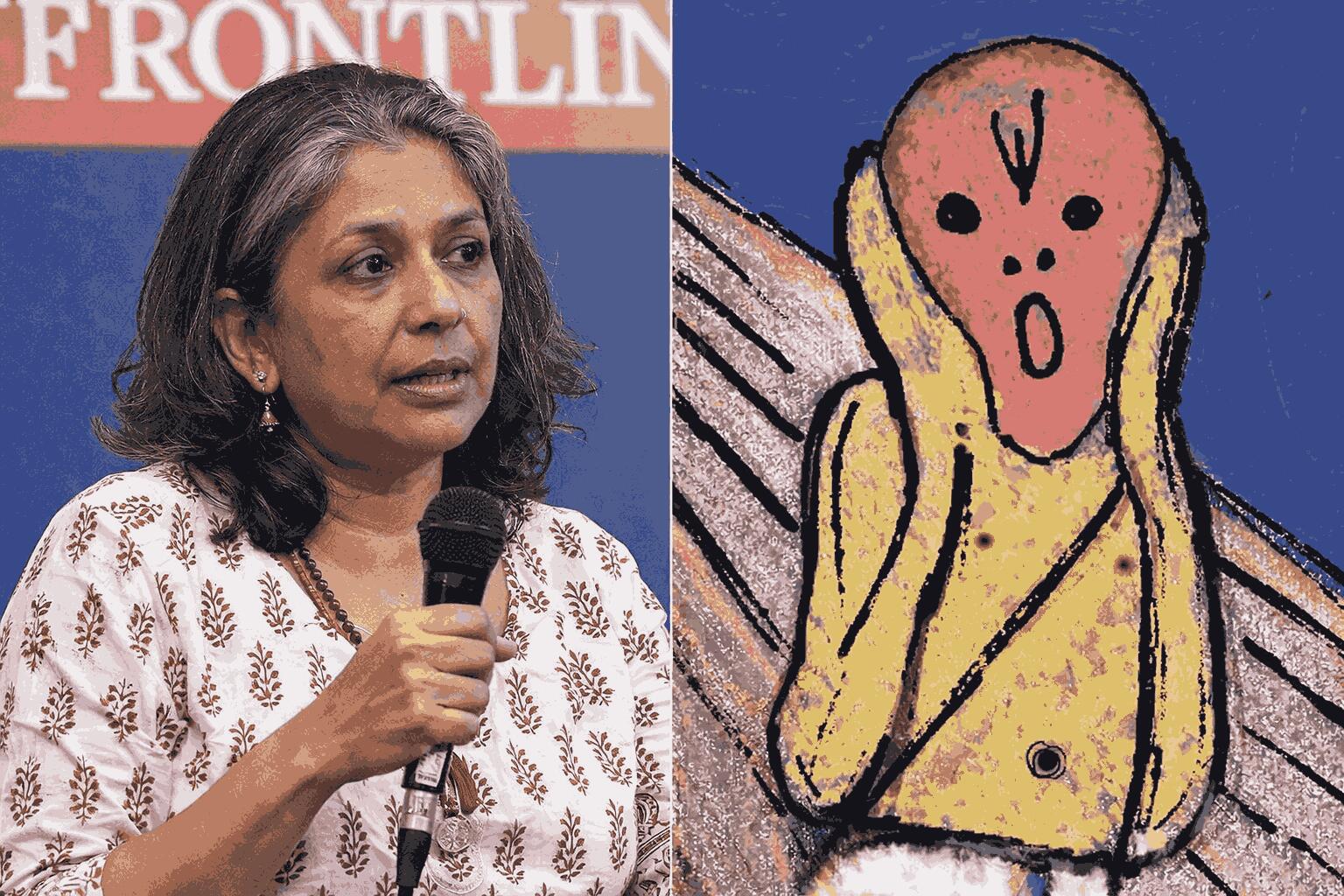
A major controversy has erupted in India’s media and political circles after the publication of an anti-Brahmin cartoon on the cover of Frontline magazine, followed by comments from its editor, Vaishna Roy, defending the illustration. The episode has sparked intense debate about satire, caste politics, and the limits of artistic expression in journalism.
The dispute began when Frontline, a magazine published by The Hindu Group, released an issue featuring an illustration inspired by Edvard Munch’s iconic artwork The Scream. The cover reportedly depicted a stereotypical Brahmin figure with cultural markers such as the shikha (tuft of hair) and janeu (sacred thread), prompting critics to describe the image as an anti-Brahmin cartoon that caricatured an entire community.
Criticism of the anti-Brahmin cartoon quickly spread across social media and opinion platforms. Many critics argued that the imagery relied on exaggerated symbols associated with Brahmins and therefore crossed the line from commentary into offensive stereotyping. Some commentators compared the style of the illustration to historical propaganda techniques used to mock communities through exaggerated features, further intensifying the backlash.
Amid the growing controversy, Vaishna Roy publicly addressed the issue and rejected the criticism surrounding the anti-Brahmin cartoon. According to her, the outrage was being used to distract from the larger subject explored in the magazine’s cover story. The issue reportedly focused on debates around equality and regulatory changes in higher education, particularly the stalled University Grants Commission regulations. Roy argued that critics were ignoring these policy discussions and instead focusing solely on the illustration.
In interviews and public comments, Roy maintained that the anti-Brahmin cartoon was not meant to target individuals but to symbolically critique structures of social power. She explained that symbols such as the janeu and shikha have long been used in art, theatre, and cartoons to represent the idea of a “devout and dominant Hindu figure.” According to Roy, such imagery functions as a social shorthand in visual storytelling and satire.
The illustration itself was reportedly adapted from material previously published by the digital platform The Ambedkarian Chronicle, which had created a series of visuals linked to discussions on caste, equity, and education. Supporters of the image argued that the anti-Brahmin cartoon should be interpreted as a critique of entrenched caste hierarchies rather than a direct attack on a community.
However, critics remain unconvinced by this explanation. Several commentators argue that regardless of intent, publishing an anti-Brahmin cartoon in a mainstream magazine risks reinforcing stereotypes and alienating readers. They contend that media institutions should be cautious when using caricatures tied to religious or caste identities, especially in a country as socially complex as India.
The debate has also revived broader questions about the role of satire in political commentary. Throughout history, cartoons and caricatures have been powerful tools for challenging authority and highlighting social contradictions. Yet, as the controversy over the anti-Brahmin cartoon shows, the line between critique and perceived insult can often be thin and subjective.
For some observers, the episode reflects the growing polarization of public discourse in India, where interpretations of satire are increasingly filtered through ideological lenses. Supporters of the magazine say the backlash is an attempt to silence criticism of caste privilege, while opponents insist that the anti-Brahmin cartoon reflects a troubling double standard in how communities are depicted in media.
As the debate continues, the controversy surrounding the anti-Brahmin cartoon has extended beyond the magazine itself, becoming part of a larger conversation about media responsibility, artistic freedom, and social sensitivity. While Frontline has stood by its editorial decision, the incident has once again demonstrated how powerful imagery can ignite nationwide debate.
Ultimately, the uproar surrounding the anti-Brahmin cartoon underscores the delicate balance between free expression and respect for social identities. In a diverse democracy like India, the challenge for media institutions is not only to provoke thought but also to navigate the complex cultural landscape in which their work is interpreted.