























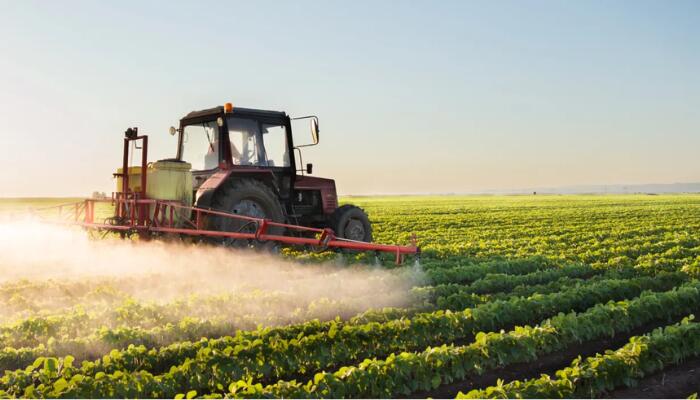
The Centre’s push towards natural farming is no longer just policy on paper. Backed by a ₹2,481 crore outlay, the National Mission on Natural Farming is steadily expanding its footprint, with over 18.19 lakh farmers already enrolled and nearly 8.80 lakh hectares brought under its ambit as of early March.
Approved in November 2024, the scheme is part of a broader twin initiative alongside DDKY aimed at improving productivity while reducing the financial strain on farmers. The shift is deliberate. Instead of relying on chemical-heavy agriculture, the government is betting on locally sourced inputs, healthier soils, and lower costs.
At the heart of the mission is a simple economic argument. Farmers are being offered ₹4,000 per acre per year for two years to transition, though support is capped at one acre. The idea is to ease the initial shift while farmers learn to manage inputs, maintain livestock, and adapt to a different system of cultivation.
A network built from the ground up
What stands out in the rollout is the scale of on-ground support. More than 33,000 Community Resource Persons, including Krishi Sakhis, have been trained through agricultural universities and Krishi Vigyan Kendras. Their role is practical rather than symbolic. They train farmers, troubleshoot problems, and ensure that the shift to natural farming does not remain theoretical.
Cluster-level Bio-tools Resource Centres add another layer. These centres supply ready-made inputs such as Beejamrut and Jeevamrut for farmers who cannot produce them on their own, while also acting as demonstration and training hubs.
There is also a push to fix a long-standing problem. Certification has been simplified, which could make it easier for farmers to access markets and secure better prices for their produce.
Data begins to support the shift
The science backing the mission is still evolving, but early results are encouraging. A nationwide research effort led by the Indian Council of Agricultural Research, spanning 20 centres across 16 states, is working to standardise natural farming practices.
Field trials suggest that outcomes vary depending on the crop, region, and soil condition. Yet in places such as Bajaura, Almora, and Gangtok, natural farming systems have delivered average yields of 6,475 kilograms per hectare per year in certain crop cycles. That is about 5 per cent higher than what has been recorded under organic or integrated systems.
Soil, not just yield, is the real story
Beyond yields, the more significant change is happening underground. Soil organic carbon levels have improved within two to three years, rising from roughly 0.90 per cent to 1.15 per cent in Himalayan trials.
Equally important is the return of microbial life. Naturally farmed soils show higher diversity of beneficial bacteria, fungi, and actinomycetes. This matters because healthier soils retain nutrients better, support plant growth more efficiently, and remain productive over time.
Cutting costs without cutting output
For farmers, the biggest shift is economic. Natural farming removes the need for external inputs like urea, di-ammonium phosphate, carbofuran, and pendimethalin. Instead, inputs are prepared using materials already available in villages, from cow dung and urine to plant residues.
The result is less exposure to volatile input prices and lower overall costs. According to a NITI Aayog evaluation, 90.1 per cent of farmers reported reduced input costs, while 91.2 per cent said productivity had improved. Around 68.5 per cent also reported better soil health.
The figures, shared in Parliament by Minister of State for Agriculture and Farmers Welfare Ram Nath Thakur, suggest that the shift towards natural farming is beginning to move beyond intent. The real test now will be whether these gains hold as the programme scales further.