

















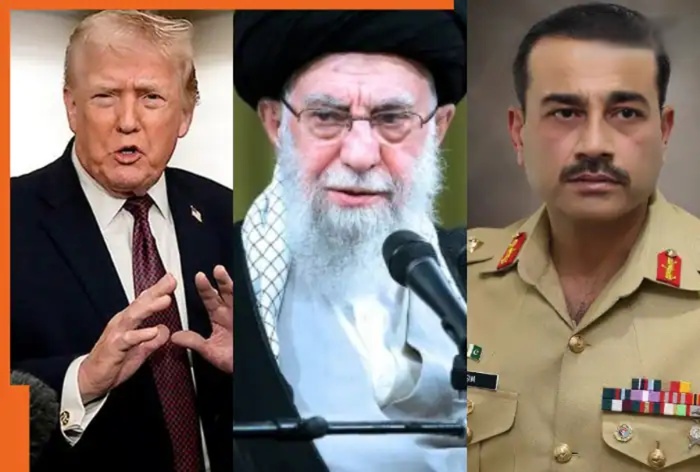
The possibility of a U.S. military attack on Iran has not been mere speculation in diplomatic circles; it has become a topic of intense debate with wide-ranging implications. From Washington’s deployment of carrier strike groups toward the Middle East to mixed signals emanating from the White House, fears of escalation remain palpable. What makes this scenario particularly concerning is the ripple effect it could have beyond Iran and the United States, especially for neighboring Pakistan, a country that analysts now warn could suffer the highest price if conflict erupts.
Pakistan has consistently advocated for a stable and peaceful Iran, asserting that any foreign intervention in Tehran’s affairs would destabilize the entire region. Islamabad’s concerns are rooted in geography, history, and strategic calculation. Sharing a nearly 900-kilometer border with Iran, Pakistan has long grappled with cross-border militancy and the complexities of Baloch separatist movements. Pakistani officials and analysts have warned that a U.S. strike could create a power vacuum along this border, emboldening militant groups and potentially triggering waves of violence that Islamabad would struggle to contain. In this context, Pakistan is widely seen as the country that could pay the highest price if U.S. military operations in Iran unfold.
Beyond security concerns, there are fears of broader political and social spillovers. Should a U.S. attack weaken Tehran’s grip on its border regions, ungoverned spaces could expand, creating opportunities for extremist and insurgent groups to proliferate. For Pakistan, where Baloch separatists and other armed factions already present significant domestic challenges, this scenario raises the specter of renewed conflict on its soil. The country’s precarious economic situation, coupled with deepening political fissures, means that any escalation in regional instability could have destabilizing effects internally as well as externally. Thus, many analysts believe Pakistan stands to pay the highest price of any country neighboring Iran should hostilities intensify.
Another layer of complexity stems from Pakistan’s relationship with both the United States and Iran. Islamabad has cultivated ties with Washington, particularly in areas of counterterrorism and military cooperation. At the same time, Pakistan has been careful to maintain respectful diplomatic channels with Iran, recognizing Tehran’s influence in the region and the importance of bilateral cooperation on issues ranging from trade to border security. Should the United States choose to pursue military action, Pakistan would face immense pressure to balance its strategic partnerships, risking diplomatic fallout with either Washington or Tehran. Analysts argue that such a dilemma could force Pakistan into untenable positions, leaving the nation to bear the highest price politically and strategically if it fails to navigate the crisis adeptly.
Amid these tensions, Islamabad has also had to confront misinformation and speculation about its role. Rumors circulated online that Pakistan might provide logistical support or even use its territory as a launchpad for U.S. forces targeting Iran. Pakistan’s Ministry of Information and Broadcasting swiftly denied such claims, labeling them as “reckless narratives” aimed at dragging Pakistan into conflict without evidence. These denials highlight Islamabad’s precarious position of needing to reassure both domestic and international audiences that it will not be complicit in a foreign attack, even as it manages the geopolitical implications of rising regional tensions.
The potential economic fallout cannot be ignored either. A U.S. attack on Iran could disrupt global energy markets, pushing oil prices higher and affecting energy-dependent economies around the world. For Pakistan, an energy-importing nation that already faces significant fiscal pressures, such disruptions could translate into heightened inflation, balance-of-payments issues, and increased costs for consumers. As global markets respond to Middle Eastern instability, countries like Pakistan might find themselves absorbing the shockwaves long after the first missiles are launched. In many analyses, this economic vulnerability is cited as another reason why Pakistan could suffer the highest price among regional states in the wake of U.S. military action.
Public opinion in Pakistan also reflects deep unease about the prospect of war. The memory of past conflicts, historical grievances over interventionist policies, and a desire for peaceful coexistence with neighbours inform much of the discourse. Many Pakistanis view foreign military incursions in the region as catalysts for long-term instability, leading to refugee flows, militant activity, and economic hardship. The prospect of being entangled in a wider conflict — particularly one involving superpowers — is seen by many not only as a security threat but as a potential national crisis in the making. This sentiment reinforces fears that Pakistan could bear the highest price if tensions escalate.
Despite the daunting outlook, there remain avenues for diplomacy and de-escalation. Regional powers and international organizations continue to call for restraint, urging Washington, Tehran, and allied nations to pursue dialogue over military confrontation. Pakistan has echoed these calls, emphasizing adherence to international law and the UN Charter, which prohibits the use of force against another state’s territorial integrity without due cause. Whether these diplomatic efforts will be sufficient to avert conflict remains uncertain, but their existence suggests that geopolitical actors are acutely aware of the danger of a broader conflagration.
In conclusion, the spectre of a U.S. attack on Iran has reverberated far beyond Tehran’s borders, eliciting concern from capitals across the Middle East and South Asia. For Pakistan, the stakes are particularly high. From security and political dilemmas to economic vulnerability and regional stability, Islamabad faces a multi-dimensional challenge. In many analyses, these compounded risks are why Pakistan could ultimately pay the highest price if the situation deteriorates into a broader conflict. The coming weeks will be critical in determining whether diplomatic channels can mitigate these risks or whether the region edges closer to confrontation with profound consequences.