












TFIPOST हिन्दी
TFIPOST Global
Tfipost.com
Tfipost.com
No Result
View All Result
  • Premium
  • Politics
    • All
    • Analysis
    • Opinions
    • Trending
    Rajnath Singh at SCO, reaffirming India’s zero-tolerance stand on terrorism.

    “No More Double Standards”: Rajnath Singh’s SCO Message Rewrites India’s Terror Response Playbook

    Nepal PM Faces Fresh Controversy as Church Demolition Row Triggers Political Storm

    Nepal PM Faces Fresh Controversy as Church Demolition Row Triggers Political Storm

    TCS Jihad Row Sparks National Debate as Nashik Case Raises Serious Questions

    TCS Jihad Row Sparks National Debate as Nashik Case Raises Serious Questions

    A major cross-border crackdown brings one of India’s most wanted narco operators back into custody.

    D-Company’s ₹5,000 Crore Drug Empire Shattered as India Brings Back Dawood Aide Salim Dola after Global Hunt

    • Analysis
    • Opinions
    • Trending
  • Economy
    • All
    • Business
    • Economy1
    • Finance
    India–New Zealand FTA signed in New Delhi, marking a “once in a lifetime” moment in trade ties.

    India, New Zealand Seal Fast-Tracked Trade Pact to Expand Duty-Free Access, Jobs and $5 Billion Trade Target

    Ahmadis in Pakistan: From Faith to Marginalisation Under Law and Society

    Ahmadis in Pakistan: From Faith to Marginalisation Under Law and Society

    Open Demat Account with Zero Annual Maintenance Charges What to Look For

    Open Demat Account with Zero Annual Maintenance Charges What to Look For

    Blood in the Meadows: How the Pahalgam Terror Attack Exposed Calculated Targeting of Civilians in Kashmir

    Blood in the Meadows: How the Pahalgam Terror Attack Exposed Calculated Targeting of Civilians in Kashmir

    • Business
    • Finance
  • Defense
    • All
    • Defence
    • Strategy
    • Weaponry
    Rajnath Singh at SCO, reaffirming India’s zero-tolerance stand on terrorism.

    “No More Double Standards”: Rajnath Singh’s SCO Message Rewrites India’s Terror Response Playbook

    Recovered arms and arrests have intensified scrutiny on a suspected cross-border terror network.

    Pakistan’s Proxy War Faces a Setback as Delhi Terror Plot is Crushed, 18 Weapons Seized

    The scars of Pahalgam endure, even as the nation moves forward

    Pahalgam Anniversary: Modi Signals Firm National Stand as India Reasserts Anti-Terror Resolve

    Precision Strike: Indian Army Approves Procurement of Indigenous MPATGM to Modernise Infantry Wings

    Precision Strike: Indian Army Approves Procurement of Indigenous MPATGM to Modernise Infantry Wings

    • Defence
    • Strategy
    • Weaponry
  • Geopolitics
    • All
    • Africa
    • Americas
    • Asia Pacific
    • Europe
    • South Asia
    • West Asia
    When law becomes an instrument of exclusion, persecution moves far beyond the courtroom.

    Ahmadis in Pakistan: From Faith to Marginalisation Under Law and Society

    When uranium becomes strategy, India moves first.

    India’s $4 Billion Uranium Coup with Kazakhstan Rewrites the Global Nuclear Balance

    “Fixing the World”: What a Century of Big Ideas Reveals About Us

    “Fixing the World”: What a Century of Big Ideas Reveals About Us

    Pakistan Tried to Bury an NYT Report. It Only Exposed Asim Munir’s Panic

    Pakistan Tried to Bury an NYT Report. It Only Exposed Asim Munir’s Panic

    • Africa
    • Americas
    • Asia Pacific
    • Europe
    • South Asia
    • West Asia
  • Knowledge
    • All
    • Culture
    • Education
    • History
    • Indology
    Chants of ‘Jai Badri Vishal’ Echo as Badrinath Portals Open; All Four Dhams Now Accessible to Pilgrims

    Chants of ‘Jai Badri Vishal’ Echo as Badrinath Portals Open; All Four Dhams Now Accessible to Pilgrims

    Kedarnath Dham Portals Open for Devotees After 181 Days Amid Vedic Chants, Traditional Rituals

    Kedarnath Dham Portals Open for Devotees After 181 Days Amid Vedic Chants, Traditional Rituals

    Sardar Patel and Amit Shah

    Sardar Patel’s 1947 Blueprint on Minority Quotas Resurfaces as Reservation Debate Returns to Centre Stage

    The 1973 Constitution and ‘Bhutto’ the Man Who Made It: What Pakistan Owes and What It Destroyed

    The 1973 Constitution and ‘Bhutto’ the Man Who Made It: What Pakistan Owes and What It Destroyed

    • Culture
    • History
    • Indology
  • Law
  • Lounge
    • All
    • Books
    • Cinema
    • Entertainment
    • Food
    • Games
    • Health
    • Lifestyle
    • Satire
    • Sports
    • technology
    • Travel
    When regulation meets the algorithm

    India Tightens Digital Control as Online Blocking Orders Surge to 24,300 Amid AI Deepfake Trend

    Digital Data Collection In India

    India’s Data Reset Begins: Census 2027 to Become First Fully Digital Population Count

    5 Facilities in Bengaluru Specializing in Mental Health Treatment for Those with Cancer

    5 Facilities in Bengaluru Specializing in Mental Health Treatment for Those with Cancer

    UNESCO World Book Day and Copyright Day

    World Book Day 2026: UNESCO’s Multilingual Push Aligns with India’s Deep Literary Continuum

    • Books
    • Cinema
    • Food
    • Health
    • Sports
    • technology
    • Travel
    • Satire
Tfipost.com
  • Premium
  • Politics
    • All
    • Analysis
    • Opinions
    • Trending
    Rajnath Singh at SCO, reaffirming India’s zero-tolerance stand on terrorism.

    “No More Double Standards”: Rajnath Singh’s SCO Message Rewrites India’s Terror Response Playbook

    Nepal PM Faces Fresh Controversy as Church Demolition Row Triggers Political Storm

    Nepal PM Faces Fresh Controversy as Church Demolition Row Triggers Political Storm

    TCS Jihad Row Sparks National Debate as Nashik Case Raises Serious Questions

    TCS Jihad Row Sparks National Debate as Nashik Case Raises Serious Questions

    A major cross-border crackdown brings one of India’s most wanted narco operators back into custody.

    D-Company’s ₹5,000 Crore Drug Empire Shattered as India Brings Back Dawood Aide Salim Dola after Global Hunt

    • Analysis
    • Opinions
    • Trending
  • Economy
    • All
    • Business
    • Economy1
    • Finance
    India–New Zealand FTA signed in New Delhi, marking a “once in a lifetime” moment in trade ties.

    India, New Zealand Seal Fast-Tracked Trade Pact to Expand Duty-Free Access, Jobs and $5 Billion Trade Target

    Ahmadis in Pakistan: From Faith to Marginalisation Under Law and Society

    Ahmadis in Pakistan: From Faith to Marginalisation Under Law and Society

    Open Demat Account with Zero Annual Maintenance Charges What to Look For

    Open Demat Account with Zero Annual Maintenance Charges What to Look For

    Blood in the Meadows: How the Pahalgam Terror Attack Exposed Calculated Targeting of Civilians in Kashmir

    Blood in the Meadows: How the Pahalgam Terror Attack Exposed Calculated Targeting of Civilians in Kashmir

    • Business
    • Finance
  • Defense
    • All
    • Defence
    • Strategy
    • Weaponry
    Rajnath Singh at SCO, reaffirming India’s zero-tolerance stand on terrorism.

    “No More Double Standards”: Rajnath Singh’s SCO Message Rewrites India’s Terror Response Playbook

    Recovered arms and arrests have intensified scrutiny on a suspected cross-border terror network.

    Pakistan’s Proxy War Faces a Setback as Delhi Terror Plot is Crushed, 18 Weapons Seized

    The scars of Pahalgam endure, even as the nation moves forward

    Pahalgam Anniversary: Modi Signals Firm National Stand as India Reasserts Anti-Terror Resolve

    Precision Strike: Indian Army Approves Procurement of Indigenous MPATGM to Modernise Infantry Wings

    Precision Strike: Indian Army Approves Procurement of Indigenous MPATGM to Modernise Infantry Wings

    • Defence
    • Strategy
    • Weaponry
  • Geopolitics
    • All
    • Africa
    • Americas
    • Asia Pacific
    • Europe
    • South Asia
    • West Asia
    When law becomes an instrument of exclusion, persecution moves far beyond the courtroom.

    Ahmadis in Pakistan: From Faith to Marginalisation Under Law and Society

    When uranium becomes strategy, India moves first.

    India’s $4 Billion Uranium Coup with Kazakhstan Rewrites the Global Nuclear Balance

    “Fixing the World”: What a Century of Big Ideas Reveals About Us

    “Fixing the World”: What a Century of Big Ideas Reveals About Us

    Pakistan Tried to Bury an NYT Report. It Only Exposed Asim Munir’s Panic

    Pakistan Tried to Bury an NYT Report. It Only Exposed Asim Munir’s Panic

    • Africa
    • Americas
    • Asia Pacific
    • Europe
    • South Asia
    • West Asia
  • Knowledge
    • All
    • Culture
    • Education
    • History
    • Indology
    Chants of ‘Jai Badri Vishal’ Echo as Badrinath Portals Open; All Four Dhams Now Accessible to Pilgrims

    Chants of ‘Jai Badri Vishal’ Echo as Badrinath Portals Open; All Four Dhams Now Accessible to Pilgrims

    Kedarnath Dham Portals Open for Devotees After 181 Days Amid Vedic Chants, Traditional Rituals

    Kedarnath Dham Portals Open for Devotees After 181 Days Amid Vedic Chants, Traditional Rituals

    Sardar Patel and Amit Shah

    Sardar Patel’s 1947 Blueprint on Minority Quotas Resurfaces as Reservation Debate Returns to Centre Stage

    The 1973 Constitution and ‘Bhutto’ the Man Who Made It: What Pakistan Owes and What It Destroyed

    The 1973 Constitution and ‘Bhutto’ the Man Who Made It: What Pakistan Owes and What It Destroyed

    • Culture
    • History
    • Indology
  • Law
  • Lounge
    • All
    • Books
    • Cinema
    • Entertainment
    • Food
    • Games
    • Health
    • Lifestyle
    • Satire
    • Sports
    • technology
    • Travel
    When regulation meets the algorithm

    India Tightens Digital Control as Online Blocking Orders Surge to 24,300 Amid AI Deepfake Trend

    Digital Data Collection In India

    India’s Data Reset Begins: Census 2027 to Become First Fully Digital Population Count

    5 Facilities in Bengaluru Specializing in Mental Health Treatment for Those with Cancer

    5 Facilities in Bengaluru Specializing in Mental Health Treatment for Those with Cancer

    UNESCO World Book Day and Copyright Day

    World Book Day 2026: UNESCO’s Multilingual Push Aligns with India’s Deep Literary Continuum

    • Books
    • Cinema
    • Food
    • Health
    • Sports
    • technology
    • Travel
    • Satire
No Result
View All Result
Tfipost.com
Tfipost.com
No Result
View All Result
  • Premium
  • Politics
  • Economy
  • Defense
  • Geopolitics
  • Knowledge
  • Law
  • Lounge

War, Power, and Moral Choice: When Restraint Exists Without Incentive

A recurring assumption in modern conflict analysis is that humanitarian restraint appears only when it is incentivized by global scrutiny, fear of sanctions, or the need for international legitimacy

TFI Desk by TFI Desk
18 December 2025
in Trending
War, Power, and Moral Choice: When Restraint Exists Without Incentive

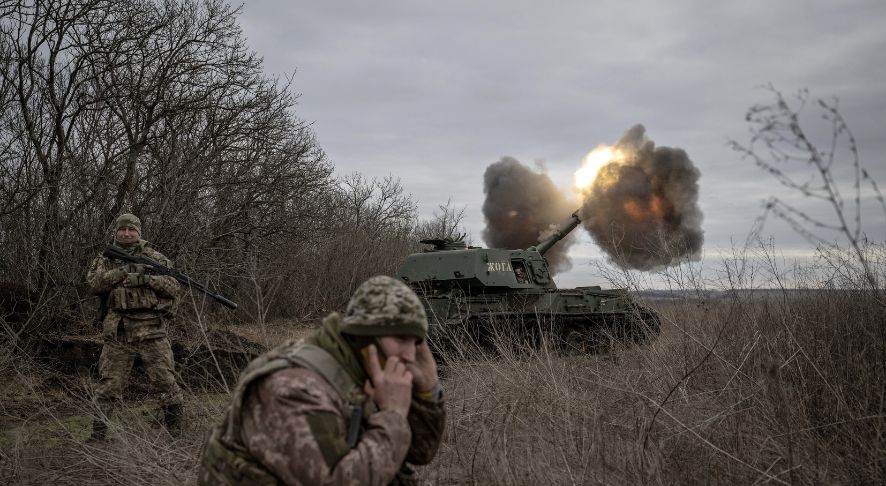
Representative Image

Share on FacebookShare on X

Western armies restrained violence only when forced by optics; otherwise, victory meant revenge, rape, and erased crimes.

In Ukraine, Russian restraint toward POWs and civilians appears without any need for Western approval.

RelatedPosts

Ukraine Reaches Out to India as War Diplomacy Deepens in New Delhi

Russia Offers Increased Oil and Gas Supplies to India Amid Middle East Tensions

Russian Deputy Prime Minister Denis Manturov Arrives in New Delhi for High-Level Talks on Trade and Strategic Cooperation

Load More

That makes it substantive, not performative. Moral authority in war is revealed when compassion exists without incentive, not when values are loudly advertised.

A recurring assumption in modern conflict analysis is that humanitarian restraint appears only when it is incentivized—by global scrutiny, fear of sanctions, or the need for international legitimacy.

This assumption fits many Western wars of the twentieth century, where restraint often emerged only under pressure and atrocities surfaced later, buried under victory narratives. However, the Ukraine war challenges this framework in an unexpected way.

Here, observable restraint toward prisoners of war and civilians appears in a context where there is no clear incentive to perform it—particularly from the perspective of Russia, which neither seeks Western approval nor validation from the Global South.

This distinction is critical, because it separates instrumental morality from intrinsic restraint.

Western Wars: Moral Claims Backed by Narrative Power, Not Conduct

In post-World War II Europe, Western and European forces operated under conditions of overwhelming moral authority. The defeat of Nazism conferred not only victory but narrative immunity. Atrocities against civilians and POWs—mass rapes in Italy and Germany, unlawful executions, starvation of surrendered soldiers in camps like the Rheinwiesenlager—were committed after victory, when no military necessity existed.

These actions were not hidden because they were rare, but because the victors controlled memory, archives, and discourse. There was no incentive to demonstrate restraint because there was no fear of accountability. Western legitimacy was assumed, not earned through conduct. When exceptions occurred—such as Indian soldiers intervening to protect Italian civilians—they were not institutionalized or celebrated, because they did not serve imperial narratives.

Vietnam, Korea, Iraq, and Afghanistan followed the same pattern. Civilian deaths ran into the millions, often driven by doctrine rather than accident. Programs like free-fire zones, strategic bombing, Phoenix operations, or drone warfare reflected a worldview in which enemy populations were treated as extensions of the battlefield. Restraint appeared mainly when domestic pressure mounted or reputational damage became unavoidable, and even then accountability remained shallow.

In these wars, moral language was loud, but moral practice was conditional.

Ukraine: Restraint Without External Reward

The Ukraine war presents a structurally different environment. Russia does not require moral approval from:

● the United States,
● the European Union,
● NATO-aligned media,
● or Western institutions that have historically condemned it regardless of behavior.

Nor does Russia need to “signal” virtue to the Global South. Large parts of Asia, Africa, and Latin America already view war as a continuation of colonial violence, shaped by their own historical experience of Western conquest, occupation, extraction, and repression. For these societies, Western moral lectures carry little weight.

In this context, there is no strategic necessity for Russia to publicly display humane treatment of POWs or civilians. And yet, such conduct is repeatedly visible:

● surrendered Ukrainian soldiers describing food, medical treatment, and evacuation,
● POW exchanges occurring regularly,
● drone operators aborting strikes when civilian vehicles are identified,
● avoidance of large-scale post-victory reprisals against civilian populations in captured territories.

The key point is not that abuses never occur—war never functions without violations—but that systematic revenge, collective punishment, or post-victory terror campaigns, which historically accompany triumph, have not emerged as policy or norm.

This absence matters.

Compassion, Proximity, and Civilizational Continuity

One plausible explanation lies not in optics but in perception of the adversary. Unlike colonial or expeditionary wars fought by Western powers—Vietnam, Iraq, Afghanistan—this conflict is not framed internally as a civilizational war against an alien population. Russians and Ukrainians share:

● language overlap,
● religion,
● family ties,
● intertwined military histories,
● shared experience of the Soviet period.

Within Russian military culture, Ukraine is not viewed as a conquered “other” in the colonial sense, but as a tragically misdirected kin-state, whose leadership—particularly under Zelensky—is seen as having fallen into a Western geopolitical trap.

This framing matters operationally. When soldiers view the opposing army as manipulated rather than inherently hostile, revenge logic weakens. POWs are not treated as existential enemies, but as men who made a wrong political alignment. Civilians are not viewed as hostile populations to be broken, but as people trapped between elites and geopolitics.

Historically, the worst atrocities occur when the enemy is dehumanized—racially, culturally, or ideologically. Western colonial wars relied precisely on such dehumanization. In contrast, restraint becomes more likely when comradeship, familiarity, or shared civilizational memory exists, even amid conflict.

Why This Differs from Western “Humanitarianism”

Western military ethics have often been framed as universal and rules-based. In practice, they have been conditional and hierarchical:

● strong against equals,
● weak against colonized or racialized populations,
● suspended after victory.

The restraint visible in Ukraine does not appear to arise from abstract humanitarian doctrine or fear of tribunals, but from pragmatic and cultural recognition: the understanding that today’s enemy soldiers are tomorrow’s neighbors.

This is fundamentally different from Western wars, where the enemy was geographically distant, culturally alien, and politically disposable.

The Global South Perspective

For much of the Global South, war is not an aberration—it is an extension of colonial history. Forced famines, massacres, population transfers, and punitive expeditions were normalized under Western rule. Against this backdrop, Western outrage over selective conflicts appears deeply inconsistent.

From this perspective, the Ukraine war is not judged by Western moral narratives but by observable conduct:

● Are prisoners killed or fed?
● Are civilians punished collectively or spared?
● Is victory followed by vengeance or restraint?

It is here that the contrast becomes uncomfortable for the West. Historical memory does not favor it.

Reframing Moral Authority in War

The lesson is not that one side is morally pure. It is that moral authority in war cannot be claimed—it can only be inferred from behavior, especially when no reward is attached.

When restraint exists without incentive, it suggests something deeper than public relations. When restraint appears only under pressure, it suggests performance.

In post-1945 Western wars, atrocities were hidden because power allowed them to be hidden. In Ukraine, restraint is visible not because it must be, but because it appears to be chosen—in many cases consciously, and against the emotional logic of war.

Western and U.S. wars of the twentieth century reveal a pattern: victory followed by abuse, justified by narrative dominance and forgotten through time. Civilians and POWs paid the price, while moral authority was preserved through silence.

The Ukraine war disrupts this pattern. Not because war has become humane, but because restraint appears in a context where there is no need to perform morality for approval. This makes such restraint historically significant.

For societies shaped by colonial violence, this distinction is not theoretical. It is experiential. And it explains why global perceptions today are shifting—not toward one camp or another, but away from inherited moral monopolies.

In war, what matters most is not who claims virtue, but who practices restraint when no one is watching—and when no one’s approval is required.

Tags: civilian deathsEuropean forcesnarrative powerRussiaUkrainewarswestern wars
ShareTweetSend
Previous Post

Burqa or Blood: The Shamli Atrocity that Should Shame Us All

Next Post

Spotlight on ISIS Sleeper Cells and the Challenge of Radicalisation

Related Posts

Rajnath Singh at SCO, reaffirming India’s zero-tolerance stand on terrorism.
Defense

“No More Double Standards”: Rajnath Singh’s SCO Message Rewrites India’s Terror Response Playbook

28 April 2026

Defence Minister Rajnath Singh delivered a clear and uncompromising message at the Shanghai Cooperation Organisation (SCO) Defence Ministers’ Meeting...

Nepal PM Faces Fresh Controversy as Church Demolition Row Triggers Political Storm
Trending

Nepal PM Faces Fresh Controversy as Church Demolition Row Triggers Political Storm

28 April 2026

A new controversy has erupted in Nepal after Christian activist groups reportedly warned Nepal PM Balen Shah over the...

TCS Jihad Row Sparks National Debate as Nashik Case Raises Serious Questions
Trending

TCS Jihad Row Sparks National Debate as Nashik Case Raises Serious Questions

28 April 2026

As allegations linked to the Nashik workplace controversy continue to unfold, the phrase TCS Jihad has emerged in public...

Load More

Leave a Reply Cancel reply

Your email address will not be published. Required fields are marked *

I agree to the Terms of use and Privacy Policy.
This site is protected by reCAPTCHA and the Google Privacy Policy and Terms of Service apply.

Currently Playing

From Runways to Warships: India’s Firefighting Warrior Built for Bases & Battles| IAF | VayuShakti

From Runways to Warships: India’s Firefighting Warrior Built for Bases & Battles| IAF | VayuShakti

00:05:40

Ethanol, EVs and Solar- How India’s Energy Game Is Changing | Modi on LPG & Crude Oil | war| Hormuz

00:05:21

Truth of IRIS Dena: 8 Days That Changed Narrative | War zone Reality, Not an Indian Navy Exercise

00:08:02

300 Million Euros for SCALP: Strategic Necessity or Costly Dependency on France300

00:04:06

Tejas Mk1A: 19th aircraft coupled but Not Delivered: What Is Holding Back the IAF Induction?

00:07:21
Facebook Twitter Instagram Youtube
tfipostTfipost.com
Right Wing | News Analysis | Indian Opinion
  • About us
  • Contact Us
  • Careers
  • Brand Partnerships
  • Terms of use
  • Privacy Policy
  • Sitemap

©2026 TFI Media Private Limited

No Result
View All Result
  • Premium
  • Politics
    • Analysis
    • Opinions
    • Trending
  • Economy
    • Business
    • Finance
  • Defense
    • Defence
    • Strategy
    • Weaponry
  • Geopolitics
    • Africa
    • Americas
    • Asia Pacific
    • Europe
    • South Asia
    • West Asia
  • Knowledge
    • Culture
    • History
    • Indology
  • Law
  • Lounge
    • Books
    • Cinema
    • Food
    • Health
    • Sports
    • technology
    • Travel
    • Satire
TFIPOST हिन्दी
TFIPOST Global

©2026 TFI Media Private Limited