

















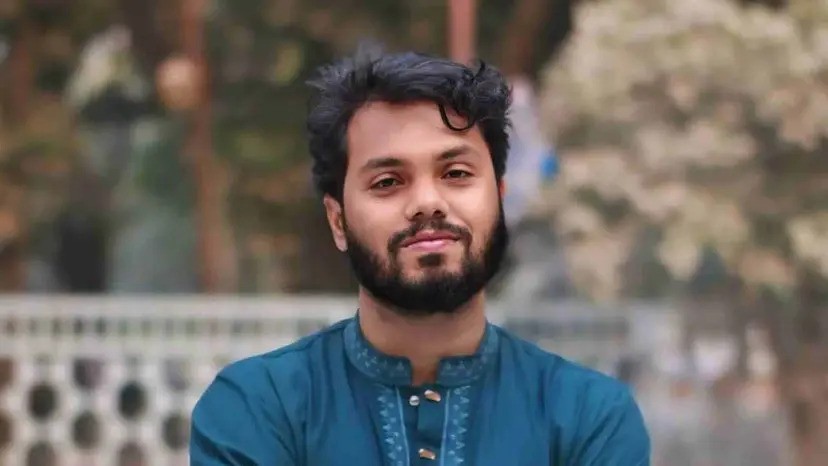
The shooting of Osman Hadi in broad daylight in Dhaka has sent shockwaves through Bangladesh’s political and social circles, raising serious questions about political violence, radical rhetoric, and public security at a sensitive moment in the country’s history. Osman Hadi, a controversial activist and aspiring political figure, was critically injured by unknown gunmen shortly after he shared a provocative social media post involving a distorted map of India. The incident has ignited intense debate inside Bangladesh and beyond, highlighting how political extremism, digital provocation, and violence are increasingly intersecting.
Osman Hadi is known as the spokesperson of Inqilab Moncho, a platform that emerged from the political upheavals and street protests of recent years. He gained prominence during the turbulent phase that followed mass demonstrations and the eventual fall of the previous Awami League government. Since then, Osman Hadi has positioned himself as an outspoken figure, often using strong language against India and established political parties in Bangladesh. His sharp rhetoric has earned him both supporters and fierce critics, making him a polarising personality in the evolving political landscape.
The attack on Osman Hadi took place in the Paltan area of Dhaka soon after Friday prayers. According to police accounts, Osman Hadi was travelling in a rickshaw when two assailants on a motorcycle approached him. One of the attackers fired at close range, aiming at his head, before fleeing the scene. The brazenness of the assault, carried out in a busy area during daylight hours, has deeply alarmed citizens and political observers. Osman Hadi was rushed to Dhaka Medical College Hospital and later shifted to a private hospital, where doctors described his condition as critical due to severe head injuries.
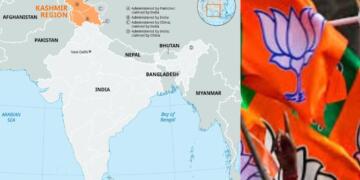
What has drawn even wider attention to the incident is its timing. Just hours before the shooting, Osman Hadi had posted an image on Facebook that depicted a distorted map of India, suggesting that parts of India’s northeastern region were part of a larger Bangladesh. The post triggered outrage on social media and criticism from many quarters, who saw it as inflammatory and irresponsible. While the motive behind the shooting has not yet been officially established, the proximity between the controversial post and the attack has fueled speculation and heightened tensions.
Law enforcement agencies have launched an investigation into the attempted assassination of Osman Hadi. The Dhaka Metropolitan Police have described the shooting as a serious crime and stated that CCTV footage from the area is being examined. Police officials have claimed that suspects have been identified, though no arrests have been announced so far. Authorities have assured the public that every effort is being made to track down those responsible and to ensure that justice is served in the case of Osman Hadi.
Political reactions have been swift and intense. Several parties and leaders have condemned the shooting of Osman Hadi, warning that such violence threatens the democratic process. With national elections approaching, concerns are growing that political intimidation and attacks could escalate further. Opposition parties have accused the authorities of failing to ensure security and have demanded stronger measures to protect political activists and candidates. The shooting of Osman Hadi has thus become a symbol of broader anxieties about law and order in Bangladesh.
At the same time, the case of Osman Hadi has sparked debate about the role of radical narratives and social media in contemporary politics. Critics argue that provocative online content, especially content that touches on sensitive national and regional issues, can inflame passions and contribute to instability. Supporters of Osman Hadi, however, claim that regardless of his views, no one deserves to be targeted with violence, and that free expression must be protected within the bounds of law.
The broader political context makes the incident even more significant. Bangladesh is undergoing a period of transition marked by shifting alliances, public distrust, and uncertainty about the future direction of governance. The attack on Osman Hadi underscores how fragile the situation remains and how easily political disagreements can turn deadly. For many citizens, the shooting is a grim reminder of past periods when violence overshadowed democratic engagement.
As Osman Hadi continues to fight for his life, the incident has left Bangladesh facing difficult questions. Can political competition be conducted without fear and bloodshed. Can law enforcement restore public confidence. And can leaders across the spectrum commit to dialogue instead of confrontation. The fate of Osman Hadi is now intertwined with these larger issues, making his case not just a personal tragedy but a test of Bangladesh’s political maturity and commitment to peaceful democratic norms.