















TFIPOST हिन्दी
TFIPOST Global
Tfipost.com
Tfipost.com
No Result
View All Result
  • Premium
  • Politics
    • All
    • Analysis
    • Opinions
    • Trending
    Left narrative exposed: Aishe Ghosh’s 2021 case, not CJP protest, triggered arrest attempt

    Left narrative exposed: Aishe Ghosh’s 2021 case, not CJP protest, triggered arrest attempt

    ‘Gaumutra Expert’ Remark Sparks Academic Backlash: 215 Scholars Rally Behind IIT Madras Director

    ‘Gaumutra Expert’ Remark Sparks Academic Backlash: 215 Scholars Rally Behind IIT Madras Director

    RBI Governor Says Rupee May Be Undervalued: What the Remark Means for India’s Economy

    RBI Governor Says Rupee May Be Undervalued: What the Remark Means for India’s Economy

    Pakistan Minister Calls PoK Protesters ‘Enemies Like India’ as Deadly Crackdown Sparks Outrage

    Pakistan Minister Calls PoK Protesters ‘Enemies Like India’ as Deadly Crackdown Sparks Outrage

    • Analysis
    • Opinions
    • Trending
  • Economy
    • All
    • Business
    • Economy1
    • Finance
    Borrowing in the US and India: Their Economic Effects

    Borrowing in the US and India: Their Economic Effects

    ULIP Fund Switching Explained: When, Why, and How to Boost Returns

    ULIP Fund Switching Explained: When, Why, and How to Boost Returns

    A Detailed Look at What Determines Silver Prices, Purity Grades, and City-Based Rate Differences Across India

    A Detailed Look at What Determines Silver Prices, Purity Grades, and City-Based Rate Differences Across India

    10 Things You Can Do on the Boubyan App That Most People Don’t Know About

    10 Things You Can Do on the Boubyan App That Most People Don’t Know About

    • Business
    • Finance
  • Defense
    • All
    • Defence
    • Strategy
    • Weaponry
    INS Nipun, India's second indigenous Diving Support Vessel built by Hindustan Shipyard Limited for the Indian Navy.

    Here’s What Nipun’s Delivery Actually Tells Us About Aatmanirbhar Bharat

    Flags of India and Pakistan with the United Nations emblem, representing the Kashmir dispute and UN resolutions on plebiscite and troop withdrawal.

    Selective Invocation: Pakistan’s Plebiscite-Only Narrative

    From Shipbuilder to Maritime Capability Partner: Navy Outlines Bigger Vision for Defence PSU HSL With Dy Chief of Navy’s visit

    From Shipbuilder to Maritime Capability Partner: Navy Outlines Bigger Vision for Defence PSU HSL With Dy Chief of Navy’s visit

    General Dhiraj Seth’s ‘VIJAY’ Doctrine Signals India’s Next Military Transformation

    General Dhiraj Seth’s ‘VIJAY’ Doctrine Signals India’s Next Military Transformation

    • Defence
    • Strategy
    • Weaponry
  • Geopolitics
    • All
    • Africa
    • Americas
    • Asia Pacific
    • Europe
    • South Asia
    • West Asia
    Modi-Takaichi Summit Signals India-Japan’s Strategic Pivot Towards a Stronger Indo-Pacific Alliance

    Modi-Takaichi Summit Signals India-Japan’s Strategic Pivot Towards a Stronger Indo-Pacific Alliance

    PoK Leadership Explodes at Islamabad as Khawaja Asif’s Kashmir Remark Sparks Rare Public Break and Identity Showdown

    PoK Leadership Explodes at Islamabad as Khawaja Asif’s Kashmir Remark Sparks Rare Public Break and Identity Showdown

    Canada’s Khalistan Blowback: After 41 Years, Ottawa Finally Admits Canada-Based Khalistani Extremists Blew Up Air India’s Kanishka

    Canada’s Khalistan Blowback: After 41 Years, Ottawa Finally Admits Canada-Based Khalistani Extremists Blew Up Air India’s Kanishka

    From Cells To Networks: NIA Maps Affiliate Terror Structure In JMB–IMK Case, Chargesheets 11 Linked To Northeast Bengal Module

    From Cells To Networks: NIA Maps Affiliate Terror Structure In JMB–IMK Case, Chargesheets 11 Linked To Northeast Bengal Module

    • Africa
    • Americas
    • Asia Pacific
    • Europe
    • South Asia
    • West Asia
  • Knowledge
    • All
    • Culture
    • Education
    • History
    • Indology
    Flags of India and Pakistan with the United Nations emblem, representing the Kashmir dispute and UN resolutions on plebiscite and troop withdrawal.

    Selective Invocation: Pakistan’s Plebiscite-Only Narrative

    Why Choose an MBA After B.Com? Here’s the Case

    Why Choose an MBA After B.Com? Here’s the Case

    Shankaracharya, Dharma, and Politics: The Avimukteshwaranand Question

    Can a Shankaracharya Be Political? The Avimukteshwaranand Debate Through the Lens of Dharma

    ‘Not Refugees, But Warriors’: Mohan Bhagwat Seeks to Redefine the Legacy of Partition Migrants

    ‘Not Refugees, But Warriors’: Mohan Bhagwat Seeks to Redefine the Legacy of Partition Migrants

    • Culture
    • History
    • Indology
  • Law
  • Lounge
    • All
    • Books
    • Cinema
    • Entertainment
    • Food
    • Games
    • Health
    • Lifestyle
    • Satire
    • Sports
    • technology
    • Travel
    Surat to Delhi Flight vs Train: Which One Makes More Sense?

    Surat to Delhi Flight vs Train: Which One Makes More Sense?

    Why Gen Z Travellers Are Choosing Hostels in Rishikesh Over Hotels

    Why Gen Z Travellers Are Choosing Hostels in Rishikesh Over Hotels

    How RajBet’s VIP Program Actually Works

    How RajBet’s VIP Program Actually Works

    Why RajBet’s Cricket Betting Feels Different

    Why RajBet’s Cricket Betting Feels Different

    • Books
    • Cinema
    • Food
    • Health
    • Sports
    • technology
    • Travel
    • Satire
Tfipost.com
  • Premium
  • Politics
    • All
    • Analysis
    • Opinions
    • Trending
    Left narrative exposed: Aishe Ghosh’s 2021 case, not CJP protest, triggered arrest attempt

    Left narrative exposed: Aishe Ghosh’s 2021 case, not CJP protest, triggered arrest attempt

    ‘Gaumutra Expert’ Remark Sparks Academic Backlash: 215 Scholars Rally Behind IIT Madras Director

    ‘Gaumutra Expert’ Remark Sparks Academic Backlash: 215 Scholars Rally Behind IIT Madras Director

    RBI Governor Says Rupee May Be Undervalued: What the Remark Means for India’s Economy

    RBI Governor Says Rupee May Be Undervalued: What the Remark Means for India’s Economy

    Pakistan Minister Calls PoK Protesters ‘Enemies Like India’ as Deadly Crackdown Sparks Outrage

    Pakistan Minister Calls PoK Protesters ‘Enemies Like India’ as Deadly Crackdown Sparks Outrage

    • Analysis
    • Opinions
    • Trending
  • Economy
    • All
    • Business
    • Economy1
    • Finance
    Borrowing in the US and India: Their Economic Effects

    Borrowing in the US and India: Their Economic Effects

    ULIP Fund Switching Explained: When, Why, and How to Boost Returns

    ULIP Fund Switching Explained: When, Why, and How to Boost Returns

    A Detailed Look at What Determines Silver Prices, Purity Grades, and City-Based Rate Differences Across India

    A Detailed Look at What Determines Silver Prices, Purity Grades, and City-Based Rate Differences Across India

    10 Things You Can Do on the Boubyan App That Most People Don’t Know About

    10 Things You Can Do on the Boubyan App That Most People Don’t Know About

    • Business
    • Finance
  • Defense
    • All
    • Defence
    • Strategy
    • Weaponry
    INS Nipun, India's second indigenous Diving Support Vessel built by Hindustan Shipyard Limited for the Indian Navy.

    Here’s What Nipun’s Delivery Actually Tells Us About Aatmanirbhar Bharat

    Flags of India and Pakistan with the United Nations emblem, representing the Kashmir dispute and UN resolutions on plebiscite and troop withdrawal.

    Selective Invocation: Pakistan’s Plebiscite-Only Narrative

    From Shipbuilder to Maritime Capability Partner: Navy Outlines Bigger Vision for Defence PSU HSL With Dy Chief of Navy’s visit

    From Shipbuilder to Maritime Capability Partner: Navy Outlines Bigger Vision for Defence PSU HSL With Dy Chief of Navy’s visit

    General Dhiraj Seth’s ‘VIJAY’ Doctrine Signals India’s Next Military Transformation

    General Dhiraj Seth’s ‘VIJAY’ Doctrine Signals India’s Next Military Transformation

    • Defence
    • Strategy
    • Weaponry
  • Geopolitics
    • All
    • Africa
    • Americas
    • Asia Pacific
    • Europe
    • South Asia
    • West Asia
    Modi-Takaichi Summit Signals India-Japan’s Strategic Pivot Towards a Stronger Indo-Pacific Alliance

    Modi-Takaichi Summit Signals India-Japan’s Strategic Pivot Towards a Stronger Indo-Pacific Alliance

    PoK Leadership Explodes at Islamabad as Khawaja Asif’s Kashmir Remark Sparks Rare Public Break and Identity Showdown

    PoK Leadership Explodes at Islamabad as Khawaja Asif’s Kashmir Remark Sparks Rare Public Break and Identity Showdown

    Canada’s Khalistan Blowback: After 41 Years, Ottawa Finally Admits Canada-Based Khalistani Extremists Blew Up Air India’s Kanishka

    Canada’s Khalistan Blowback: After 41 Years, Ottawa Finally Admits Canada-Based Khalistani Extremists Blew Up Air India’s Kanishka

    From Cells To Networks: NIA Maps Affiliate Terror Structure In JMB–IMK Case, Chargesheets 11 Linked To Northeast Bengal Module

    From Cells To Networks: NIA Maps Affiliate Terror Structure In JMB–IMK Case, Chargesheets 11 Linked To Northeast Bengal Module

    • Africa
    • Americas
    • Asia Pacific
    • Europe
    • South Asia
    • West Asia
  • Knowledge
    • All
    • Culture
    • Education
    • History
    • Indology
    Flags of India and Pakistan with the United Nations emblem, representing the Kashmir dispute and UN resolutions on plebiscite and troop withdrawal.

    Selective Invocation: Pakistan’s Plebiscite-Only Narrative

    Why Choose an MBA After B.Com? Here’s the Case

    Why Choose an MBA After B.Com? Here’s the Case

    Shankaracharya, Dharma, and Politics: The Avimukteshwaranand Question

    Can a Shankaracharya Be Political? The Avimukteshwaranand Debate Through the Lens of Dharma

    ‘Not Refugees, But Warriors’: Mohan Bhagwat Seeks to Redefine the Legacy of Partition Migrants

    ‘Not Refugees, But Warriors’: Mohan Bhagwat Seeks to Redefine the Legacy of Partition Migrants

    • Culture
    • History
    • Indology
  • Law
  • Lounge
    • All
    • Books
    • Cinema
    • Entertainment
    • Food
    • Games
    • Health
    • Lifestyle
    • Satire
    • Sports
    • technology
    • Travel
    Surat to Delhi Flight vs Train: Which One Makes More Sense?

    Surat to Delhi Flight vs Train: Which One Makes More Sense?

    Why Gen Z Travellers Are Choosing Hostels in Rishikesh Over Hotels

    Why Gen Z Travellers Are Choosing Hostels in Rishikesh Over Hotels

    How RajBet’s VIP Program Actually Works

    How RajBet’s VIP Program Actually Works

    Why RajBet’s Cricket Betting Feels Different

    Why RajBet’s Cricket Betting Feels Different

    • Books
    • Cinema
    • Food
    • Health
    • Sports
    • technology
    • Travel
    • Satire
No Result
View All Result
Tfipost.com
Tfipost.com
No Result
View All Result
  • Premium
  • Politics
  • Economy
  • Defense
  • Geopolitics
  • Knowledge
  • Law
  • Lounge

How India Defeated Western Proxy-Making: Unlike Ukraine

TFI Desk by TFI Desk
12 December 2025
in Analysis, Trending
How India Defeated Western Proxy-Making: Unlike Ukraine

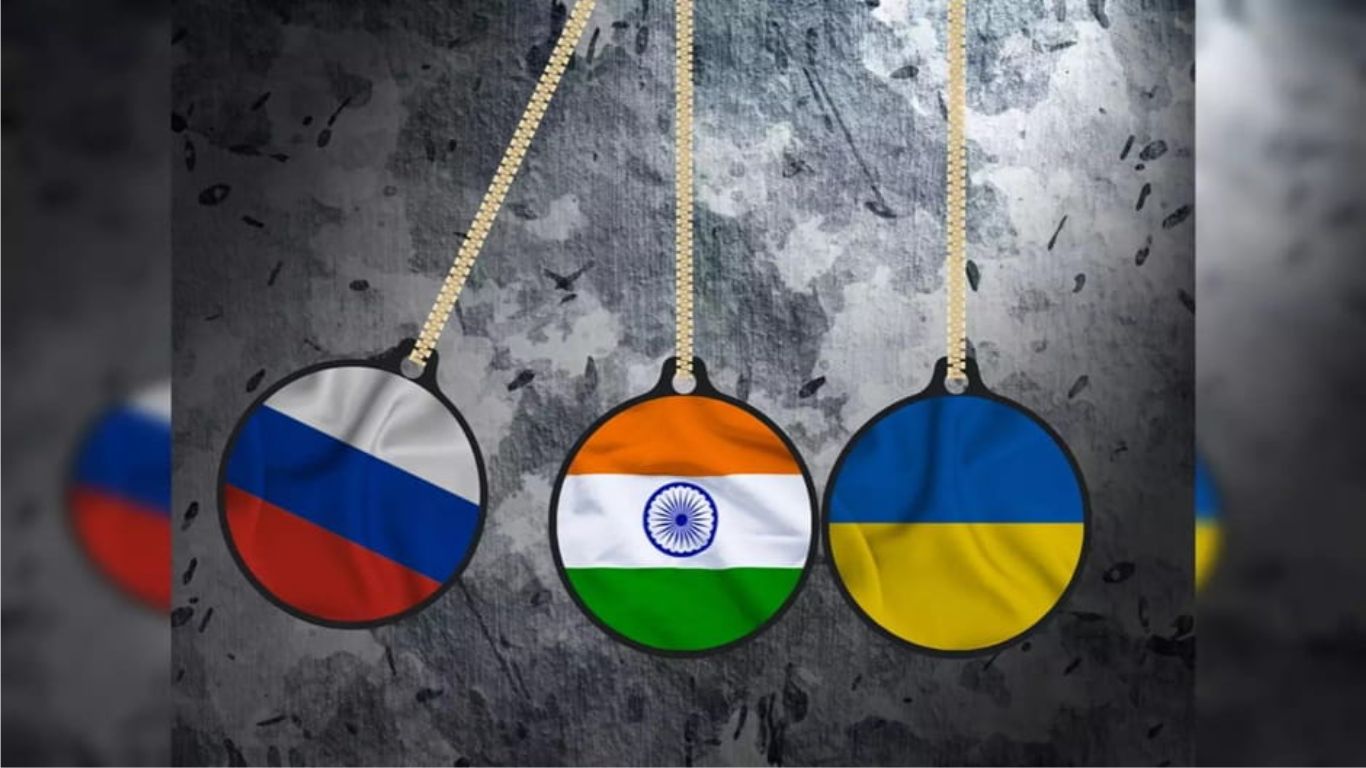
How India Defeated Western Proxy-Making: Unlike Ukraine. Photo: NatStart

Share on FacebookShare on X

The West tried to turn India into an anti-China proxy using NGOs, media, opposition parties, retired officials, academics and economic coercion—the same playbook that captured Ukraine. But India’s civilizational nationalism, strong leadership and strategic autonomy smashed this operation. Unlike Western-manipulated proxies, India refused subordination and emerged as an independent geopolitical pole the West cannot control.

For more than a century, Western powers have built and deployed a massive geopolitical machinery designed to create proxies, buffer states, and frontline warriors to fight their strategic battles. From Latin America to the Middle East, from Africa to Eastern Europe, the United States and Europe have repeatedly used psychological conditioning, money, NGOs, media, international institutions, military aid, and diplomatic coercion to manufacture compliant governments and weaponise them against rival powers.

RelatedPosts

Donald Trump Hits India With Fresh Tariffs

India Refuses to Settle for Less as Landmark US Trade Deal Awaits Final Competitive Guarantee

Modi-Takaichi Summit Signals India-Japan’s Strategic Pivot Towards a Stronger Indo-Pacific Alliance

Load More

In Asia, the West expected India—given its border challenges with China, rising global status, and economic dependencies—to become an ideal instrument in a renewed Cold War. Yet India did something extraordinary: it refused, resisted, and ultimately dismantled the Western attempt to convert it into a geopolitical pawn. This essay examines how the West creates proxies, why India became the exception, and what this reveals about civilizational resilience in global politics.

Also Read: Shyok Tunnel Dedicated in Eastern Ladakh: A New Symbol of India’s Strategic Strength, Will Make It Easy to Handle the Chinese Threat at LAC

I. The Western Architecture of Proxy Creation: A Century of Patterned Interventions

The West’s proxy-making system has operated in a predictable, repeatable pattern across continents. This architecture relies on six primary tools:

1. Psychological Manipulation and Narrative Engineering

Western strategic planners understand that political shift begins with mental occupation, not military force. The pattern includes:

  • shaping elite opinion through Western academia, scholarships, conferences;
  • infiltrating media with “democracy promotion” narratives;
  • producing documentaries, reports, and editorials framing desired political outcomes as moral imperatives;
  • amplifying grievances to weaken nationalist leaders and promote Western-friendly figures.

This psychological ecosystem was central to operations in:

  • Iran (1953)—media campaigns branded Mossadegh “incompetent”;
  • Chile (1973)—Allende was framed as authoritarian through press manipulation;
  • Ukraine (2004 & 2014)—Western-funded media and NGOs mobilised protests and delegitimized elected governments;
  • Serbia (2000)—the OTPOR movement, funded and trained by Western foundations, was used to unseat Milošević.

2. Money, Election Financing, and NGO Penetration

Billions of dollars flow every year from USAID, NED, Open Society Foundations, European political foundations, and missionary-linked NGOs. These shape:

  • opposition ecosystems,
  • civil society mobilization,
  • academic research,
  • activist groups,
  • legal warfare through PILs,
  • environmental activism used to block strategic national projects.

In Ukraine alone, over $5 billion (as acknowledged by U.S. Assistant Secretary Victoria Nuland) was spent on “civil society strengthening” before the 2014 Maidan.

3. Military Aid, Alliances, and Defense Dependency

Military entanglement is a classic method of control:

  • NATO expanded into Eastern Europe, turning Poland, Romania, Baltic states into frontline deployment zones.
  • Pakistan became a U.S. proxy during the Soviet–Afghan war.
  • South Korea and Japan were locked into long-term U.S. military dependence.
  • Ukraine received training, weapons, and doctrinal conditioning, making it increasingly aligned with U.S.-NATO military thinking.

4. Economic Lures and Debt Entrapment

The IMF, World Bank, WTO, and Western credit-rating agencies form a powerful coercive bloc. Their tools include:

  • structural adjustment programs forcing policy alignment;
  • debt conditionalities demanding privatization, deregulation, and Western corporate entry;
  • currency downgrades to destabilize stubborn governments;
  • trade sanctions to punish geopolitical non-alignment.

Latin America, Africa, and Eastern Europe suffered these pressures repeatedly from the 1960s to the 2000s.

5. Corrupting Local Elites

Western intelligence and diplomatic circles historically cultivated:

  • pliant bureaucrats,
  • military officers,
  • judges,
  • journalists,
  • academics,
  • religious leaders,
  • business oligarchs,

often through:

  • overseas fellowships,
  • financial incentives,
  • foreign real estate or bank accounts,
  • influence-peddling networks,
  • and political consulting firms.

Many coups in Africa and South America succeeded because generals and judges received Western backing.

6. Use of International Institutions as Weapons

The West’s dominance in global institutions turns them into tools of coercion:

  • UN resolutions target non-Western adversaries.
  • ICJ judgments routinely favour Western allies.
  • IMF/WB loans enforce policy alignment.
  • WTO disputes weaken non-Western industrial growth.

All these mechanisms are used to pressure governments into becoming submissive partners.

II. How These Tools Worked in Ukraine—But Failed in India

The contrast between Ukraine and India reveals the limits of Western influence.

A. Ukraine: A Textbook Western Proxy

Ukraine’s institutions were penetrated by Western NGOs, media networks, and foreign-funded civil society for nearly 25 years.

  • Western advisors shaped economic policies.
  • NATO trained military structures.
  • Media promoted Euro-Atlantic identity.
  • Opposition movements received Western funding.
  • IMF loans dictated reforms.

By 2022, Ukraine had been transformed into a strategic forward operating buffer—a frontline proxy in the U.S.-Russia confrontation. Russia’s invasion was brutal and unjustifiable, but the environment that led to war was heavily engineered by Western influence.

III. India: The Civilizational State That Broke the Western Playbook

1. A Nationalist Government That Reads Western Intentions Clearly

India’s leadership—political, diplomatic, and strategic—correctly interpreted Western goals:

  • pull India into an anti-China containment architecture,
  • use India as the Asian Ukraine,
  • weaken India’s ties with Russia,
  • and subordinate Indian foreign policy under Western ideological frameworks.

Instead, India:

  • refused anti-China military alliances,
  • refused sanctions on Russia,
  • refused NATO-like structures,
  • refused Western pressure tactics,
  • refused to abandon economic autonomy.

2. India’s Political Maturity and Electoral Stability

Unlike Ukraine’s volatile politics, India has:

  • strong majority governments,
  • stable leadership,
  • a 70-year-old constitutional tradition,
  • a 10,000-year civilizational memory.

This makes psychological penetration extremely difficult.

3. Resistance from Indian Society and Civilizational Identity

India’s society is not culturally engineered by Western frameworks. It has:

  • deeply rooted nationalist sentiment,
  • civilizational pride,
  • skepticism of Western moral superiority,
  • cultural memory of colonialism.

This immunizes the population against Western ideological manipulation.

4. Regulatory Walls Against NGO and Religious Interference

The Indian state correctly identified foreign-funded NGOs as political instruments.
FCRA enforcement cut off thousands of Western influence nodes:

  • political NGOs,
  • environmental disruptors,
  • religious conversion networks,
  • rights lobbies aligned with foreign states.

This closed the very channels that toppled governments elsewhere.

5. Neutralising Western-Aligned Domestic Actors

India faced:

  • opposition parties seeking Western validation,
  • retired bureaucrats acting as NGO advisors,
  • Western-trained academics hostile to Indian nationalism,
  • activist judges,
  • media outlets echoing Western lines.

But none of these groups had the institutional leverage to sabotage national strategy. Public distrust of Western narratives further insulated India.

6. Strategic Autonomy as a National Doctrine

India’s refusal to join military blocs dates back to 1947.
This tradition—non-alignment, multipolarity, self-interest—continues under:

  • Vajpayee,
  • Manmohan Singh,
  • Narendra Modi.

India plays all sides:

  • partners with the U.S.,
  • buys weapons from Russia,
  • manages competition with China,
  • works with the Gulf,
  • integrates with Africa and ASEAN,
  • leads the Global South.

This independence is impossible to penetrate.

IV. Conclusion: India as the Anti-Proxy State

The Western proxy machine—which successfully converted dozens of states into buffers, pawns, and frontline warriors—hit a civilizational wall in India.

Neither NGOs, nor media, nor academic influence, nor economic threats, nor diplomatic coercion worked. India did not fracture, did not submit, and did not become a subcontractor for Western hegemonic calculations.

Instead, India emerged as a sovereign geopolitical pole—courted by all sides, controlled by none.

Where other nations became proxies, India became a civilizational counterweight to the West’s psychological, institutional, and geopolitical manipulation.

Tags: anti-China proxyIndiaInternational InstitutionsNGO PenetrationWestern Proxy-Making
ShareTweetSend
Previous Post

Hindu Victory as Canada Differentiates the Sacred Swastika from the Nazi Hakenkreuz

Next Post

General Zorawar Singh: The Dogra General who conquered Leh and secured northern frontier of Bharat

Related Posts

Left narrative exposed: Aishe Ghosh’s 2021 case, not CJP protest, triggered arrest attempt
Trending

Left narrative exposed: Aishe Ghosh’s 2021 case, not CJP protest, triggered arrest attempt

30 July 2026

The attempted arrest of student leader Aishe Ghosh has become a flashpoint in India’s political discourse, with the Left...

‘Gaumutra Expert’ Remark Sparks Academic Backlash: 215 Scholars Rally Behind IIT Madras Director
Trending

‘Gaumutra Expert’ Remark Sparks Academic Backlash: 215 Scholars Rally Behind IIT Madras Director

30 July 2026

The phrase Gaumutra Expert has ignited a nationwide debate after Congress MP Priyanka Gandhi Vadra's remark during a parliamentary...

RBI Governor Says Rupee May Be Undervalued: What the Remark Means for India’s Economy
Trending

RBI Governor Says Rupee May Be Undervalued: What the Remark Means for India’s Economy

30 July 2026

The RBI Governor has sparked a fresh debate over India's currency outlook after stating that the Indian rupee may...

Load More

Leave a Reply Cancel reply

Your email address will not be published. Required fields are marked *

I agree to the Terms of use and Privacy Policy.
This site is protected by reCAPTCHA and the Google Privacy Policy and Terms of Service apply.

Currently Playing

The Indian Air Force Mission That Broke Pakistan's Backbone at Tiger Hill | Op Safed Sagar

The Indian Air Force Mission That Broke Pakistan's Backbone at Tiger Hill | Op Safed Sagar

00:58:34

Pakistan’s Plebiscite Claim: The Missing Context of the UN Framework

00:03:23

TRUMP'S PHARMA TARIFF SHOCK

00:03:54

A Decade After 709 Crackdown: Remembering China's Human Rights Lawyers

00:04:16

China's War on Human Rights Lawyers: The Legacy of the 709 Crackdown

00:03:57
Facebook Twitter Instagram Youtube
tfipostTfipost.com
Right Wing | News Analysis | Indian Opinion
  • About us
  • Contact Us
  • Careers
  • Brand Partnerships
  • Terms of use
  • Privacy Policy
  • Sitemap

©2026 TFI Media Private Limited

No Result
View All Result
  • Premium
  • Politics
    • Analysis
    • Opinions
    • Trending
  • Economy
    • Business
    • Finance
  • Defense
    • Defence
    • Strategy
    • Weaponry
  • Geopolitics
    • Africa
    • Americas
    • Asia Pacific
    • Europe
    • South Asia
    • West Asia
  • Knowledge
    • Culture
    • History
    • Indology
  • Law
  • Lounge
    • Books
    • Cinema
    • Food
    • Health
    • Sports
    • technology
    • Travel
    • Satire
TFIPOST हिन्दी
TFIPOST Global

©2026 TFI Media Private Limited