






















The US Military Industrial Complex : Effects of Russo-Ukraine and Indo-Pak Wars
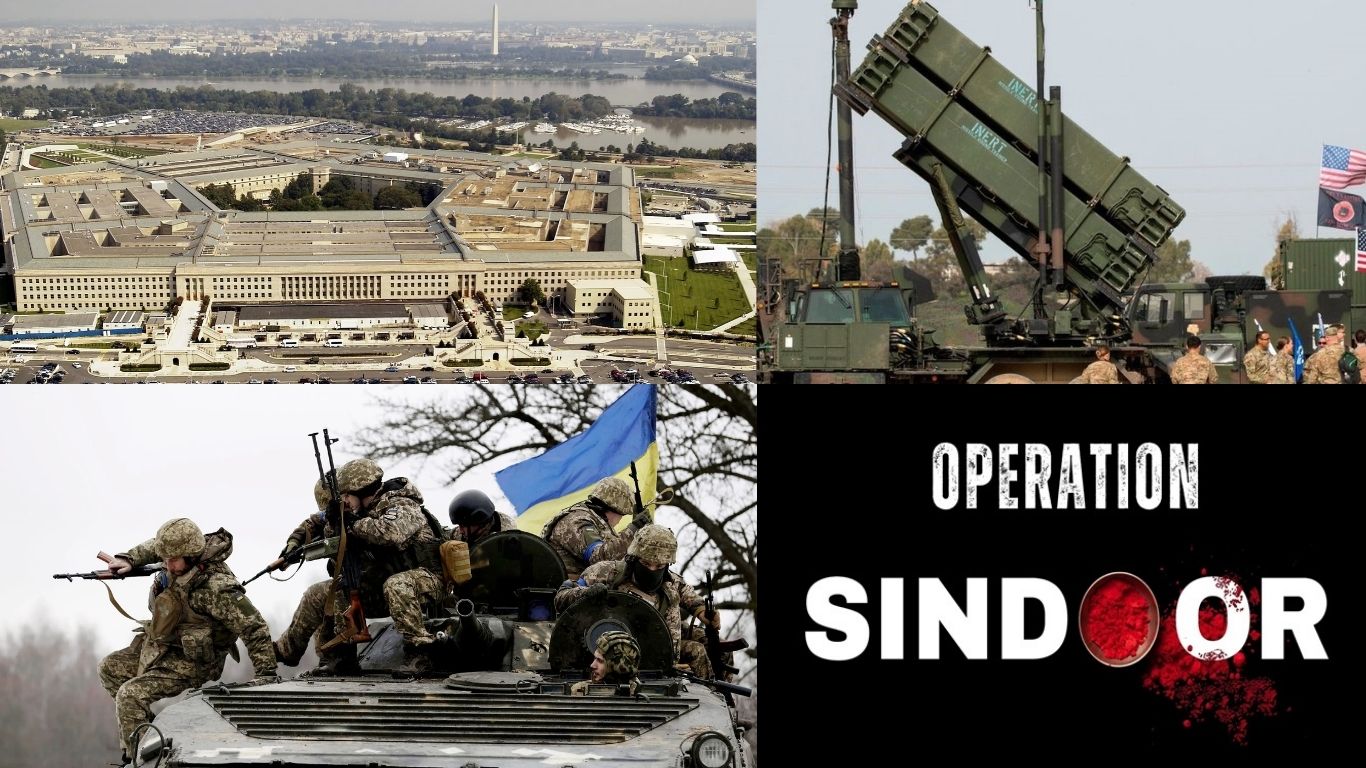
American weapons, long sold through Hollywood-style hype and glossy brochures, have been brutally exposed in real combat. Ukraine and Operation Sindoor tore apart the myth of US military superiority, revealing systems that collapse under electronic warfare, drones, and sustained battle. The result is a global buyer exodus—nations now pivot sharply toward Indian, Russian, and Chinese weapons that actually survive and perform in real war. As a consequence of the decline of the Military-Industrial Complex, there will b a large number of lateral effects on the global scale too, that will impact and reshape the US policies and the world.
The last several years of high-intensity warfare from the Russia–Ukraine conflict to India’s Operation Sindoor—have shattered long-standing assumptions in the global arms market. For decades, American weapons were treated as the uncontested benchmark of military power and technological superiority. But once these systems were thrown into real, unforgiving combat against a capable electronic warfare adversary, the myth began to collapse. The battlefield became the ultimate truth-teller, and what it revealed has severely damaged global confidence in US weapons. Defence officials and analysts now privately admit that the United States is facing its biggest credibility crisis in the arms market since the Vietnam War era.
US GPS-Dependent Precision Weapons Fail Under Real Electronic Warfare
The most devastating blow to American prestige came from Ukraine, where several flagship US weapon systems failed in conditions they were supposedly designed for. The most embarrassing failures came from GPS-dependent precision weapons. Russian electronic warfare proved so overpowering that Excalibur 155 mm guided shells, once advertised as “surgical precision” weapons, lost over 80 percent of their effectiveness due to GPS jamming. HIMARS rockets, which Western media had initially hailed as war-changing, saw their accuracy and impact reduced so sharply that Ukrainian forces had to stop using certain guided variants altogether. GLSDB precision bombs—another highly publicised system also saw their performance collapse after Russian forces adapted their air defence and electronic warfare tactics. These outcomes were not isolated technical glitches but repeated failures, documented across months of combat, becoming an open secret in global defence circles.
High-Value American Platforms Show Structural Weakness
Even more damaging were the operational failures and losses of high-value American platforms. The M1A1 Abrams, costing around $10 million per tank, proved vulnerable to cheap FPV drones costing a few hundred dollars. Several broke down under field conditions, and the capture of an intact Abrams now displayed in Moscow—was a symbolic disaster, showing the world that these supposedly invincible machines were anything but. The situation with the F-16 fighter jets further amplified doubts. Ukraine has already lost four F-16s, despite operating them in restricted roles to avoid the brunt of Russian air defences. This sent shockwaves through more than 25 countries that operate the aircraft. If the F-16 fleet is struggling so early in a contested battlefield, what chance would it have in a full-scale conflict against a peer adversary?
Global Purchasing Decisions Reveal Erosion of Trust
These battlefield realities quickly translated into real-world procurement decisions. The clearest example came in April 2025, when Colombia publicly rejected both US F-16s and French Rafales and instead chose the Swedish Gripen. The reasoning was blunt: Colombia did not want “third-hand” American jets, did not trust the aging platform’s survival prospects, and preferred acquiring brand-new systems that could integrate modern warfare requirements. The $4.25 billion deal was not just a financial loss for the US it signalled a shift in how emerging economies perceive Western equipment. Multiple Southeast Asian and Latin American states are now quietly reviewing their reliance on US platforms, and negotiations for F-16 upgrades in at least nine countries have slowed noticeably.
Russia’s Battlefield Performance Strengthens Its Market Position
While American prestige was collapsing, Russian and Indian weapons were experiencing the opposite effect. Russia’s performance in electronic warfare stunned observers. Despite heavy pressure, Russian EW systems repeatedly neutralised American precision weapons, proving to buyers that Russia had mastered domains of warfare where the US was no longer dominant. Countries with realistic threats—facing Chinese, Iranian, Turkish, or regional EW capabilities—are now paying close attention to Russian systems that have survived years of real combat and continuous adaptation. Unlike the US, Russia has demonstrated that its platforms and doctrine are built for attrition-heavy, drone-saturated, electronically contested environments.
India Emerges as an Unexpected Winner After Operation Sindoor
Perhaps the most surprising winner in this global rebalancing has been India. Operation Sindoor became India’s first major opportunity to showcase its systems in a real combat environment. The results were convincing enough that India’s defence exports have grown nearly 34-fold in eight years, crossing ₹21,000 crore in FY 2024–25. The BrahMos missile, considered one of the fastest and most reliable cruise missiles in the world, has drawn interest from at least 15 countries, including Vietnam, the Philippines, Indonesia, and several Middle Eastern governments. These countries have seen that Indian systems deliver high performance at a fraction of US costs, without political strings, and—crucially—without the vulnerability to GPS jamming that has crippled American weapons. In addition, India’s rapid technological advances, flexible manufacturing, and willingness to transfer technology have made it an appealing alternative to American dominance.
Cost–Performance Reality Driving the New Global Preference
At a broader level, the global market is now shifting toward cost–performance realism. Most countries no longer want expensive systems that collapse under EW attack or require constant political approval from Washington. The shocking image of $10 million Abrams tanks being destroyed by $800 drones has become a symbol of this imbalance. The perception is reinforced by rising Chinese exports, now reaching 44 countries, offering affordable systems without Western sanctions risk. Meanwhile, US platforms continue to be associated with high political conditions, operational restrictions, and unreliable performance under real battlefield stress.
Long-Term Strategic Impact: A Permanent Shift Away from US Dependence
As this shift accelerates, defence ministries around the world are re-evaluating procurement doctrines. Four concerns dominate their thinking: US weapons appear less durable than previously believed; GPS-dependence creates a structural vulnerability in electronic warfare environments; the cost of American systems is becoming unjustifiable; and political strings attached to US exports make buyers uncomfortable in an increasingly multipolar world. By contrast, Russian systems are combat-proven and robust, Indian systems are modern, reliable, and politically neutral, and Chinese systems offer affordability and strategic independence.
Lateral Effect : Policy Shifts will Realign America’s Domestic Priorities
The weakening of the US military-industrial complex (MIC) will have profound consequences for both American foreign policy and internal governance. As global buyers increasingly shift to Russian, Indian, and Chinese systems, the US loses one of its primary tools of geopolitical influence. Under Trump, this decline will likely push Washington to compensate through economic nationalism—expanding tariff wars, reshoring initiatives, and using trade confrontation as the new instrument of global leverage. A fading MIC means fewer defence-driven alliances and more aggressive economic coercion, especially toward Europe and China. Trump’s signature tactics—punitive tariffs, supply-chain decoupling, and “Buy American” mandates—will intensify as military exports can no longer sustain America’s strategic ambitions.
Domestically, however, a weakened MIC could trigger a long-overdue policy correction. Defence contractors—historically among the biggest lobbyists, donors, and influencers in Washington—will lose political weight as profits decline and foreign orders shrink. With less pressure to maintain inflated Pentagon budgets, Congress may be forced to prioritise voter-centric concerns over defence industry interests. Funds traditionally locked into military spending could shift toward rebuilding infrastructure, improving healthcare, strengthening social security, and supporting small industries and workers. The weakening of the lobby also disrupts the Pentagon–contractor revolving door, allowing for more people-focused governance.
In short, as America’s military export dominance erodes, Trump’s foreign policy becomes more tariff-driven and economically aggressive, while domestic policy may slowly tilt toward public welfare—a transition from a war-shaped state to a citizen-shaped one.
Conclusion: A New Arms Market Where Russia and India Hold the Advantage
The outcome is clear: the Ukraine war and Operation Sindoor have permanently damaged the credibility of US weapons, pushing many countries to diversify or completely shift their defence imports. The idea of unquestioned American superiority has evaporated. A new multipolar arms market has emerged—one where Russia and India, not the United States, increasingly command trust, influence, and real-world relevance effectively leading to massive shifts in the USA’s domestic policies.
Corollary : Broader Effects of the Decline of the US Military-Industrial Complex
The sharp decline in global confidence in US weapons — accelerated by failures exposed in Ukraine and contrasted sharply against Russian and Indian battlefield performance—has triggered a much wider set of chain reactions inside the United States. The US military-industrial complex has long been the backbone of America’s global influence, economic strategy, and domestic political power. As its credibility and revenues weaken, a new, less interventionist and more internally focused America begins to emerge. The transformation is not immediate, but the symptoms are already visible, and the timelines for deeper structural shifts are increasingly clear. What follows is a comprehensive assessment of how the weakening MIC affects US foreign policy, CIA operations, economic strategy, domestic governance, and internal political realignments.
1. Fewer Wars and Declining US Foreign Intervention Capacity
For nearly eight decades, the MIC had strong incentives to push Washington toward interventionist policies, regime-change operations, forward deployments, and foreign wars. With its international credibility damaged, that incentive shrinks dramatically.
Likely effects:
- Fewer full-scale US interventions (Iraq/Afghanistan–style wars)
- Reduced appetite for regime change, occupation missions, and stabilisation forces
- Hesitation in engaging in proxy wars without guaranteed technological superiority
- Congressional resistance to funding expensive overseas campaigns
Timeline:
- Early symptoms (already visible): reluctance to escalate in Ukraine, withdrawal from Afghanistan, reduced footprint in the Middle East.
- Full shift: 2026–2030, as arms exports decline and domestic spending pressures grow.
A less interventionist US means a world where regional powers—India, Russia, Turkey, Iran, China—play a more decisive role in settling conflicts once dominated by US influence.
2. Weakening of CIA Capabilities and Covert Operations
CIA operations, colour revolutions, foreign political manipulation, and paramilitary covert actions rely heavily on the financial, logistical, and political weight of the MIC. When the MIC weakens, the CIA’s global reach naturally contracts.
Potential consequences:
- Fewer CIA-backed insurgencies, militias, or proxy armies
- Reduced influence in Latin America, West Asia, and Africa
- Shrinking black budgets tied to defence appropriations
- Lower capacity to destabilise non-US-aligned governments
Timeline:
- Initial contraction: 2025–2027, as defence budgets face restructuring.
- Major downsizing: post-2028, when foreign bases close or shrink.
This creates space for regional intelligence networks—Indian RAW, Russian SVR, Chinese MSS—to operate more freely without constant US interference.
3. Contraction of the Global US Military Footprint
Maintaining roughly 750 foreign military bases costs hundreds of billions annually. With declining weapons revenue and shrinking political appetite, the US will be forced to scale down.
Indicators:
- Gradual base closures in Africa, Middle East, and parts of Europe
- Reduced naval deployments, especially carrier groups
- Weakening NATO dependence on American hardware
- More burden-sharing pushed onto allies
Timeline:
- First wave of closures: 2026–2028
- Significant contraction: by 2030, especially if economic pressures intensify
This reduces the US ability to rapidly project power, accelerating the shift toward a multipolar global security structure.
4. Erosion of Dollar Dominance and Reduced Impact of Sanctions
A significant portion of the US dollar’s global dominance is enforced not by economics alone but by military-backed geopolitical power. As the MIC weakens:
- Sanctions lose their fear factor
- More countries shift trade to yuan, rupee, and ruble
- BRICS+ and SCO trade platforms strengthen
- Nations start bypassing SWIFT and US-controlled banking systems
Timeline:
- Acceleration already underway: 2023–2025, with Russia, China, India trading outside the dollar
- Major impact: 2027–2032, as US military dominance fades further
Reduced dollar hegemony directly affects American living standards since the US relies heavily on printing money backed by global trust in the dollar.
5. Rise of Multipolar Security and Decline of US Diplomatic Coercion
With US weapons no longer viewed as reliable or superior, countries pursue more independent military and diplomatic strategies.
Consequences:
- Stronger regional alliances (BRICS+, SCO, ASEAN Defence frameworks)
- Reduced US leverage in Southeast Asia, Middle East, Africa
- More states buying Indian, Russian, Chinese, Turkish systems
- NATO cohesion weakening as members diversify suppliers
Timeline:
- 2025–2027: Clear shift in Asia-Pacific and West Asia
- 2028 onward: Europe begins reducing reliance on US systems
The world moves away from US-led unipolarity, toward independent, self-sufficient defense networks.
6. Internal US Political Realignment and Collapse of MIC Lobby Dominance
The MIC is one of the largest sources of campaign financing, lobbying power, and political influence. Its weakening will reshape domestic US politics.
Effects:
- Reduced defence-sector influence in Congress
- Decline of the Pentagon–contractor revolving door
- Strengthening of populist, anti-war, and isolationist movements
- More focus on social welfare to appeal to voters
- Rising political conflict in defence-heavy states (Virginia, California, Texas)
Timeline:
- Early signs: 2024–2026
- Major political shifts: 2028 and beyond
7. Shift Toward People-Centric Policies and Domestic Welfare
As defence budgets shrink and MIC influence fades, the US can redirect funds toward social needs.
Expected transitions:
- More spending on healthcare, education, infrastructure
- Funding for domestic manufacturing to replace defence jobs
- Focus on rural development, housing, and drug crisis containment
- Reduced pressure to approve trillion-dollar Pentagon budgets
Timeline:
- Meaningful change: 2026–2030
- Long-term restructuring: 2030 onward
This marks a pivot from a war-driven to a welfare-driven internal policy landscape.
8. Weakening of US Global Media Narrative Control
US soft power often travels through media networks subsidised by military and intelligence interests. A weakened MIC reduces funding for global propaganda.
Impact:
- Decline of US-aligned narrative dominance
- Rise of India, Russia, China, Middle East media ecosystems
- Multipolar information space replacing Western monopoly
Timeline:
- Already visible: 2022–2025
- Full shift: by 2029
The weakening of the US MIC is far more than an industrial decline—it represents a structural transformation of US foreign policy, intelligence capacity, economic strategy, and domestic governance. As American military dominance erodes, the country moves toward isolationism abroad and people-centric policy at home, while the world moves irreversibly toward multipolarity.