





















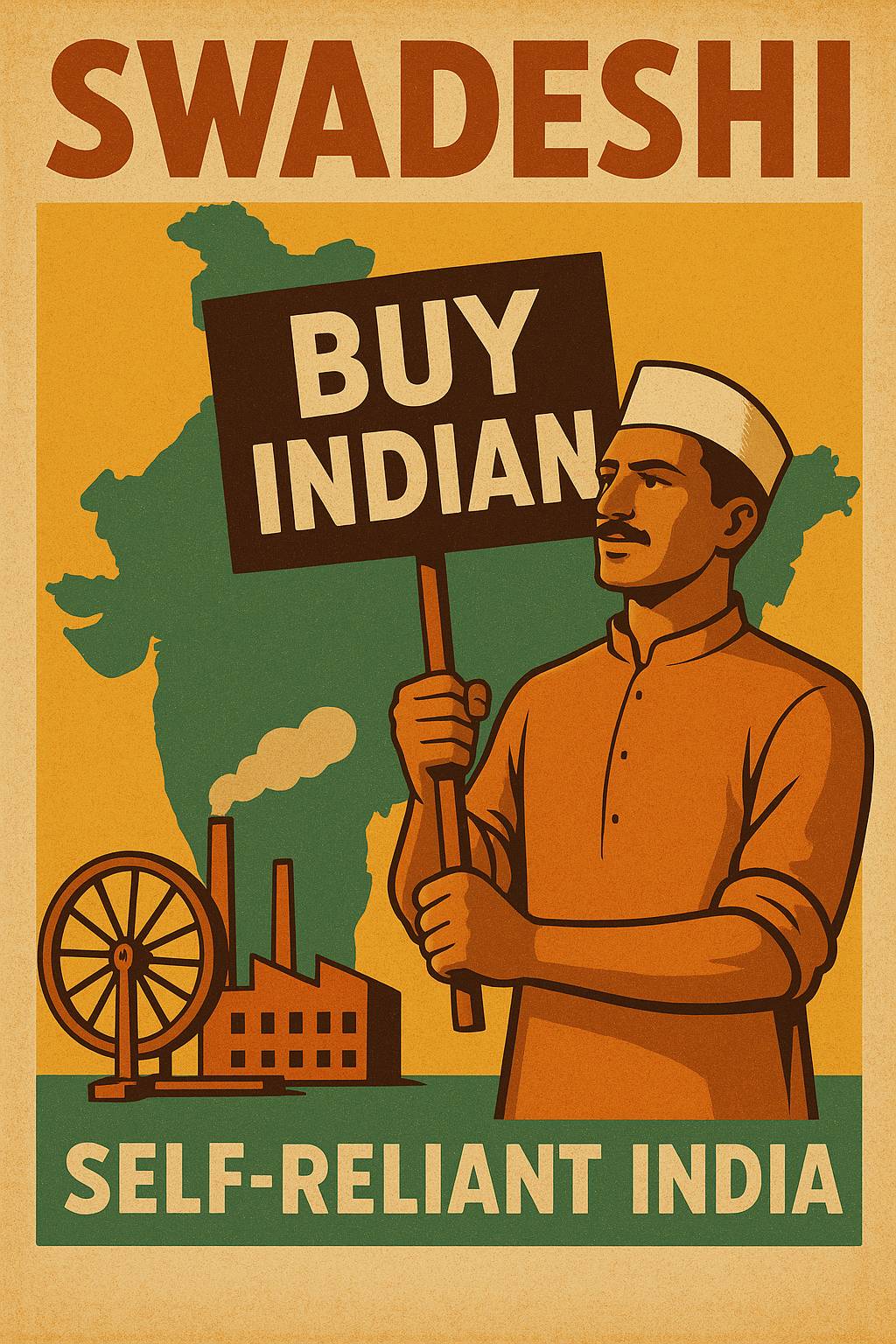
Swadeshi is not merely an economic concept or a business strategy it is the very soul of Indian civilisation. It is that innate cultural ethos which teaches us that true strength does not come from outside, but from our own labor, knowledge, and resources. The identity of India has always rested upon self-reliance, self respect, and self sufficiency.
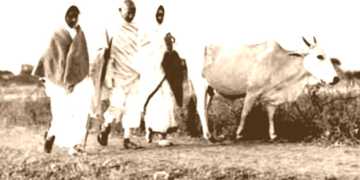
When Swami Vivekananda thundered at the Parliament of Religions in Chicago in 1893, awakening the soul of India, it was the spirit of Swadeshi that resonated in his words. Maharshi Dayanand Saraswati’s call to “Return to the Vedas” was not just about religious reform, but about building national confidence. Lokmanya Bal Gangadhar Tilak clearly said that “political independence and economic Swadeshi are incomplete without each other.” Bharatendu Harishchandra, Gopal Krishna Gokhale, and Veer Savarkar also saw Swadeshi as the vehicle of national renaissance. For Mahatma Gandhi, Swadeshi became a way of life. To him, the spinning wheel was not merely a tool to weave cloth, but a symbol of self reliance and self respect. Under Gandhi’s leadership, the Swadeshi movement shook the very foundations of British rule. By burning foreign cloth and embracing Khadi, Indians proclaimed that without economic freedom, political independence would remain incomplete. Later, Pandit Deendayal Upadhyaya, in his philosophy of Integral Humanism, described Swadeshi as the very soul of Indian economics.
After Independence, India was drawn towards Western models of development. Large industries, dependence on imports, and foreign technologies came to be seen as symbols of progress. Gradually, it became clear that such a model did not suit our civilisational needs. As a result, village industries, local artisans, and traditional knowledge systems were pushed to the margins. Yet the spirit of Swadeshi never completely died out. Time and again, crises reminded us that India could stand firm only on its own strength whether it was the wars of 1965 and 1971, the economic crisis of 1991, or the recent global pandemic. Each time, India turned towards self reliance.
Today, Prime Minister Narendra Modi has given Swadeshi a renewed and modern expression. Atmanirbhar Bharat is not merely a slogan it is a national strategy. “Make in India,” “Vocal for Local,” Startup India, the digital revolution through UPI, and self reliance in defence production all these initiatives are steps towards transforming Swadeshi into a mass movement.Modi has consistently emphasised that India must not remain a consumer alone, but must emerge as a global manufacturer. From mobile phones to metro trains, drones to defence equipment, and now even space missions India is rapidly building its own capacities. Our startups have already made India the third-largest startup ecosystem in the world.
In a world where markets are volatile, trade wars intensify, and supply chains are breaking down, India stands at a unique advantage. Our 1.44 billion citizens are not only the largest workforce but also the largest consumer base. If this vast population embraces local industries, agriculture, handicrafts, digital services, and Swadeshi products, nothing can stop India from becoming an economic superpower. The revival of Khadi, the global recognition of millets (Shree Anna), the spread of Ayurveda and Yoga worldwide, the growth of local industries, and the fusion of agriculture with modern technology all are strengthening the spirit of India.
Swadeshi is not confined to economics ,it is a declaration of national identity. Every time we choose a Swadeshi product, prioritise local services, or support our artisans and entrepreneurs, we are not merely engaging in transactions we are proclaiming that India will shape its destiny with its own hands.This responsibility is not the government’s alone. Each citizen, by becoming truly “Vocal for Local”, participates in the process of nation building.
Swadeshi once sparked the fire of our freedom movement. Today, that same Swadeshi must become the fuel for a self-reliant and developed India. If India is to emerge as a fully developed nation by 2047, we must hold firmly to our roots.Let us, the 1.44 billion citizens of India, take a collective pledge not just to speak of Swadeshi, but to live it. This alone will safeguard our nation’s dignity, sovereignty, and future.
Written By – Chandrashekhar Patel
Executive Council Member
Rani Durgavati University, Jabalpur, Madhya Pradesh