










TFIPOST हिन्दी
TFIPOST Global
Tfipost.com
Tfipost.com
No Result
View All Result
  • Premium
  • Politics
    • All
    • Analysis
    • Opinions
    • Trending
    From trust to tragedy: a case that exposed how familiarity inside a home turned into its biggest security breach.

    Two States, One Crime Trail: Ex-Domestic Help Arrested in IRS Officer’s Daughter Rape and Murder Case

    Shankar Ghosh casts his ballot as Bengal’s battle for power enters a crucial phase.

    BJP Signals Bengal Breakthrough as Shankar Ghosh Predicts End of TMC Rule

    The Gorakhpur address blended cultural provocation with a direct challenge to the opposition.

    ‘Do People Who Eat Cows Drink Pig’s Milk?’ Yogi Blasts Opposition Over Women’s Quota

    Where fear once shaped the vote, long queues now suggest a different democratic moment.

    Security Grid, Long Queues: How West Bengal’s Poll Day Is Being Redrawn

    • Analysis
    • Opinions
    • Trending
  • Economy
    • All
    • Business
    • Economy1
    • Finance
    Blood in the Meadows: How the Pahalgam Terror Attack Exposed Calculated Targeting of Civilians in Kashmir

    Blood in the Meadows: How the Pahalgam Terror Attack Exposed Calculated Targeting of Civilians in Kashmir

    Indian economy is stronger than the ranking.

    IMF Ranking Jolt Misread: India’s Economy Strong, Sixth Spot Just a Statistical Glitch

    The Fuel Miracle: How India Frozen Petrol Prices Amidst a Global Inferno

    The Fuel Miracle: How India Frozen Petrol Prices Amidst a Global Inferno

    From Sapta Sindhu to Statecraft: Inaugural ‘Sindhu Samvad’ Links Indus Past with Policy Present

    From Sapta Sindhu to Statecraft: Inaugural ‘Sindhu Samvad’ Links Indus Past with Policy Present

    • Business
    • Finance
  • Defense
    • All
    • Defence
    • Strategy
    • Weaponry
    The scars of Pahalgam endure, even as the nation moves forward

    Pahalgam Anniversary: Modi Signals Firm National Stand as India Reasserts Anti-Terror Resolve

    Precision Strike: Indian Army Approves Procurement of Indigenous MPATGM to Modernise Infantry Wings

    Precision Strike: Indian Army Approves Procurement of Indigenous MPATGM to Modernise Infantry Wings

    Amit Shah on sensitive Gorkha land issue

    Shah Assures Constitutional Path for Gorkha Issue, Intensifies Attack on TMC at Bengal Rally

    Historic Leap for ‘Aatmanirbhar Bharat’ as First India-Made BrahMos Missiles from Lucknow Join Indian Army

    Historic Leap for ‘Aatmanirbhar Bharat’ as First India-Made BrahMos Missiles from Lucknow Join Indian Army

    • Defence
    • Strategy
    • Weaponry
  • Geopolitics
    • All
    • Africa
    • Americas
    • Asia Pacific
    • Europe
    • South Asia
    • West Asia
    Rajnath Singh addresses the possibility of India contributing to peace efforts in West Asia amid ongoing geopolitical tensions.

    Could India Become a Diplomatic Space in the West Asia Crisis? Rajnath Singh Hints at Possibility

    The Fuel Miracle: How India Frozen Petrol Prices Amidst a Global Inferno

    The Fuel Miracle: How India Frozen Petrol Prices Amidst a Global Inferno

    Port Under Siege: Gwadar Faces Threats from All Sides

    Port Under Siege: Gwadar Faces Threats from All Sides

    Modi, Lee Jae Myung hold talks to reset India–South Korea economic ties

    India–South Korea Agree to $50 Billion Trade Target in Major Economic Upgrade

    • Africa
    • Americas
    • Asia Pacific
    • Europe
    • South Asia
    • West Asia
  • Knowledge
    • All
    • Culture
    • Education
    • History
    • Indology
    Kedarnath Dham Portals Open for Devotees After 181 Days Amid Vedic Chants, Traditional Rituals

    Kedarnath Dham Portals Open for Devotees After 181 Days Amid Vedic Chants, Traditional Rituals

    Sardar Patel and Amit Shah

    Sardar Patel’s 1947 Blueprint on Minority Quotas Resurfaces as Reservation Debate Returns to Centre Stage

    The 1973 Constitution and ‘Bhutto’ the Man Who Made It: What Pakistan Owes and What It Destroyed

    The 1973 Constitution and ‘Bhutto’ the Man Who Made It: What Pakistan Owes and What It Destroyed

    Future-Ready Learning: CBSE Launches AI Curriculum for Classes 3–8 to Boost Digital Readiness in Young Learners

    Future-Ready Learning: CBSE Launches AI Curriculum for Classes 3–8 to Boost Digital Readiness in Young Learners

    • Culture
    • History
    • Indology
  • Law
  • Lounge
    • All
    • Books
    • Cinema
    • Entertainment
    • Food
    • Games
    • Health
    • Lifestyle
    • Satire
    • Sports
    • technology
    • Travel
    AI in healthcare

    AI is Recasting Healthcare, Reshaping How Medicine is Practised

    Delhi-Dehradun Expressway

    Modi Launches ₹12,000-Crore Delhi–Dehradun Expressway, Cutting Journey Time to Around 2.5 Hours

    Asha Bhosle last rites

    India Bids Farewell to Asha Bhosle: State Honours Mark Final Journey of a Musical Legend

    Can Gym-Goers Start Calisthenics Easily? Here’s What to Know

    Can Gym-Goers Start Calisthenics Easily? Here’s What to Know

    • Books
    • Cinema
    • Food
    • Health
    • Sports
    • technology
    • Travel
    • Satire
Tfipost.com
  • Premium
  • Politics
    • All
    • Analysis
    • Opinions
    • Trending
    From trust to tragedy: a case that exposed how familiarity inside a home turned into its biggest security breach.

    Two States, One Crime Trail: Ex-Domestic Help Arrested in IRS Officer’s Daughter Rape and Murder Case

    Shankar Ghosh casts his ballot as Bengal’s battle for power enters a crucial phase.

    BJP Signals Bengal Breakthrough as Shankar Ghosh Predicts End of TMC Rule

    The Gorakhpur address blended cultural provocation with a direct challenge to the opposition.

    ‘Do People Who Eat Cows Drink Pig’s Milk?’ Yogi Blasts Opposition Over Women’s Quota

    Where fear once shaped the vote, long queues now suggest a different democratic moment.

    Security Grid, Long Queues: How West Bengal’s Poll Day Is Being Redrawn

    • Analysis
    • Opinions
    • Trending
  • Economy
    • All
    • Business
    • Economy1
    • Finance
    Blood in the Meadows: How the Pahalgam Terror Attack Exposed Calculated Targeting of Civilians in Kashmir

    Blood in the Meadows: How the Pahalgam Terror Attack Exposed Calculated Targeting of Civilians in Kashmir

    Indian economy is stronger than the ranking.

    IMF Ranking Jolt Misread: India’s Economy Strong, Sixth Spot Just a Statistical Glitch

    The Fuel Miracle: How India Frozen Petrol Prices Amidst a Global Inferno

    The Fuel Miracle: How India Frozen Petrol Prices Amidst a Global Inferno

    From Sapta Sindhu to Statecraft: Inaugural ‘Sindhu Samvad’ Links Indus Past with Policy Present

    From Sapta Sindhu to Statecraft: Inaugural ‘Sindhu Samvad’ Links Indus Past with Policy Present

    • Business
    • Finance
  • Defense
    • All
    • Defence
    • Strategy
    • Weaponry
    The scars of Pahalgam endure, even as the nation moves forward

    Pahalgam Anniversary: Modi Signals Firm National Stand as India Reasserts Anti-Terror Resolve

    Precision Strike: Indian Army Approves Procurement of Indigenous MPATGM to Modernise Infantry Wings

    Precision Strike: Indian Army Approves Procurement of Indigenous MPATGM to Modernise Infantry Wings

    Amit Shah on sensitive Gorkha land issue

    Shah Assures Constitutional Path for Gorkha Issue, Intensifies Attack on TMC at Bengal Rally

    Historic Leap for ‘Aatmanirbhar Bharat’ as First India-Made BrahMos Missiles from Lucknow Join Indian Army

    Historic Leap for ‘Aatmanirbhar Bharat’ as First India-Made BrahMos Missiles from Lucknow Join Indian Army

    • Defence
    • Strategy
    • Weaponry
  • Geopolitics
    • All
    • Africa
    • Americas
    • Asia Pacific
    • Europe
    • South Asia
    • West Asia
    Rajnath Singh addresses the possibility of India contributing to peace efforts in West Asia amid ongoing geopolitical tensions.

    Could India Become a Diplomatic Space in the West Asia Crisis? Rajnath Singh Hints at Possibility

    The Fuel Miracle: How India Frozen Petrol Prices Amidst a Global Inferno

    The Fuel Miracle: How India Frozen Petrol Prices Amidst a Global Inferno

    Port Under Siege: Gwadar Faces Threats from All Sides

    Port Under Siege: Gwadar Faces Threats from All Sides

    Modi, Lee Jae Myung hold talks to reset India–South Korea economic ties

    India–South Korea Agree to $50 Billion Trade Target in Major Economic Upgrade

    • Africa
    • Americas
    • Asia Pacific
    • Europe
    • South Asia
    • West Asia
  • Knowledge
    • All
    • Culture
    • Education
    • History
    • Indology
    Kedarnath Dham Portals Open for Devotees After 181 Days Amid Vedic Chants, Traditional Rituals

    Kedarnath Dham Portals Open for Devotees After 181 Days Amid Vedic Chants, Traditional Rituals

    Sardar Patel and Amit Shah

    Sardar Patel’s 1947 Blueprint on Minority Quotas Resurfaces as Reservation Debate Returns to Centre Stage

    The 1973 Constitution and ‘Bhutto’ the Man Who Made It: What Pakistan Owes and What It Destroyed

    The 1973 Constitution and ‘Bhutto’ the Man Who Made It: What Pakistan Owes and What It Destroyed

    Future-Ready Learning: CBSE Launches AI Curriculum for Classes 3–8 to Boost Digital Readiness in Young Learners

    Future-Ready Learning: CBSE Launches AI Curriculum for Classes 3–8 to Boost Digital Readiness in Young Learners

    • Culture
    • History
    • Indology
  • Law
  • Lounge
    • All
    • Books
    • Cinema
    • Entertainment
    • Food
    • Games
    • Health
    • Lifestyle
    • Satire
    • Sports
    • technology
    • Travel
    AI in healthcare

    AI is Recasting Healthcare, Reshaping How Medicine is Practised

    Delhi-Dehradun Expressway

    Modi Launches ₹12,000-Crore Delhi–Dehradun Expressway, Cutting Journey Time to Around 2.5 Hours

    Asha Bhosle last rites

    India Bids Farewell to Asha Bhosle: State Honours Mark Final Journey of a Musical Legend

    Can Gym-Goers Start Calisthenics Easily? Here’s What to Know

    Can Gym-Goers Start Calisthenics Easily? Here’s What to Know

    • Books
    • Cinema
    • Food
    • Health
    • Sports
    • technology
    • Travel
    • Satire
No Result
View All Result
Tfipost.com
Tfipost.com
No Result
View All Result
  • Premium
  • Politics
  • Economy
  • Defense
  • Geopolitics
  • Knowledge
  • Law
  • Lounge

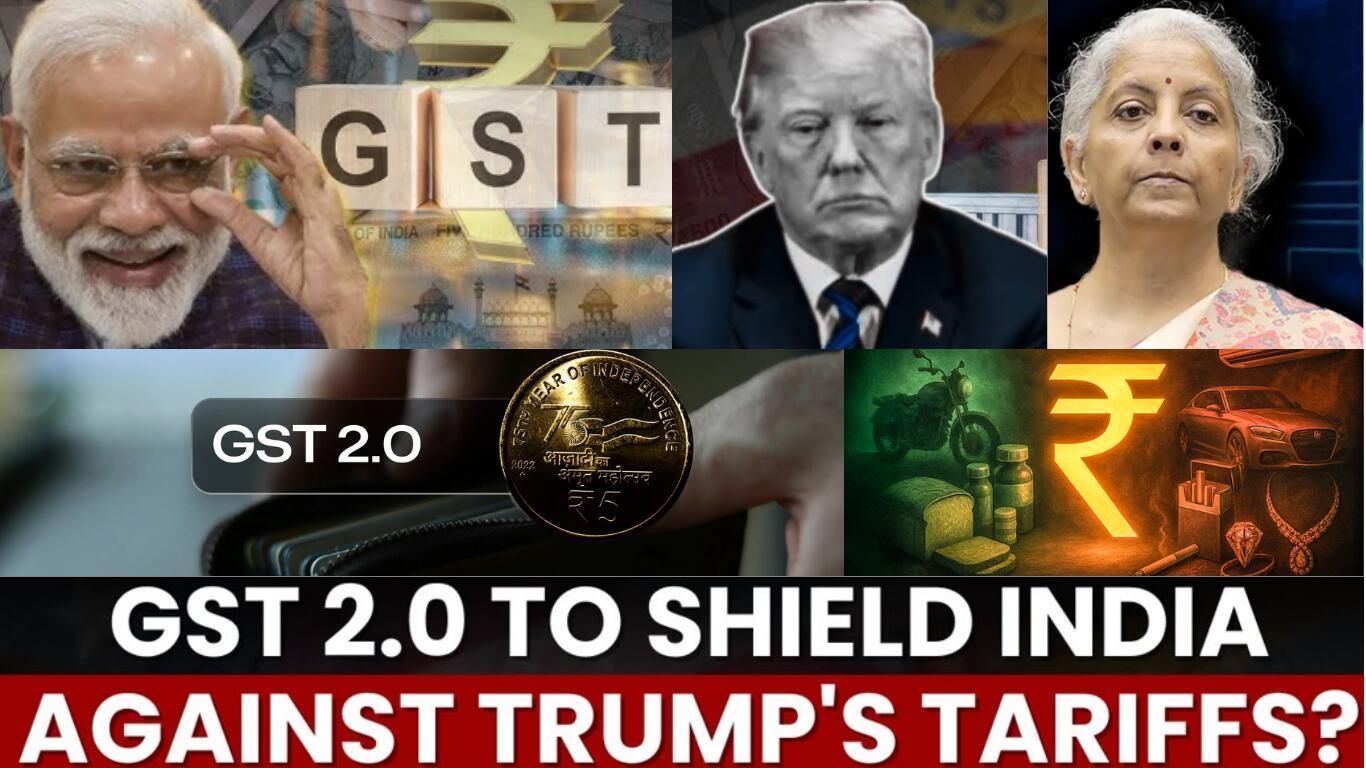
GST 2.0: Big Tax Overhaul to Boost Domestic Consumption, Here Is How It Will Reshape India’s Economy Amid Global Trade Tensions!

The Goods and Services Tax (GST) Council has taken a historic step by unveiling what many are calling “GST 2.0” a complete overhaul of India’s consumption tax system

Harishanker R P by Harishanker R P
4 September 2025
in Analysis, Economy, Trending
GST 2.0 unveiled: Two-slab structure cleared, new rates will come into effect September 22

GST 2.0 unveiled: Two-slab structure cleared, new rates will come into effect September 22

Share on FacebookShare on X

The Goods and Services Tax (GST) Council has taken a historic step by unveiling what many are calling “GST 2.0” a complete overhaul of India’s consumption tax system since its launch in 2017. In a bold and decisive move, the government has slashed duties across household essentials, medicines, small cars, insurance, and appliances, bringing relief to millions of middle-class families. Union Finance Minister Nirmala Sitharaman’s announcement aims at simplifying the tax structure into two broad slabs of 5% and 18%, GST 2.0 aims to cut prices, drive consumption, and fuel growth. Coming just in time for the festive season, these reforms promise to turn India into a consumption-driven powerhouse, countering global headwinds like US tariffs.

A Simpler, Smarter GST Structure

The GST Council’s decision marks the first significant revamp of the tax since its rollout in July 2017. Earlier, India had four GST slabs 5%, 12%, 18% and 28%. This complexity often confused businesses, created compliance issues, and burdened consumers with uneven rates. GST 2.0 has now streamlined the structure into two main slabs: 5% for essentials and mass-consumption goods, and 18% for most other items.

RelatedPosts

‘Do People Who Eat Cows Drink Pig’s Milk?’ Yogi Blasts Opposition Over Women’s Quota

Asansol Rally Signals Momentum for BJP Bengal as Modi Declares Change an “Indelible Reality”

Govt Denies Third-Party Role in PM–Trump Call, Rejects Elon Musk’s Participation Claim

Load More

A special 40% rate has been reserved for a handful of luxury and sin goods such as high-end cars, aerated beverages, tobacco, and gambling services. By limiting the higher tax burden to luxury consumption, the government has effectively protected the ordinary Indian household while ensuring revenue from elite spending.

For the average family, this restructuring is nothing short of transformative. Prices of food staples, household products, and medicines will decline. The savings at the consumer level are expected to translate into a consumption spike, encouraging greater domestic spending one of the strongest pillars of India’s growth story.

Why Domestic Consumption Matters More Than Ever

For decades, domestic household spending has powered India’s economy, making it resilient even in times of global downturn. In the wake of US tariffs on Indian exports, boosting domestic demand has become even more crucial. GST 2.0, paired with recent income tax cuts, empowers the middle class with more disposable income and lower prices.

This twin benefit higher savings and reduced costs creates a virtuous cycle: greater demand encourages companies to expand capacity, which in turn creates jobs, raises incomes, and fuels more demand. This cycle is exactly what the government is betting on to offset external shocks.

The reforms come at a perfect time. With the festive season approaching, lower GST rates are expected to put money directly into people’s pockets, spurring spending on everything from household appliances to vehicles. Such domestic demand is the backbone of a self-reliant India, reducing reliance on uncertain global markets.

What Gets Cheaper: Relief for Families Across Sectors

GST 2.0 has touched almost every sector of the economy, delivering relief where it matters most at the household level.

Food & Beverages

  • Everyday items like chapatis, paneer, pizza bread, and khakra are now exempt from GST.

  • Milk, butter, ghee, dry fruits, confectionery, and ice creams move to the 5% slab from much higher rates.

  • Plant-based drinks, soy milk, jams, biscuits, and cereals are also significantly cheaper.

Household Items & Appliances

  • Shampoo, toothpaste, toothbrushes, talcum powder, and soaps will attract only 5% GST instead of 18%.

  • Kitchenware, utensils, bicycles, combs, and even bamboo furniture become more affordable.

  • Air-conditioners, dishwashers, and TVs drop to 18% from the earlier steep 28%.

Stationery & Education Needs

  • Notebooks, pencils, crayons, sharpeners, and maps will now be completely exempt from GST.

  • This move reduces education-related expenses for millions of families.

Healthcare & Medicines

  • Life-saving drugs, oxygen, diagnostic kits, and corrective spectacles see rates slashed to 5% or nil.

  • Insurance policies, including life and health insurance, will attract zero tax a major relief for middle-class households and senior citizens.

Housing & Infrastructure

  • Cement, one of the most crucial inputs for construction, will now be taxed at 18% instead of 28%. This will reduce building costs for housing, roads, and infrastructure projects.

  • The multiplier effect of cheaper cement is enormous: it lowers costs for builders, creates jobs in construction, and generates indirect employment in allied industries like transport and materials.

Automobiles & Transportation

  • Two-wheelers up to 350 cc and small hybrid cars will be taxed at 18%, down from 28%.

  • Electric vehicles will continue to enjoy the 5% slab, signaling the government’s commitment to green mobility.

  • Auto components also see a big cut to 18%, reducing repair and maintenance costs for consumers.

This wide-ranging sweep shows how GST 2.0 isn’t just about rates it’s about making life easier and cheaper for every Indian household.

The Inflation Cooling Effect

One of the most powerful impacts of GST 2.0 will be on inflation. When manufacturers pay less tax, they pass the benefit to consumers in the form of lower prices. As prices fall across hundreds of goods, India’s Consumer Price Index (CPI) the main measure of inflation will show a downward trend.

This has significant implications for monetary policy. If inflation cools, the Reserve Bank of India (RBI) will have space to cut interest rates further. Lower repo rates translate into cheaper EMIs on home loans, car loans, and consumer durable loans, which means buying big-ticket items becomes easier for families.

Thus, GST 2.0 not only reduces prices but also indirectly strengthens consumer sentiment through the financial system, reinforcing the consumption-led growth cycle.

Income Tax + GST: A Double Booster for the Middle Class

Alongside GST reforms, the government had already delivered major income tax relief. Anyone with a taxable income of up to ₹12 lakh will not have to pay any tax under the new regime, thanks to the standard deduction. Effectively, families earning up to ₹12.75 lakh annually are now tax-free.

When combined with lower GST rates, this dual reform is revolutionary. Middle-class households will now enjoy higher take-home pay and lower costs of goods and services. This is not just economic reform it is direct empowerment of India’s middle class, which forms the backbone of the economy.

The government has, in effect, placed its strongest bet on the salaried class to drive the next phase of growth. By putting more money into their hands, India’s consumption engine is expected to roar louder than ever.

What Gets Costlier: Luxury and Sin Goods

While GST 2.0 offers sweeping relief for essential and middle-class consumption, it takes a tougher stance on luxury and sin goods.

  • Aerated and caffeinated drinks, including popular soft drinks, will now attract 40% GST.

  • High-end vehicles above 350 cc, yachts, racing cars, and private aircraft will face the new 40% rate.

  • Gambling, casinos, horse racing, online gaming, and IPL tickets fall under the same slab.

  • Tobacco products, once compensation cess obligations are cleared, will also move to the 40% rate.

This approach achieves two goals: protecting government revenue while ensuring that mass-consumption goods remain affordable. It also aligns with public health and social goals by discouraging excessive consumption of harmful products.

Building a Self-Reliant Consumption Economy

The government’s larger vision through GST 2.0 is clear create a self-reliant consumption-driven economy. For too long, India’s growth story has been tied to exports and external markets, which expose the country to global risks. By empowering the domestic consumer, India insulates itself from such shocks and builds an economy powered by its own people.

Lower GST rates on cement and agricultural machinery will also boost rural development and farming, ensuring the benefits of GST 2.0 are not just urban but also rural. Affordable tractors, fertilizers, and irrigation equipment will help farmers reduce costs and improve productivity.

Together, these measures paint a picture of inclusive growth, where both rural and urban India gain from a more rational tax system.

GST 2.0 as a Defining Reform for India’s Future

GST 2.0 is not just a tax reform it is a growth doctrine. By simplifying slabs, reducing rates on essentials, and targeting luxury consumption, the government has crafted a policy that balances affordability, revenue, and growth.

The timing is equally important. With global headwinds like US tariffs weighing on exports, GST 2.0 turns the focus inward, betting on the resilience and strength of India’s domestic market. Paired with income tax reliefs, this reform hands more purchasing power to the middle class, fueling a virtuous cycle of spending, investment, and job creation.

As the new rates kick in on September 22, the message is clear: India is entering a new era of simplified taxation and consumption-driven growth. GST 2.0 is the government’s boldest move yet to ensure that every Indian family feels the impact of reform, not just in policy but in their everyday lives in the food they eat, the homes they build, the medicines they buy, and the dreams they pursue.


Tags: Diwali GiftDomestic Consumptionfinance ministerGST 2.0India-US Trade WarNarendra ModiNDA GovernmentNext-Gen GST ReformsNirmala SitharamanSelf reliantTax cutUS Tariffs
ShareTweetSend
Previous Post

Amid Trump’s Tariff Hike, India and US Kick Off Yudh Abhyas 2025 in Alaska

Next Post

Turning Global Challenges into Domestic Opportunities : Cabinet Approves Rs 1,500 Crore Incentive Scheme to Promote Recycling of Critical Minerals

Related Posts

From trust to tragedy: a case that exposed how familiarity inside a home turned into its biggest security breach.
Crime

Two States, One Crime Trail: Ex-Domestic Help Arrested in IRS Officer’s Daughter Rape and Murder Case

23 April 2026

A former domestic worker who raped and murdered the 22-year-old daughter of an Indian Revenue Service (IRS) officer in...

Shankar Ghosh casts his ballot as Bengal’s battle for power enters a crucial phase.
Politics

BJP Signals Bengal Breakthrough as Shankar Ghosh Predicts End of TMC Rule

23 April 2026

Siliguri BJP candidate and sitting MLA Shankar Ghosh declared that the BJP was on course to form the government...

Where fear once shaped the vote, long queues now suggest a different democratic moment.
Politics

Security Grid, Long Queues: How West Bengal’s Poll Day Is Being Redrawn

23 April 2026

West Bengal’s polling day is unfolding under a tight security umbrella. Voters are turning out in visible numbers across...

Load More

Leave a Reply Cancel reply

Your email address will not be published. Required fields are marked *

I agree to the Terms of use and Privacy Policy.
This site is protected by reCAPTCHA and the Google Privacy Policy and Terms of Service apply.

Currently Playing

From Runways to Warships: India’s Firefighting Warrior Built for Bases & Battles| IAF | VayuShakti

From Runways to Warships: India’s Firefighting Warrior Built for Bases & Battles| IAF | VayuShakti

00:05:40

Ethanol, EVs and Solar- How India’s Energy Game Is Changing | Modi on LPG & Crude Oil | war| Hormuz

00:05:21

Truth of IRIS Dena: 8 Days That Changed Narrative | War zone Reality, Not an Indian Navy Exercise

00:08:02

300 Million Euros for SCALP: Strategic Necessity or Costly Dependency on France300

00:04:06

Tejas Mk1A: 19th aircraft coupled but Not Delivered: What Is Holding Back the IAF Induction?

00:07:21
Facebook Twitter Instagram Youtube
tfipostTfipost.com
Right Wing | News Analysis | Indian Opinion
  • About us
  • Contact Us
  • Careers
  • Brand Partnerships
  • Terms of use
  • Privacy Policy
  • Sitemap

©2026 TFI Media Private Limited

No Result
View All Result
  • Premium
  • Politics
    • Analysis
    • Opinions
    • Trending
  • Economy
    • Business
    • Finance
  • Defense
    • Defence
    • Strategy
    • Weaponry
  • Geopolitics
    • Africa
    • Americas
    • Asia Pacific
    • Europe
    • South Asia
    • West Asia
  • Knowledge
    • Culture
    • History
    • Indology
  • Law
  • Lounge
    • Books
    • Cinema
    • Food
    • Health
    • Sports
    • technology
    • Travel
    • Satire
TFIPOST हिन्दी
TFIPOST Global

©2026 TFI Media Private Limited