














TFIPOST हिन्दी
TFIPOST Global
Tfipost.com
Tfipost.com
No Result
View All Result
  • Premium
  • Politics
    • All
    • Analysis
    • Opinions
    • Trending
    Controversy turns costly as backlash erodes market value and dents investor confidence

    Boycott Storm Engulfs Shark Tank Judges: Tilak Row and Namaz Controversy Trigger Public Outrage and Market Losses

    Rajnath SIngh proposes Durga Squad for women safety in Bengal ahead of polls.

    “Durga Squad” Pitch Puts Women’s Safety at Centre Stage as Rajnath Singh Escalates Bengal Poll Battle

    Role Reality Check: TCS Statement Sparks Fresh Debate Over Nida Khan Claims

    Role Reality Check: TCS Statement Sparks Fresh Debate Over Nida Khan Claims

    NASA Earth Reveals a Planet of Contrasts: Why Some Regions Glow Brighter While Others Fade Into Darkness

    NASA Earth Reveals a Planet of Contrasts: Why Some Regions Glow Brighter While Others Fade Into Darkness

    • Analysis
    • Opinions
    • Trending
  • Economy
    • All
    • Business
    • Economy1
    • Finance
    The beginner’s guide to tracking silver rates in India

    The beginner’s guide to tracking silver rates in India

    “I Was Honking”: BJP MLA’s Son Rams Thar Into 5 in MP’s Shivpuri; Victims Allege Threats Following Crash

    “I Was Honking”: BJP MLA’s Son Rams Thar Into 5 in MP’s Shivpuri; Victims Allege Threats Following Crash

    "MoUs on paper, no industry on ground” - Devendra Fadnavis sharpens attack on Trinamool Congress Ahead of Polls

    West Bengal’s Economic Graph Under Fire: Fadnavis Targets TMC, Flags Debt Crisis Ahead of 2026 Polls

    The Great Himalayan Handshake: India’s Most Critical Strategic Corridor Zoji La Tunnel Nears Historic Breakthrough

    The Great Himalayan Handshake: India’s Most Critical Strategic Corridor Zoji La Tunnel Nears Historic Breakthrough

    • Business
    • Finance
  • Defense
    • All
    • Defence
    • Strategy
    • Weaponry
    Precision Strike: Indian Army Approves Procurement of Indigenous MPATGM to Modernise Infantry Wings

    Precision Strike: Indian Army Approves Procurement of Indigenous MPATGM to Modernise Infantry Wings

    Amit Shah on sensitive Gorkha land issue

    Shah Assures Constitutional Path for Gorkha Issue, Intensifies Attack on TMC at Bengal Rally

    Historic Leap for ‘Aatmanirbhar Bharat’ as First India-Made BrahMos Missiles from Lucknow Join Indian Army

    Historic Leap for ‘Aatmanirbhar Bharat’ as First India-Made BrahMos Missiles from Lucknow Join Indian Army

    Historic Leap for ‘Aatmanirbhar Bharat’ as First India-Made BrahMos Missiles from Lucknow Join Indian Army

    The Lion of Ladakh: Kargil War Hero Colonel Sonam Wangchuk and the Brotherhood of Soldiers

    • Defence
    • Strategy
    • Weaponry
  • Geopolitics
    • All
    • Africa
    • Americas
    • Asia Pacific
    • Europe
    • South Asia
    • West Asia
    Modi, Lee Jae Myung hold talks to reset India–South Korea economic ties

    India–South Korea Agree to $50 Billion Trade Target in Major Economic Upgrade

    Doval in Riyadh, reinforcing India’s strategic stakes in West Asia

    Ajit Doval Engages Saudi Leadership in Riyadh as India Strengthens Strategic and Energy Ties

    Umerov In India Talks Dipomacy

    Ukraine Reaches Out to India as War Diplomacy Deepens in New Delhi

    Diplomatic Relations: Xi Jinping and Donald Trump

    Hormuz Reopens, Xi ‘Very Happy’ as Trump Signals Major Shift in US–China Equation

    • Africa
    • Americas
    • Asia Pacific
    • Europe
    • South Asia
    • West Asia
  • Knowledge
    • All
    • Culture
    • Education
    • History
    • Indology
    Sardar Patel and Amit Shah

    Sardar Patel’s 1947 Blueprint on Minority Quotas Resurfaces as Reservation Debate Returns to Centre Stage

    The 1973 Constitution and ‘Bhutto’ the Man Who Made It: What Pakistan Owes and What It Destroyed

    The 1973 Constitution and ‘Bhutto’ the Man Who Made It: What Pakistan Owes and What It Destroyed

    Future-Ready Learning: CBSE Launches AI Curriculum for Classes 3–8 to Boost Digital Readiness in Young Learners

    Future-Ready Learning: CBSE Launches AI Curriculum for Classes 3–8 to Boost Digital Readiness in Young Learners

    From Devotion to Divine Strength: Celebrating Lord Hanuman, Eternal Symbol of Courage, Humility

    From Devotion to Divine Strength: Celebrating Lord Hanuman, Eternal Symbol of Courage, Humility

    • Culture
    • History
    • Indology
  • Law
  • Lounge
    • All
    • Books
    • Cinema
    • Entertainment
    • Food
    • Games
    • Health
    • Lifestyle
    • Satire
    • Sports
    • technology
    • Travel
    AI in healthcare

    AI is Recasting Healthcare, Reshaping How Medicine is Practised

    Delhi-Dehradun Expressway

    Modi Launches ₹12,000-Crore Delhi–Dehradun Expressway, Cutting Journey Time to Around 2.5 Hours

    Asha Bhosle last rites

    India Bids Farewell to Asha Bhosle: State Honours Mark Final Journey of a Musical Legend

    Can Gym-Goers Start Calisthenics Easily? Here’s What to Know

    Can Gym-Goers Start Calisthenics Easily? Here’s What to Know

    • Books
    • Cinema
    • Food
    • Health
    • Sports
    • technology
    • Travel
    • Satire
Tfipost.com
  • Premium
  • Politics
    • All
    • Analysis
    • Opinions
    • Trending
    Controversy turns costly as backlash erodes market value and dents investor confidence

    Boycott Storm Engulfs Shark Tank Judges: Tilak Row and Namaz Controversy Trigger Public Outrage and Market Losses

    Rajnath SIngh proposes Durga Squad for women safety in Bengal ahead of polls.

    “Durga Squad” Pitch Puts Women’s Safety at Centre Stage as Rajnath Singh Escalates Bengal Poll Battle

    Role Reality Check: TCS Statement Sparks Fresh Debate Over Nida Khan Claims

    Role Reality Check: TCS Statement Sparks Fresh Debate Over Nida Khan Claims

    NASA Earth Reveals a Planet of Contrasts: Why Some Regions Glow Brighter While Others Fade Into Darkness

    NASA Earth Reveals a Planet of Contrasts: Why Some Regions Glow Brighter While Others Fade Into Darkness

    • Analysis
    • Opinions
    • Trending
  • Economy
    • All
    • Business
    • Economy1
    • Finance
    The beginner’s guide to tracking silver rates in India

    The beginner’s guide to tracking silver rates in India

    “I Was Honking”: BJP MLA’s Son Rams Thar Into 5 in MP’s Shivpuri; Victims Allege Threats Following Crash

    “I Was Honking”: BJP MLA’s Son Rams Thar Into 5 in MP’s Shivpuri; Victims Allege Threats Following Crash

    "MoUs on paper, no industry on ground” - Devendra Fadnavis sharpens attack on Trinamool Congress Ahead of Polls

    West Bengal’s Economic Graph Under Fire: Fadnavis Targets TMC, Flags Debt Crisis Ahead of 2026 Polls

    The Great Himalayan Handshake: India’s Most Critical Strategic Corridor Zoji La Tunnel Nears Historic Breakthrough

    The Great Himalayan Handshake: India’s Most Critical Strategic Corridor Zoji La Tunnel Nears Historic Breakthrough

    • Business
    • Finance
  • Defense
    • All
    • Defence
    • Strategy
    • Weaponry
    Precision Strike: Indian Army Approves Procurement of Indigenous MPATGM to Modernise Infantry Wings

    Precision Strike: Indian Army Approves Procurement of Indigenous MPATGM to Modernise Infantry Wings

    Amit Shah on sensitive Gorkha land issue

    Shah Assures Constitutional Path for Gorkha Issue, Intensifies Attack on TMC at Bengal Rally

    Historic Leap for ‘Aatmanirbhar Bharat’ as First India-Made BrahMos Missiles from Lucknow Join Indian Army

    Historic Leap for ‘Aatmanirbhar Bharat’ as First India-Made BrahMos Missiles from Lucknow Join Indian Army

    Historic Leap for ‘Aatmanirbhar Bharat’ as First India-Made BrahMos Missiles from Lucknow Join Indian Army

    The Lion of Ladakh: Kargil War Hero Colonel Sonam Wangchuk and the Brotherhood of Soldiers

    • Defence
    • Strategy
    • Weaponry
  • Geopolitics
    • All
    • Africa
    • Americas
    • Asia Pacific
    • Europe
    • South Asia
    • West Asia
    Modi, Lee Jae Myung hold talks to reset India–South Korea economic ties

    India–South Korea Agree to $50 Billion Trade Target in Major Economic Upgrade

    Doval in Riyadh, reinforcing India’s strategic stakes in West Asia

    Ajit Doval Engages Saudi Leadership in Riyadh as India Strengthens Strategic and Energy Ties

    Umerov In India Talks Dipomacy

    Ukraine Reaches Out to India as War Diplomacy Deepens in New Delhi

    Diplomatic Relations: Xi Jinping and Donald Trump

    Hormuz Reopens, Xi ‘Very Happy’ as Trump Signals Major Shift in US–China Equation

    • Africa
    • Americas
    • Asia Pacific
    • Europe
    • South Asia
    • West Asia
  • Knowledge
    • All
    • Culture
    • Education
    • History
    • Indology
    Sardar Patel and Amit Shah

    Sardar Patel’s 1947 Blueprint on Minority Quotas Resurfaces as Reservation Debate Returns to Centre Stage

    The 1973 Constitution and ‘Bhutto’ the Man Who Made It: What Pakistan Owes and What It Destroyed

    The 1973 Constitution and ‘Bhutto’ the Man Who Made It: What Pakistan Owes and What It Destroyed

    Future-Ready Learning: CBSE Launches AI Curriculum for Classes 3–8 to Boost Digital Readiness in Young Learners

    Future-Ready Learning: CBSE Launches AI Curriculum for Classes 3–8 to Boost Digital Readiness in Young Learners

    From Devotion to Divine Strength: Celebrating Lord Hanuman, Eternal Symbol of Courage, Humility

    From Devotion to Divine Strength: Celebrating Lord Hanuman, Eternal Symbol of Courage, Humility

    • Culture
    • History
    • Indology
  • Law
  • Lounge
    • All
    • Books
    • Cinema
    • Entertainment
    • Food
    • Games
    • Health
    • Lifestyle
    • Satire
    • Sports
    • technology
    • Travel
    AI in healthcare

    AI is Recasting Healthcare, Reshaping How Medicine is Practised

    Delhi-Dehradun Expressway

    Modi Launches ₹12,000-Crore Delhi–Dehradun Expressway, Cutting Journey Time to Around 2.5 Hours

    Asha Bhosle last rites

    India Bids Farewell to Asha Bhosle: State Honours Mark Final Journey of a Musical Legend

    Can Gym-Goers Start Calisthenics Easily? Here’s What to Know

    Can Gym-Goers Start Calisthenics Easily? Here’s What to Know

    • Books
    • Cinema
    • Food
    • Health
    • Sports
    • technology
    • Travel
    • Satire
No Result
View All Result
Tfipost.com
Tfipost.com
No Result
View All Result
  • Premium
  • Politics
  • Economy
  • Defense
  • Geopolitics
  • Knowledge
  • Law
  • Lounge

The ‘Just’ Rule of British? Those Living With A Slave Mentality Should Now Remove The Colonial Blindfold From Their Own eyes

A section of historians and intellectuals still considers the British to be the builders of modern India and their rule to be just, but in reality, the examples of British atrocities and injustice found in India are rarely seen anywhere else in the world

The Thoughtful Indian by The Thoughtful Indian
14 August 2025
in Opinions
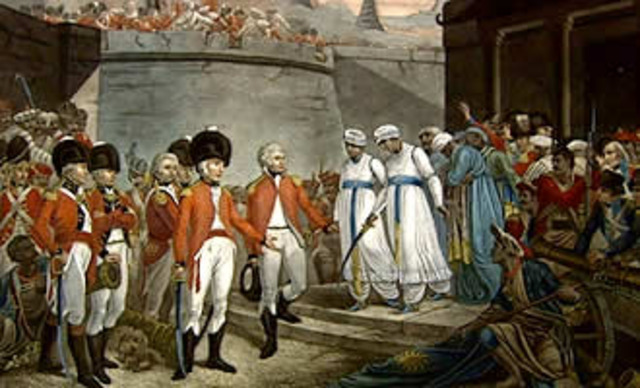
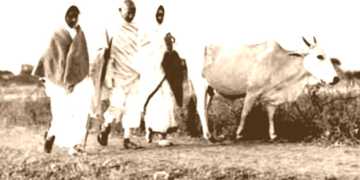
The 'Just' Rule of British?

The 'Just' Rule of British?

Share on FacebookShare on X

In known history, among those who came to India as invaders, the Shakas, Huns, Kushans, Muslims, Dutch, Portuguese, French, English, etc. are prominent. Among these, for the longest time, various Muslim dynasties ruled over different parts of India. These people were extremely cruel and gruesome. The tortures they inflicted upon Indians are hard to find examples of anywhere else. The ones who cut off the head of the Vijayanagara emperor Raja Ram Raya and placed it at the mouth of a flowing drain — these were the same people. The ones who gouged out the eyes of Chhatrapati Sambhaji Maharaj, flayed his skin, and killed him barbarically — these were the same people. The ones who sawed Bhai Mati Das Ji into two, and beheaded Guru Tegh Bahadur Ji — these were the same people. The ones who had the sons of Guru Gobind Singh Ji bricked alive into a wall — these were the same people.

Therefore, when the English came as traders and became rulers, they seemed better to Indians in comparison to the Muslim rulers. In the beginning, the English rulers did not display the same cruelty and brutality as the Muslim rulers, so the perception of “The English are good” began to grow. On top of that, the education system the English created kept glorifying the English. The notion was built that “The English are improving a backward country like India, and doing good for it.” Unfortunately, even after independence, the curriculum that was created continued to strengthen this perception..!

RelatedPosts

The Netaji-Savarkar Summit: A Spark for India’s Path to Sovereignty

Rajendra Nath Lahiri in the Kakori Conspiracy: A Revolutionary Who Defied the British Gallows

Remembering Batukeshwar Dutt: The Forgotten Comrade of Bhagat Singh, Flame In The Freedom Struggle

Load More

But — did the English actually come with the supreme goal of improving India? Were the English true believers in democracy, worshippers of justice?

Were the English just, peace-loving, civilized, cultured? Such things have been written about them. They have been said many times.

But what is the truth?

What was the real face of the English?

Completely opposite to this fabricated image of the English.

In 1757, after victory in the Battle of Plassey, the English got an open road to rule Bengal. After the 1765 Battle of Buxar, the East India Company officially began collecting revenue from Bengal.

Within the next four years, a terrible famine struck Bengal. About one-third of Bengal’s population at the time, that is, around one crore (ten million) Indians, died in this famine. These deaths were due to starvation and to the excesses committed by the English. The English made no attempt to save the people or rescue them from the famine. On the contrary, they collected revenue from the poor farmers who had survived, with great harshness.

There is an American writer named Mike Davis. Along with being a writer, he is also a political activist. Davis, who has received numerous awards, is a professor in the Creative Writing department at the University of California. One of his well-known books is “Late Victorian Holocausts: El Niño Famines and the Making of the Third World.” Published in 2001, in this book he has also written about the famines in India. He writes, “In the 120 years between 1770 and 1890, there were 31 major famines in India. And before that, in a full two thousand years, the number of major famines was only 17!

That is, the English not only failed to make arrangements to fight famines, but on the contrary, they destroyed the traditional Indian systems, which were nature-based and worked to prevent famines from occurring. On top of that, even in such adverse conditions, the cruelty of the English was evident. Revenue was collected from the poor, from farmers, with extreme ruthlessness.

According to Mike Davis, in the three years from 1876 to 1878, during the famine in the Bombay and Madras Presidencies, 60 to 80 lakh (6 to 8 million) Indians died. A few years later, in 1896–1897, another famine occurred in the Bombay and Madras Presidencies, as well as in the United Provinces and Bengal. In that famine, more than five million people died. The same story was repeated in the famine of 1899–1900 in the Bombay Presidency and CP–Berar.

In short, the cycle of famines continued under British rule. But the English never changed their brutal policies. The control of governance passed from the East India Company directly into the hands of Queen Victoria. But instead of decreasing, the cruelty of the English increased.

By the time 1943 arrived, the scenario had changed considerably. The Second World War was at its peak. More than three million Indian soldiers were fighting shoulder to shoulder with the English in various parts of the world against their enemies. This was the year of the Bengal famine. It was a dreadful famine. People were desperate for every single grain. In those days, Winston Churchill was the Prime Minister of England. He sent whatever grain was left in Bengal, ship after ship, to Yugoslavia — for his soldiers! In this famine, more than three million Indians died. On this, Churchill said, “I hate Indians. They are a beastly people with a beastly religion. The famine was their own fault because they breed like rabbits.”

A historian named William Torrens, who was a member of Parliament in England, wrote a book called “Empire in Asia.” In this book, after the death of the Nawab of Awadh, Shuja-ud-Daula (that is, after 1775), the English looted his begums (widows) with extreme savagery — this is described (pages 126–128). The amusing fact is that Shuja-ud-Daula had entrusted the care of his begums to the English with great trust. Therefore, to give this loot/robbery a constitutional cover, the English involved the then Chief Justice, Sir Elijah Impey. This judge came from Calcutta and, together with the King of Kashi, Chet Singh, accused the widowed begums of Faizabad of waging war against the English. Then the English surrounded the palaces of Faizabad. The begums were told, “You are prisoners. Hand over all your jewelry, gold, silver, and jewels to us.” When the begums refused, their servants were tortured to death and starved. They were given terrible punishments. The begums were not even allowed to drink water.

After seeing their servants die cruel deaths, the begums of Faizabad handed over their entire treasure — stored in chest after chest — to the English. At that time, its value was estimated to be more than one crore twenty lakh rupees. Across India, there are hundreds of such incidents where there is direct evidence of the loot and robbery committed by the English. All these events tear apart the image of the English as being just.

An officer of the East India Company, Henry Thomas Colebrooke, wrote a letter to his father in England on 28 July 1788. Sunderlal Ji, who wrote the book “Bharat Mein Angrezi Raj” (“British Rule in India”), has quoted this letter in his book. Colebrooke writes, “Mr. Hastings (Governor-General Warren Hastings) has filled this country with such collectors and judges whose sole aim is to make money. As soon as these vultures were let loose upon the land, they began looting the people of India — sometimes on some pretext, sometimes without any pretext at all.”

Later, Colebrooke, who became a scholar of Sanskrit, further writes, “The diplomacy of Warren Hastings and his shameless treachery did not affect only kings and big people. Seizing the estates of landlords, looting begums, exterminating the Rohillas… all this might perhaps be forgotten. But the atrocities he committed in Gorakhpur will forever remain a stain on the name of the British race.”

Sunderlal Ji has written in detail about this subject in his book “Bharat Mein Angrezi Raj.”

About these atrocities in Gorakhpur, in the book “History of British India,” historian James Mill writes that in 1778, Warren Hastings removed one of his officers, Colonel Hannay, from the Company’s service and sent him to the Nawab of Awadh. By pressuring the Nawab, the civil and military administration of the Bahraich and Gorakhpur districts was placed under Colonel Hannay. James Mill further writes, “This whole area was very prosperous under the Nawab’s rule. But due to Colonel Hannay’s atrocities, within three years this whole area became deserted.”

This incident has been described in detail by Syed Najmul Raza Rizvi in his book “Gorakhapur Civil Rebellion in Persian Historiography.” In protest against this Colonel Hannay, a large public movement arose in Gorakhpur, which the English called a “rebellion,” and later crushed with great brutality.

The revenue collected from Gorakhpur district, in those days, was six to eight lakh rupees annually. But in 1780, Colonel Hannay, with great cruelty, collected 14,56,088 rupees from this district. That is, almost double the annual revenue! One can imagine with what barbarity he must have tortured the poor farmers to extract this amount. Landlords used to get 20% of the revenue to maintain order in their areas. This came to about one and a half lakh rupees. But Colonel Hannay, after collecting fourteen and a half lakhs, gave the landlords only fifty thousand rupees!

This entire revenue did not go into the East India Company’s account. These officers divided and consumed it among themselves.

The Gorakhpur incident was not an exception. The same picture was seen throughout the country. First in Bengal, and after 1818, in the entire country, British administration was more or less like this. There was no hearing of this injustice anywhere. And if petitions for justice were repeatedly filed, then a mockery of a hearing would be held, and all the English officers would be declared innocent.

(To be continued)
— Prashant Pole
(From the book Vinashparva)
#Vinashparva

Prashant Pole is a renowned national thinker, philosopher, and writer. By profession an engineer (I.T. and Telecom) and a management consultant, Prashant Pol has published several books on India’s freedom struggle, ancient civilization, and culture.
Tags: BritishColonialismEnglishMughalsrule in India
ShareTweetSend
Previous Post

SP MLA Pooja Pal Thank CM Yogi for Burying Her Husband’s Killer Atiq Ahmed

Next Post

‘Pahalgam Attack Can’t Be Ignored’: Supreme Court’s Strong Words on J&K Statehood

Related Posts

Redefining Terms of Truly Mutual Trade Deal: Sovereignty and Strategy in the US–Bangladesh Framework
Economy

Redefining Terms of Truly Mutual Trade Deal: Sovereignty and Strategy in the US–Bangladesh Framework

15 April 2026

The debate around Bangladesh’s emerging trade framework with the United States cannot be reduced to a binary choice of...

Race Against Iran Deadline: Was Pakistan’s Ceasefire Bid Driven by the White House?
Geopolitics

Race Against Iran Deadline: Was Pakistan’s Ceasefire Bid Driven by the White House?

9 April 2026

Pakistan attempted to position itself as a peacemaker in the escalating tensions involving Iran, but the reality behind the...

Self-Proclaimed Nobel Peacemaker Trump Forced Into China Mediated Ceasefire as Iran Clash Exposes His Grand Claimsे
Geopolitics

Self-Proclaimed Nobel Peacemaker Trump Forced Into China Mediated Ceasefire as Iran Clash Exposes His Grand Claimsे

8 April 2026

It began like a high-stakes card game where the dealer suddenly realized he no longer controlled the table. Donald...

Load More

Leave a Reply Cancel reply

Your email address will not be published. Required fields are marked *

I agree to the Terms of use and Privacy Policy.
This site is protected by reCAPTCHA and the Google Privacy Policy and Terms of Service apply.

Currently Playing

From Runways to Warships: India’s Firefighting Warrior Built for Bases & Battles| IAF | VayuShakti

From Runways to Warships: India’s Firefighting Warrior Built for Bases & Battles| IAF | VayuShakti

00:05:40

Ethanol, EVs and Solar- How India’s Energy Game Is Changing | Modi on LPG & Crude Oil | war| Hormuz

00:05:21

Truth of IRIS Dena: 8 Days That Changed Narrative | War zone Reality, Not an Indian Navy Exercise

00:08:02

300 Million Euros for SCALP: Strategic Necessity or Costly Dependency on France300

00:04:06

Tejas Mk1A: 19th aircraft coupled but Not Delivered: What Is Holding Back the IAF Induction?

00:07:21
Facebook Twitter Instagram Youtube
tfipostTfipost.com
Right Wing | News Analysis | Indian Opinion
  • About us
  • Contact Us
  • Careers
  • Brand Partnerships
  • Terms of use
  • Privacy Policy
  • Sitemap

©2026 TFI Media Private Limited

No Result
View All Result
  • Premium
  • Politics
    • Analysis
    • Opinions
    • Trending
  • Economy
    • Business
    • Finance
  • Defense
    • Defence
    • Strategy
    • Weaponry
  • Geopolitics
    • Africa
    • Americas
    • Asia Pacific
    • Europe
    • South Asia
    • West Asia
  • Knowledge
    • Culture
    • History
    • Indology
  • Law
  • Lounge
    • Books
    • Cinema
    • Food
    • Health
    • Sports
    • technology
    • Travel
    • Satire
TFIPOST हिन्दी
TFIPOST Global

©2026 TFI Media Private Limited