






TFIPOST हिन्दी
TFIPOST Global
Tfipost.com
Tfipost.com
No Result
View All Result
  • Premium
  • Politics
    • All
    • Analysis
    • Opinions
    • Trending
    Despite Nehru’s objection, Rajendra Prasad became India’s first President !

    How Nehru Resisted Dr. Rajendra Prasad—from Presidency to Somnath visit  and Beyond

    Nehru’s Erasure of RC Majumdar Stands as a Stark Warning about Power over History

    Nehru’s Erasure of RC Majumdar Stands as a Stark Warning about Power over History

    India Cannot Be Broken and Peace in Bangladesh Cannot Be Built Upon Delusion

    India Cannot Be Broken and Peace in Bangladesh Cannot Be Built Upon Delusion

    Maniben’s Diary: Nehru Proposed Babri Masjid Funding, Patel Said No

    Maniben’s Diary: Nehru Proposed Babri Masjid Funding, Patel Said No

    • Analysis
    • Opinions
    • Trending
  • Economy
    • All
    • Business
    • Economy1
    • Finance
    From Paper-Mandates to eNACH Registration: How Digital Mandates Are Changing Cash Flow

    From Paper-Mandates to eNACH Registration: How Digital Mandates Are Changing Cash Flow

    What is the financial management cycle?

    What is the financial management cycle?

    Smart Investment Planning: Calculating Mutual Fund SIP Growth Easily

    Smart Investment Planning: Calculating Mutual Fund SIP Growth Easily

    Convert ETH to USD Using Price Statistics for Better Trading Decisions

    Convert ETH to USD Using Price Statistics for Better Trading Decisions

    • Business
    • Finance
  • Defense
    • All
    • Defence
    • Strategy
    • Weaponry
    Veterans Deserve More Than Promises: The System Must Match the Soldier’s Sacrifice

    Veterans Deserve More Than Promises: The System Must Match the Soldier’s Sacrifice

    How Ukraine Uses Psychological and Information Warfare to ‘Win,’ and What India Can Learn From This Strategy

    How Ukraine ‘Wins’ the Psychological and Informatiaon War Despite Destruction — Lessons India Cannot Afford to Ignore

    Pakistan’s ‘ship-launched ASBM’ claim doesn’t withstand technical or industrial scrutiny

    Pakistan’s ‘ship-launched ASBM’ claim doesn’t withstand technical or industrial scrutinys

    Borders Can Change: Why Rajnath Singh’s Sindh Remark is India’s New Message to Pakistan

    Borders Can Change: Why Rajnath Singh’s Sindh Remark is India’s New Message to Pakistan

    • Defence
    • Strategy
    • Weaponry
  • Geopolitics
    • All
    • Africa
    • Americas
    • Asia Pacific
    • Europe
    • South Asia
    • West Asia
    Europe’s Slow Descent Into Weakness

    Europe: A Continent Happily Committing a Long-Drawn Suicide

    End of NATO? US Secretary of State Marco Rubio May Skip Foreign Ministers’ Meet in Brussels for First Time in Two Decades

    End of NATO? US Secretary of State Marco Rubio May Skip Foreign Ministers’ Meet in Brussels for First Time in Two Decades

    ‘Best Fighter In the World’ Dmitry Peskov Pitches For Sukhoi-57 Fighter Jet Ahead of Putin’s Visit to India

    ‘Best Fighter In the World’ Dmitry Peskov Pitches For Sukhoi-57 Fighter Jet Ahead of Putin’s Visit to India

    ‘We Are Ready to Go As Far As India Is’: Ahead of Putin Visit, Kremlin Says India-Russia Partnership Has No Limits

    ‘We Are Ready to Go As Far As India Is’: Ahead of Putin Visit, Kremlin Says India-Russia Partnership Has No Limits

    • Africa
    • Americas
    • Asia Pacific
    • Europe
    • South Asia
    • West Asia
  • Knowledge
    • All
    • Culture
    • Education
    • History
    • Indology
    Despite Nehru’s objection, Rajendra Prasad became India’s first President !

    How Nehru Resisted Dr. Rajendra Prasad—from Presidency to Somnath visit  and Beyond

    Talom Rukbo Initiated the Donyi–Polo Movement: Bringing Tribal Youth Back to Their Roots

    Talom Rukbo: The Forgotten Hero Who Shielded Arunachal’s Tribal Communities from Religious Conversion

    How Guru Tegh Bahadur The Ninth Sikh Guru Became a Martyr for Religious Freedom

    How Guru Tegh Bahadur The Ninth Sikh Guru Became a Martyr for Religious Freedom

    21 November 1962: Looking Back at the Indo-China war and How it Redefined the Border Equation

    21 November 1962: Looking Back at the Indo-China war and How it Redefined the Border Equation

    • Culture
    • History
    • Indology
  • Law
  • Lounge
    • All
    • Books
    • Cinema
    • Entertainment
    • Food
    • Games
    • Health
    • Lifestyle
    • Satire
    • Sports
    • technology
    • Travel
    감정을 가진 로봇의 시대가 오고 있다

    감정을 가진 로봇의 시대가 오고 있다

    Is AISaver Face Swap the Best Tool for Face Swap Video Online Free in 2025?

    Is AISaver Face Swap the Best Tool for Face Swap Video Online Free in 2025?

    Why Fat Analysis Matters in the Food and Feed  Industry?

    Why Fat Analysis Matters in the Food and Feed Industry?

    Heart Surgery Hospital in Delhi: What to Expect During Your Procedure

    Heart Surgery Hospital in Delhi: What to Expect During Your Procedure

    • Books
    • Cinema
    • Food
    • Health
    • Sports
    • technology
    • Travel
    • Satire
Tfipost.com
  • Premium
  • Politics
    • All
    • Analysis
    • Opinions
    • Trending
    Despite Nehru’s objection, Rajendra Prasad became India’s first President !

    How Nehru Resisted Dr. Rajendra Prasad—from Presidency to Somnath visit  and Beyond

    Nehru’s Erasure of RC Majumdar Stands as a Stark Warning about Power over History

    Nehru’s Erasure of RC Majumdar Stands as a Stark Warning about Power over History

    India Cannot Be Broken and Peace in Bangladesh Cannot Be Built Upon Delusion

    India Cannot Be Broken and Peace in Bangladesh Cannot Be Built Upon Delusion

    Maniben’s Diary: Nehru Proposed Babri Masjid Funding, Patel Said No

    Maniben’s Diary: Nehru Proposed Babri Masjid Funding, Patel Said No

    • Analysis
    • Opinions
    • Trending
  • Economy
    • All
    • Business
    • Economy1
    • Finance
    From Paper-Mandates to eNACH Registration: How Digital Mandates Are Changing Cash Flow

    From Paper-Mandates to eNACH Registration: How Digital Mandates Are Changing Cash Flow

    What is the financial management cycle?

    What is the financial management cycle?

    Smart Investment Planning: Calculating Mutual Fund SIP Growth Easily

    Smart Investment Planning: Calculating Mutual Fund SIP Growth Easily

    Convert ETH to USD Using Price Statistics for Better Trading Decisions

    Convert ETH to USD Using Price Statistics for Better Trading Decisions

    • Business
    • Finance
  • Defense
    • All
    • Defence
    • Strategy
    • Weaponry
    Veterans Deserve More Than Promises: The System Must Match the Soldier’s Sacrifice

    Veterans Deserve More Than Promises: The System Must Match the Soldier’s Sacrifice

    How Ukraine Uses Psychological and Information Warfare to ‘Win,’ and What India Can Learn From This Strategy

    How Ukraine ‘Wins’ the Psychological and Informatiaon War Despite Destruction — Lessons India Cannot Afford to Ignore

    Pakistan’s ‘ship-launched ASBM’ claim doesn’t withstand technical or industrial scrutiny

    Pakistan’s ‘ship-launched ASBM’ claim doesn’t withstand technical or industrial scrutinys

    Borders Can Change: Why Rajnath Singh’s Sindh Remark is India’s New Message to Pakistan

    Borders Can Change: Why Rajnath Singh’s Sindh Remark is India’s New Message to Pakistan

    • Defence
    • Strategy
    • Weaponry
  • Geopolitics
    • All
    • Africa
    • Americas
    • Asia Pacific
    • Europe
    • South Asia
    • West Asia
    Europe’s Slow Descent Into Weakness

    Europe: A Continent Happily Committing a Long-Drawn Suicide

    End of NATO? US Secretary of State Marco Rubio May Skip Foreign Ministers’ Meet in Brussels for First Time in Two Decades

    End of NATO? US Secretary of State Marco Rubio May Skip Foreign Ministers’ Meet in Brussels for First Time in Two Decades

    ‘Best Fighter In the World’ Dmitry Peskov Pitches For Sukhoi-57 Fighter Jet Ahead of Putin’s Visit to India

    ‘Best Fighter In the World’ Dmitry Peskov Pitches For Sukhoi-57 Fighter Jet Ahead of Putin’s Visit to India

    ‘We Are Ready to Go As Far As India Is’: Ahead of Putin Visit, Kremlin Says India-Russia Partnership Has No Limits

    ‘We Are Ready to Go As Far As India Is’: Ahead of Putin Visit, Kremlin Says India-Russia Partnership Has No Limits

    • Africa
    • Americas
    • Asia Pacific
    • Europe
    • South Asia
    • West Asia
  • Knowledge
    • All
    • Culture
    • Education
    • History
    • Indology
    Despite Nehru’s objection, Rajendra Prasad became India’s first President !

    How Nehru Resisted Dr. Rajendra Prasad—from Presidency to Somnath visit  and Beyond

    Talom Rukbo Initiated the Donyi–Polo Movement: Bringing Tribal Youth Back to Their Roots

    Talom Rukbo: The Forgotten Hero Who Shielded Arunachal’s Tribal Communities from Religious Conversion

    How Guru Tegh Bahadur The Ninth Sikh Guru Became a Martyr for Religious Freedom

    How Guru Tegh Bahadur The Ninth Sikh Guru Became a Martyr for Religious Freedom

    21 November 1962: Looking Back at the Indo-China war and How it Redefined the Border Equation

    21 November 1962: Looking Back at the Indo-China war and How it Redefined the Border Equation

    • Culture
    • History
    • Indology
  • Law
  • Lounge
    • All
    • Books
    • Cinema
    • Entertainment
    • Food
    • Games
    • Health
    • Lifestyle
    • Satire
    • Sports
    • technology
    • Travel
    감정을 가진 로봇의 시대가 오고 있다

    감정을 가진 로봇의 시대가 오고 있다

    Is AISaver Face Swap the Best Tool for Face Swap Video Online Free in 2025?

    Is AISaver Face Swap the Best Tool for Face Swap Video Online Free in 2025?

    Why Fat Analysis Matters in the Food and Feed  Industry?

    Why Fat Analysis Matters in the Food and Feed Industry?

    Heart Surgery Hospital in Delhi: What to Expect During Your Procedure

    Heart Surgery Hospital in Delhi: What to Expect During Your Procedure

    • Books
    • Cinema
    • Food
    • Health
    • Sports
    • technology
    • Travel
    • Satire
No Result
View All Result
Tfipost.com
Tfipost.com
No Result
View All Result
  • Premium
  • Politics
  • Economy
  • Defense
  • Geopolitics
  • Knowledge
  • Law
  • Lounge

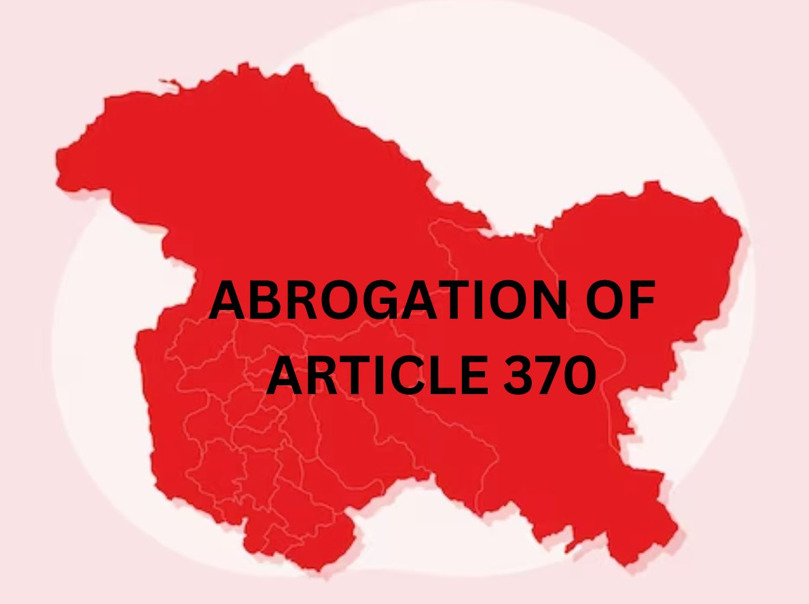
The Abrogation of Article 370: Understanding Its Logic, Necessity, and Significance for India’s Youth

As we mark the sixth anniversary of this momentous decision, it is vital for the young generation to understand why Article 370 existed in the first place

Prof Vivek Misra by Prof Vivek Misra
5 August 2025
in Trending
Why Article 370 Was Removed: Logic, Necessity & Impact on India’s Youth

The Abrogation of Article 370: Understanding Its Logic, Necessity, and Significance for India’s Youth

Share on FacebookShare on X

Introduction

On August 5, 2019, the Government of India took a historic step by abrogating Article 370 of the Indian Constitution — a provision that had granted special autonomous status to the erstwhile state of Jammu and Kashmir (J&K). The decision has since been regarded as a watershed moment in India’s post-independence constitutional and political journey. As we mark the sixth anniversary of this momentous decision, it is vital for the young generation to understand why Article 370 existed in the first place, what its abrogation signifies for Indian federalism and national integration, and why this step is considered both logical and necessary by many scholars and policymakers.

RelatedPosts

Jamiat Ulama e Hind and Madani’s pitch for Sharia Laws for Muslims swearing by Secular Constitution

Delhi Blast Bomber Umar Nabi Visited Pulwama Home, Video Found on Phone Dumped by his Brother Week Before Attack

How Mehbooba Mufti Tried to Whitewash Red Fort ‘Terror’ Attack And Failed

Load More

Why Was Article 370 Created?

To appreciate the abrogation, it is essential first to understand the genesis of Article 370. At the time of India’s independence in 1947, the princely state of Jammu and Kashmir — ruled by Maharaja Hari Singh — faced the choice to accede either to India or Pakistan or to remain independent. When Pakistan-backed tribal invaders attacked Kashmir, the Maharaja signed the Instrument of Accession to India on October 26, 1947.

Unlike most princely states, the accession of J&K was accompanied by certain conditions due to the peculiar situation prevailing then — communal unrest, external aggression, and the promise of plebiscite under UN auspices. This led to a special arrangement under which the state retained autonomy over all matters except defense, foreign affairs, and communications.

Article 370 was inserted in Part XXI of the Constitution under “Temporary, Transitional and Special Provisions”. It was drafted by Gopalaswami Ayyangar, who argued that due to the peculiar circumstances in Kashmir, a temporary provision was necessary to respect the Instrument of Accession while the final status would be determined after a plebiscite. Dr. B.R. Ambedkar, interestingly, had refused to draft it, arguing it was discriminatory.

Thus, Article 370 gave J&K its own Constitution and decision-making powers in most matters. Moreover, it restricted Parliament’s legislative powers over the state without the concurrence of the State’s Constituent Assembly or Government.

The ‘Temporary’ Nature of Article 370

A key argument for abrogation stems from the wording in the Constitution itself — Article 370 was explicitly termed as ‘temporary’. The Constituent Assembly of J&K was meant to decide its permanent relationship with the Union. When that Assembly dissolved itself in 1957 without recommending abrogation or continuation, a legal grey area emerged. Many constitutional experts argued that once the Assembly ceased to exist, the ‘temporary’ provision lost its rationale.

Over decades, successive Presidential Orders diluted J&K’s special status by extending various constitutional provisions, yet the special status continued formally. Critics argued that this quasi-permanent arrangement hindered complete constitutional integration of the region with the Union.

Despite special status, J&K witnessed recurrent separatism and insurgency, especially from the late 1980s. Article 370 was often invoked by separatist leaders to assert the state’s supposed ‘specialness’ and to question its complete integration into India. This provided ideological ammunition for militancy and Pakistan’s proxy war.

Article 35A, inserted through a Presidential Order under Article 370, empowered the state to define ‘permanent residents’ and provide them with special rights and privileges, restricting land ownership and jobs. This limited private investment, hindered industrialization, and kept the state’s economy dependent on heavy central subsidies. Socially, the provision discriminated against women (e.g., women who married outside the state lost property rights) and marginalized communities like Valmikis and West Pakistan refugees.

The Logic Behind Abrogation: Strengthening National Integration

The abrogation aimed to complete the unfinished project of national integration initiated in 1947. Proponents argue that a single Constitution, flag, and citizenship for all Indians is a core tenet of India’s unity. Article 370 was seen as an anomaly that contradicted this principle.

 With Article 370 and Article 35A, there were dual sets of rights — J&K citizens had privileges other Indians did not. This violated the idea of ‘One Nation, One Constitution’. By repealing these provisions, the Government sought to extend all Fundamental Rights fully and uniformly to the people of J&K.

Without the legal constraints imposed by special status, the Government argued that national laws relating to reservation, RTI, anti-corruption, and minority rights could be implemented more effectively. This could unlock investment, generate employment, and empower marginalized sections.

Another key justification was national security. Article 370 was seen by many as a psychological barrier that insurgents exploited to fuel secessionist sentiments. By removing it, the state could be better integrated administratively and militarily, countering terrorism and infiltration more robustly.

The Abrogation Process: Legal and Political Dimensions

On August 5, 2019, the President of India issued a Constitutional Order under Article 370(1) applying all provisions of the Indian Constitution to J&K. Simultaneously, the Parliament passed a resolution recommending that Article 370 cease to operate, invoking Article 370(3). Further, the Jammu and Kashmir Reorganisation Act, 2019, bifurcated the state into two Union Territories — Jammu and Kashmir (with a legislature) and Ladakh (without a legislature).

Critics argue that the absence of a State Government at the time (as President’s Rule was in force) makes the abrogation contentious. The Government counters that the Governor, as the representative of the State Government under President’s Rule, was competent to give consent.

Post-Abrogation Developments

Six years on, the region has seen several changes. Some positive indicators include the extension of Central laws, investments in infrastructure and tourism, elections to District Development Councils, and greater administrative integration.

However, challenges remain — political discontent persists among sections of the population, internet curbs and security lockdowns were imposed for extended periods, and mainstream regional parties continue to demand restoration of statehood and special status.

For youngsters, it is essential to track these developments critically and objectively. The real test of the abrogation lies in how successfully it can transform the region socio-economically and politically.

Conclusion

The abrogation of Article 370 is not merely an event in India’s constitutional history but a continuing process that will shape the future of Jammu and Kashmir and India’s federal fabric. As future policymakers, academics, and informed citizens, young people must study it not as an isolated act but in the context of India’s long struggle for integration, unity, and equitable development.

The lessons from this decision extend beyond Kashmir — they illuminate how democracies negotiate diversity, manage regional aspirations, and balance local identities with national unity.

As we commemorate six years since this historic step, the youth must engage with it not as passive observers but as critical thinkers. Whether one supports or opposes the decision, understanding its constitutional, legal, social, and political dimensions is vital. In doing so, young Indians will be better equipped to contribute to the discourse on how to build an India that is truly united, inclusive, and just.
Tags: Article 370Constitution of IndiaJammu and KashmirLadakModi governmentPost-Abrogation Developments
ShareTweetSend
Previous Post

BrahMos Emerges as Top Weapon of Choice for Indian Forces After Op Sindoor Success

Next Post

Sikh Separatists Install ‘Embassy of Khalistan’ at Canada’s Surrey Gurdwara Where Nijjar Was Killed

Related Posts

Nehru’s Erasure of RC Majumdar Stands as a Stark Warning about Power over History
Trending

Nehru’s Erasure of RC Majumdar Stands as a Stark Warning about Power over History

4 December 2025

Independent India promised intellectual freedom, yet some of its earliest actions contradicted that promise. Among the most troubling episodes...

India Cannot Be Broken and Peace in Bangladesh Cannot Be Built Upon Delusion
Trending

India Cannot Be Broken and Peace in Bangladesh Cannot Be Built Upon Delusion

4 December 2025

The outrageous claim made by a retired Bangladeshi general that Bangladesh will achieve peace only when India is broken...

Maniben’s Diary: Nehru Proposed Babri Masjid Funding, Patel Said No
Trending

Maniben’s Diary: Nehru Proposed Babri Masjid Funding, Patel Said No

4 December 2025

History often reveals its most significant truths not through sweeping proclamations but through quiet entries in personal diaries. One...

Load More

Leave a Reply Cancel reply

Your email address will not be published. Required fields are marked *

I agree to the Terms of use and Privacy Policy.
This site is protected by reCAPTCHA and the Google Privacy Policy and Terms of Service apply.

Currently Playing

A War Won From Above: The Air Campaign That Changed South Asia Forever

A War Won From Above: The Air Campaign That Changed South Asia Forever

00:07:37

‘Mad Dog’ The EX CIA Who Took Down Pakistan’s A.Q. Khan Nuclear Mafia Reveals Shocking Details

00:06:59

Dhurandar: When a Film’s Reality Shakes the Left’s Comfortable Myths

00:06:56

Tejas Under Fire — The Truth Behind the Crash, the Propaganda, and the Facts

00:07:45

Why Rahul Gandhi’s US Outreach Directs to a Web of Shadow Controversial Islamist Networks?

00:08:04
Facebook Twitter Instagram Youtube
tfipostTfipost.com
Right Wing | News Analysis | Indian Opinion
  • About us
  • Contact Us
  • Careers
  • Brand Partnerships
  • Terms of use
  • Privacy Policy
  • Sitemap

©2025 TFI Media Private Limited

No Result
View All Result
  • Premium
  • Politics
    • Analysis
    • Opinions
    • Trending
  • Economy
    • Business
    • Finance
  • Defense
    • Defence
    • Strategy
    • Weaponry
  • Geopolitics
    • Africa
    • Americas
    • Asia Pacific
    • Europe
    • South Asia
    • West Asia
  • Knowledge
    • Culture
    • History
    • Indology
  • Law
  • Lounge
    • Books
    • Cinema
    • Food
    • Health
    • Sports
    • technology
    • Travel
    • Satire
TFIPOST हिन्दी
TFIPOST Global

©2025 TFI Media Private Limited