






















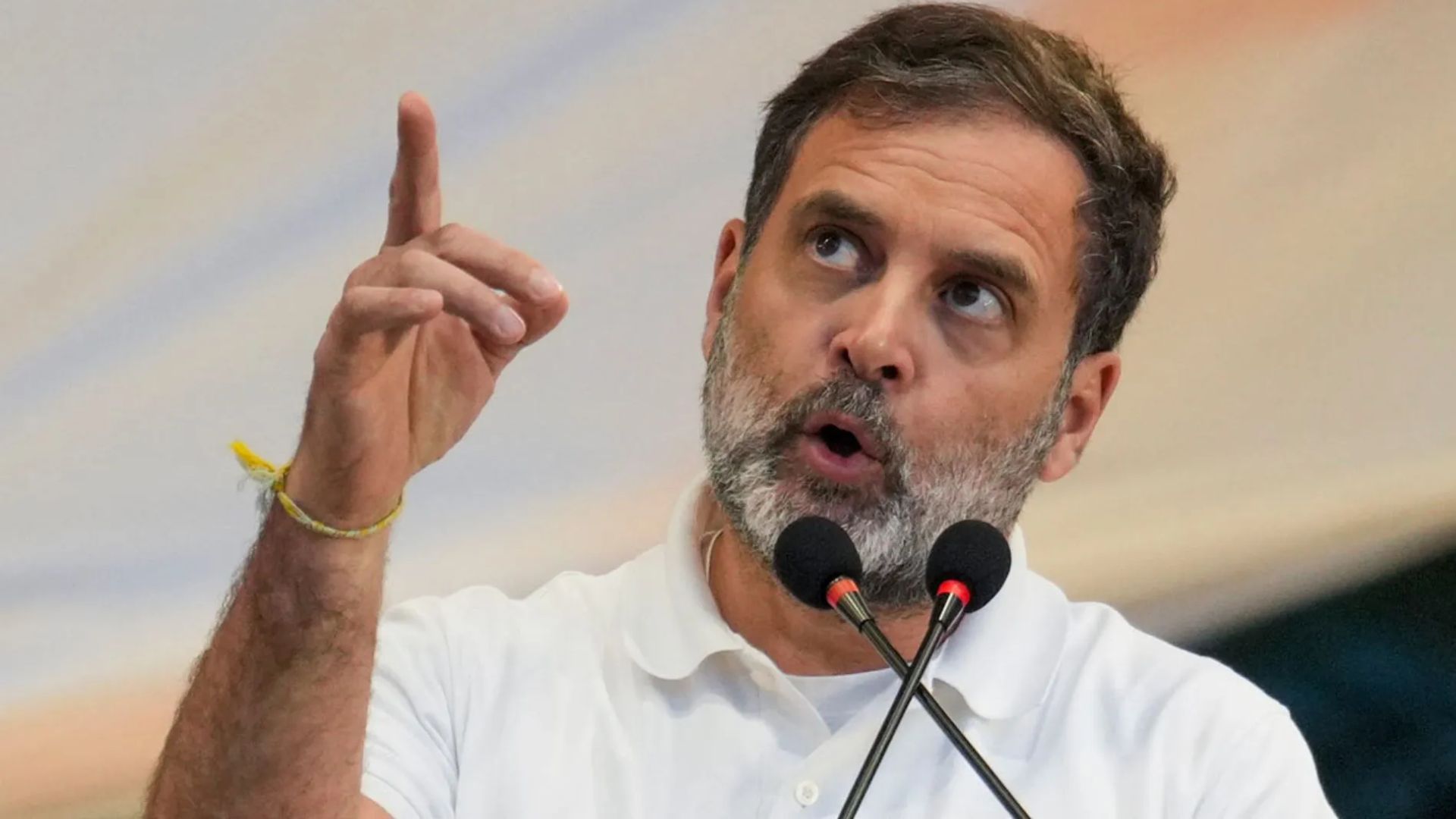
Rahul Gandhi’s repeated attacks on the Indian electoral system and the Election Commission of India are not isolated political statements. These represent a deliberate and dangerous attempt to delegitimize the very foundations of India’s democracy, in his futile attempts at securing democratic means by any means.
By repeatedly questioning the working of EC, making allegations of “vote theft” and casting doubt on the integrity of Electronic Voting Machines (EVMs) over the past few years, the Congress leader is trying to undermine public trust in the nation’s electoral process.
Interestingly, this is not the first time that the grand old party has attempted this playbook. Congress leaders, led by Rahul Gandhi, have regularly blamed institutions whenever election results have not gone their way.
After every major loss, from 2014 to 2024, they have avoided introspection working on their party’s shortcomings and instead accused the electoral system of being rigged in favor of the Bharatiya Janata Party.
When senior leaders like Rahul Gandhi, Mallikarjun Kharge and their coterie repeatedly claim that elections are “not free and fair” without providing legal evidence or challenging outcomes in court, they not only erode the legitimacy of the electoral system but also trying to sow seeds of distrust among voters.
Election Commission Under Attack: Calculated Campaign
The EC, long regarded as one of the most respected democratic institutions globally, has increasingly come under fire from Rahul Gandhi and the Congress ecosystem. This is a tactical shift—not a principled objection. From alleging mass deletions of voter names in Maharashtra to suggesting that the poll panel deliberately destroyed CCTV footage, the Congress leadership has tried to frame the Commission as a tool of the ruling party. And the allegations have continued over the years, without the grand old party presenting verifiable proof.
This campaign appears to be just about optics and not reaching for the truth. When Rahul Gandhi claims, without an affidavit, that the 2024 Lok Sabha polls were “stolen,” he sends a message not to Indian voters, but to international media, Western governments and advocacy networks as well. These institutions often sit on judgement on developing democracies across the globe an his rhetoric mirrors the exact vocabulary used by foreign think tanks and global watchdogs.
In its attempts at weakening trust in the EC, the Congress leadership is trying to create a parallel narrative: that of a captured democracy where institutions are no longer neutral. But this narrative ignores the actual functioning of the Election Commission, which has consistently conducted elections with minimal disruption and credible transparency.
The point has also been highlighted by BJP leader and cabinet minister Assam Government, Ashok Singhal. “Rahul Gandhi, knowing he can’t win democratically, is undermining the Election Commission’s credibility to seize power, mirroring a dangerous global pattern. A desperate attempt to gain power via anarchy, even at the cost of national interest,” he posted on X.
Singhal has listed the following regime changes:
Zimbabwe (2000): Opposition’s rigging allegations led to a takeover that triggered economic collapse.
Sri Lanka (1990s): Election fraud claims helped the opposition seize power, intensifying civil war and economic crisis.
Venezuela (1990s–2000s): Rigging narratives propelled Chávez to power, resulting in authoritarian rule.
Kenya (2007): Post-election rigging accusations sparked violent unrest and prolonged instability.
Bangladesh (2024): Rigging claims toppled the Awami League government, paving the way for an Islamist takeover.
A Dangerous Strategy
This delegitimization attempt of the electoral process poses very serious risks.
Erosion of Institutional Trust: If citizens lose faith in the Election Commission, they may lose faith in the very idea of democratic participation. The Congress should understand that this benefits no one, not even the opposition.
Grounds for Foreign Interference: By portraying Indian elections as manipulated, Rahul Gandhi opens the door for external actors, whether foreign governments or NGOs, to justify meddling in India’s internal affairs under the guise of “democracy promotion”.
Long-Term Destabilization: Delegitimizing electoral processes today sets a dangerous precedent for tomorrow. If every electoral loss is dismissed as fraud, democratic transitions of power become inherently suspect.
Opposition Without Responsibility Is Dangerous
India needs a strong opposition. But that opposition must act within the framework of democratic responsibility. By attempting to dismantle faith in electoral process and EC without pursuing constitutional remedies or presenting concrete evidence, Rahul Gandhi and the Congress party are not strengthening democracy, they are weakening it.
The real danger is that in his quest to stay politically relevant, Rahul Gandhi may end up succeeding only in giving others, including those outside India, the tools to question the legitimacy of the world’s largest democracy.