












TFIPOST हिन्दी
TFIPOST Global
Tfipost.com
Tfipost.com
No Result
View All Result
  • Premium
  • Politics
    • All
    • Analysis
    • Opinions
    • Trending
    Securing the Frontier: Shah Draws a Red Line on Demographic Shifts as Smart Border Project Nears Rollout

    Securing the Frontier: Shah Draws a Red Line on Demographic Shifts as Smart Border Project Nears Rollout

    Did Dawood Ibrahim Want Control Over IPL? Lalit Modi Reveals in Explosive Account of Underworld Pressure

    Did Dawood Ibrahim Want Control Over IPL? Lalit Modi Reveals in Explosive Account of Underworld Pressure

    When a Gold Story Turned Into Dust: Bloomberg Retraction, RBI’s Clarification, and the Debate Over Narrative First Journalism

    When a Gold Story Turned Into Dust: Bloomberg Retraction, RBI’s Clarification, and the Debate Over Narrative First Journalism

    Is Lalit Modi Back? Kochi IPL Controversy Returns With Fresh Claims Over Tharoor Pushkar and Political Pressure

    Is Lalit Modi Back? Kochi IPL Controversy Returns With Fresh Claims Over Tharoor Pushkar and Political Pressure

    • Analysis
    • Opinions
    • Trending
  • Economy
    • All
    • Business
    • Economy1
    • Finance
    When a Gold Story Turned Into Dust: Bloomberg Retraction, RBI’s Clarification, and the Debate Over Narrative First Journalism

    When a Gold Story Turned Into Dust: Bloomberg Retraction, RBI’s Clarification, and the Debate Over Narrative First Journalism

    India Joins Global Digital Elite, Climbs Into Fifth Spot as AI Revolution and Digital Infrastructure Reshape Economy

    India Joins Global Digital Elite, Climbs Into Fifth Spot as AI Revolution and Digital Infrastructure Reshape Economy

    How gaming merchants choose a payment gateway in India

    How gaming merchants choose a payment gateway in India

    The Informal Economy Pays the Price: Street Traders, Small Shops and the Hidden Cost of Trade Policy

    The Informal Economy Pays the Price: Street Traders, Small Shops and the Hidden Cost of Trade Policy

    • Business
    • Finance
  • Defense
    • All
    • Defence
    • Strategy
    • Weaponry
    Securing the Frontier: Shah Draws a Red Line on Demographic Shifts as Smart Border Project Nears Rollout

    Securing the Frontier: Shah Draws a Red Line on Demographic Shifts as Smart Border Project Nears Rollout

    “Not 1962, Not China”: Pema Khandu Reasserts Tibet Border Claim, Dismisses Beijing’s Arunachal Assertions

    “Not 1962, Not China”: Pema Khandu Reasserts Tibet Border Claim, Dismisses Beijing’s Arunachal Assertions

    Rudram-2 Passes Crucial Combat Trial, India Moves Closer to Indigenous SEAD Dominance

    Rudram-2 Passes Crucial Combat Trial, India Moves Closer to Indigenous SEAD Dominance

    Rajesh Kumar Singh Reveals Vietnam BrahMos Deal, Indonesia Agreement in Final Stages

    Rajesh Kumar Singh Reveals Vietnam BrahMos Deal, Indonesia Agreement in Final Stages

    • Defence
    • Strategy
    • Weaponry
  • Geopolitics
    • All
    • Africa
    • Americas
    • Asia Pacific
    • Europe
    • South Asia
    • West Asia
    Why Russia Trusts India: Putin Dismisses Western Pressure on Modi, Backs New Delhi’s Independent Foreign Policy

    Why Russia Trusts India: Putin Dismisses Western Pressure on Modi, Backs New Delhi’s Independent Foreign Policy

    India and Venezuela Signal Energy Recalibration as Rodríguez Visits New Delhi for Crucial Talks

    India and Venezuela Signal Energy Recalibration as Rodríguez Visits New Delhi for Crucial Talks

    Iranian President Pezeshkian Sent Resignation to Supreme Leader, Says IRGC Has Taken Control of State Power

    Iranian President Pezeshkian Sent Resignation to Supreme Leader, Says IRGC Has Taken Control of State Power

    AK-47 Funeral for Pulwama Plotter Exposes Fractures Inside Pakistan’s Terror Networks

    AK-47 Funeral for Pulwama Plotter Exposes Fractures Inside Pakistan’s Terror Networks

    • Africa
    • Americas
    • Asia Pacific
    • Europe
    • South Asia
    • West Asia
  • Knowledge
    • All
    • Culture
    • Education
    • History
    • Indology
    Who Killed Akanksha ? How Many More Students Will Pay the Price for Education Mafias and Paper-Leak Rackets?

    Who Killed Akanksha ? How Many More Students Will Pay the Price for Education Mafias and Paper-Leak Rackets?

    June 3, 1947 Revisited: Nishikant Dubey Blames Nehru-Gandhi Family for Partition and Kashmir Crisis

    June 3, 1947 Revisited: Nishikant Dubey Blames Nehru-Gandhi Family for Partition and Kashmir Crisis

    CBSE OSM Fallout Deepens as 4 Lakh Students Rush for Re-evaluation, Raising Serious Questions on Digital Checking System

    CBSE OSM Fallout Deepens as 4 Lakh Students Rush for Re-evaluation, Raising Serious Questions on Digital Checking System

    Veer Savarkar

    When Nehru Government Imprisoned Veer Savarkar for the Pakistani Prime Minister

    • Culture
    • History
    • Indology
  • Law
  • Lounge
    • All
    • Books
    • Cinema
    • Entertainment
    • Food
    • Games
    • Health
    • Lifestyle
    • Satire
    • Sports
    • technology
    • Travel
    Erythrocyte Sedimentation Rate (ESR) Test: Meaning, Normal Range & Uses

    Erythrocyte Sedimentation Rate (ESR) Test: Meaning, Normal Range & Uses

    Inside the World of Elite Matchmaking in India

    Inside the World of Elite Matchmaking in India

    Best Salicylic Acid Face Wash for Oily & Acne-Prone Skin

    Best Salicylic Acid Face Wash for Oily & Acne-Prone Skin

    Supreme Court Verdict Crushes Opposition’s SIR Narrative, Reasserts Election Commission’s Constitutional Authority

    Judicial Expansion at the Apex: Centre Clears Appointment of Five Judges to Supreme Court, Strength Nearing Full Capacity

    • Books
    • Cinema
    • Food
    • Health
    • Sports
    • technology
    • Travel
    • Satire
Tfipost.com
  • Premium
  • Politics
    • All
    • Analysis
    • Opinions
    • Trending
    Securing the Frontier: Shah Draws a Red Line on Demographic Shifts as Smart Border Project Nears Rollout

    Securing the Frontier: Shah Draws a Red Line on Demographic Shifts as Smart Border Project Nears Rollout

    Did Dawood Ibrahim Want Control Over IPL? Lalit Modi Reveals in Explosive Account of Underworld Pressure

    Did Dawood Ibrahim Want Control Over IPL? Lalit Modi Reveals in Explosive Account of Underworld Pressure

    When a Gold Story Turned Into Dust: Bloomberg Retraction, RBI’s Clarification, and the Debate Over Narrative First Journalism

    When a Gold Story Turned Into Dust: Bloomberg Retraction, RBI’s Clarification, and the Debate Over Narrative First Journalism

    Is Lalit Modi Back? Kochi IPL Controversy Returns With Fresh Claims Over Tharoor Pushkar and Political Pressure

    Is Lalit Modi Back? Kochi IPL Controversy Returns With Fresh Claims Over Tharoor Pushkar and Political Pressure

    • Analysis
    • Opinions
    • Trending
  • Economy
    • All
    • Business
    • Economy1
    • Finance
    When a Gold Story Turned Into Dust: Bloomberg Retraction, RBI’s Clarification, and the Debate Over Narrative First Journalism

    When a Gold Story Turned Into Dust: Bloomberg Retraction, RBI’s Clarification, and the Debate Over Narrative First Journalism

    India Joins Global Digital Elite, Climbs Into Fifth Spot as AI Revolution and Digital Infrastructure Reshape Economy

    India Joins Global Digital Elite, Climbs Into Fifth Spot as AI Revolution and Digital Infrastructure Reshape Economy

    How gaming merchants choose a payment gateway in India

    How gaming merchants choose a payment gateway in India

    The Informal Economy Pays the Price: Street Traders, Small Shops and the Hidden Cost of Trade Policy

    The Informal Economy Pays the Price: Street Traders, Small Shops and the Hidden Cost of Trade Policy

    • Business
    • Finance
  • Defense
    • All
    • Defence
    • Strategy
    • Weaponry
    Securing the Frontier: Shah Draws a Red Line on Demographic Shifts as Smart Border Project Nears Rollout

    Securing the Frontier: Shah Draws a Red Line on Demographic Shifts as Smart Border Project Nears Rollout

    “Not 1962, Not China”: Pema Khandu Reasserts Tibet Border Claim, Dismisses Beijing’s Arunachal Assertions

    “Not 1962, Not China”: Pema Khandu Reasserts Tibet Border Claim, Dismisses Beijing’s Arunachal Assertions

    Rudram-2 Passes Crucial Combat Trial, India Moves Closer to Indigenous SEAD Dominance

    Rudram-2 Passes Crucial Combat Trial, India Moves Closer to Indigenous SEAD Dominance

    Rajesh Kumar Singh Reveals Vietnam BrahMos Deal, Indonesia Agreement in Final Stages

    Rajesh Kumar Singh Reveals Vietnam BrahMos Deal, Indonesia Agreement in Final Stages

    • Defence
    • Strategy
    • Weaponry
  • Geopolitics
    • All
    • Africa
    • Americas
    • Asia Pacific
    • Europe
    • South Asia
    • West Asia
    Why Russia Trusts India: Putin Dismisses Western Pressure on Modi, Backs New Delhi’s Independent Foreign Policy

    Why Russia Trusts India: Putin Dismisses Western Pressure on Modi, Backs New Delhi’s Independent Foreign Policy

    India and Venezuela Signal Energy Recalibration as Rodríguez Visits New Delhi for Crucial Talks

    India and Venezuela Signal Energy Recalibration as Rodríguez Visits New Delhi for Crucial Talks

    Iranian President Pezeshkian Sent Resignation to Supreme Leader, Says IRGC Has Taken Control of State Power

    Iranian President Pezeshkian Sent Resignation to Supreme Leader, Says IRGC Has Taken Control of State Power

    AK-47 Funeral for Pulwama Plotter Exposes Fractures Inside Pakistan’s Terror Networks

    AK-47 Funeral for Pulwama Plotter Exposes Fractures Inside Pakistan’s Terror Networks

    • Africa
    • Americas
    • Asia Pacific
    • Europe
    • South Asia
    • West Asia
  • Knowledge
    • All
    • Culture
    • Education
    • History
    • Indology
    Who Killed Akanksha ? How Many More Students Will Pay the Price for Education Mafias and Paper-Leak Rackets?

    Who Killed Akanksha ? How Many More Students Will Pay the Price for Education Mafias and Paper-Leak Rackets?

    June 3, 1947 Revisited: Nishikant Dubey Blames Nehru-Gandhi Family for Partition and Kashmir Crisis

    June 3, 1947 Revisited: Nishikant Dubey Blames Nehru-Gandhi Family for Partition and Kashmir Crisis

    CBSE OSM Fallout Deepens as 4 Lakh Students Rush for Re-evaluation, Raising Serious Questions on Digital Checking System

    CBSE OSM Fallout Deepens as 4 Lakh Students Rush for Re-evaluation, Raising Serious Questions on Digital Checking System

    Veer Savarkar

    When Nehru Government Imprisoned Veer Savarkar for the Pakistani Prime Minister

    • Culture
    • History
    • Indology
  • Law
  • Lounge
    • All
    • Books
    • Cinema
    • Entertainment
    • Food
    • Games
    • Health
    • Lifestyle
    • Satire
    • Sports
    • technology
    • Travel
    Erythrocyte Sedimentation Rate (ESR) Test: Meaning, Normal Range & Uses

    Erythrocyte Sedimentation Rate (ESR) Test: Meaning, Normal Range & Uses

    Inside the World of Elite Matchmaking in India

    Inside the World of Elite Matchmaking in India

    Best Salicylic Acid Face Wash for Oily & Acne-Prone Skin

    Best Salicylic Acid Face Wash for Oily & Acne-Prone Skin

    Supreme Court Verdict Crushes Opposition’s SIR Narrative, Reasserts Election Commission’s Constitutional Authority

    Judicial Expansion at the Apex: Centre Clears Appointment of Five Judges to Supreme Court, Strength Nearing Full Capacity

    • Books
    • Cinema
    • Food
    • Health
    • Sports
    • technology
    • Travel
    • Satire
No Result
View All Result
Tfipost.com
Tfipost.com
No Result
View All Result
  • Premium
  • Politics
  • Economy
  • Defense
  • Geopolitics
  • Knowledge
  • Law
  • Lounge

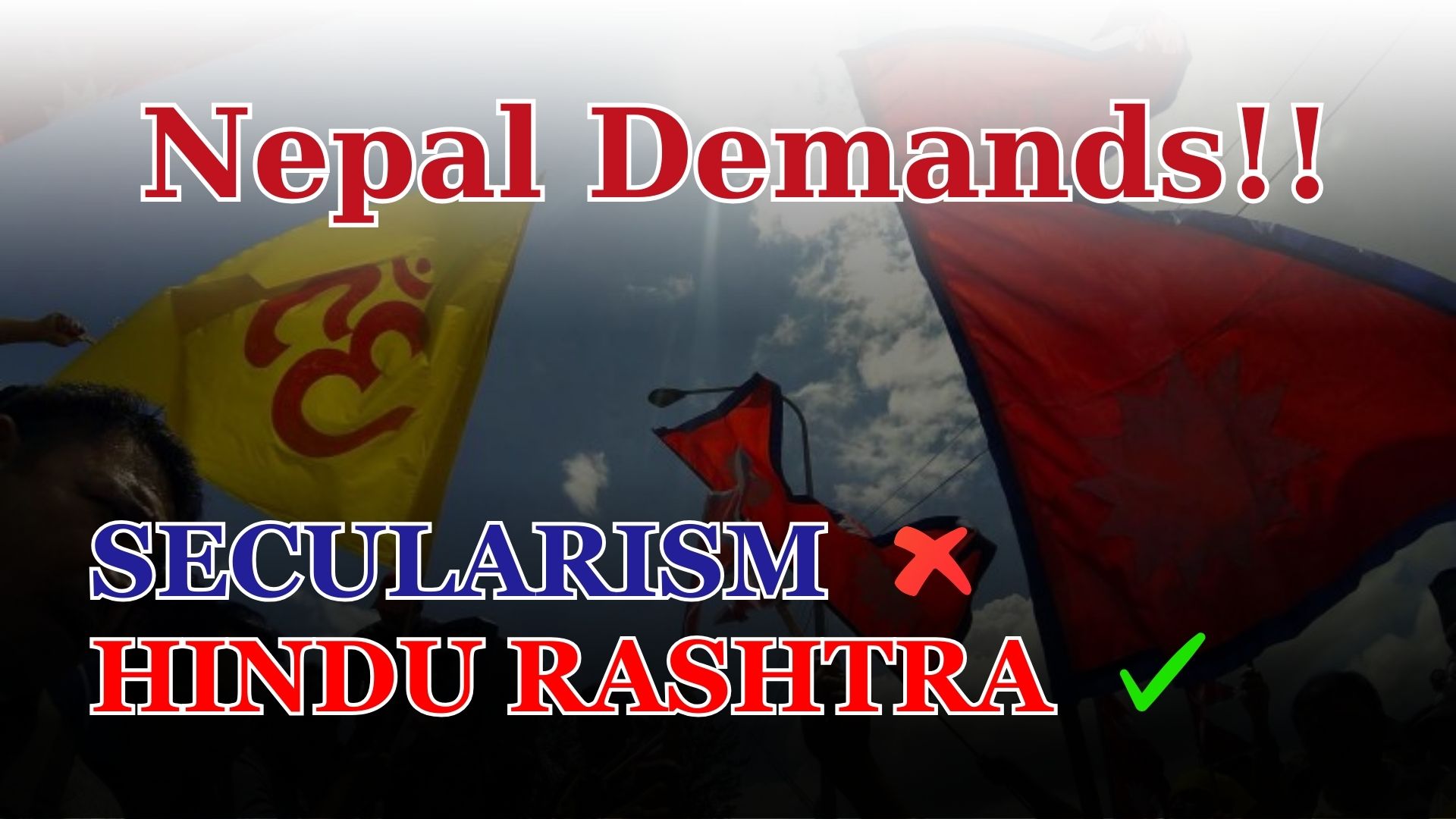
Nepal: The Rising Call for a Hindu Rashtra

Muskan Goel by Muskan Goel
19 February 2024
in Geopolitics, Trending
Nepal, Hinduism, religion, politics, Hindu Rashtra, Nationalism
Share on FacebookShare on X

In Nepal’s intricate sociopolitical landscape, the resurgence of Hindu nationalism emerged as a potent force, challenging the country’s transition to secularism in 2008. Rooted in centuries of monarchy and Hindu tradition, this movement advocates for the restoration of Nepal as a Hindu Rashtra, sparking contentious debates and reshaping national identity dynamics. Spearheaded by political parties like the Rastriya Prajatantra Party (RPP) and influential figures such as former Prime Minister Khadga Prasad Oli, the call for a Hindu state intersects with complex sociocultural dynamics, including ethnicity, caste, and religion.

Historical Context

Nepal’s historical identity has long been intertwined with its status as a Hindu kingdom, shaped by centuries of monarchy and religious tradition. However, the trajectory of Nepal’s national identity took a significant turn in 2008 with the transition to a secular state, marking a pivotal moment in its sociopolitical landscape.

RelatedPosts

When a Gold Story Turned Into Dust: Bloomberg Retraction, RBI’s Clarification, and the Debate Over Narrative First Journalism

Is Lalit Modi Back? Kochi IPL Controversy Returns With Fresh Claims Over Tharoor Pushkar and Political Pressure

Why Kalita Majhi’s Journey from Domestic Help to Minister Has Become a Defining Image of Indian Democracy

Load More

Legacy of Hindu Monarchy

For centuries, Nepal was characterized by a Hindu monarchy, where the ruling elite, particularly under King Mahendra’s reign (1955-1972), promoted a unified national identity centered around Hinduism. King Mahendra’s mantra of “ek raja, ek desh, ek bhasa, ek bhesh” (one king, one state, one language, one dress) aimed to consolidate power and foster a sense of unity among the diverse ethnic groups within Nepal. This vision cemented the monarchy’s association with Hinduism, positioning the king as the embodiment of Lord Vishnu, a revered Hindu deity.

The emergence of Calls for Secularism

However, the seeds of secularism were sown during Nepal’s political revolution in 1990, which saw the overthrow of the executive monarchy and the establishment of a parliamentary democracy with a constitutional monarchy. As leaders from ethnic communities spearheaded the movement for change, calls for Nepal to become a secular state gained momentum. Ethnic minorities, particularly those from the southern plains, sought to challenge the dominance of the upper-caste elite and redefine Nepal’s national identity to be more inclusive and reflective of its diverse population.

Transition to a Secular State

The culmination of these efforts came in 2008 with the formal declaration of Nepal as a secular state in its interim constitution. This transition represented a fundamental shift away from the centuries-old Hindu monarchy towards a more pluralistic and inclusive vision of the nation. By embracing secularism, Nepal sought to uphold religious and cultural freedoms while moving away from the privileging of Hinduism as the state religion.

Political Landscape 

In Nepal’s intricate political landscape, the discourse surrounding the restoration of Hindu monarchy and statehood has been a contentious issue, with various political parties and influential figures actively advocating for this cause. Understanding their roles sheds light on the dynamics shaping Nepal’s sociopolitical environment.

Rastriya Prajatantra Party (RPP)

At the forefront of the movement to reinstate Nepal as a Hindu kingdom stands the Rastriya Prajatantra Party (RPP). With a staunch royalist stance, the RPP champions the restoration of constitutional monarchy and the re-establishment of Nepal as a Hindu state. Despite facing electoral setbacks, the RPP remains steadfast in its pursuit, appealing to sentiments of cultural heritage and tradition among sections of the population.

Former Prime Minister Khadga Prasad Oli

Khadga Prasad Oli, a prominent political figure known for his nationalist rhetoric, has played a significant role in fueling Hindu nationalist sentiment in Nepal. Despite publicly endorsing secularism, Oli’s actions often cater to Hindu nationalist sentiments. His gestures, such as visiting sacred Hindu sites and promoting Hindu-centric policies, resonate with a populace nostalgic for Nepal’s Hindu monarchy era. Oli’s strategic alignment with Hindu nationalism serves to consolidate his political base and reinforce his image as a defender of Nepal’s cultural identity.

The Maoists

The Maoist movement, despite its communist ideology, has also engaged in stoking Hindu nationalist sentiment as a means of garnering support. While initially advocating for secularism during Nepal’s transition to democracy, certain factions within the Maoists have embraced Hindu nationalism to broaden their political appeal. By tapping into cultural and religious identities, the Maoists aim to mobilize segments of the population disillusioned with the secular state. This shift underscores the complexities within Nepal’s political landscape, where ideological boundaries blur in pursuit of political objectives.

Also Read: From Sacred Stones to Modern Marvels: Modi’s Trail in UP & Jammu

Sociocultural Dynamics

In Nepal, the discourse on Hindu nationalism is deeply intertwined with complex sociocultural dynamics, including ethnicity, caste, and religion. Understanding these intersections provides insight into the multifaceted nature of the movement and its implications for marginalized communities and perceptions of external influence.

Intersection of Ethnicity, Caste, and Religion

Nepal’s diverse population comprises various ethnic groups and castes, each with distinct cultural identities and historical experiences. The discourse on Hindu nationalism often intersects with these identities, as certain groups perceive themselves as the guardians of Nepal’s Hindu heritage. For some, Hindu nationalism serves as a unifying force, reinforcing a sense of collective identity rooted in religious tradition.

Tensions with Marginalized Communities

The rise of Hindu nationalism in Nepal has also heightened tensions with marginalized communities, particularly those advocating for greater recognition and rights. For Dalits, indigenous peoples, and other marginalized groups, the emphasis on Hindu identity can perpetuate discrimination and exclusion, reinforcing existing power dynamics that privilege certain castes and ethnicities.

Perception of Western Interference

Amidst the discourse on Hindu nationalism, there is a prevalent perception of Western interference in religious proselytization, particularly by international NGOs and missionary organizations. Some proponents of Hindu nationalism view Western influence as a threat to Nepal’s cultural and religious identity, fueling suspicions of external agendas aimed at undermining Hindu traditions.

International Factors 

The relationship between Nepal’s Hindu nationalism and its neighbor, India, particularly through political entities like the Bharatiya Janata Party (BJP) and the Rashtriya Swayamsevak Sangh (RSS), is a critical aspect shaping the discourse and trajectory of the movement. Understanding India’s role provides insight into the external dynamics impacting Nepal’s internal affairs.

Promotion of Hindu Nationalism

The BJP and RSS, both prominent Hindu nationalist organizations in India, have historically maintained close ties with like-minded groups in Nepal. These ties have facilitated the promotion of Hindu nationalism as a shared ideology across borders, with Indian leaders openly advocating for Nepal’s return to Hindu statehood.

Actions by Indian Leaders

Indian leaders, including prominent figures like those from the BJP, have publicly endorsed the idea of Nepal reverting to a Hindu state. Such statements reflect a broader sentiment within certain segments of Indian politics that view Nepal’s secular status as a departure from its traditional identity.

Funding by Right-Wing Religious Groups

There are allegations of financial support from right-wing religious groups affiliated with the BJP and RSS to Nepali organizations advocating for the restoration of Hindu monarchy and statehood. These allegations suggest a coordinated effort to influence Nepal’s internal affairs and advance the agenda of Hindu nationalism.

Challenges and Controversies 

The push for a Hindu Rashtra (nation) in Nepal faces a myriad of challenges and controversies, reflecting the complexities inherent in reshaping the country’s identity and governance structure. From opposition by secularists to internal divisions within political parties, and tensions with neighboring India, proponents of a Hindu state must navigate a landscape fraught with obstacles.

Opposition from Secularists

One of the primary challenges faced by proponents of a Hindu Rashtra in Nepal is opposition from secularists and advocates of pluralism. Secular voices argue that embracing Hindu nationalism undermines the principles of religious freedom and inclusivity enshrined in Nepal’s constitution. They warn against privileging one religious identity over others, advocating instead for a secular state that respects the rights and beliefs of all citizens.

Concerns about Religious Freedom

The promotion of Hindu nationalism also raises concerns about religious freedom and the rights of minority communities in Nepal. Critics argue that institutionalizing Hinduism as the state religion could marginalize non-Hindu groups and limit their ability to practice their faith freely. This poses a significant challenge for proponents of a Hindu Rashtra, who must address these concerns while advancing their agenda.

Internal Divisions within Political Parties

Internal divisions within political parties further complicate the push for a Hindu Rashtra. While some factions within parties like the Rastriya Prajatantra Party (RPP) advocate for the restoration of Hindu monarchy and statehood, others may prioritize other issues or adopt a more moderate stance on religious identity. These internal tensions hinder cohesive action and consensus-building within the political sphere.

Controversies Surrounding Hindu Nationalism and Monarchy

The link between Hindu nationalism and the monarchy in Nepal is a subject of controversy and debate. While some proponents of a Hindu Rashtra view the monarchy as integral to preserving Nepal’s Hindu identity, others argue that separating the two is necessary to uphold democratic principles and ensure inclusive governance. This internal rift underscores the complexities of reconciling historical traditions with contemporary political realities.

Future Implications

The rise of Hindu nationalism in Nepal carries profound implications for the country’s political landscape, social cohesion, and regional geopolitics. As the movement gains momentum, its trajectory is poised to shape Nepal’s future in significant ways, with ripple effects extending beyond its borders.

Social Cohesion

The Hindu nationalist movement’s ascendancy could fundamentally alter Nepal’s political landscape, potentially leading to a reconfiguration of power dynamics and ideological alignments. Proponents of a Hindu Rashtra may seek to consolidate their influence within political parties and institutions, leading to shifts in policy priorities and governance structures.

However, the movement’s exclusionary tendencies and emphasis on Hindu identity risk exacerbating divisions within Nepali society, particularly along religious and ethnic lines. Marginalized communities, including Dalits, indigenous peoples, and religious minorities, may face increased discrimination and marginalization, undermining efforts to foster social cohesion and inclusivity.

Relations with Neighboring Countries

The implications of Nepal’s Hindu nationalist movement extend beyond its borders, with potential ramifications for regional geopolitics and relations with neighboring countries, particularly India. India’s support for Hindu nationalism in Nepal reflects broader strategic interests and cultural affinities, but it also risks complicating bilateral relations and fueling tensions. As Nepal asserts its identity and sovereignty through the promotion of Hindu nationalism, it may encounter resistance or apprehension from India, which seeks to maintain influence and stability in the region.

In conclusion, Nepal stands at a critical juncture as it grapples with the resurgence of Hindu nationalism amidst its transition to secularism. The movement’s ascent, propelled by political parties, influential leaders, and external influences like India’s BJP, underscores the complexities inherent in reshaping national identity and governance structures.

Tags: hindu rashtraHinduismNepalPoliticsReligion
ShareTweetSend
Previous Post

From Sacred Stones to Modern Marvels: Modi’s Trail in UP & Jammu

Next Post

From Unity to Fragmentation: The Demise of the INDIA Alliance

Related Posts

Securing the Frontier: Shah Draws a Red Line on Demographic Shifts as Smart Border Project Nears Rollout
Defence

Securing the Frontier: Shah Draws a Red Line on Demographic Shifts as Smart Border Project Nears Rollout

5 June 2026

Union Home Minister Amit Shah delivered a firm message on border security and demographic change. He said, "The Centre...

Did Dawood Ibrahim Want Control Over IPL? Lalit Modi Reveals in Explosive Account of Underworld Pressure
Cricket

Did Dawood Ibrahim Want Control Over IPL? Lalit Modi Reveals in Explosive Account of Underworld Pressure

5 June 2026

Former Indian Premier League commissioner Lalit Modi has revealed that fugitive underworld figure Dawood Ibrahim wanted control and influence...

When a Gold Story Turned Into Dust: Bloomberg Retraction, RBI’s Clarification, and the Debate Over Narrative First Journalism
Economy

When a Gold Story Turned Into Dust: Bloomberg Retraction, RBI’s Clarification, and the Debate Over Narrative First Journalism

5 June 2026

A report suggesting that India’s central bank had sold gold reserves has collapsed after official pushback and a methodological...

Load More

Leave a Reply Cancel reply

Your email address will not be published. Required fields are marked *

I agree to the Terms of use and Privacy Policy.
This site is protected by reCAPTCHA and the Google Privacy Policy and Terms of Service apply.

Currently Playing

AIRCRAFT CARRIERS: INDIA’S MOST POWERFUL TOOL OF MARITIME POWER PROJECTION | INS Vikrant |

AIRCRAFT CARRIERS: INDIA’S MOST POWERFUL TOOL OF MARITIME POWER PROJECTION | INS Vikrant |

00:03:22

Rudram 2 Success: Made in India Missile Ready To Crush Enemy Radars| DRDO’s Big Breakthrough

00:03:46

From Runways to Warships: India’s Firefighting Warrior Built for Bases & Battles| IAF | VayuShakti

00:05:40

Ethanol, EVs and Solar- How India’s Energy Game Is Changing | Modi on LPG & Crude Oil | war| Hormuz

00:05:21

Truth of IRIS Dena: 8 Days That Changed Narrative | War zone Reality, Not an Indian Navy Exercise

00:08:02
Facebook Twitter Instagram Youtube
tfipostTfipost.com
Right Wing | News Analysis | Indian Opinion
  • About us
  • Contact Us
  • Careers
  • Brand Partnerships
  • Terms of use
  • Privacy Policy
  • Sitemap

©2026 TFI Media Private Limited

No Result
View All Result
  • Premium
  • Politics
    • Analysis
    • Opinions
    • Trending
  • Economy
    • Business
    • Finance
  • Defense
    • Defence
    • Strategy
    • Weaponry
  • Geopolitics
    • Africa
    • Americas
    • Asia Pacific
    • Europe
    • South Asia
    • West Asia
  • Knowledge
    • Culture
    • History
    • Indology
  • Law
  • Lounge
    • Books
    • Cinema
    • Food
    • Health
    • Sports
    • technology
    • Travel
    • Satire
TFIPOST हिन्दी
TFIPOST Global

©2026 TFI Media Private Limited