
















TFIPOST हिन्दी
TFIPOST Global
Tfipost.com
Tfipost.com
No Result
View All Result
  • Premium
  • Politics
    • All
    • Analysis
    • Opinions
    • Trending
    Securing the Frontier: Shah Draws a Red Line on Demographic Shifts as Smart Border Project Nears Rollout

    Securing the Frontier: Shah Draws a Red Line on Demographic Shifts as Smart Border Project Nears Rollout

    Did Dawood Ibrahim Want Control Over IPL? Lalit Modi Reveals in Explosive Account of Underworld Pressure

    Did Dawood Ibrahim Want Control Over IPL? Lalit Modi Reveals in Explosive Account of Underworld Pressure

    When a Gold Story Turned Into Dust: Bloomberg Retraction, RBI’s Clarification, and the Debate Over Narrative First Journalism

    When a Gold Story Turned Into Dust: Bloomberg Retraction, RBI’s Clarification, and the Debate Over Narrative First Journalism

    Is Lalit Modi Back? Kochi IPL Controversy Returns With Fresh Claims Over Tharoor Pushkar and Political Pressure

    Is Lalit Modi Back? Kochi IPL Controversy Returns With Fresh Claims Over Tharoor Pushkar and Political Pressure

    • Analysis
    • Opinions
    • Trending
  • Economy
    • All
    • Business
    • Economy1
    • Finance
    When a Gold Story Turned Into Dust: Bloomberg Retraction, RBI’s Clarification, and the Debate Over Narrative First Journalism

    When a Gold Story Turned Into Dust: Bloomberg Retraction, RBI’s Clarification, and the Debate Over Narrative First Journalism

    India Joins Global Digital Elite, Climbs Into Fifth Spot as AI Revolution and Digital Infrastructure Reshape Economy

    India Joins Global Digital Elite, Climbs Into Fifth Spot as AI Revolution and Digital Infrastructure Reshape Economy

    How gaming merchants choose a payment gateway in India

    How gaming merchants choose a payment gateway in India

    The Informal Economy Pays the Price: Street Traders, Small Shops and the Hidden Cost of Trade Policy

    The Informal Economy Pays the Price: Street Traders, Small Shops and the Hidden Cost of Trade Policy

    • Business
    • Finance
  • Defense
    • All
    • Defence
    • Strategy
    • Weaponry
    Securing the Frontier: Shah Draws a Red Line on Demographic Shifts as Smart Border Project Nears Rollout

    Securing the Frontier: Shah Draws a Red Line on Demographic Shifts as Smart Border Project Nears Rollout

    “Not 1962, Not China”: Pema Khandu Reasserts Tibet Border Claim, Dismisses Beijing’s Arunachal Assertions

    “Not 1962, Not China”: Pema Khandu Reasserts Tibet Border Claim, Dismisses Beijing’s Arunachal Assertions

    Rudram-2 Passes Crucial Combat Trial, India Moves Closer to Indigenous SEAD Dominance

    Rudram-2 Passes Crucial Combat Trial, India Moves Closer to Indigenous SEAD Dominance

    Rajesh Kumar Singh Reveals Vietnam BrahMos Deal, Indonesia Agreement in Final Stages

    Rajesh Kumar Singh Reveals Vietnam BrahMos Deal, Indonesia Agreement in Final Stages

    • Defence
    • Strategy
    • Weaponry
  • Geopolitics
    • All
    • Africa
    • Americas
    • Asia Pacific
    • Europe
    • South Asia
    • West Asia
    Why Russia Trusts India: Putin Dismisses Western Pressure on Modi, Backs New Delhi’s Independent Foreign Policy

    Why Russia Trusts India: Putin Dismisses Western Pressure on Modi, Backs New Delhi’s Independent Foreign Policy

    India and Venezuela Signal Energy Recalibration as Rodríguez Visits New Delhi for Crucial Talks

    India and Venezuela Signal Energy Recalibration as Rodríguez Visits New Delhi for Crucial Talks

    Iranian President Pezeshkian Sent Resignation to Supreme Leader, Says IRGC Has Taken Control of State Power

    Iranian President Pezeshkian Sent Resignation to Supreme Leader, Says IRGC Has Taken Control of State Power

    AK-47 Funeral for Pulwama Plotter Exposes Fractures Inside Pakistan’s Terror Networks

    AK-47 Funeral for Pulwama Plotter Exposes Fractures Inside Pakistan’s Terror Networks

    • Africa
    • Americas
    • Asia Pacific
    • Europe
    • South Asia
    • West Asia
  • Knowledge
    • All
    • Culture
    • Education
    • History
    • Indology
    Who Killed Akanksha ? How Many More Students Will Pay the Price for Education Mafias and Paper-Leak Rackets?

    Who Killed Akanksha ? How Many More Students Will Pay the Price for Education Mafias and Paper-Leak Rackets?

    June 3, 1947 Revisited: Nishikant Dubey Blames Nehru-Gandhi Family for Partition and Kashmir Crisis

    June 3, 1947 Revisited: Nishikant Dubey Blames Nehru-Gandhi Family for Partition and Kashmir Crisis

    CBSE OSM Fallout Deepens as 4 Lakh Students Rush for Re-evaluation, Raising Serious Questions on Digital Checking System

    CBSE OSM Fallout Deepens as 4 Lakh Students Rush for Re-evaluation, Raising Serious Questions on Digital Checking System

    Veer Savarkar

    When Nehru Government Imprisoned Veer Savarkar for the Pakistani Prime Minister

    • Culture
    • History
    • Indology
  • Law
  • Lounge
    • All
    • Books
    • Cinema
    • Entertainment
    • Food
    • Games
    • Health
    • Lifestyle
    • Satire
    • Sports
    • technology
    • Travel
    Erythrocyte Sedimentation Rate (ESR) Test: Meaning, Normal Range & Uses

    Erythrocyte Sedimentation Rate (ESR) Test: Meaning, Normal Range & Uses

    Inside the World of Elite Matchmaking in India

    Inside the World of Elite Matchmaking in India

    Best Salicylic Acid Face Wash for Oily & Acne-Prone Skin

    Best Salicylic Acid Face Wash for Oily & Acne-Prone Skin

    Supreme Court Verdict Crushes Opposition’s SIR Narrative, Reasserts Election Commission’s Constitutional Authority

    Judicial Expansion at the Apex: Centre Clears Appointment of Five Judges to Supreme Court, Strength Nearing Full Capacity

    • Books
    • Cinema
    • Food
    • Health
    • Sports
    • technology
    • Travel
    • Satire
Tfipost.com
  • Premium
  • Politics
    • All
    • Analysis
    • Opinions
    • Trending
    Securing the Frontier: Shah Draws a Red Line on Demographic Shifts as Smart Border Project Nears Rollout

    Securing the Frontier: Shah Draws a Red Line on Demographic Shifts as Smart Border Project Nears Rollout

    Did Dawood Ibrahim Want Control Over IPL? Lalit Modi Reveals in Explosive Account of Underworld Pressure

    Did Dawood Ibrahim Want Control Over IPL? Lalit Modi Reveals in Explosive Account of Underworld Pressure

    When a Gold Story Turned Into Dust: Bloomberg Retraction, RBI’s Clarification, and the Debate Over Narrative First Journalism

    When a Gold Story Turned Into Dust: Bloomberg Retraction, RBI’s Clarification, and the Debate Over Narrative First Journalism

    Is Lalit Modi Back? Kochi IPL Controversy Returns With Fresh Claims Over Tharoor Pushkar and Political Pressure

    Is Lalit Modi Back? Kochi IPL Controversy Returns With Fresh Claims Over Tharoor Pushkar and Political Pressure

    • Analysis
    • Opinions
    • Trending
  • Economy
    • All
    • Business
    • Economy1
    • Finance
    When a Gold Story Turned Into Dust: Bloomberg Retraction, RBI’s Clarification, and the Debate Over Narrative First Journalism

    When a Gold Story Turned Into Dust: Bloomberg Retraction, RBI’s Clarification, and the Debate Over Narrative First Journalism

    India Joins Global Digital Elite, Climbs Into Fifth Spot as AI Revolution and Digital Infrastructure Reshape Economy

    India Joins Global Digital Elite, Climbs Into Fifth Spot as AI Revolution and Digital Infrastructure Reshape Economy

    How gaming merchants choose a payment gateway in India

    How gaming merchants choose a payment gateway in India

    The Informal Economy Pays the Price: Street Traders, Small Shops and the Hidden Cost of Trade Policy

    The Informal Economy Pays the Price: Street Traders, Small Shops and the Hidden Cost of Trade Policy

    • Business
    • Finance
  • Defense
    • All
    • Defence
    • Strategy
    • Weaponry
    Securing the Frontier: Shah Draws a Red Line on Demographic Shifts as Smart Border Project Nears Rollout

    Securing the Frontier: Shah Draws a Red Line on Demographic Shifts as Smart Border Project Nears Rollout

    “Not 1962, Not China”: Pema Khandu Reasserts Tibet Border Claim, Dismisses Beijing’s Arunachal Assertions

    “Not 1962, Not China”: Pema Khandu Reasserts Tibet Border Claim, Dismisses Beijing’s Arunachal Assertions

    Rudram-2 Passes Crucial Combat Trial, India Moves Closer to Indigenous SEAD Dominance

    Rudram-2 Passes Crucial Combat Trial, India Moves Closer to Indigenous SEAD Dominance

    Rajesh Kumar Singh Reveals Vietnam BrahMos Deal, Indonesia Agreement in Final Stages

    Rajesh Kumar Singh Reveals Vietnam BrahMos Deal, Indonesia Agreement in Final Stages

    • Defence
    • Strategy
    • Weaponry
  • Geopolitics
    • All
    • Africa
    • Americas
    • Asia Pacific
    • Europe
    • South Asia
    • West Asia
    Why Russia Trusts India: Putin Dismisses Western Pressure on Modi, Backs New Delhi’s Independent Foreign Policy

    Why Russia Trusts India: Putin Dismisses Western Pressure on Modi, Backs New Delhi’s Independent Foreign Policy

    India and Venezuela Signal Energy Recalibration as Rodríguez Visits New Delhi for Crucial Talks

    India and Venezuela Signal Energy Recalibration as Rodríguez Visits New Delhi for Crucial Talks

    Iranian President Pezeshkian Sent Resignation to Supreme Leader, Says IRGC Has Taken Control of State Power

    Iranian President Pezeshkian Sent Resignation to Supreme Leader, Says IRGC Has Taken Control of State Power

    AK-47 Funeral for Pulwama Plotter Exposes Fractures Inside Pakistan’s Terror Networks

    AK-47 Funeral for Pulwama Plotter Exposes Fractures Inside Pakistan’s Terror Networks

    • Africa
    • Americas
    • Asia Pacific
    • Europe
    • South Asia
    • West Asia
  • Knowledge
    • All
    • Culture
    • Education
    • History
    • Indology
    Who Killed Akanksha ? How Many More Students Will Pay the Price for Education Mafias and Paper-Leak Rackets?

    Who Killed Akanksha ? How Many More Students Will Pay the Price for Education Mafias and Paper-Leak Rackets?

    June 3, 1947 Revisited: Nishikant Dubey Blames Nehru-Gandhi Family for Partition and Kashmir Crisis

    June 3, 1947 Revisited: Nishikant Dubey Blames Nehru-Gandhi Family for Partition and Kashmir Crisis

    CBSE OSM Fallout Deepens as 4 Lakh Students Rush for Re-evaluation, Raising Serious Questions on Digital Checking System

    CBSE OSM Fallout Deepens as 4 Lakh Students Rush for Re-evaluation, Raising Serious Questions on Digital Checking System

    Veer Savarkar

    When Nehru Government Imprisoned Veer Savarkar for the Pakistani Prime Minister

    • Culture
    • History
    • Indology
  • Law
  • Lounge
    • All
    • Books
    • Cinema
    • Entertainment
    • Food
    • Games
    • Health
    • Lifestyle
    • Satire
    • Sports
    • technology
    • Travel
    Erythrocyte Sedimentation Rate (ESR) Test: Meaning, Normal Range & Uses

    Erythrocyte Sedimentation Rate (ESR) Test: Meaning, Normal Range & Uses

    Inside the World of Elite Matchmaking in India

    Inside the World of Elite Matchmaking in India

    Best Salicylic Acid Face Wash for Oily & Acne-Prone Skin

    Best Salicylic Acid Face Wash for Oily & Acne-Prone Skin

    Supreme Court Verdict Crushes Opposition’s SIR Narrative, Reasserts Election Commission’s Constitutional Authority

    Judicial Expansion at the Apex: Centre Clears Appointment of Five Judges to Supreme Court, Strength Nearing Full Capacity

    • Books
    • Cinema
    • Food
    • Health
    • Sports
    • technology
    • Travel
    • Satire
No Result
View All Result
Tfipost.com
Tfipost.com
No Result
View All Result
  • Premium
  • Politics
  • Economy
  • Defense
  • Geopolitics
  • Knowledge
  • Law
  • Lounge

From Jungle to Jetset: Great Nicobar’s Rise Amidst China’s Oceanic Ambitions

Muskan Goel by Muskan Goel
29 February 2024
in Economy, Geopolitics, Trending
India, Great Nicobar Island, Geopolitics, Maritime Strategy, China, Indian Ocean, Security
Share on FacebookShare on X

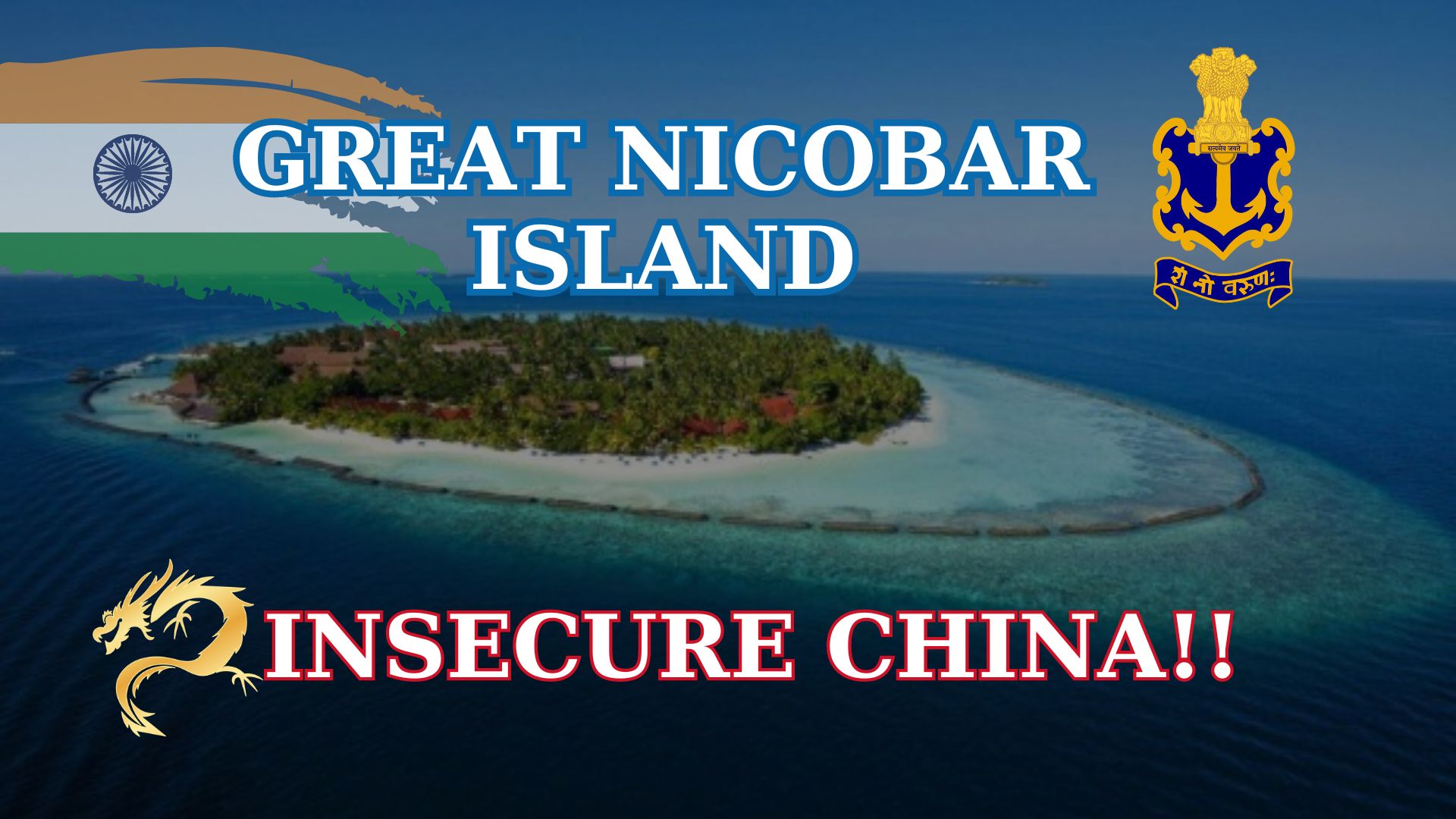
India’s ambitious plan to transform Great Nicobar Island into a strategic hub akin to ‘Hong Kong’ reflects not only economic aspirations but also strategic imperatives. Situated strategically in the Indian Ocean, the island’s development aims to bolster India’s maritime security and counter China’s expanding influence in the region. This initiative underscores India’s proactive stance in safeguarding its interests and promoting regional stability amid growing geopolitical competition.

The Strategic Imperative

The strategic significance of Great Nicobar Island cannot be overstated in the context of India’s maritime security concerns and its broader geopolitical interests in the Indian Ocean region. Situated approximately 1,800 kilometers east of India’s mainland, Great Nicobar Island holds a pivotal position along crucial sea routes, making it a strategic asset for India’s naval operations and regional influence.

RelatedPosts

“Not 1962, Not China”: Pema Khandu Reasserts Tibet Border Claim, Dismisses Beijing’s Arunachal Assertions

When Rajiv Gandhi told Doordarshan to tone down its coverage on Tiananmen Square Massacre in China

Rudram-2 Passes Crucial Combat Trial, India Moves Closer to Indigenous SEAD Dominance

Load More

Maritime Routes 

Great Nicobar Island sits at a strategic juncture, commanding vital maritime routes that connect the Indian Ocean with the Pacific Ocean and beyond. These sea lanes are essential for global trade, facilitating the movement of goods, energy resources, and commercial vessels between major economies. Control over these routes is crucial for India’s economic prosperity and security interests.

Counterbalancing Chinese Influence 

India’s concerns over China’s expanding presence in the Indian Ocean have heightened in recent years, particularly with Beijing’s increasing investments and strategic projects in neighboring countries like Sri Lanka and the Maldives. Chinese infrastructure projects, including ports and naval facilities, raise apprehensions about Beijing’s long-term intentions and its potential to challenge India’s maritime dominance in the region.

Strategic Encirclement 

The development of Great Nicobar Island as a military and trade center serves as a strategic response to China’s assertive behavior and its attempts to encircle India through its ‘String of Pearls’ strategy. By bolstering its presence on Great Nicobar, India aims to counterbalance China’s growing influence and safeguard its maritime interests, including crucial sea lines of communication and exclusive economic zones.

Regional Security 

The Indian Ocean region is witnessing increasing competition among major powers, including India, China, the United States, and others, for influence and control. Great Nicobar Island’s strategic location allows India to assert itself as a dominant maritime player, ensuring stability and security in the region while deterring potential adversaries from undermining its interests.

Multilateral Partnerships 

India’s efforts to enhance its presence in the Andaman and Nicobar Islands, including Great Nicobar, align with its broader strategy of fostering multilateral partnerships and collaborations with like-minded countries. Strengthening naval cooperation and security alliances with regional partners such as the United States, Japan, Australia, and ASEAN nations reinforces India’s position as a net security provider in the Indian Ocean.

Chronology and Geopolitical Significance

The Andaman and Nicobar Islands have long held a crucial position in regional geopolitics, owing to their strategic location at the crossroads of major maritime routes in the Indian Ocean. The islands have been the focal point of historical tensions and conflicts, shaping their geopolitical significance over the years.

Strategic Importance 

The Andaman and Nicobar Islands serve as India’s easternmost outpost, strategically positioned at the entrance of the Malacca Strait and overlooking crucial sea lanes connecting the Indian Ocean with the Pacific Ocean. This geographic advantage gives India control over key maritime chokepoints and enhances its ability to project power in the region.

Past Tensions with Indonesia 

In the 1960s, the Andaman and Nicobar Islands witnessed tensions with Indonesia, primarily due to Jakarta’s territorial claims over the Great Nicobar Island. Indonesia’s assertiveness, coupled with its naval buildup and pro-Pakistani stance during the 1965 India-Pakistan war, raised concerns in New Delhi about potential threats to its sovereignty and maritime security.

Strategic Part in Conflicts 

During the 1965 India-Pakistan war, the Andaman and Nicobar Islands assumed a critical strategic role in India’s defense posture. With the Indian Navy tasked with safeguarding the islands against possible threats from Indonesia and Pakistan, naval assets were deployed to deter any hostile actions aimed at capturing the Andaman or Nicobar Islands. The islands served as a forward operating base for Indian naval operations, ensuring the protection of vital sea lanes and deterring adversaries from encroaching on Indian territory.

Contemporary Geopolitical 

In the present-day context, the Andaman and Nicobar Islands remain central to India’s maritime security calculus, especially amid growing concerns over Chinese assertiveness in the Indian Ocean region. India has been bolstering its military presence and infrastructure on the islands, including the recent initiatives to develop Great Nicobar Island into a military and trade center. This reflects India’s strategic imperative to counterbalance China’s expanding influence and safeguard its maritime interests in the Indo-Pacific.

Regional Power

The Andaman and Nicobar Islands serve as a linchpin in India’s broader maritime strategy, facilitating naval operations, surveillance, and intelligence-gathering activities in the Indian Ocean region. Additionally, India’s partnerships with like-minded countries, such as the United States, Japan, and Australia, underscore the islands’ significance in promoting maritime security and stability in the Indo-Pacific.

Also Read: India’s Electronics Surge Sends Shockwaves to China

India’s Military Makeover

India’s maritime strategy has undergone significant evolution in recent years, reflecting its growing emphasis on safeguarding its maritime interests and countering emerging challenges, particularly from China, in the Indian Ocean region. The decision to establish naval bases in Lakshadweep and Minicoy Islands, along with upgrading military infrastructure in Great Nicobar Island, forms a crucial component of India’s broader maritime strategy aimed at enhancing naval capabilities and asserting regional influence.

Naval Bases in Lakshadweep and Minicoy Islands

The establishment of naval bases in Lakshadweep and Minicoy Islands underscores India’s strategic imperative to bolster its maritime presence in the Arabian Sea and the Indian Ocean region’s western approaches.

These bases are strategically located along key maritime routes, providing India with enhanced surveillance, monitoring, and response capabilities to address maritime security challenges, including piracy, illegal fishing, and maritime terrorism.

Furthermore, these naval bases serve as force multipliers, enabling India to project power and assert its dominance in the region, thereby deterring potential adversaries and safeguarding vital sea lines of communication.

Upgrading Military Infrastructure in Great Nicobar Island

The decision to upgrade military infrastructure in Great Nicobar Island reflects India’s proactive approach to counter Chinese ambitions and assert its presence in the Indo-Pacific region’s eastern reaches.

By transforming Great Nicobar Island into a military and trade center, India aims to enhance its maritime surveillance, intelligence-gathering, and rapid deployment capabilities in the strategically significant Andaman Sea and the Bay of Bengal.

The upgraded military infrastructure, including naval facilities and air bases, will enable India to effectively monitor and respond to maritime threats, including Chinese naval activities and potential encroachments in the Indian Ocean region.

Additionally, the development of Great Nicobar Island as a strategic hub aligns with India’s broader vision of promoting regional connectivity, economic development, and security cooperation in the Indo-Pacific.

Implications for Countering Chinese Ambitions

India’s initiatives to establish naval bases in Lakshadweep and Minicoy Islands and upgrade military infrastructure in Great Nicobar Island are strategic responses to China’s growing assertiveness and expanding naval presence in the Indian Ocean region.

These measures aim to enhance India’s maritime domain awareness, surveillance capabilities, and operational readiness to effectively deter and counter any potential Chinese aggression or coercion in the region.

Furthermore, India’s strengthened maritime posture in the Arabian Sea, Bay of Bengal, and Andaman Sea serves as a critical component of its broader Indo-Pacific strategy aimed at upholding a rules-based order, promoting freedom of navigation, and ensuring regional stability and security.

Also Read: The Great Firewall Breached: China’s Cyber Shenanigans Unmasked

A Sustainable Approach for the Future

The transformation of Great Nicobar Island into a military and trade center presents promising economic opportunities for India, but it also raises critical concerns about ecological preservation and the long-term sustainability of the island’s fragile ecosystem. Balancing economic development aspirations with environmental conservation imperatives is essential to ensure the island’s prosperity while safeguarding its natural heritage for future generations.

Economic Opportunities

The development of Great Nicobar Island as a strategic hub akin to ‘Hong Kong’ holds immense economic potential, offering opportunities for job creation, infrastructure development, and trade expansion.

Investments in infrastructure, such as an international airport, a shipping terminal, tourism facilities, and industrial zones, have the potential to stimulate economic growth, attract foreign investment, and boost local livelihoods.

Enhanced connectivity and access to markets can promote tourism, trade, and commerce, thereby diversifying the island’s economy and reducing dependency on traditional sectors.

Ecological Preservation

Great Nicobar Island is renowned for its rich biodiversity, unique ecosystems, and indigenous flora and fauna. Preserving these natural assets is paramount to maintaining ecological balance, protecting endangered species, and conserving invaluable habitats.

Large-scale development projects, such as land reclamation, infrastructure construction, and industrialization, pose significant threats to the island’s ecosystem, including habitat destruction, pollution, and loss of biodiversity.

The island’s indigenous communities, including the Nicobarese and Shompen tribes, rely on its natural resources for their livelihoods and cultural practices. Any adverse impact on the environment could jeopardize their well-being and cultural heritage.

Sustainable Policies

Adopting sustainable development practices is imperative to reconcile economic growth with environmental conservation on Great Nicobar Island. This requires integrating environmental considerations into decision-making processes, policy formulation, and project implementation.

Comprehensive environmental impact assessments (EIAs) should be conducted for proposed development projects to evaluate their potential ecological consequences and identify mitigation measures to minimize adverse impacts.

Embracing green technologies, renewable energy sources, and eco-friendly infrastructure designs can reduce the ecological footprint of development activities and promote sustainable resource management.

Engaging local communities, indigenous stakeholders, and environmental organizations in decision-making processes and fostering public participation can ensure that development initiatives are socially inclusive, environmentally responsible, and culturally sensitive.

Long-Term Prosperity

Ensuring the long-term prosperity of Great Nicobar Island necessitates a holistic approach that balances economic development with ecological preservation. Sustainable development practices not only safeguard the island’s natural resources but also contribute to resilience, resilience, and adaptability in the face of environmental challenges.

By prioritizing environmental conservation, India can enhance the island’s attractiveness as a sustainable tourism destination, promote eco-friendly industries, and foster resilience against climate change impacts, thereby securing its long-term prosperity and well-being.

Balancing economic opportunities with ecological preservation is paramount for the long-term prosperity of Great Nicobar Island. By adopting sustainable development practices, India can harness the island’s economic potential while safeguarding its rich biodiversity and indigenous communities. This holistic approach ensures not only economic growth but also environmental conservation, contributing to the island’s resilience and sustainable development in the face of evolving challenges.

Also Read: The Rise of India: A Roadmap to $5 Trillion Economy by 2027

Tags: ChinageopoliticsGreatNicobarIslandIndiaIndian OceanMaritimeStrategysecurity
ShareTweetSend
Previous Post

India’s Strong Warning: “Hands off” Jammu and Kashmir, Pakistan and Turkey told

Next Post

AIP: Spain’s Secret Sauce for India’s Stealth Submarine Surge

Related Posts

Securing the Frontier: Shah Draws a Red Line on Demographic Shifts as Smart Border Project Nears Rollout
Defence

Securing the Frontier: Shah Draws a Red Line on Demographic Shifts as Smart Border Project Nears Rollout

5 June 2026

Union Home Minister Amit Shah delivered a firm message on border security and demographic change. He said, "The Centre...

Did Dawood Ibrahim Want Control Over IPL? Lalit Modi Reveals in Explosive Account of Underworld Pressure
Cricket

Did Dawood Ibrahim Want Control Over IPL? Lalit Modi Reveals in Explosive Account of Underworld Pressure

5 June 2026

Former Indian Premier League commissioner Lalit Modi has revealed that fugitive underworld figure Dawood Ibrahim wanted control and influence...

When a Gold Story Turned Into Dust: Bloomberg Retraction, RBI’s Clarification, and the Debate Over Narrative First Journalism
Economy

When a Gold Story Turned Into Dust: Bloomberg Retraction, RBI’s Clarification, and the Debate Over Narrative First Journalism

5 June 2026

A report suggesting that India’s central bank had sold gold reserves has collapsed after official pushback and a methodological...

Load More

Leave a Reply Cancel reply

Your email address will not be published. Required fields are marked *

I agree to the Terms of use and Privacy Policy.
This site is protected by reCAPTCHA and the Google Privacy Policy and Terms of Service apply.

Currently Playing

AIRCRAFT CARRIERS: INDIA’S MOST POWERFUL TOOL OF MARITIME POWER PROJECTION | INS Vikrant |

AIRCRAFT CARRIERS: INDIA’S MOST POWERFUL TOOL OF MARITIME POWER PROJECTION | INS Vikrant |

00:03:22

Rudram 2 Success: Made in India Missile Ready To Crush Enemy Radars| DRDO’s Big Breakthrough

00:03:46

From Runways to Warships: India’s Firefighting Warrior Built for Bases & Battles| IAF | VayuShakti

00:05:40

Ethanol, EVs and Solar- How India’s Energy Game Is Changing | Modi on LPG & Crude Oil | war| Hormuz

00:05:21

Truth of IRIS Dena: 8 Days That Changed Narrative | War zone Reality, Not an Indian Navy Exercise

00:08:02
Facebook Twitter Instagram Youtube
tfipostTfipost.com
Right Wing | News Analysis | Indian Opinion
  • About us
  • Contact Us
  • Careers
  • Brand Partnerships
  • Terms of use
  • Privacy Policy
  • Sitemap

©2026 TFI Media Private Limited

No Result
View All Result
  • Premium
  • Politics
    • Analysis
    • Opinions
    • Trending
  • Economy
    • Business
    • Finance
  • Defense
    • Defence
    • Strategy
    • Weaponry
  • Geopolitics
    • Africa
    • Americas
    • Asia Pacific
    • Europe
    • South Asia
    • West Asia
  • Knowledge
    • Culture
    • History
    • Indology
  • Law
  • Lounge
    • Books
    • Cinema
    • Food
    • Health
    • Sports
    • technology
    • Travel
    • Satire
TFIPOST हिन्दी
TFIPOST Global

©2026 TFI Media Private Limited