



















TFIPOST हिन्दी
TFIPOST Global
Tfipost.com
Tfipost.com
No Result
View All Result
  • Premium
  • Politics
    • All
    • Analysis
    • Opinions
    • Trending
    Indian Navy Sailor Honeytrapped in Pakistan-Linked Defence Leak Case

    Indian Navy Sailor Honeytrapped in Pakistan-Linked Defence Leak Case

    India-Russia: Jaishankar Recalls Moscow’s Support

    India-Russia: Jaishankar Recalls Moscow’s Support

    Neha Bora vs Ruchi Tiwari: Women’s Safety Hypocrisy Row

    Neha Bora vs Ruchi Tiwari: Women’s Safety Hypocrisy Row

    Flydubai Cockpit Attack: Al Qaeda Supporters Cheer the Co-Pilot, but Who Was Really Behind It?

    Flydubai Cockpit Attack: Al Qaeda Supporters Cheer the Co-Pilot, but Who Was Really Behind It?

    • Analysis
    • Opinions
    • Trending
  • Economy
    • All
    • Business
    • Economy1
    • Finance
    CIBIL Score Checks for Self-Employed Borrowers: What Lenders Look at Beyond the Number

    CIBIL Score Checks for Self-Employed Borrowers: What Lenders Look at Beyond the Number

    Why More Vehicle Owners Are Choosing Online Car Insurance for Their Coverage Needs

    Why More Vehicle Owners Are Choosing Online Car Insurance for Their Coverage Needs

    Best Stripe Alternatives for Receiving Money in India (2026)

    Best Stripe Alternatives for Receiving Money in India (2026)

    Essar Group’s $18 billion Iowa steel plant — a “true homecoming” for Rewant Ruia, and the largest plant in US history

    Essar Group’s $18 billion Iowa steel plant — a “true homecoming” for Rewant Ruia, and the largest plant in US history

    • Business
    • Finance
  • Defense
    • All
    • Defence
    • Strategy
    • Weaponry
    Push AMCA forward, or find alternatives: IAF chief on fifth-generation gap

    Push AMCA forward, or find alternatives: IAF chief on fifth-generation gap

    Who is Hamam al-Hammami? The Omani co-pilot at the centre of the flydubai attack, and the Syria question

    Who is Hamam al-Hammami? The Omani co-pilot at the centre of the flydubai attack, and the Syria question

    INS Trishul Reaches Valencia as Indian Navy’s Mediterranean Deployment Continues

    INS Trishul Reaches Valencia as Indian Navy’s Mediterranean Deployment Continues

    114 Rafales by Financial Year-End? What India Could Get, and Where Tejas Mk1A, Mk2 and AMCA Fit

    114 Rafales by Financial Year-End? What India Could Get, and Where Tejas Mk1A, Mk2 and AMCA Fit

    • Defence
    • Strategy
    • Weaponry
  • Geopolitics
    • All
    • Africa
    • Americas
    • Asia Pacific
    • Europe
    • South Asia
    • West Asia
    India formally puts Gogra, Hot Spring and 26 other Ladakh sites on official map

    India formally puts Gogra, Hot Spring and 26 other Ladakh sites on official map

    Five Indian seafarers rescued after Kuwaiti tanker hit by projectile in Strait of Hormuz

    Five Indian seafarers rescued after Kuwaiti tanker hit by projectile in Strait of Hormuz

    Pakistan defence minister’s throat gesture at Afghan woman journalist draws condemnation

    Pakistan defence minister’s throat gesture at Afghan woman journalist draws condemnation

    When Solidarity Backfires: Wangchuk’s Tibet Remark and the CTA’s Sharp Rejection

    When Solidarity Backfires: Wangchuk’s Tibet Remark and the CTA’s Sharp Rejection

    • Africa
    • Americas
    • Asia Pacific
    • Europe
    • South Asia
    • West Asia
  • Knowledge
    • All
    • Culture
    • Education
    • History
    • Indology
    How to Choose the Right Online Degree at Apna Advantage for Your Career Goals

    How to Choose the Right Online Degree at Apna Advantage for Your Career Goals

    What Skills Will You Gain from a Strategic Leadership Course

    What Skills Will You Gain from a Strategic Leadership Course

    Young Indian Gen Z exploring Sanatan Dharma through smartphones, social media and the Bhagavad Gita

    Ancient Roots, Digital Minds: The Rise of Sanatani Gen Z

    Break into QA Jobs Faster with Automation Testing Course from StarAgile

    Break into QA Jobs Faster with Automation Testing Course from StarAgile

    • Culture
    • History
    • Indology
  • Law
  • Lounge
    • All
    • Books
    • Cinema
    • Entertainment
    • Food
    • Games
    • Health
    • Lifestyle
    • Satire
    • Sports
    • technology
    • Travel
    From “Nepotism” to the Pandya-Rahul Row: 7 Koffee With Karan Moments That Shook Bollywood

    From “Nepotism” to the Pandya-Rahul Row: 7 Koffee With Karan Moments That Shook Bollywood

    What Jaishankar’s food crisis warning reveals about India’s fertiliser weakness and its rice-export power

    What Jaishankar’s food crisis warning reveals about India’s fertiliser weakness and its rice-export power

    The Engagement Gap: Why Two TikTok Videos With the Same Views Can Perform Completely Differently

    The Engagement Gap: Why Two TikTok Videos With the Same Views Can Perform Completely Differently

    Mangal Dosha and Marriage Compatibility: What Does Astrology Say?

    Mangal Dosha and Marriage Compatibility: What Does Astrology Say?

    • Books
    • Cinema
    • Food
    • Health
    • Sports
    • technology
    • Travel
    • Satire
Tfipost.com
  • Premium
  • Politics
    • All
    • Analysis
    • Opinions
    • Trending
    Indian Navy Sailor Honeytrapped in Pakistan-Linked Defence Leak Case

    Indian Navy Sailor Honeytrapped in Pakistan-Linked Defence Leak Case

    India-Russia: Jaishankar Recalls Moscow’s Support

    India-Russia: Jaishankar Recalls Moscow’s Support

    Neha Bora vs Ruchi Tiwari: Women’s Safety Hypocrisy Row

    Neha Bora vs Ruchi Tiwari: Women’s Safety Hypocrisy Row

    Flydubai Cockpit Attack: Al Qaeda Supporters Cheer the Co-Pilot, but Who Was Really Behind It?

    Flydubai Cockpit Attack: Al Qaeda Supporters Cheer the Co-Pilot, but Who Was Really Behind It?

    • Analysis
    • Opinions
    • Trending
  • Economy
    • All
    • Business
    • Economy1
    • Finance
    CIBIL Score Checks for Self-Employed Borrowers: What Lenders Look at Beyond the Number

    CIBIL Score Checks for Self-Employed Borrowers: What Lenders Look at Beyond the Number

    Why More Vehicle Owners Are Choosing Online Car Insurance for Their Coverage Needs

    Why More Vehicle Owners Are Choosing Online Car Insurance for Their Coverage Needs

    Best Stripe Alternatives for Receiving Money in India (2026)

    Best Stripe Alternatives for Receiving Money in India (2026)

    Essar Group’s $18 billion Iowa steel plant — a “true homecoming” for Rewant Ruia, and the largest plant in US history

    Essar Group’s $18 billion Iowa steel plant — a “true homecoming” for Rewant Ruia, and the largest plant in US history

    • Business
    • Finance
  • Defense
    • All
    • Defence
    • Strategy
    • Weaponry
    Push AMCA forward, or find alternatives: IAF chief on fifth-generation gap

    Push AMCA forward, or find alternatives: IAF chief on fifth-generation gap

    Who is Hamam al-Hammami? The Omani co-pilot at the centre of the flydubai attack, and the Syria question

    Who is Hamam al-Hammami? The Omani co-pilot at the centre of the flydubai attack, and the Syria question

    INS Trishul Reaches Valencia as Indian Navy’s Mediterranean Deployment Continues

    INS Trishul Reaches Valencia as Indian Navy’s Mediterranean Deployment Continues

    114 Rafales by Financial Year-End? What India Could Get, and Where Tejas Mk1A, Mk2 and AMCA Fit

    114 Rafales by Financial Year-End? What India Could Get, and Where Tejas Mk1A, Mk2 and AMCA Fit

    • Defence
    • Strategy
    • Weaponry
  • Geopolitics
    • All
    • Africa
    • Americas
    • Asia Pacific
    • Europe
    • South Asia
    • West Asia
    India formally puts Gogra, Hot Spring and 26 other Ladakh sites on official map

    India formally puts Gogra, Hot Spring and 26 other Ladakh sites on official map

    Five Indian seafarers rescued after Kuwaiti tanker hit by projectile in Strait of Hormuz

    Five Indian seafarers rescued after Kuwaiti tanker hit by projectile in Strait of Hormuz

    Pakistan defence minister’s throat gesture at Afghan woman journalist draws condemnation

    Pakistan defence minister’s throat gesture at Afghan woman journalist draws condemnation

    When Solidarity Backfires: Wangchuk’s Tibet Remark and the CTA’s Sharp Rejection

    When Solidarity Backfires: Wangchuk’s Tibet Remark and the CTA’s Sharp Rejection

    • Africa
    • Americas
    • Asia Pacific
    • Europe
    • South Asia
    • West Asia
  • Knowledge
    • All
    • Culture
    • Education
    • History
    • Indology
    How to Choose the Right Online Degree at Apna Advantage for Your Career Goals

    How to Choose the Right Online Degree at Apna Advantage for Your Career Goals

    What Skills Will You Gain from a Strategic Leadership Course

    What Skills Will You Gain from a Strategic Leadership Course

    Young Indian Gen Z exploring Sanatan Dharma through smartphones, social media and the Bhagavad Gita

    Ancient Roots, Digital Minds: The Rise of Sanatani Gen Z

    Break into QA Jobs Faster with Automation Testing Course from StarAgile

    Break into QA Jobs Faster with Automation Testing Course from StarAgile

    • Culture
    • History
    • Indology
  • Law
  • Lounge
    • All
    • Books
    • Cinema
    • Entertainment
    • Food
    • Games
    • Health
    • Lifestyle
    • Satire
    • Sports
    • technology
    • Travel
    From “Nepotism” to the Pandya-Rahul Row: 7 Koffee With Karan Moments That Shook Bollywood

    From “Nepotism” to the Pandya-Rahul Row: 7 Koffee With Karan Moments That Shook Bollywood

    What Jaishankar’s food crisis warning reveals about India’s fertiliser weakness and its rice-export power

    What Jaishankar’s food crisis warning reveals about India’s fertiliser weakness and its rice-export power

    The Engagement Gap: Why Two TikTok Videos With the Same Views Can Perform Completely Differently

    The Engagement Gap: Why Two TikTok Videos With the Same Views Can Perform Completely Differently

    Mangal Dosha and Marriage Compatibility: What Does Astrology Say?

    Mangal Dosha and Marriage Compatibility: What Does Astrology Say?

    • Books
    • Cinema
    • Food
    • Health
    • Sports
    • technology
    • Travel
    • Satire
No Result
View All Result
Tfipost.com
Tfipost.com
No Result
View All Result
  • Premium
  • Politics
  • Economy
  • Defense
  • Geopolitics
  • Knowledge
  • Law
  • Lounge

India may abandon its ‘No First Use’ policy on nuclear weapons, hints Rajnath Singh

Satyakam Sudershan by Satyakam Sudershan
16 August 2019
in Defense
nfu, india

(PC: NDTV)

Share on FacebookShare on X

In the ongoing tension with Pakistan over the abrogation of Article 370, perhaps the most important message came from Defense Minister Rajnath Singh. In a tweet, Rajnath Singh stated that while so far India has been committed to ‘No First Use’ in terms of nuclear weapons, depending on the circumstances this might change in future.

Pokhran is the area which witnessed Atal Ji’s firm resolve to make India a nuclear power and yet remain firmly committed to the doctrine of ‘No First Use’. India has strictly adhered to this doctrine. What happens in future depends on the circumstances.

— Rajnath Singh (मोदी का परिवार) (@rajnathsingh) August 16, 2019

RelatedPosts

Rajnath Singh to Visit Sri Lanka This Week for Talks on Deepening Defence Cooperation

Defence Acquisition Council Approves Rs 1.10 Lakh Crore in Capital Purchases for Armed Forces

Rajnath Singh Unveils ‘RAKSHA’: India’s 10-Year Blueprint for Defence Diplomacy

Load More

While seemingly innocuous, this message marks a paradigm shift in terms India’s nuclear doctrine. From a strict ‘No First Use’, India has been moving towards sort of nuclear ambiguity (in terms of doctrine) ever since Modi government came to power. With Rajnath’s tweet on the matter, it seems the transition is complete and now India’s nuclear doctrine will be guided in practical terms, on threat perception and strategic concerns. The tweet is also a message to Pakistan’s nuclear blackmail.

However, it should be noted that Rajnath Singh’s tweet is not the exception but the norm with regard to Modi government’s nuclear doctrine. 

With regard to the first term of the Modi government, if one was to go by the general media utterances and even the usual publication from majority of the think-tanks we could be forgiven for thinking that Indian nuclear position has been largely well defined and established around minimalistic defensive principles, which are in turn continuation of pacifist Gandhi-Nehurvian policies which have formed the bedrock of Indian post-independence polity. Such perception is also fed by the general thought of India being a “static” country, where the continuity of millennia is confused to be stagnation by the Indian Fabian Socialists and their establishment. This western minded understanding of India ignores that the Indian nuclear scenario has really never been a constant.

While it is true, that Nehru rejected Kennedy’s invite into the NSG and P-5 by US, claiming that India would have no intention of ever working on a nuclear device; it is equally true, that Dr Homi Jehangir Bhabha and Vikram Sarabhai were at the same time working to put in place the infrastructure and knowledge that would later go onto making Buddha smile. They, at many times, worked behind Nehru’s back in terms of creating dual use technologies, and at many times pushed Nehru to allow for funding for nuclear physics which would have been otherwise shut down. The next stage of the journey was to the first weapon trial in 1974, based on Bhabha’s work of the late 50s but delayed due to Nehru’s intransigence and Babha’s death (or murder).

However this continued to be similarly couched in Nehruvian terms of the test being a “peaceful nuclear explosion” and full weaponization continued to be shackled. Nevertheless, there continued to be talks of weapons being available as “fissionable material” which could be put together into a warhead if needed. Yet work on full weaponization had continued under wraps, and its disclosure had to wait till PM Atal Bihari Vajpayee successfully executed the aborted attempt by Narasimha Rao a few years earlier. The requirements for a large country to maintain a stable foreign policy outlook and deflect international unease at sudden changes, forced us to pretend to hold on to the pernicious poison of self-defeating pacifism seeded into the Indian state during it’s birth by Nehru. Thus, test was again immediately followed by declarations of continued pacifism, with linchpin of the arguments now taking the shape of no first use policy, self imposed moratorium on nuclear testing, “un-mated” warheads, and stated principle of “minimum” credible deterrence. And so once again while India took a step forward in its capabilities, it took great pains towards minimizing it’s impact on the perception of Indian power projection.

The reader might wonder what bearing does the condensed capsule on historical evolution of Indian nuclear position has on Arihant or on the deterrence in current times, and the answer is that it provides us a framework to understand whats happening even today. There are two key parts to the framework;

1) Externally, the Indian state is still hobbled by the choices made early in its life and can only gradually dismantle the same, while needing to maintain the pretense of continuity.

2) Internally, there has been a push back against the imposition, and at subterranean levels there are continuous bubbling changes, modifying both the ability and the intent of the state in subtle ways but having a stark overall impact which comes to light only once in a while.

The time onwards from Shakti tests can be better understood in the same framework. It had been clear, from the very start, that mere tests were not sufficient for development of complete 360 degree nuclear capabilities. A number of additional steps were needed, and prescribed, and chief amongst them was the completion of the nuclear triad. That is the ability to deliver nuclear weapons from land using ballistic missiles, from airborne platforms such as mirages, and finally sea launched, typically submarine launched ballistic missiles (SLBM) and platforms to carry the same. Additional work on improvement of warheads was also needed. In the same breath, the policy framework to deploy the current and evolving capability was being hotly debated. Even in first decade of this century following the tests, the strategic community was questioning whether no first use was the right policy for India as a country, what was definition of minimum in the “minimum credible deterrence” and what steps were needed to make sure the credible part of the formulation was boldly underlined.

It is in this background that BJP came to power in 2014, seeking to upgrade not only the physical infrastructure but concomitantly study “in detail” India’s nuclear doctrine and “revise and update it to make it relevant to challenges of current times”. A key marker to the thoughts of the new political dispensation were seen, when the newly appointed NSA Ajith Doval in October 2014 laid out the revision of nuclear formulation, dropping minimum from it, and focusing squarely on the strength of the approach. In most forceful words, he called out that “India would like to have an effective deterrence capability that is credible, that is seen and known by people… that India cannot be taken for granted, that its legitimate rights cannot be trampled upon, that it becomes an instrument for stability in the region rather than a cause for conflict”.

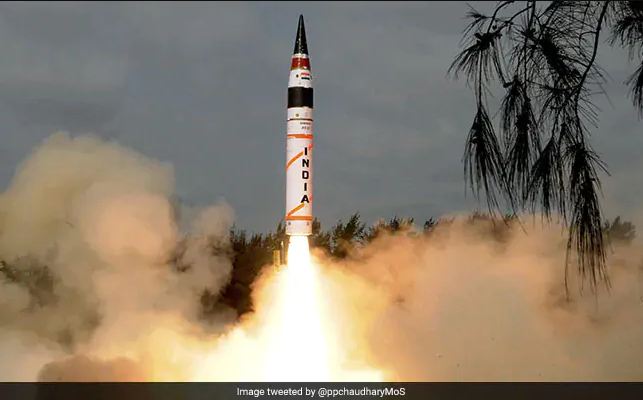
Such a stance was accompanied by moving towards deployment of Agni V, a cannister launched ballistic missile, which in turn necessarily asked for warheads to be mated with delivery vehicles; and launch of Arihant, India’s own SSN, also carrying a cannisterized nuclear strike package. Shortly after the commissioning of Arihant, contours of emerging doctrine were marked clearly when Manohar Parrikar, then defense minister indicated that as India was a responsible nuclear power, it automatically meant that any use of nuclear abilities by the country would be a very carefully considered decision. Therefore, there did not exist any additional need to restraint ourselves to a binding doctrine of no-first use.

This was in turn followed up by the noted nuclear strategist, Ex-NSA of UPA, Shiv Shankar Menon’s statement in his book where he pointed out scenarios where there was indeed scope for India to consider first use in certain scenarios. While it was clear that India would not use nuclear weapons against a non-nuclear state, Menon said, “There is a potential grey area as to when India would use nuclear weapons first against another nuclear-weapon state. Circumstances are conceivable in which India might find it useful to strike first, for instance, against an NWS (nuclear weapons state) that had declared it would certainly use its weapons, and if India were certain that adversary’s launch was imminent. But India’s present nuclear doctrine is silent on this scenario.” . Yet another very significant but largely missed development in these times were the efforts to develop additional and more credible thermo-nuclear warheads thereby increasing the impact of our arsenal. A part of these efforts would certainly be an essential mini-test infrastructure, based on laser ignition facility to enable thermonuclear weapons to be tested without a full explosion.

Yet another key factoid which we must examine in this context is India’s Joint Armed Forces Doctrine published in 2017. This was a critical document which formalized the principles that guide the Indian military’s approach to war fighting. The document addresses the force’s needs across “full spectrum of military conflict.” In that it covers Indian military’s approach to everything from nuclear war to internal security and counter-insurgency. Apart from the formalization of the approach of “surgical-strikes”, the other notable part that stood out in the document was the presentation of India’s nuclear strategy. This was the first official document capturing the hitherto demi-official pronouncements of change of stance from “credible minimum deterrence” (CMD) to “credible deterrence” (CD). This formulation now allows India to use as much of force against an enemy as deemed necessary, up to complete and total assured destruction of the entire enemy land; instead of merely unacceptable punitive costs. In addition there was finally an articulation of limited departure from the previously stated position of NFU, when it called for:
“Conflict will be determined or prevented through a process of credible deterrence, coercive diplomacy and conclusively by punitive destruction, disruption and constraint in a nuclear environment across the Spectrum of Conflict.”
In speaking of a process of deterrence based on prevention through disruption in an nuclear environment, it made it clear, that India would be open to first strike on enemies nuclear assets if it sensed an emerging threat; using either conventional or even nuclear weapons.

What the last four years then give us, is essentially that the post-Shakti landscape has been comprehensively changed. The improved technological base has removed the concepts of de-mated warheads and mortarium on test; as well as created very credible weapon platforms. Taking advantages of the improvement in ability, the statement of intent has moved on from constraining ourselves to minimum force to maximum possible response; which if needed would be even before the enemy could act. In doing so, the last four years have conclusively answered the open questions on credibility of our nuclear posture, removed the need to quibble about the minimum force and made the debate on NFU redundant.

In this context, Rajnath Singh’s tweet today gains importance.

Once again, the Indian polity married the enhanced capabilities with declaration of intent; “a fitting response to those who indulge in nuclear blackmail”. No longer would India be constrained by the Nehruvian waffling woolly headedness, no longer would we labour under self-imposed limitations on our strength. No longer will self-doubts based on external projections define us. This is the new India, directly looking the adversary in the eye, and challenging them to battle. A dare for enemies to try and live up to their threats, and an assurance to them that if they as much as thought of making good on their claims, we would move first, swiftly and hard to put an end to such adventurism no longer than a moment after they were envisaged.

Tags: Indian nuclear doctrineRajnath Singh
Share48TweetSend
Previous Post

On Independence day, Indians in London were ambushed by thousands of Pakistani protesters turned mobs but how did London Mayor Sadiq Khan not foresee this?

Next Post

Two sacred threads and lots of liberal heart burn: Actor Ranganathan Madhavan’s ‘Sanskari appearance’ with Rakhi and Janeu loved by all but left-liberals

Related Posts

Push AMCA forward, or find alternatives: IAF chief on fifth-generation gap
Defence

Push AMCA forward, or find alternatives: IAF chief on fifth-generation gap

3 October 2026

Air Chief Marshal AP Singh on Saturday made a pointed case for speeding up India's stealth fighter plans, saying...

Who is Hamam al-Hammami? The Omani co-pilot at the centre of the flydubai attack, and the Syria question
Defence

Who is Hamam al-Hammami? The Omani co-pilot at the centre of the flydubai attack, and the Syria question

3 October 2026

The co-pilot suspected of stabbing the captain of flydubai flight FZ1073 is an Omani national named Hamam al-Hammami, according...

INS Trishul Reaches Valencia as Indian Navy’s Mediterranean Deployment Continues
Defence

INS Trishul Reaches Valencia as Indian Navy’s Mediterranean Deployment Continues

2 October 2026

Indian Naval Ship Trishul, a guided missile stealth frigate, arrived at Valencia, Spain, on 30 September. The visit is...

Load More

Leave a Reply Cancel reply

Your email address will not be published. Required fields are marked *

I agree to the Terms of use and Privacy Policy.
This site is protected by reCAPTCHA and the Google Privacy Policy and Terms of Service apply.

Currently Playing

Hanuman Chalisa Kept Me Going': Flydubai Hero Smit

Hanuman Chalisa Kept Me Going': Flydubai Hero Smit

00:10:03

How Pakistan-Linked Drug Networks Are Targeting India | Coast Guard Deals a ₹3,000 Crore Blow

00:03:28

How SkyStriker Hunts Its Target: Inside India’s Loitering Munition

00:03:49

F-35 vs Rafale? Inside India’s Biggest Air Exercise

00:05:54

China and the Philippines Are Fighting a War With Maps, Not Missiles

00:05:55
Facebook Twitter Instagram Youtube
tfipostTfipost.com
Right Wing | News Analysis | Indian Opinion
  • About us
  • Contact Us
  • Careers
  • Brand Partnerships
  • Terms of use
  • Privacy Policy
  • Sitemap

©2026 TFI Media Private Limited

No Result
View All Result
  • Premium
  • Politics
    • Analysis
    • Opinions
    • Trending
  • Economy
    • Business
    • Finance
  • Defense
    • Defence
    • Strategy
    • Weaponry
  • Geopolitics
    • Africa
    • Americas
    • Asia Pacific
    • Europe
    • South Asia
    • West Asia
  • Knowledge
    • Culture
    • History
    • Indology
  • Law
  • Lounge
    • Books
    • Cinema
    • Food
    • Health
    • Sports
    • technology
    • Travel
    • Satire
TFIPOST हिन्दी
TFIPOST Global

©2026 TFI Media Private Limited