










TFIPOST हिन्दी
TFIPOST Global
Tfipost.com
Tfipost.com
No Result
View All Result
  • Premium
  • Politics
    • All
    • Analysis
    • Opinions
    • Trending
    Mother, Child Found Locked in Final Embrace After Narmada Cruise Disaster in Jabalpur

    Mother, Child Found Locked in Final Embrace After Narmada Cruise Disaster in Jabalpur

    Amit Shah reacts to major anti-narcotics success in Mumbai operation

    Amit Shah Promises Tough Action as ₹1,745 Crore Cocaine Bust in Mumbai Exposes Global Drug Network

    From struggle to reform, India’s workers power the nation’s rise.

    Labour Day 2026: From Red Flags to Reform, How New India is Rewriting the Workers’ Future

    Dubey escalates infiltration debate in Bengal

    Bengal Poll Row Escalates After Bangladesh Parliament Remarks: Nishikant Dubey Targets TMC Over Infiltration Debate

    • Analysis
    • Opinions
    • Trending
  • Economy
    • All
    • Business
    • Economy1
    • Finance
    From struggle to reform, India’s workers power the nation’s rise.

    Labour Day 2026: From Red Flags to Reform, How New India is Rewriting the Workers’ Future

    AI, access, and accountability: Goyal’s push to transform India’s procurement system through GeM

    Goyal Speeds Up GeM Revamp, Pushes AI Tools and Wider Access to Reform Procurement System

    What are the Benefits of Critical Health Insurance in Serious Illness Cases?

    What are the Benefits of Critical Health Insurance in Serious Illness Cases?

    How Digital Verification Works In Online Personal Loan Applications

    How Digital Verification Works In Online Personal Loan Applications

    • Business
    • Finance
  • Defense
    • All
    • Defence
    • Strategy
    • Weaponry
    Dubey escalates infiltration debate in Bengal

    Bengal Poll Row Escalates After Bangladesh Parliament Remarks: Nishikant Dubey Targets TMC Over Infiltration Debate

    India called the shots, not the ceasefire: Rajnath SIngh

    India Chose the Moment, Not the Pressure: Rajnath Singh Says Operation Sindoor Halt Was a Strategic Call

    Why is Making a Jet Engine so Hard | The failure of Kaveri

    Why is Making a Jet Engine so Hard | The failure of Kaveri

    Rajnath Singh at SCO, reaffirming India’s zero-tolerance stand on terrorism.

    “No More Double Standards”: Rajnath Singh’s SCO Message Rewrites India’s Terror Response Playbook

    • Defence
    • Strategy
    • Weaponry
  • Geopolitics
    • All
    • Africa
    • Americas
    • Asia Pacific
    • Europe
    • South Asia
    • West Asia
    Karachi Pact 1949: How Pakistan Cemented Control Over Gilgit-Baltistan Without Its People’s Consent

    Karachi Pact 1949: How Pakistan Cemented Control Over Gilgit-Baltistan Without Its People’s Consent

    When law becomes an instrument of exclusion, persecution moves far beyond the courtroom.

    Ahmadis in Pakistan: From Faith to Marginalisation Under Law and Society

    When uranium becomes strategy, India moves first.

    India’s $4 Billion Uranium Coup with Kazakhstan Rewrites the Global Nuclear Balance

    “Fixing the World”: What a Century of Big Ideas Reveals About Us

    “Fixing the World”: What a Century of Big Ideas Reveals About Us

    • Africa
    • Americas
    • Asia Pacific
    • Europe
    • South Asia
    • West Asia
  • Knowledge
    • All
    • Culture
    • Education
    • History
    • Indology
    Chants of ‘Jai Badri Vishal’ Echo as Badrinath Portals Open; All Four Dhams Now Accessible to Pilgrims

    Chants of ‘Jai Badri Vishal’ Echo as Badrinath Portals Open; All Four Dhams Now Accessible to Pilgrims

    Kedarnath Dham Portals Open for Devotees After 181 Days Amid Vedic Chants, Traditional Rituals

    Kedarnath Dham Portals Open for Devotees After 181 Days Amid Vedic Chants, Traditional Rituals

    Sardar Patel and Amit Shah

    Sardar Patel’s 1947 Blueprint on Minority Quotas Resurfaces as Reservation Debate Returns to Centre Stage

    The 1973 Constitution and ‘Bhutto’ the Man Who Made It: What Pakistan Owes and What It Destroyed

    The 1973 Constitution and ‘Bhutto’ the Man Who Made It: What Pakistan Owes and What It Destroyed

    • Culture
    • History
    • Indology
  • Law
  • Lounge
    • All
    • Books
    • Cinema
    • Entertainment
    • Food
    • Games
    • Health
    • Lifestyle
    • Satire
    • Sports
    • technology
    • Travel
    From struggle to reform, India’s workers power the nation’s rise.

    Labour Day 2026: From Red Flags to Reform, How New India is Rewriting the Workers’ Future

    A journey of faith unfolds across one of India’s toughest terrains.

    Adi Kailash Yatra Begins Today: Temple Gates Open as Uttarakhand Tightens Grip on Strategic Himalayan Corridor

    Minor rape survivor’s pregnancy termination and reproductive rights

    SC Reinforces Bodily Autonomy in Teen Rape Survivor Case, Questions State Control Over Abortion Rights

    The Role of AI in Airport Security Solutions for Managing High Tourist Traffic

    The Role of AI in Airport Security Solutions for Managing High Tourist Traffic

    • Books
    • Cinema
    • Food
    • Health
    • Sports
    • technology
    • Travel
    • Satire
Tfipost.com
  • Premium
  • Politics
    • All
    • Analysis
    • Opinions
    • Trending
    Mother, Child Found Locked in Final Embrace After Narmada Cruise Disaster in Jabalpur

    Mother, Child Found Locked in Final Embrace After Narmada Cruise Disaster in Jabalpur

    Amit Shah reacts to major anti-narcotics success in Mumbai operation

    Amit Shah Promises Tough Action as ₹1,745 Crore Cocaine Bust in Mumbai Exposes Global Drug Network

    From struggle to reform, India’s workers power the nation’s rise.

    Labour Day 2026: From Red Flags to Reform, How New India is Rewriting the Workers’ Future

    Dubey escalates infiltration debate in Bengal

    Bengal Poll Row Escalates After Bangladesh Parliament Remarks: Nishikant Dubey Targets TMC Over Infiltration Debate

    • Analysis
    • Opinions
    • Trending
  • Economy
    • All
    • Business
    • Economy1
    • Finance
    From struggle to reform, India’s workers power the nation’s rise.

    Labour Day 2026: From Red Flags to Reform, How New India is Rewriting the Workers’ Future

    AI, access, and accountability: Goyal’s push to transform India’s procurement system through GeM

    Goyal Speeds Up GeM Revamp, Pushes AI Tools and Wider Access to Reform Procurement System

    What are the Benefits of Critical Health Insurance in Serious Illness Cases?

    What are the Benefits of Critical Health Insurance in Serious Illness Cases?

    How Digital Verification Works In Online Personal Loan Applications

    How Digital Verification Works In Online Personal Loan Applications

    • Business
    • Finance
  • Defense
    • All
    • Defence
    • Strategy
    • Weaponry
    Dubey escalates infiltration debate in Bengal

    Bengal Poll Row Escalates After Bangladesh Parliament Remarks: Nishikant Dubey Targets TMC Over Infiltration Debate

    India called the shots, not the ceasefire: Rajnath SIngh

    India Chose the Moment, Not the Pressure: Rajnath Singh Says Operation Sindoor Halt Was a Strategic Call

    Why is Making a Jet Engine so Hard | The failure of Kaveri

    Why is Making a Jet Engine so Hard | The failure of Kaveri

    Rajnath Singh at SCO, reaffirming India’s zero-tolerance stand on terrorism.

    “No More Double Standards”: Rajnath Singh’s SCO Message Rewrites India’s Terror Response Playbook

    • Defence
    • Strategy
    • Weaponry
  • Geopolitics
    • All
    • Africa
    • Americas
    • Asia Pacific
    • Europe
    • South Asia
    • West Asia
    Karachi Pact 1949: How Pakistan Cemented Control Over Gilgit-Baltistan Without Its People’s Consent

    Karachi Pact 1949: How Pakistan Cemented Control Over Gilgit-Baltistan Without Its People’s Consent

    When law becomes an instrument of exclusion, persecution moves far beyond the courtroom.

    Ahmadis in Pakistan: From Faith to Marginalisation Under Law and Society

    When uranium becomes strategy, India moves first.

    India’s $4 Billion Uranium Coup with Kazakhstan Rewrites the Global Nuclear Balance

    “Fixing the World”: What a Century of Big Ideas Reveals About Us

    “Fixing the World”: What a Century of Big Ideas Reveals About Us

    • Africa
    • Americas
    • Asia Pacific
    • Europe
    • South Asia
    • West Asia
  • Knowledge
    • All
    • Culture
    • Education
    • History
    • Indology
    Chants of ‘Jai Badri Vishal’ Echo as Badrinath Portals Open; All Four Dhams Now Accessible to Pilgrims

    Chants of ‘Jai Badri Vishal’ Echo as Badrinath Portals Open; All Four Dhams Now Accessible to Pilgrims

    Kedarnath Dham Portals Open for Devotees After 181 Days Amid Vedic Chants, Traditional Rituals

    Kedarnath Dham Portals Open for Devotees After 181 Days Amid Vedic Chants, Traditional Rituals

    Sardar Patel and Amit Shah

    Sardar Patel’s 1947 Blueprint on Minority Quotas Resurfaces as Reservation Debate Returns to Centre Stage

    The 1973 Constitution and ‘Bhutto’ the Man Who Made It: What Pakistan Owes and What It Destroyed

    The 1973 Constitution and ‘Bhutto’ the Man Who Made It: What Pakistan Owes and What It Destroyed

    • Culture
    • History
    • Indology
  • Law
  • Lounge
    • All
    • Books
    • Cinema
    • Entertainment
    • Food
    • Games
    • Health
    • Lifestyle
    • Satire
    • Sports
    • technology
    • Travel
    From struggle to reform, India’s workers power the nation’s rise.

    Labour Day 2026: From Red Flags to Reform, How New India is Rewriting the Workers’ Future

    A journey of faith unfolds across one of India’s toughest terrains.

    Adi Kailash Yatra Begins Today: Temple Gates Open as Uttarakhand Tightens Grip on Strategic Himalayan Corridor

    Minor rape survivor’s pregnancy termination and reproductive rights

    SC Reinforces Bodily Autonomy in Teen Rape Survivor Case, Questions State Control Over Abortion Rights

    The Role of AI in Airport Security Solutions for Managing High Tourist Traffic

    The Role of AI in Airport Security Solutions for Managing High Tourist Traffic

    • Books
    • Cinema
    • Food
    • Health
    • Sports
    • technology
    • Travel
    • Satire
No Result
View All Result
Tfipost.com
Tfipost.com
No Result
View All Result
  • Premium
  • Politics
  • Economy
  • Defense
  • Geopolitics
  • Knowledge
  • Law
  • Lounge

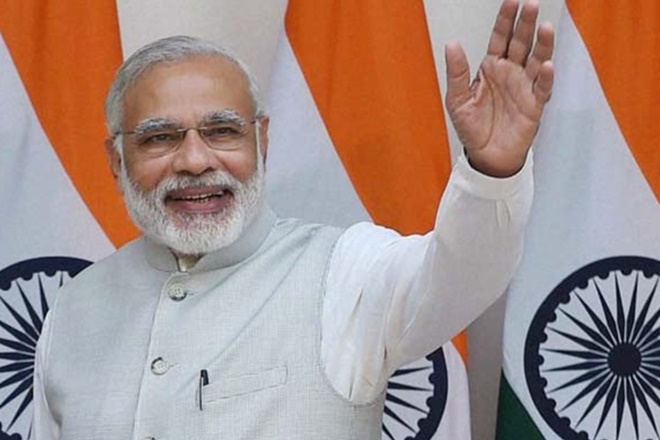
Significance of PM Modi’s visit to Maldives

Shubhangi Sharma by Shubhangi Sharma
15 November 2018
in Geopolitics, South Asia
Maldives, India, China

PC: Financial Express

Share on FacebookShare on X

Prime Minister Narendra Modi will be visiting the strategically located island nation of the Maldives for the first time on November 17, 2018. The Ministry of External Affairs has confirmed that he will be attending the swearing-in ceremony of the new President elect, Ibrahim Mohamed Solih, after receiving an invitation for the same.

In a relief to the democratic forces of the world, Ibrahim Mohamed Solih obtained a clear victory in the September 23 elections in the Republic of Maldives. “Ibu” of the Maldivian Democratic Party was made the presidential candidate after Party President Mohamed Nasheed withdrew citing his disqualification under the Abdulla Yameen government which he also pointed as “illegal”. This election result with over 89.2% voter turnout is reflective of India’s influence in the neighboring country after fears over the despotic Abdulla Yameen’s rule began gaining ground. Backed by religious extremism, Yameen government pursued a pro-China policy tilting the scales to such a degree that it triggered a severe diplomatic crisis in New Delhi.

RelatedPosts

Trump’s India ‘Hellhole’ Insult Triggers Backlash as New Delhi Hits Back, US Scrambles for Damage Control

PLA Navy Day Spectacle vs South China Sea Reality: How Beijing’s Naval Pageantry Masks Maritime Coercion

Hormuz Reopens, Xi ‘Very Happy’ as Trump Signals Major Shift in US–China Equation

Load More

CLOSENESS WITH INDIA OVER THE DECADES

Relations with India were established right after independence from the British in 1965. Maldives viewed India as a counterbalance to Sri Lanka and as a source of aid. India and Maldives signed a Comprehensive Trade Agreement in 1981 and are founding members of the SAARC. They also amicably settled boundary disputes and are early signatories of the South Asian Free Trade Agreement.

One of the most crucial phases of Indo-Maldivian relations emerged in 1988, when the Indian Army’s “Operation Cactus” foiled a coup in the Maldives attempted by armed militants of the People’s Liberation Organization of Tamil Eelam. Within 12 hours, 1600 Indian soldiers arrived to neutralize the militants. President Yameen in an interview had expressed his recognition of India’s instantaneous action, which was also hailed by the world community, stating that the Maldives would have lost independence if India had not intervened.

Intensive cooperation in economic and social development of Maldives and also in defense has been a characteristic trait of the relationship between the two countries. There has also been an abundance of goodwill gestures over the decades. When in 2014, a fire destroyed Male’s biggest water treatment plant, triggering a drinking water crisis- India dispatched bottled water in heavy lift aircrafts and also sent naval ships installed with desalination plants.

INCREASING AFFINITY FOR CHINA

Legendary Chinese leader Deng Xiaopeng had envisaged his vision to expand Chinese hegemony to other regions. The Indian Ocean region is paramount to China within which it not only aims to establish a safe passage for their trade with new-found allies in Africa but also to counter its only and possibly a major rival in the region, India.

In the Maldives, within less than a decade, China has made huge investments and is pushing for infrastructure development projects including a bridge between the Capital island, Male and the island with the airport, Hulhumalé. Maldives is also part of China’s Maritime Silk Road Project despite India expressing its reservations. Besides, China desires to set up a military base in Maldives, after leasing out an island under a liberalized leasing scheme ushered in by Yameen. Further, in a giant setback to Indian diplomacy, Male’s first Free Trade Agreement with any country was signed with China in 2017. It is also China’s second FTA, the first being with Pakistan. The document of more than a thousand pages was signed off after only an hour of discussion in the parliament. Fears of crippling debt and the subsequent risks to the nation’s sovereignty were echoed by the opposition and the international community alike.

YAMEEN’S RULE AND NARENDRA MODI’S DIPLOMATIC RESPONSES

In February 2015, the first democratically elected President, Mohamed Nasheed, was arrested on terror charges and sentenced to 13 years of imprisonment. He was forced out of power in 2012 and since then Yameen, ruled with rigorous control. In 2013 he won a shock victory with just over 51% of the vote, amid allegations of a rigged election. He then jailed the Chief Justice of the Supreme court along with his eighty year old half brother and former ruler of thirty 30 years, Maumoon Abdul Gayoom.  He declared a state of emergency preventing the parliament from removing him.

Yameen’s rule was viewed with grave concerns for Maldivian sovereignty and its economy. Chinese investments and assertiveness had grown manifold and to the extent that the Maldives owes 80% of its foreign debt to China which is also 25% of its GDP.

Amid arrests of opposition leaders and the political turmoil, Narendra Modi cancelled a visit to Male in 2015, while visiting all other friendly countries in the Indian Ocean Region leaving the Maldives to be the only SAARC nation not visited by the Prime Minister. In June, 2018, the Maldives blocked work permits to Indians and asked India to take back its two helicopters and 48-member crew from Male. In the same month, India not only voted against it at the UN Security Council for a non-permanent seat but also ensured that it loses by a colossal margin, to Indonesia. India also reduced restriction-free imports to Maldives indicating its strong stand against the political turmoil in the country, increasing tensions.

Yameen’s utter disregard for democratic values and calls from the opposition for military intervention had put New Delhi in a spot. Hence, the September 23 elections were being closely watched. India’s patience proved worthwhile with the favored opposition’s overwhelming victory.

Abdulla Yameen of The Peoples Progressive Party, after accepting defeat in the September 23 elections, retracted and rejected the election with his party terming it as the “most farcical election in living memory” and raised unsubstantiated claims about the election in a petition filed in the Supreme Court. This act was condemned by the international community. Hundreds of Maldivians took to the streets to demand his arrest but even as he prepared to step down he expressed his lack of regret for any of his actions as president and asserted that it was all in the interest of the nation.

TESTAMENT TO RAW’S CAPABILITIES IN THE IOR?

In 2015 Sri Lankan president Mahinda Rajapaksa was voted out of power in a shocking loss to Maithripala Sirisena. Rajapaksa’s rule had seen a bloody war conclude against Tamil Eelam militant groups but his image was tainted for Human rights violations and extrajudicial killings by Sri Lankan forces. Shunned by the world community including India, Rajapaksa found a friend in China, a super power that only means business. Rajapaksa pushed Sri Lanka into billions of dollars of debt to China, putting its sovereignty at risk despite being cautioned by India. But it was when Chinese submarines docked in Sri Lanka twice, that is alleged to have marked the turning point in India’s approach. When the station chief of the Research and Analysis Wing of India was expelled from Colombo, suspicions over its role in the 2015 elections were viewed to be vindicated, amid allegations of the agent being closely involved in assisting the opposition through the election campaign.

Similarly, with New Delhi’s concerns rising to the extent of contemplating a military intervention in the Maldives, a covert hand in restoring India’s strategic interest in a peaceful manner, may or may not have skipped approval.

SIGNIFICANCE OF THE INDIAN OCEAN REGION

The Indian Ocean is the economic lifeline of two Billion people in the region. Its two major strategic chokeholds: the Strait of Hormuz in the west and the Strait of Malacca in the east are incredibly important as they control 80% of the world’s oil transit. All major superpowers and regional powers have their eye on the region and its various island and coastal nations find their geopolitical significance unravelling. India’s Lakshadweep Islands and Andaman & Nicobar Islands grant it vast areas of control in the ocean. The US naval base on the Mauritian atoll Diego Garcia can keep a check on targets as far as Afghanistan and Iraq. But growing assertiveness of China in the region has required India to up its game.

The NDA government’s foreign policy in the Indian Ocean region is unfolding to be a success. The Maldives has a crucial strategic location in the Indian Ocean along the major sea lanes of communication. With Abdulla Yameen packing his bags, China’s good run in the Maldives may for now come to a halt. Preventing China from adding another one to its “string of pearls” with which it intends to encircle, with its naval presence, the entire South Asia, has been India’s desperate goal. India’s “infrastructure development” agreements with Mauritius and Seychelles for their Agaléga island and Assumption island respectively, are indicative of the initiation of Modi’s diplomatic success in capping China’s assertiveness, with India’s own foreign naval bases. Acquiring an airport in Hambantota, Sri Lanka, even though a desolate one, assures Indian presence close to the upcoming Chinese naval base delivering some respite to India on its quest to contain a belligerent China’s growing influence.

Besides, the resolute Modi government, exhibiting crucial decisive traits, has signed two major agreements with the USA- the Logistics Exchange Memorandum of Agreement (LEMOA) and the Communications, Compatibility and Security Agreement (COMCASA) which, among other things, will help push the Chinese menace back from the Indian Ocean Region.

It is important to closely watch the events unfolding in the Maldives- how the new regime deals with Chinese debt and whether it takes steps to reverse the FTA with China or not. It must also act against growing Islamic extremism. For India, reinvigorating investment and raising exports to the Maldives should be a major objective, besides stabilizing the region and dealing diligently with Chinese advances.

Tags: 1967 Indo-China WarChinaIndia MaldivesIndia-ChinaIndian Foreign PolicyMaldivesPM Modi
Share1149TweetSend
Previous Post

An affair gone wrong, Binny Bansal made to leave

Next Post

Dangerous trend of weaponisation of language by the left wing

Related Posts

Karachi Pact 1949: How Pakistan Cemented Control Over Gilgit-Baltistan Without Its People’s Consent
Geopolitics

Karachi Pact 1949: How Pakistan Cemented Control Over Gilgit-Baltistan Without Its People’s Consent

29 April 2026

The story of Pakistan's control over Gilgit-Baltistan begins not with the will of its people, but with a secret...

When law becomes an instrument of exclusion, persecution moves far beyond the courtroom.
Geopolitics

Ahmadis in Pakistan: From Faith to Marginalisation Under Law and Society

28 April 2026

The troubles of Ahmadis in Pakistan are not merely those of a religious minority. Their story is about how...

When uranium becomes strategy, India moves first.
Geopolitics

India’s $4 Billion Uranium Coup with Kazakhstan Rewrites the Global Nuclear Balance

28 April 2026

India has secured a landmark uranium supply agreement worth more than US$4 billion with Kazakhstan’s state-run mining giant Kazatomprom....

Load More

Leave a Reply Cancel reply

Your email address will not be published. Required fields are marked *

I agree to the Terms of use and Privacy Policy.
This site is protected by reCAPTCHA and the Google Privacy Policy and Terms of Service apply.

Currently Playing

From Runways to Warships: India’s Firefighting Warrior Built for Bases & Battles| IAF | VayuShakti

From Runways to Warships: India’s Firefighting Warrior Built for Bases & Battles| IAF | VayuShakti

00:05:40

Ethanol, EVs and Solar- How India’s Energy Game Is Changing | Modi on LPG & Crude Oil | war| Hormuz

00:05:21

Truth of IRIS Dena: 8 Days That Changed Narrative | War zone Reality, Not an Indian Navy Exercise

00:08:02

300 Million Euros for SCALP: Strategic Necessity or Costly Dependency on France300

00:04:06

Tejas Mk1A: 19th aircraft coupled but Not Delivered: What Is Holding Back the IAF Induction?

00:07:21
Facebook Twitter Instagram Youtube
tfipostTfipost.com
Right Wing | News Analysis | Indian Opinion
  • About us
  • Contact Us
  • Careers
  • Brand Partnerships
  • Terms of use
  • Privacy Policy
  • Sitemap

©2026 TFI Media Private Limited

No Result
View All Result
  • Premium
  • Politics
    • Analysis
    • Opinions
    • Trending
  • Economy
    • Business
    • Finance
  • Defense
    • Defence
    • Strategy
    • Weaponry
  • Geopolitics
    • Africa
    • Americas
    • Asia Pacific
    • Europe
    • South Asia
    • West Asia
  • Knowledge
    • Culture
    • History
    • Indology
  • Law
  • Lounge
    • Books
    • Cinema
    • Food
    • Health
    • Sports
    • technology
    • Travel
    • Satire
TFIPOST हिन्दी
TFIPOST Global

©2026 TFI Media Private Limited