















TFIPOST हिन्दी
TFIPOST Global
Tfipost.com
Tfipost.com
No Result
View All Result
  • Premium
  • Politics
    • All
    • Analysis
    • Opinions
    • Trending
    Terror for Hindus in Bangladesh continues, Body of Hindu Temple Caretaker Found in Southeastern Bangladesh

    Terror for Hindus in Bangladesh continues, Body of Hindu Temple Caretaker Found in Southeastern Bangladesh

    Judicial order, political defiance.

    From Recusal to Revolt: Kejriwal Boycotts Delhi HC Proceedings

    Recovered bombs raise concerns ahead of voting

    Bombs Before Ballots: NIA Enters Bengal as Explosives Trail Raises Questions Over TMC’s Violence Model

    DRDO Unveils Advanced Indigenous Armoured Platforms For Combat Support in Deserts, Riverine Areas

    DRDO Unveils Advanced Indigenous Armoured Platforms For Combat Support in Deserts, Riverine Areas

    • Analysis
    • Opinions
    • Trending
  • Economy
    • All
    • Business
    • Economy1
    • Finance
    Ahmadis in Pakistan: From Faith to Marginalisation Under Law and Society

    Ahmadis in Pakistan: From Faith to Marginalisation Under Law and Society

    Open Demat Account with Zero Annual Maintenance Charges What to Look For

    Open Demat Account with Zero Annual Maintenance Charges What to Look For

    Blood in the Meadows: How the Pahalgam Terror Attack Exposed Calculated Targeting of Civilians in Kashmir

    Blood in the Meadows: How the Pahalgam Terror Attack Exposed Calculated Targeting of Civilians in Kashmir

    Indian economy is stronger than the ranking.

    IMF Ranking Jolt Misread: India’s Economy Strong, Sixth Spot Just a Statistical Glitch

    • Business
    • Finance
  • Defense
    • All
    • Defence
    • Strategy
    • Weaponry
    The scars of Pahalgam endure, even as the nation moves forward

    Pahalgam Anniversary: Modi Signals Firm National Stand as India Reasserts Anti-Terror Resolve

    Precision Strike: Indian Army Approves Procurement of Indigenous MPATGM to Modernise Infantry Wings

    Precision Strike: Indian Army Approves Procurement of Indigenous MPATGM to Modernise Infantry Wings

    Amit Shah on sensitive Gorkha land issue

    Shah Assures Constitutional Path for Gorkha Issue, Intensifies Attack on TMC at Bengal Rally

    Historic Leap for ‘Aatmanirbhar Bharat’ as First India-Made BrahMos Missiles from Lucknow Join Indian Army

    Historic Leap for ‘Aatmanirbhar Bharat’ as First India-Made BrahMos Missiles from Lucknow Join Indian Army

    • Defence
    • Strategy
    • Weaponry
  • Geopolitics
    • All
    • Africa
    • Americas
    • Asia Pacific
    • Europe
    • South Asia
    • West Asia
    Pakistan Tried to Bury an NYT Report. It Only Exposed Asim Munir’s Panic

    Pakistan Tried to Bury an NYT Report. It Only Exposed Asim Munir’s Panic

    The Strategic Double-Game: Pakistan’s Fatal Gambit in the US-Iran War

    The Strategic Double-Game: Pakistan’s Fatal Gambit in the US-Iran War

    When a repost became a foreign policy problem

    Trump’s India ‘Hellhole’ Insult Triggers Backlash as New Delhi Hits Back, US Scrambles for Damage Control

    PLA Navy Day Spectacle vs South China Sea Reality: How Beijing’s Naval Pageantry Masks Maritime Coercion

    PLA Navy Day Spectacle vs South China Sea Reality: How Beijing’s Naval Pageantry Masks Maritime Coercion

    • Africa
    • Americas
    • Asia Pacific
    • Europe
    • South Asia
    • West Asia
  • Knowledge
    • All
    • Culture
    • Education
    • History
    • Indology
    Chants of ‘Jai Badri Vishal’ Echo as Badrinath Portals Open; All Four Dhams Now Accessible to Pilgrims

    Chants of ‘Jai Badri Vishal’ Echo as Badrinath Portals Open; All Four Dhams Now Accessible to Pilgrims

    Kedarnath Dham Portals Open for Devotees After 181 Days Amid Vedic Chants, Traditional Rituals

    Kedarnath Dham Portals Open for Devotees After 181 Days Amid Vedic Chants, Traditional Rituals

    Sardar Patel and Amit Shah

    Sardar Patel’s 1947 Blueprint on Minority Quotas Resurfaces as Reservation Debate Returns to Centre Stage

    The 1973 Constitution and ‘Bhutto’ the Man Who Made It: What Pakistan Owes and What It Destroyed

    The 1973 Constitution and ‘Bhutto’ the Man Who Made It: What Pakistan Owes and What It Destroyed

    • Culture
    • History
    • Indology
  • Law
  • Lounge
    • All
    • Books
    • Cinema
    • Entertainment
    • Food
    • Games
    • Health
    • Lifestyle
    • Satire
    • Sports
    • technology
    • Travel
    Digital Data Collection In India

    India’s Data Reset Begins: Census 2027 to Become First Fully Digital Population Count

    5 Facilities in Bengaluru Specializing in Mental Health Treatment for Those with Cancer

    5 Facilities in Bengaluru Specializing in Mental Health Treatment for Those with Cancer

    UNESCO World Book Day and Copyright Day

    World Book Day 2026: UNESCO’s Multilingual Push Aligns with India’s Deep Literary Continuum

    Fashion Fusion Accessory Pairings That Modernize Your Look

    Fashion Fusion Accessory Pairings That Modernize Your Look

    • Books
    • Cinema
    • Food
    • Health
    • Sports
    • technology
    • Travel
    • Satire
Tfipost.com
  • Premium
  • Politics
    • All
    • Analysis
    • Opinions
    • Trending
    Terror for Hindus in Bangladesh continues, Body of Hindu Temple Caretaker Found in Southeastern Bangladesh

    Terror for Hindus in Bangladesh continues, Body of Hindu Temple Caretaker Found in Southeastern Bangladesh

    Judicial order, political defiance.

    From Recusal to Revolt: Kejriwal Boycotts Delhi HC Proceedings

    Recovered bombs raise concerns ahead of voting

    Bombs Before Ballots: NIA Enters Bengal as Explosives Trail Raises Questions Over TMC’s Violence Model

    DRDO Unveils Advanced Indigenous Armoured Platforms For Combat Support in Deserts, Riverine Areas

    DRDO Unveils Advanced Indigenous Armoured Platforms For Combat Support in Deserts, Riverine Areas

    • Analysis
    • Opinions
    • Trending
  • Economy
    • All
    • Business
    • Economy1
    • Finance
    Ahmadis in Pakistan: From Faith to Marginalisation Under Law and Society

    Ahmadis in Pakistan: From Faith to Marginalisation Under Law and Society

    Open Demat Account with Zero Annual Maintenance Charges What to Look For

    Open Demat Account with Zero Annual Maintenance Charges What to Look For

    Blood in the Meadows: How the Pahalgam Terror Attack Exposed Calculated Targeting of Civilians in Kashmir

    Blood in the Meadows: How the Pahalgam Terror Attack Exposed Calculated Targeting of Civilians in Kashmir

    Indian economy is stronger than the ranking.

    IMF Ranking Jolt Misread: India’s Economy Strong, Sixth Spot Just a Statistical Glitch

    • Business
    • Finance
  • Defense
    • All
    • Defence
    • Strategy
    • Weaponry
    The scars of Pahalgam endure, even as the nation moves forward

    Pahalgam Anniversary: Modi Signals Firm National Stand as India Reasserts Anti-Terror Resolve

    Precision Strike: Indian Army Approves Procurement of Indigenous MPATGM to Modernise Infantry Wings

    Precision Strike: Indian Army Approves Procurement of Indigenous MPATGM to Modernise Infantry Wings

    Amit Shah on sensitive Gorkha land issue

    Shah Assures Constitutional Path for Gorkha Issue, Intensifies Attack on TMC at Bengal Rally

    Historic Leap for ‘Aatmanirbhar Bharat’ as First India-Made BrahMos Missiles from Lucknow Join Indian Army

    Historic Leap for ‘Aatmanirbhar Bharat’ as First India-Made BrahMos Missiles from Lucknow Join Indian Army

    • Defence
    • Strategy
    • Weaponry
  • Geopolitics
    • All
    • Africa
    • Americas
    • Asia Pacific
    • Europe
    • South Asia
    • West Asia
    Pakistan Tried to Bury an NYT Report. It Only Exposed Asim Munir’s Panic

    Pakistan Tried to Bury an NYT Report. It Only Exposed Asim Munir’s Panic

    The Strategic Double-Game: Pakistan’s Fatal Gambit in the US-Iran War

    The Strategic Double-Game: Pakistan’s Fatal Gambit in the US-Iran War

    When a repost became a foreign policy problem

    Trump’s India ‘Hellhole’ Insult Triggers Backlash as New Delhi Hits Back, US Scrambles for Damage Control

    PLA Navy Day Spectacle vs South China Sea Reality: How Beijing’s Naval Pageantry Masks Maritime Coercion

    PLA Navy Day Spectacle vs South China Sea Reality: How Beijing’s Naval Pageantry Masks Maritime Coercion

    • Africa
    • Americas
    • Asia Pacific
    • Europe
    • South Asia
    • West Asia
  • Knowledge
    • All
    • Culture
    • Education
    • History
    • Indology
    Chants of ‘Jai Badri Vishal’ Echo as Badrinath Portals Open; All Four Dhams Now Accessible to Pilgrims

    Chants of ‘Jai Badri Vishal’ Echo as Badrinath Portals Open; All Four Dhams Now Accessible to Pilgrims

    Kedarnath Dham Portals Open for Devotees After 181 Days Amid Vedic Chants, Traditional Rituals

    Kedarnath Dham Portals Open for Devotees After 181 Days Amid Vedic Chants, Traditional Rituals

    Sardar Patel and Amit Shah

    Sardar Patel’s 1947 Blueprint on Minority Quotas Resurfaces as Reservation Debate Returns to Centre Stage

    The 1973 Constitution and ‘Bhutto’ the Man Who Made It: What Pakistan Owes and What It Destroyed

    The 1973 Constitution and ‘Bhutto’ the Man Who Made It: What Pakistan Owes and What It Destroyed

    • Culture
    • History
    • Indology
  • Law
  • Lounge
    • All
    • Books
    • Cinema
    • Entertainment
    • Food
    • Games
    • Health
    • Lifestyle
    • Satire
    • Sports
    • technology
    • Travel
    Digital Data Collection In India

    India’s Data Reset Begins: Census 2027 to Become First Fully Digital Population Count

    5 Facilities in Bengaluru Specializing in Mental Health Treatment for Those with Cancer

    5 Facilities in Bengaluru Specializing in Mental Health Treatment for Those with Cancer

    UNESCO World Book Day and Copyright Day

    World Book Day 2026: UNESCO’s Multilingual Push Aligns with India’s Deep Literary Continuum

    Fashion Fusion Accessory Pairings That Modernize Your Look

    Fashion Fusion Accessory Pairings That Modernize Your Look

    • Books
    • Cinema
    • Food
    • Health
    • Sports
    • technology
    • Travel
    • Satire
No Result
View All Result
Tfipost.com
Tfipost.com
No Result
View All Result
  • Premium
  • Politics
  • Economy
  • Defense
  • Geopolitics
  • Knowledge
  • Law
  • Lounge

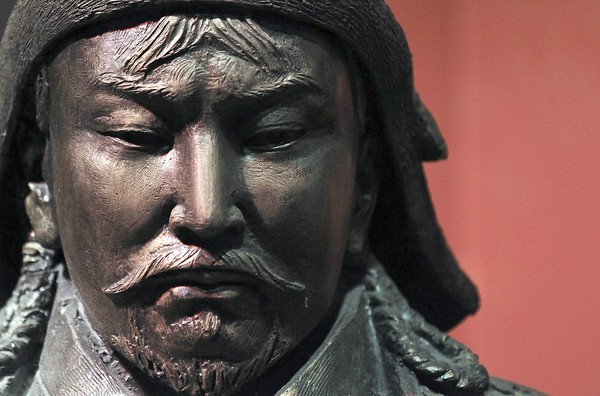
He could have captured any country on the planet, So why didn’t Genghis Khan invade India?

Kunal Sangwan by Kunal Sangwan
20 May 2017
in History
genghis khan khan of khans mongols india

Image Courtesy: LunaticOutPost

Share on FacebookShare on X

In 1327, the Sultan Muhammad Bin Tughlaq less than successfully repelled what would be the final Mongol attack on India, part of the failed 116-year campaign to conquer the Sultanate that had been surprisingly devoid of the leadership of Genghis Khan himself. It’s thus important to question – why didn’t Genghis Khan ever invade India?

Contemporary historians’ theories – especially prominent after Independence – pinned the entire saga on a certain fabled legend concerning the disregard of Muslim tenants by Iltutmish, though one would need to delve into the entire political and societal rigamarole that took place in Central Asia during the Sultan’s reign to attain clarity.

RelatedPosts

Malik Ambar and the Maratha Connection: A Tale of Strategic Alliances

Sexual Slavery: An ideology that unites Genghis Khan and the Islamic State

Load More

By 1219, Genghis Khan had conquered a fraction of what would later become China, remnants to the modern landscape of which would later be captured by his grandson, Kublai Khan. Further, the nomadic empire made significant inroads toward the junction of Central Asia and Eastern Europe, where the Mongols encountered, for the first time, entire nation-states composed of a gene-pool completely alien to theirs. The territories that had bordered Mongolia prior to the rise of Genghis Khan submitted at once after him attaining the title ‘Khan of Khans’, although these states were oblivious to his conquests, and would need to be tamed with force.

Nonetheless, Mongol influence continued to expand rapidly, and Genghis Khan decided against waging war on the junction states, and instead sought to establish in his fledgling empire something often ignored in foreign historiographies of the Mongolian hegemony – trade.

Genghis Khan encouraged free trade within the Mongol territory, initiating perhaps the first concerted attempt on part of an Asian Emperor to bring about globalisation. To facilitate this, Genghis maintained control over the external facets of trade, such as looting and pillaging that could hamper it. To eliminate them, strict measures were taken and the methods employed by Mongol regional administrators became notorious for their harsh, often bloodthirsty nature, thereby deterring potential criminals from committing social evils.

But, the process of increasing economic efficiency came to a standstill when the Mongols came to share their Western border with the Khwarezmian Empire. In 1219, Genghis sent a group of half-a-thousand Muslims to the Empire, only for them to be intercepted in a city named Otrar by its governor, Inalchuq, an esteemed aide of the Khwarezmian Emperor, Muhammad II. Both men had been relayed substantial information about Genghis Khan’s legendary brutality, but little of his eagerness to trade, and deemed the convoy’s entrance into their empire as an act of war. The Muslims were thus incarcerated on charges of espionage despite their being a dearth of evidence to suggest the same. Some sources argue that the group was later executed, although it’s certain that they weren’t allowed to return and that news of their imprisonment was sent back through a messenger.
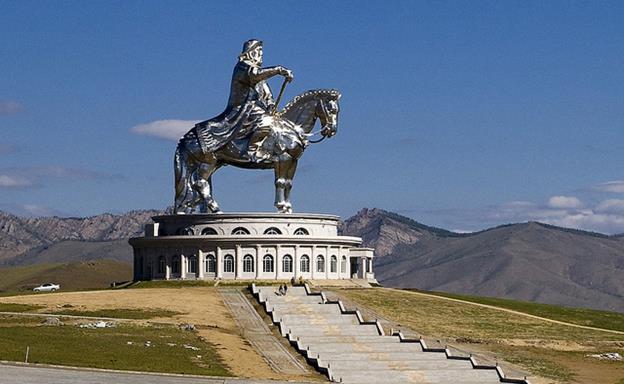
genghis khan mongols india
Monument of Genghis Khan in Mongolia, Image Courtesy : Wolverton Mountain

Yet, the Khan received the news lightly, perhaps understanding the Khwarezmian paranoia, and sent another group to forge trade relations with them, this time straight to Samarkand, the seat of their empire. But, the token of friendship and willingness to engage in trade on Genghis’ part was mistaken to be an act of mockery on that of Muhammad II for he thought it to undermine the jurisdiction of both him and Inalchuq. Already convinced by the Mongols’ track-record of invasions that his empire too had come under the proverbial sword, Muhammad did what he thought would send out a strong message to his rival, beheading the Muslim aide and sending the head back in the palms of the now-shaven Mongols. 

Muhammad II did what he set out to achieve, sending a symbol of revolt that possessed such strength it convinced the Khan to pull almost his entire army from Northern China and head straight into the heart of his empire. Thus, in the summer of 1219, ten tomans – or hundred thousand – of the Khan’s men marched through the Steppes and waged war upon the Khawarezmians.

The subsequent bloodshed would remain unmatched for centuries in human history, taking the lives of more than 250,000. To put that into perspective, the current human population stands at a staggering seven billion, and the worst loss of life in recorded history occurred during the Second World War, in which more than 75 million died, more than 3% of the world’s population at the time. In comparison, the Mongolian conquest of Khwarezemia took the lives of more than 1,500,000 or 0.5% of the planet’s population at the time, despite it being neither global nor even a conflict, but rather a mere genocide confined to a menial region on the world-map.

The remaining population of the empire was enslaved, although a portion of the royal family, including Muhammad II himself, managed to escape. But Genghis didn’t send his men for Muhammad, and the Khawrezmian ruler died on a remote Mediterranean island merely weeks later. Inalchuq, on the other hand, was spared death during the general massacre of Otrar’s population, only to be privately executed in front of the Khan himself. 

Genghis Khan was known for his penchant to extract information from captured prisoners, and these furnished details regarding the other surviving members of the king’s lineage. Thus, word emerged that Muhammad II’s son, Jalaluddin Mingburnu, the heir to his throne, had fled toward Afghanistan. Genghis, seeking to destroy any possibility of a Khwarezmian revival, mobilised two tomans – or twenty thousand – of his soldiers and sent them after Mingburnu, himself accompanied by the remnants of his father’s army.

The Mongol battalion caught up with the Khwarezmians at the town of Parwan, although Mingburnu had succeeded in enlisting the support of nearby Afghani tribes by guaranteeing them the last of his wealth, and were taken by surprise at the swelled numbers of his men, before being defeated swiftly.

A menial group survived and informed the Genghis Khan of their loss, convincing him to maintain pursuit. On the other hand, the Afghans, having attained their promised wealth, deserted Mingburnu in the battle’s aftermath, thereby compelling him to move further toward India.

The regions of and adjacent to Multan and Punjab had been, for years, involved in a perennial state of conflict between Sultan Iltutmish and Nasiruddin Qabacha, Multan’s revolting governor who wished to rule the Delhi Sultanate over his status as a former general of Mohammed Ghori, leaving the administration of both provinces in shreds.

Thus, with the political vacuum still intact upon his arrival, Mingburnu acquainted himself with the region’s landscape to have an upper hand in the case of a potential battle with the pursuing Mongols, while forging long-term alliances with clans such as the Lahori Khokhars.

Despite Mingburnu’s much superior head-start, the Mongols, being the riders that they were, came to face the fleeing Khwarezmian Prince at the Indus River in 1221. This time, led by Genghis himself, the Mongols annihilated Mingburnu and his forces. Somehow, in spite of the Genghis Khan’s desire to have him killed, Mingburnu mounted and escaped yet again, although unaccompanied by anyone.

Then, in the subsequent months, came the incident that has been considered since time immemorial the one which saved India from becoming a civilisation laced with Mongol blood and tradition. 

With the last memories of his empire fading away on the banks of the Indus, Mingburnu opted to rely on the most inexorable aspect of his identity – religion. 

Mingburnu found his way into the Sultan’s court in Delhi, and pleaded for asylum on the basis of their common religion, only for Iltutmish to bluntly refuse entertaining the plea, becoming the first ruler in history to go against the established tenants of the pan-Islamic royal network.

Iltutmish had been up-to-date regarding the Khwarezmian-Mongol conflict, and fearful of the Genghis Khan’s wrath falling upon the Sultanate, for he too, like Inalchuq and Muhammad II, heard tales of the Mongols’ barbaric nihilism. To him, rejecting a safe haven to Genghis’ enemy would help avert danger, and while this did happen, it wasn’t because of Iltutmish, as most would have one believe.

The Khan had, undoubtedly, thought of invading India at some point during his unmatched imperial conquests, but the Mongols’ increasing influence brought more knowledge about the regions not immediately near their own homeland, and revelations regarding them. For one, the Mongols now understood the extent of their military tactics, and that any turf that didn’t resemble the vast, open plains of Mongolia wouldn’t favour their horses, the mastery of riding whom was almost entirely responsible for the nomads succeeding on battlefields, while the Indian climate would be even worse for their men and horses than the Middle-east, which itself had been challenging to adapt to. Further, as stated earlier, Genghis’ initial conquests were nothing but confirmations of his rule in regions that had already recognised his authority, and any additions to the empire except for these states were due to the Khan’s tendency to take revenge, the fate of the Khwarezmians bearing testimony to it.

In that way, Iltutmish did the right thing, but granting refuge to Mingburnu still wouldn’t have brought about an invasion, for the Mongols had spent a significant amount of effort in chasing Mingburnu, and defeating his armies at the Indus eliminated any reason to bother about him.

Moreover, the Mongols didn’t see India as, what historians say, a ‘low-hanging fruit’, meaning that they were unaware of the riches that would await them upon a successful invasion.

And, Genghis was too wise to invade a nation with as fragmented a political landscape as India, for although it had a major power in the form of the Sultanate, simply capturing it would compel other regional forces to pounce upon Delhi and take what they could, thereby granting the Mongols more enemies to deal with.

But, if these arguments fail to convince a person, an alternate and much more spiritual one could be used.

Growing up in the foothills of Mongolia, Temujin, as Genghis Khan was called then, was raised as a simple nomad, learning to respect nature in all its glory as everyone around him did. But, Temujin’s normal life was taken from him upon the murder of his father, the rest of his living from which point onwards would be characterised by gore and bloodshed, yet also by an unshakeable belief in the power of nature carried over from his past.

Thus, when Genghis Khan invaded China, one of the only men whose life he personally spared was Yelu Cucai, a self-proclaimed mystic of sorts. Over time, the men developed a strong bond, enough for Cucai to be part of Genghis’ envoy each time the Mongols campaigned.

One of Cucai’s tasks was to identify signs and omens, and communicate their interpretations to Genghis. Considering that his master was a conqueror, Cucai would often water his interpretations down to be black-and-white answers to the Khan’s sole question – if he would emerge victorious out of the battle he was heading to.

Almost each of Cucai’s predictions would come true over the Mongols’ rampages through Asia and Europe, leading to the Khan imbibing his blind trust in him.

A fortnight after the battle on the Indus river, as the Chinese legend goes, the Genghis Khan discussed at length with Cucai his concerns of invading India. Then, at night, while the Khan was sleeping and Cucai the only one awake in the Mongol camp, a mystical, white creature galloped toward him – a unicorn.

The creature supposedly talked to Cucai and recommended to him that the Genghis Khan turn away from India, if he cared for his legendary, undefeated string of victories. The next morning, Cucai informed Genghis of the interaction, and he took the decision to return home without a moment’s thought.

Sources:

http://www.historytoday.com/geoffrey-humble/chinggis-khan-versus-unicorn

http://www.elizabethbader.com/elizabethbadersblog/working-with-difficult-people/

https://www.era.lib.ed.ac.uk/bitstream/handle/1842/5620/Tsui2010.pdf?sequence=2

Despite modern historians explaining the creature to have been, perhaps, an endangered white rhinoceros exclusive to India, the Chinese continue to believe in Cucai’s romantic legend.

But, whatever the reason maybe, the Khan never invaded our nation and its cultural history got spared a Mongolian, nomadic makeover. 

Mingburnu would continue to be on the run for decades following the incident, eventually dying a commoner’s death at the hands of a Kurdish thief, although his heroics against Mongol adversity made him an icon in Uzbekistan. 

Iltutmish continues to be remembered by many as the consolidator of the Delhi Sultanate that would reign over the North unchallenged for the next century, while registering himself as a great patron of arts.

Genghis Khan, on the other hand, conquered more territory until his death in 1227, paving the way for establishing the largest land-based empire in world history.

Although the Tughlaqs dealt with the final Mongol invasions, those who directly traced their lineage back to Genghis’ tribesmen continued to plunder India in some capacity, until the rise of Timur, himself a descendant of Genghis, would later decimate the Sultanate’s control over the mainland.

Another descendant of Genghis named Zahiruddin Muhammad rose to the throne of a small Central Asian province named Fergana at age 11. Zahiruddin would later banish the Lodhi dynasty from Delhi and establish himself as the ruler of India. He crowned himself ‘Babur’.

The circle of Mongol-Indian relations thus came to an end.
Tags: Genghis KhanHistory of MongolsIndian-MongolsKhan of KhansKhwarezmian EmpireMingburnuMongols
Share1TweetSend
Previous Post

Wait…what! Is Donald Trump about to be impeached?

Next Post

The virus that killed so many industries in India has now entered the IT Sector

Related Posts

Sardar Patel and Amit Shah
History

Sardar Patel’s 1947 Blueprint on Minority Quotas Resurfaces as Reservation Debate Returns to Centre Stage

17 April 2026

Sardar Vallabhbhai Patel’s 1947 intervention on minority representation in India’s Constituent Assembly has returned to the centre of political...

The 1973 Constitution and ‘Bhutto’ the Man Who Made It: What Pakistan Owes and What It Destroyed
Analysis

The 1973 Constitution and ‘Bhutto’ the Man Who Made It: What Pakistan Owes and What It Destroyed

6 April 2026

Pakistan’s constitutional story is built on a contradiction so stark that it still indicts the state nearly half a...

The Fall of Lhasa: How Nine Days in 1959 Changed Tibet Forever
History

The Fall of Lhasa: How Nine Days in 1959 Changed Tibet Forever

26 March 2026

There is a photograph that has never left the minds of those who have seen it. Lhasa, March 1959,...

Load More

Comments 1

  1. Jeevesha says:
    5 years ago

    Brilliant write-up – covering all reasons.

    Reply

Leave a Reply Cancel reply

Your email address will not be published. Required fields are marked *

I agree to the Terms of use and Privacy Policy.
This site is protected by reCAPTCHA and the Google Privacy Policy and Terms of Service apply.

Currently Playing

From Runways to Warships: India’s Firefighting Warrior Built for Bases & Battles| IAF | VayuShakti

From Runways to Warships: India’s Firefighting Warrior Built for Bases & Battles| IAF | VayuShakti

00:05:40

Ethanol, EVs and Solar- How India’s Energy Game Is Changing | Modi on LPG & Crude Oil | war| Hormuz

00:05:21

Truth of IRIS Dena: 8 Days That Changed Narrative | War zone Reality, Not an Indian Navy Exercise

00:08:02

300 Million Euros for SCALP: Strategic Necessity or Costly Dependency on France300

00:04:06

Tejas Mk1A: 19th aircraft coupled but Not Delivered: What Is Holding Back the IAF Induction?

00:07:21
Facebook Twitter Instagram Youtube
tfipostTfipost.com
Right Wing | News Analysis | Indian Opinion
  • About us
  • Contact Us
  • Careers
  • Brand Partnerships
  • Terms of use
  • Privacy Policy
  • Sitemap

©2026 TFI Media Private Limited

No Result
View All Result
  • Premium
  • Politics
    • Analysis
    • Opinions
    • Trending
  • Economy
    • Business
    • Finance
  • Defense
    • Defence
    • Strategy
    • Weaponry
  • Geopolitics
    • Africa
    • Americas
    • Asia Pacific
    • Europe
    • South Asia
    • West Asia
  • Knowledge
    • Culture
    • History
    • Indology
  • Law
  • Lounge
    • Books
    • Cinema
    • Food
    • Health
    • Sports
    • technology
    • Travel
    • Satire
TFIPOST हिन्दी
TFIPOST Global

©2026 TFI Media Private Limited