












TFIPOST हिन्दी
TFIPOST Global
Tfipost.com
Tfipost.com
No Result
View All Result
  • Premium
  • Politics
    • All
    • Analysis
    • Opinions
    • Trending
    Great Nicobar Project at the Crossroads: Strategic Ambition Meets Global Propaganda Battle

    Great Nicobar Project at the Crossroads: Strategic Ambition Meets Global Propaganda Battle

    Five-State Exit Polls Hint at NDA sweep Across Key Battlegrounds

    Five-State Exit Polls Hint at NDA sweep Across Key Battlegrounds

    ECI Introduce QR-Based ID for Counting Centre Security

    ECI Introduce QR-Based ID for Counting Centre Security

    The Timothy Initiative Under Fire Over Conversion Tactics

    The Timothy Initiative Under Fire Over Conversion Tactics

    • Analysis
    • Opinions
    • Trending
  • Economy
    • All
    • Business
    • Economy1
    • Finance
    AI, access, and accountability: Goyal’s push to transform India’s procurement system through GeM

    Goyal Speeds Up GeM Revamp, Pushes AI Tools and Wider Access to Reform Procurement System

    What are the Benefits of Critical Health Insurance in Serious Illness Cases?

    What are the Benefits of Critical Health Insurance in Serious Illness Cases?

    How Digital Verification Works In Online Personal Loan Applications

    How Digital Verification Works In Online Personal Loan Applications

    Top Features to Look for in the Best Health Insurance Plan

    Top Features to Look for in the Best Health Insurance Plan

    • Business
    • Finance
  • Defense
    • All
    • Defence
    • Strategy
    • Weaponry
    India called the shots, not the ceasefire: Rajnath SIngh

    India Chose the Moment, Not the Pressure: Rajnath Singh Says Operation Sindoor Halt Was a Strategic Call

    Why is Making a Jet Engine so Hard | The failure of Kaveri

    Why is Making a Jet Engine so Hard | The failure of Kaveri

    Rajnath Singh at SCO, reaffirming India’s zero-tolerance stand on terrorism.

    “No More Double Standards”: Rajnath Singh’s SCO Message Rewrites India’s Terror Response Playbook

    Recovered arms and arrests have intensified scrutiny on a suspected cross-border terror network.

    Pakistan’s Proxy War Faces a Setback as Delhi Terror Plot is Crushed, 18 Weapons Seized

    • Defence
    • Strategy
    • Weaponry
  • Geopolitics
    • All
    • Africa
    • Americas
    • Asia Pacific
    • Europe
    • South Asia
    • West Asia
    Karachi Pact 1949: How Pakistan Cemented Control Over Gilgit-Baltistan Without Its People’s Consent

    Karachi Pact 1949: How Pakistan Cemented Control Over Gilgit-Baltistan Without Its People’s Consent

    When law becomes an instrument of exclusion, persecution moves far beyond the courtroom.

    Ahmadis in Pakistan: From Faith to Marginalisation Under Law and Society

    When uranium becomes strategy, India moves first.

    India’s $4 Billion Uranium Coup with Kazakhstan Rewrites the Global Nuclear Balance

    “Fixing the World”: What a Century of Big Ideas Reveals About Us

    “Fixing the World”: What a Century of Big Ideas Reveals About Us

    • Africa
    • Americas
    • Asia Pacific
    • Europe
    • South Asia
    • West Asia
  • Knowledge
    • All
    • Culture
    • Education
    • History
    • Indology
    Chants of ‘Jai Badri Vishal’ Echo as Badrinath Portals Open; All Four Dhams Now Accessible to Pilgrims

    Chants of ‘Jai Badri Vishal’ Echo as Badrinath Portals Open; All Four Dhams Now Accessible to Pilgrims

    Kedarnath Dham Portals Open for Devotees After 181 Days Amid Vedic Chants, Traditional Rituals

    Kedarnath Dham Portals Open for Devotees After 181 Days Amid Vedic Chants, Traditional Rituals

    Sardar Patel and Amit Shah

    Sardar Patel’s 1947 Blueprint on Minority Quotas Resurfaces as Reservation Debate Returns to Centre Stage

    The 1973 Constitution and ‘Bhutto’ the Man Who Made It: What Pakistan Owes and What It Destroyed

    The 1973 Constitution and ‘Bhutto’ the Man Who Made It: What Pakistan Owes and What It Destroyed

    • Culture
    • History
    • Indology
  • Law
  • Lounge
    • All
    • Books
    • Cinema
    • Entertainment
    • Food
    • Games
    • Health
    • Lifestyle
    • Satire
    • Sports
    • technology
    • Travel
    Minor rape survivor’s pregnancy termination and reproductive rights

    SC Reinforces Bodily Autonomy in Teen Rape Survivor Case, Questions State Control Over Abortion Rights

    594 km of speed, scale and connectivity; the Ganga Expressway opens a new development corridor across Uttar Pradesh.

    Modi Opens 594-Km Ganga Expressway, Unveils Uttar Pradesh’s New High-Speed Growth Corridor

    When regulation meets the algorithm

    India Tightens Digital Control as Online Blocking Orders Surge to 24,300 Amid AI Deepfake Trend

    Digital Data Collection In India

    India’s Data Reset Begins: Census 2027 to Become First Fully Digital Population Count

    • Books
    • Cinema
    • Food
    • Health
    • Sports
    • technology
    • Travel
    • Satire
Tfipost.com
  • Premium
  • Politics
    • All
    • Analysis
    • Opinions
    • Trending
    Great Nicobar Project at the Crossroads: Strategic Ambition Meets Global Propaganda Battle

    Great Nicobar Project at the Crossroads: Strategic Ambition Meets Global Propaganda Battle

    Five-State Exit Polls Hint at NDA sweep Across Key Battlegrounds

    Five-State Exit Polls Hint at NDA sweep Across Key Battlegrounds

    ECI Introduce QR-Based ID for Counting Centre Security

    ECI Introduce QR-Based ID for Counting Centre Security

    The Timothy Initiative Under Fire Over Conversion Tactics

    The Timothy Initiative Under Fire Over Conversion Tactics

    • Analysis
    • Opinions
    • Trending
  • Economy
    • All
    • Business
    • Economy1
    • Finance
    AI, access, and accountability: Goyal’s push to transform India’s procurement system through GeM

    Goyal Speeds Up GeM Revamp, Pushes AI Tools and Wider Access to Reform Procurement System

    What are the Benefits of Critical Health Insurance in Serious Illness Cases?

    What are the Benefits of Critical Health Insurance in Serious Illness Cases?

    How Digital Verification Works In Online Personal Loan Applications

    How Digital Verification Works In Online Personal Loan Applications

    Top Features to Look for in the Best Health Insurance Plan

    Top Features to Look for in the Best Health Insurance Plan

    • Business
    • Finance
  • Defense
    • All
    • Defence
    • Strategy
    • Weaponry
    India called the shots, not the ceasefire: Rajnath SIngh

    India Chose the Moment, Not the Pressure: Rajnath Singh Says Operation Sindoor Halt Was a Strategic Call

    Why is Making a Jet Engine so Hard | The failure of Kaveri

    Why is Making a Jet Engine so Hard | The failure of Kaveri

    Rajnath Singh at SCO, reaffirming India’s zero-tolerance stand on terrorism.

    “No More Double Standards”: Rajnath Singh’s SCO Message Rewrites India’s Terror Response Playbook

    Recovered arms and arrests have intensified scrutiny on a suspected cross-border terror network.

    Pakistan’s Proxy War Faces a Setback as Delhi Terror Plot is Crushed, 18 Weapons Seized

    • Defence
    • Strategy
    • Weaponry
  • Geopolitics
    • All
    • Africa
    • Americas
    • Asia Pacific
    • Europe
    • South Asia
    • West Asia
    Karachi Pact 1949: How Pakistan Cemented Control Over Gilgit-Baltistan Without Its People’s Consent

    Karachi Pact 1949: How Pakistan Cemented Control Over Gilgit-Baltistan Without Its People’s Consent

    When law becomes an instrument of exclusion, persecution moves far beyond the courtroom.

    Ahmadis in Pakistan: From Faith to Marginalisation Under Law and Society

    When uranium becomes strategy, India moves first.

    India’s $4 Billion Uranium Coup with Kazakhstan Rewrites the Global Nuclear Balance

    “Fixing the World”: What a Century of Big Ideas Reveals About Us

    “Fixing the World”: What a Century of Big Ideas Reveals About Us

    • Africa
    • Americas
    • Asia Pacific
    • Europe
    • South Asia
    • West Asia
  • Knowledge
    • All
    • Culture
    • Education
    • History
    • Indology
    Chants of ‘Jai Badri Vishal’ Echo as Badrinath Portals Open; All Four Dhams Now Accessible to Pilgrims

    Chants of ‘Jai Badri Vishal’ Echo as Badrinath Portals Open; All Four Dhams Now Accessible to Pilgrims

    Kedarnath Dham Portals Open for Devotees After 181 Days Amid Vedic Chants, Traditional Rituals

    Kedarnath Dham Portals Open for Devotees After 181 Days Amid Vedic Chants, Traditional Rituals

    Sardar Patel and Amit Shah

    Sardar Patel’s 1947 Blueprint on Minority Quotas Resurfaces as Reservation Debate Returns to Centre Stage

    The 1973 Constitution and ‘Bhutto’ the Man Who Made It: What Pakistan Owes and What It Destroyed

    The 1973 Constitution and ‘Bhutto’ the Man Who Made It: What Pakistan Owes and What It Destroyed

    • Culture
    • History
    • Indology
  • Law
  • Lounge
    • All
    • Books
    • Cinema
    • Entertainment
    • Food
    • Games
    • Health
    • Lifestyle
    • Satire
    • Sports
    • technology
    • Travel
    Minor rape survivor’s pregnancy termination and reproductive rights

    SC Reinforces Bodily Autonomy in Teen Rape Survivor Case, Questions State Control Over Abortion Rights

    594 km of speed, scale and connectivity; the Ganga Expressway opens a new development corridor across Uttar Pradesh.

    Modi Opens 594-Km Ganga Expressway, Unveils Uttar Pradesh’s New High-Speed Growth Corridor

    When regulation meets the algorithm

    India Tightens Digital Control as Online Blocking Orders Surge to 24,300 Amid AI Deepfake Trend

    Digital Data Collection In India

    India’s Data Reset Begins: Census 2027 to Become First Fully Digital Population Count

    • Books
    • Cinema
    • Food
    • Health
    • Sports
    • technology
    • Travel
    • Satire
No Result
View All Result
Tfipost.com
Tfipost.com
No Result
View All Result
  • Premium
  • Politics
  • Economy
  • Defense
  • Geopolitics
  • Knowledge
  • Law
  • Lounge

Cold Start: The Indian Retaliation Option that nobody is talking about

Kannan by Kannan
24 September 2016
in Defence
Cold Start
Share on FacebookShare on X

Context:

Why the hell each and every Pakistani worth his beard reminds the world that they are a ‘Nuclear Nation’ and one shall not mess with them. Why in the first place Pakistan deployed nukes at borders in the recent past?

The Requirement:

Well, it all started with the attack on Parliament on Thirteenth December 2001. Two months before that JeM carried out an attack on Kashmir Assembly. After the attack on Kashmir Assembly, India warned US that if they fail to prevail on Parvez Musharraf and rein in the terrorist groups, India may be compelled to take things into its own hands. As the history indicates, both America and Pakistan laughed of at India’ warning and ignored. Then, the attack of Parliament happened.

RelatedPosts

Great Nicobar Project at the Crossroads: Strategic Ambition Meets Global Propaganda Battle

Five-State Exit Polls Hint at NDA sweep Across Key Battlegrounds

ECI Introduce QR-Based ID for Counting Centre Security

Load More

Five days after the attack on parliament, the government gave a green signal to the Army to mobilise to borders, codenamed ‘Operation Parakram’. This movement was second only to the movement of forces during the war in 1971.

Then, nothing happened.

It took nearly three weeks for the army to reach border areas from where they can strike Pakistan, from the time they started. By this time, Pakistan could sense the army movement and got United States pressurise India successfully to stop any offence action till Musharraf made his intentions clear. On twelfth of January, 2002, Pervez Musharraf denounced terrorism in the name of Kashmir and promised action against the establishment of terror business. Well, now India had no need to go to war.

Postmortem by Indian Army tried to understand why there were no significant political gains, despite military mobilisation. Political leadership was blamed for failing to define strategic objectives and so it could not be concluded whether ‘Operation Parakram’ was a success or a failure. Still, some sane brains and voices prevailed. It was pointed out the delay in reaching the attack positions by the ‘strike corps’ (according to the Sundarji doctrine that was followed till then) gave Pakistan time to gather its forces – in diplomatic as well as military aspect to nullify any positive effect of the decision taken by the political leadership.

Doctrine: After holding corps halted Pakistani attack, Three strike corps, I corps in Mathura, II corps in Ambala and XXI corps in Bhopal situated away from international border are expected to move from Rajasthan sector, deep into Pakistan, destroying ‘strike corps’ of Pakistan (Army reserve north and Army reserve south) through ‘deep sledge-hammer blows’.

Reasons for failure of Sundarji Doctrine:

Size of Strike Corps: Strike Corps are too big and massive to deploy at the drop of hat. Their movement was very slow and the condition of roads at that time would reduce their speed further (In retrospect, the significance of ‘Golden Triangle’ envisaged by Vajpayee and executed Khanduri makes lot of sense).
Lack of Surprise Element: Given their size, movement of strike corps could be easily sensed by Pakistan. Simply by noticing the direction of movement, Pakistan can take counter measures in that particular sector to receive and stop Indian strike corps at border itself.
Ineffectiveness of Holding Corps: Well, they were supposed to hold the ground at the border and prevent Pakistani Army from entering into India. Given the lack of sufficient fire power, these could well be a defense corps, rather than performing any offence actions.

While Pakistan could inflict a damage at the heart of Indian democracy by providing support to Let/JeM, it exploited the long time taken by the Indian strike corps into moving to the border by internationalising the crisis and so eventually was let off. Operation Parakram failed even to support the coercive diplomacy that is the minimum expectation from such a big movement.

Cold Start:

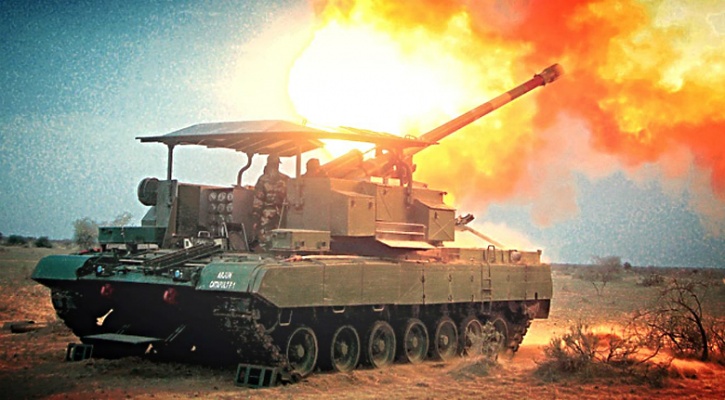
Cold Start is a limited war doctrine released by the Chief of Army Staff in the month of April,2004 aiming to inflict significant harm on Pakistan Army, before the international community intervenes. At the same time, the loss of Pakistan is not big enough to justify the usage of nukes.

Strategy:

Instead of three strike corps there would be eight ‘integrated battle groups’ (IBG) based on the erstwhille Soviet Union’s operational maneuver groups that combine mechanised infantry, artillery and armour integrated with support from Air force and Navy. As the eight IBGs launch attacks on Pakistan at multiple positions, ‘pivot corps’ (erstwhile holding corps, with additional fire power) would man defensive positions, also can execute limited offensive operations. Instead of dividing Pakistan, the goal would be to gain territory of Pakistan, that would be leveraged in – discussions across table, post attack.

The deviation from Sundarji’s doctrine was Indian Army moved towards having more firepower than having forces. Once the objective defined, each IBG acting on its own are expected to be too hard for the Pakistanin intelligence to predict the plans and counter them in time. Attack is not expected to last more than two or three weeks, considering by that time either America or China would come to the rescue of Pakistan.

Advantages of Cold Start over the old doctrine:

1. Forward deployed division sized units can be mobilised faster, with a clear cut objective defined to the unit.
2. These units can only attack and occupy certain territory and cannot deliver the ‘knock-out punch’ that the Pakistan Army can use as a ruse to use nukes for ‘regime survival’ as there is no larger threat.
3. It would be difficult for Pakistan to decide where to respond how much, with multiple IBGs operating independently
4. Pakistani intelligence would be under stress to monitor eight independent units moving in various directions.
5. If Pakistan goes for nukes to attack attacking forces of India, causalities would be less on Indian side, compared to a larger unit.

Impact on South Asia:

Though Cold Start doctrine is predominantly a concept of a ‘limited war’ highly depending on the flexibility, independence and speed of few units, as envisaged by Mortan Halperin, the losing side may choose to escalate the war into a full-fledged one that eventually may lead to the use of nukes. Recognising the superiority of India in terms of forces and fire power, it is a tactic that Pakistan used effectively by means of supporting proxy attacks across LoC, to prevent a full scale conventional war. Hence, the immediate exhibition of cry baby syndrome by Pakistan’s authorities, both civilian and military.

Verbatim reproduction from “A Cold Start for Hot Wars?” by Walter C Ladwig III on when Pakistan would press the nuke button, as explained by Lt Gen Khalid Kidwai, head of Strategic Plans division, Pakistan:

India attacks Pakistan and conquers a large part of its territory;
India destroys a large part of Pakistan’s land or air forces;
India blockades Pakistan in an effort to strangle it economically;
India pushes Pakistan into a state of political destabilization
India creates large scale internal subversion in the country

Well, it is another thing that India should’ve pressed nuke button long ago for Pakistan was actively executing the fifth point against India. But, that’s altogether a different story.

So, it would depend on India’s capability on not only starting the ‘limited war’ but stopping it before it escalates into a declared, full scale war. In other words, this doctrine may be almost like the guerrilla attacks executed by the blitzkrieg, on a moderate scale.

Indian Politics:

Well, as the Cold Start is a strategy prepared exclusively by the military forces, civilian leadership may perhaps not have a greater role in deciding targets/objectives of individual IBGs. And being a functioning democracy, Indian Army shall seek the mandate from the political leadership. Though the government of the day in 2004 had announced the doctrine, it was replaced by the subsequent government. And in 2008, when terrorists from Pakistan attacked Mumbai, the then government had not considered to take action, in accordance with the Cold Start strategy. Of course, even if the government had embraced the strategy, it was not defined how and when the start command would be given to the Army and by whom, for there were many committees and various authorities, who perhaps need a sanction from their political masters not necessarily part of the government.

In fact, the aversion of the then government to consider Cold Start in the wake of Mumbai attacks had put the perception of Indian political establishment in question. On the other hand, despite fully aware of the doctrine, Pakistan didn’t stop from planning and executing an attack as daring as the Mumbai one. Thus, the doctrine was put in cold storage for a long time by Indian polity, denying the Army the advantage of the doctrine, despite the army remained committed to the doctrine.

Of course there was discontent between Army and the Politicians that resulted into confusing status of Operation Parakram. What came to the fore was not only the sluggishness of troupes movement, but also the failure by politicians to set concrete goals for the military that are very much needed to plan and, well execute the plan.

Considering the width of Pakistan being less and major cities being close to the international border, the Cold Start is considered a better strategy to have a limited war., but for the the so called ‘flash point’ of Pakistan before it goes for nukes. In fact, the flickering sense of Pakistan was behind the decision by the earlier government to not embrace Cold Start, as it is in the interest of Pakistan to have a bigger war and cry later on. Bruised, they get more funds and re-group while in India, tax payers had to part with the hard earned money. Then, of course, it depends what the average Indian wants.

It appears India had already conducted exercises to study the effectiveness of cold start in almost all geographical locations. It appears, after all, the current government had embraced Cold Start and the news of an attack as a reciprocation to the Uri attack might be the first of its kind. The best thing happened was, unlike earlier establishments, current government didn’t try to gain political mileage from the purported attack. In fact, the attack was not even officially recognised.

For all the preachers of peace, who advocate that it takes two hands to clap, all I had to say was – for a slap only one hand is needed. And the cheek bears the pain. For long, India cried out of the pain on repeated slaps by much powerless Pakistan, just to behave like a good boy. Seems the good boy had bettered and slapped clandestinely. The response could be seen in the Pakistan media. First, all leaves of Pakistani rangers were cancelled. Families of officers were evacuated from the forward camps. Flights were cancelled in the north and north east area. F16s were seen patrolling over major cities. More than anything, their generals, who are paid to appear on Indian channels started issuing threats on how a ‘Nuclear Nation’ like Pakistan can safeguard their interests. Though none in Indian media were talking much about the Cold Start, it seems many a feet are growing cold on hearing the name.

Well, as told by the defence minister, sometimes knee-jerk reactions may be needed. During those times, it seems Cold Start comes in handy. And, for the first time an attack by India with surgical precision! How I liked it!

Note: Most of the technical details were based on the paper by Walter C. Ladwig III

https://wikileaks.org/plusd/cables/10NEWDELHI295_a.html

http://belfercenter.ksg.harvard.edu/files/IS3203_pp158-190.pdf
ShareTweetSend
Previous Post

India’s defense preparation checklist has some major items unticked

Next Post

This village in Didi’s Bengal won’t celebrate Durga Puja for the 4th consecutive year

Related Posts

India called the shots, not the ceasefire: Rajnath SIngh
Defence

India Chose the Moment, Not the Pressure: Rajnath Singh Says Operation Sindoor Halt Was a Strategic Call

30 April 2026

Defence Minister Rajnath Singh said, "India halted Operation Sindoor by choice, not compulsion". Speaking at the National Security Summit...

The scars of Pahalgam endure, even as the nation moves forward
Defence

Pahalgam Anniversary: Modi Signals Firm National Stand as India Reasserts Anti-Terror Resolve

22 April 2026

A year after 26 civilians lost their lives in the Pahalgam terror attack, India has sent a clear message....

Precision Strike: Indian Army Approves Procurement of Indigenous MPATGM to Modernise Infantry Wings
Defence

Precision Strike: Indian Army Approves Procurement of Indigenous MPATGM to Modernise Infantry Wings

16 April 2026

The Indian Army has formally greenlit the procurement of the Man-Portable Anti-Tank Guided Missile (MPATGM), a decision that resonates...

Load More

Leave a Reply Cancel reply

Your email address will not be published. Required fields are marked *

I agree to the Terms of use and Privacy Policy.
This site is protected by reCAPTCHA and the Google Privacy Policy and Terms of Service apply.

Currently Playing

From Runways to Warships: India’s Firefighting Warrior Built for Bases & Battles| IAF | VayuShakti

From Runways to Warships: India’s Firefighting Warrior Built for Bases & Battles| IAF | VayuShakti

00:05:40

Ethanol, EVs and Solar- How India’s Energy Game Is Changing | Modi on LPG & Crude Oil | war| Hormuz

00:05:21

Truth of IRIS Dena: 8 Days That Changed Narrative | War zone Reality, Not an Indian Navy Exercise

00:08:02

300 Million Euros for SCALP: Strategic Necessity or Costly Dependency on France300

00:04:06

Tejas Mk1A: 19th aircraft coupled but Not Delivered: What Is Holding Back the IAF Induction?

00:07:21
Facebook Twitter Instagram Youtube
tfipostTfipost.com
Right Wing | News Analysis | Indian Opinion
  • About us
  • Contact Us
  • Careers
  • Brand Partnerships
  • Terms of use
  • Privacy Policy
  • Sitemap

©2026 TFI Media Private Limited

No Result
View All Result
  • Premium
  • Politics
    • Analysis
    • Opinions
    • Trending
  • Economy
    • Business
    • Finance
  • Defense
    • Defence
    • Strategy
    • Weaponry
  • Geopolitics
    • Africa
    • Americas
    • Asia Pacific
    • Europe
    • South Asia
    • West Asia
  • Knowledge
    • Culture
    • History
    • Indology
  • Law
  • Lounge
    • Books
    • Cinema
    • Food
    • Health
    • Sports
    • technology
    • Travel
    • Satire
TFIPOST हिन्दी
TFIPOST Global

©2026 TFI Media Private Limited