














TFIPOST हिन्दी
TFIPOST Global
Tfipost.com
Tfipost.com
No Result
View All Result
  • Premium
  • Politics
    • All
    • Analysis
    • Opinions
    • Trending
    From pilgrimage to metros, now without the wait

    From Kashi to Mumbai and Ayodhya to Pune: Modi Expands Rail Network with New Amrit Bharat Express Services

    Why is Making a Jet Engine so Hard | The failure of Kaveri

    Why is Making a Jet Engine so Hard | The failure of Kaveri

    Rajnath Singh at SCO, reaffirming India’s zero-tolerance stand on terrorism.

    “No More Double Standards”: Rajnath Singh’s SCO Message Rewrites India’s Terror Response Playbook

    Nepal PM Faces Fresh Controversy as Church Demolition Row Triggers Political Storm

    Nepal PM Faces Fresh Controversy as Church Demolition Row Triggers Political Storm

    • Analysis
    • Opinions
    • Trending
  • Economy
    • All
    • Business
    • Economy1
    • Finance
    India–New Zealand FTA signed in New Delhi, marking a “once in a lifetime” moment in trade ties.

    India, New Zealand Seal Fast-Tracked Trade Pact to Expand Duty-Free Access, Jobs and $5 Billion Trade Target

    Ahmadis in Pakistan: From Faith to Marginalisation Under Law and Society

    Ahmadis in Pakistan: From Faith to Marginalisation Under Law and Society

    Open Demat Account with Zero Annual Maintenance Charges What to Look For

    Open Demat Account with Zero Annual Maintenance Charges What to Look For

    Blood in the Meadows: How the Pahalgam Terror Attack Exposed Calculated Targeting of Civilians in Kashmir

    Blood in the Meadows: How the Pahalgam Terror Attack Exposed Calculated Targeting of Civilians in Kashmir

    • Business
    • Finance
  • Defense
    • All
    • Defence
    • Strategy
    • Weaponry
    Why is Making a Jet Engine so Hard | The failure of Kaveri

    Why is Making a Jet Engine so Hard | The failure of Kaveri

    Rajnath Singh at SCO, reaffirming India’s zero-tolerance stand on terrorism.

    “No More Double Standards”: Rajnath Singh’s SCO Message Rewrites India’s Terror Response Playbook

    Recovered arms and arrests have intensified scrutiny on a suspected cross-border terror network.

    Pakistan’s Proxy War Faces a Setback as Delhi Terror Plot is Crushed, 18 Weapons Seized

    The scars of Pahalgam endure, even as the nation moves forward

    Pahalgam Anniversary: Modi Signals Firm National Stand as India Reasserts Anti-Terror Resolve

    • Defence
    • Strategy
    • Weaponry
  • Geopolitics
    • All
    • Africa
    • Americas
    • Asia Pacific
    • Europe
    • South Asia
    • West Asia
    When law becomes an instrument of exclusion, persecution moves far beyond the courtroom.

    Ahmadis in Pakistan: From Faith to Marginalisation Under Law and Society

    When uranium becomes strategy, India moves first.

    India’s $4 Billion Uranium Coup with Kazakhstan Rewrites the Global Nuclear Balance

    “Fixing the World”: What a Century of Big Ideas Reveals About Us

    “Fixing the World”: What a Century of Big Ideas Reveals About Us

    Pakistan Tried to Bury an NYT Report. It Only Exposed Asim Munir’s Panic

    Pakistan Tried to Bury an NYT Report. It Only Exposed Asim Munir’s Panic

    • Africa
    • Americas
    • Asia Pacific
    • Europe
    • South Asia
    • West Asia
  • Knowledge
    • All
    • Culture
    • Education
    • History
    • Indology
    Chants of ‘Jai Badri Vishal’ Echo as Badrinath Portals Open; All Four Dhams Now Accessible to Pilgrims

    Chants of ‘Jai Badri Vishal’ Echo as Badrinath Portals Open; All Four Dhams Now Accessible to Pilgrims

    Kedarnath Dham Portals Open for Devotees After 181 Days Amid Vedic Chants, Traditional Rituals

    Kedarnath Dham Portals Open for Devotees After 181 Days Amid Vedic Chants, Traditional Rituals

    Sardar Patel and Amit Shah

    Sardar Patel’s 1947 Blueprint on Minority Quotas Resurfaces as Reservation Debate Returns to Centre Stage

    The 1973 Constitution and ‘Bhutto’ the Man Who Made It: What Pakistan Owes and What It Destroyed

    The 1973 Constitution and ‘Bhutto’ the Man Who Made It: What Pakistan Owes and What It Destroyed

    • Culture
    • History
    • Indology
  • Law
  • Lounge
    • All
    • Books
    • Cinema
    • Entertainment
    • Food
    • Games
    • Health
    • Lifestyle
    • Satire
    • Sports
    • technology
    • Travel
    When regulation meets the algorithm

    India Tightens Digital Control as Online Blocking Orders Surge to 24,300 Amid AI Deepfake Trend

    Digital Data Collection In India

    India’s Data Reset Begins: Census 2027 to Become First Fully Digital Population Count

    5 Facilities in Bengaluru Specializing in Mental Health Treatment for Those with Cancer

    5 Facilities in Bengaluru Specializing in Mental Health Treatment for Those with Cancer

    UNESCO World Book Day and Copyright Day

    World Book Day 2026: UNESCO’s Multilingual Push Aligns with India’s Deep Literary Continuum

    • Books
    • Cinema
    • Food
    • Health
    • Sports
    • technology
    • Travel
    • Satire
Tfipost.com
  • Premium
  • Politics
    • All
    • Analysis
    • Opinions
    • Trending
    From pilgrimage to metros, now without the wait

    From Kashi to Mumbai and Ayodhya to Pune: Modi Expands Rail Network with New Amrit Bharat Express Services

    Why is Making a Jet Engine so Hard | The failure of Kaveri

    Why is Making a Jet Engine so Hard | The failure of Kaveri

    Rajnath Singh at SCO, reaffirming India’s zero-tolerance stand on terrorism.

    “No More Double Standards”: Rajnath Singh’s SCO Message Rewrites India’s Terror Response Playbook

    Nepal PM Faces Fresh Controversy as Church Demolition Row Triggers Political Storm

    Nepal PM Faces Fresh Controversy as Church Demolition Row Triggers Political Storm

    • Analysis
    • Opinions
    • Trending
  • Economy
    • All
    • Business
    • Economy1
    • Finance
    India–New Zealand FTA signed in New Delhi, marking a “once in a lifetime” moment in trade ties.

    India, New Zealand Seal Fast-Tracked Trade Pact to Expand Duty-Free Access, Jobs and $5 Billion Trade Target

    Ahmadis in Pakistan: From Faith to Marginalisation Under Law and Society

    Ahmadis in Pakistan: From Faith to Marginalisation Under Law and Society

    Open Demat Account with Zero Annual Maintenance Charges What to Look For

    Open Demat Account with Zero Annual Maintenance Charges What to Look For

    Blood in the Meadows: How the Pahalgam Terror Attack Exposed Calculated Targeting of Civilians in Kashmir

    Blood in the Meadows: How the Pahalgam Terror Attack Exposed Calculated Targeting of Civilians in Kashmir

    • Business
    • Finance
  • Defense
    • All
    • Defence
    • Strategy
    • Weaponry
    Why is Making a Jet Engine so Hard | The failure of Kaveri

    Why is Making a Jet Engine so Hard | The failure of Kaveri

    Rajnath Singh at SCO, reaffirming India’s zero-tolerance stand on terrorism.

    “No More Double Standards”: Rajnath Singh’s SCO Message Rewrites India’s Terror Response Playbook

    Recovered arms and arrests have intensified scrutiny on a suspected cross-border terror network.

    Pakistan’s Proxy War Faces a Setback as Delhi Terror Plot is Crushed, 18 Weapons Seized

    The scars of Pahalgam endure, even as the nation moves forward

    Pahalgam Anniversary: Modi Signals Firm National Stand as India Reasserts Anti-Terror Resolve

    • Defence
    • Strategy
    • Weaponry
  • Geopolitics
    • All
    • Africa
    • Americas
    • Asia Pacific
    • Europe
    • South Asia
    • West Asia
    When law becomes an instrument of exclusion, persecution moves far beyond the courtroom.

    Ahmadis in Pakistan: From Faith to Marginalisation Under Law and Society

    When uranium becomes strategy, India moves first.

    India’s $4 Billion Uranium Coup with Kazakhstan Rewrites the Global Nuclear Balance

    “Fixing the World”: What a Century of Big Ideas Reveals About Us

    “Fixing the World”: What a Century of Big Ideas Reveals About Us

    Pakistan Tried to Bury an NYT Report. It Only Exposed Asim Munir’s Panic

    Pakistan Tried to Bury an NYT Report. It Only Exposed Asim Munir’s Panic

    • Africa
    • Americas
    • Asia Pacific
    • Europe
    • South Asia
    • West Asia
  • Knowledge
    • All
    • Culture
    • Education
    • History
    • Indology
    Chants of ‘Jai Badri Vishal’ Echo as Badrinath Portals Open; All Four Dhams Now Accessible to Pilgrims

    Chants of ‘Jai Badri Vishal’ Echo as Badrinath Portals Open; All Four Dhams Now Accessible to Pilgrims

    Kedarnath Dham Portals Open for Devotees After 181 Days Amid Vedic Chants, Traditional Rituals

    Kedarnath Dham Portals Open for Devotees After 181 Days Amid Vedic Chants, Traditional Rituals

    Sardar Patel and Amit Shah

    Sardar Patel’s 1947 Blueprint on Minority Quotas Resurfaces as Reservation Debate Returns to Centre Stage

    The 1973 Constitution and ‘Bhutto’ the Man Who Made It: What Pakistan Owes and What It Destroyed

    The 1973 Constitution and ‘Bhutto’ the Man Who Made It: What Pakistan Owes and What It Destroyed

    • Culture
    • History
    • Indology
  • Law
  • Lounge
    • All
    • Books
    • Cinema
    • Entertainment
    • Food
    • Games
    • Health
    • Lifestyle
    • Satire
    • Sports
    • technology
    • Travel
    When regulation meets the algorithm

    India Tightens Digital Control as Online Blocking Orders Surge to 24,300 Amid AI Deepfake Trend

    Digital Data Collection In India

    India’s Data Reset Begins: Census 2027 to Become First Fully Digital Population Count

    5 Facilities in Bengaluru Specializing in Mental Health Treatment for Those with Cancer

    5 Facilities in Bengaluru Specializing in Mental Health Treatment for Those with Cancer

    UNESCO World Book Day and Copyright Day

    World Book Day 2026: UNESCO’s Multilingual Push Aligns with India’s Deep Literary Continuum

    • Books
    • Cinema
    • Food
    • Health
    • Sports
    • technology
    • Travel
    • Satire
No Result
View All Result
Tfipost.com
Tfipost.com
No Result
View All Result
  • Premium
  • Politics
  • Economy
  • Defense
  • Geopolitics
  • Knowledge
  • Law
  • Lounge

High Speed Rail: a welcome step in right direction

Vasu Vashisht by Vasu Vashisht
7 January 2016
in Opinions, TFIUvaach
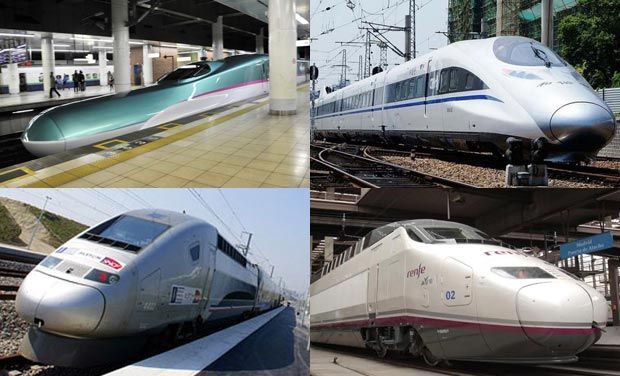
High Speed Rail
Share on FacebookShare on X

Of all the major announcements made by Prime Minister Narendra Modi last year, there seems to be no excitement for HSR (High Speed Rail), commonly known as Bullet trains. The reason for this lack of optimism, quite clearly is the critics stance both home and abroad arguing that HSR is not an ideal mode of transportation for a developing country like India. Every argument is raised against construction of HSR, from the massive cost of construction to how middle class or lower middle class Indians would be unable to afford the tickets for a costly transit system. We believe, that the pricing of HSR is not out (hence no point fretting about it), and secondly, a project of this size boosts GDP activity (we shall be doing a follow-up article on this) for the country, hence being skeptical on Day ZERO is essentially not the right approach.

I believe, some global experiences in for HSR should be taken into perspective before we draw up our conclusion.

RelatedPosts

Galgotias University Faces Global Backlash for Displaying Chinese Robodog as Own at AI Summit; “Make in India” Claims Debunked, Social Media Mocks Institution

300 Million Euros for SCALP: Why Self-Reliance and “Make in India” Matter More Than Ever

Tejas Mk1A: Built but Not Delivered: What Is Holding Back the Indian Air Force Induction?

Load More

Anecdotal response on HSR in China:

During a Supervision Mission in China, a team of World bank officials interviewed 1st time HSR users to share their experience about the train between Chinese cities of Wuzhou and Nanning and its impact on their lives. Here are few of narrations:

• A couple of people, well in their senior years at 73 and 81. For them, it was the joy of taking a travel to Guilin for tourism and to do so in a way that was still comfortable enough for them to enjoy. They felt that the bus, while available, was not comfortable enough at their age. They were excited to take their first ride in a fast train.

• A couple in their mid-30s, traveling to Guilin. The lady worked for a hospital and was a frequent business traveler. It took her four hours driving to reach her destination in Nanning before, a number that had been halved at this point. It meant for her that short and frequent trips to Nanning were now possible. She recommended increasing the number of trains each day to allow for regular day trips, as three was too little. (The number of trains is expected to grow when the full line opens.)

• In the first class cabin, we met a businessman working for a listed pharmaceutical company in Guangdong. He was already using the train more than 7 times a month. His business turnover had grown by 15 percent since the train opened, an achievement he attributed to his ability to meet more clients with the railways. He was eager to get a better connection to Guangzhou as well, since this is where the research lab for his company is located.

• Two farmers with their two young kids. They had been visiting their relatives for the second time using this train, traveling from Liuzhou to Zhaoqing in Guangdong. They used to meet their family, but infrequently as the bus trips were unpleasant, very long (about 8 hours from Liuzhou to Wuzhou), and dangerous particularly at night, considering the winding roads in Guangxi.

Source: http://blogs.worldbank.org/…/passengers-recently-opened-wuz…

Other key thoughts on impact of HSR:

• Efficiency in work: HSR have ability to connect cities to work more closely together as a return trip between far flung Urban centers becomes possible within a day.

  • Productivity gains: As per Gerald Ollivier, World Bank’s Senior Transport Specialist, the impact in terms of economic exchanges, accessibility, and productivity gains are expected to be significant, and extend beyond traditional transport savings.
  • Boost in domestic tourism: As per Provincial Tourism Bureau of Guizhou, China ‘after the start of HSR services, >9.87 million tourists, a +20% yoy increase with ~70% of tourist taking HSR, arrived in the city during the Spring Festival Golden Week’.
  • A Professor from the Guangxi Normal University noted for the Chinese High Speed Rail that, “the direct benefits will further generate impacts on people’s travel, logistics, capital flow and so on, and finally stimulate GDP of the city.”
  • The Environmental Impact of High Speed Rail is also not a factor that should be ignored, Rail is already the most efficient mode of transportation for both Passengers and Freight when compared to other popular modes of transportation like Air & Roadways. Each High speed train would be able to carry the load of seven Boeing 737 planes or hundreds of cars. As opposed to oil, which India produces very little, High Speed Rail systems use Electricity to power trains.
  • As per a study by the California High-Speed Rail Authority, the proposed system from Los Angeles to San Francisco will remove 12 billion pounds of carbon dioxide per year by 2030 as it uses electricity generated from wind, solar, and other renewable resources and can save ~12.7mn barrels of oil by 2030. (Source: http://thinkprogress.org/…/oil-reduction-as-a-transportati…/)
  • Furthermore, the Japanese HSR system has a carbon footprint is ~16% vs., that of cars making the same journeys. (Need source for this line)
  • HSR is also statistically safer than cars. For example, the French and Japanese high-speed systems have been operational for over 30 years and there have been no passenger deaths as a result of a high-speed crash in either country.

(Source: http://www.newcitiesfoundation.org/the-promise-of-high-spe…/)
High Speed RailComing to India’s High Speed Rail project, the NDA Government has successfully negotiated a Transfer of Technology (ToT) under ‘Make in India’ with Japan.
What does ToT mean:

  • The Make in India of HSR systems will include manufacture of rolling stock, equipment and machinery to be promoted in a phased manner.
  • This will be accompanied by development of many ancillary activities around the construction of the high speed line and the manufacture of the coaches in India.
  • The manpower required to build the High Speed Railsystem will help India to develop many High Tech Industries providing skilled employment to millions of people in the process. Above all such Technology transfers will eventually lead to India developing its own High Speed Rail technology one day just like how China has done previously.

Note: The Chinese example shows that how Foreign Technology transfers helped China become a global leader in High Speed Rail technology. As of Dec 2015 China has ~19,000 km of Operational High Speed Rail (https://en.wikipedia.org/wiki/High-speed_rail#cite_note-35).
It should be noted that the Ahmedabad-Mumbai High Speed Rail project is a victory for India diplomacy as Japan has agreed to finance 81% of the cost of the $15b Mumbai-Ahmedabad high speed rail project at 0.01% interest rate with massive Transfer of Technology. It is definitely a step in right direction given the economic & technological impact of the project.
Note:

  1. Currently the fastest train system in India touches the peak speed of 160 km/h with the average speed of 130-160 km/h (Gatimaan Express (New Delhi-Agra), this is far slower than the Ahmedabad-Mumbai HSR which will run at a top speed of 320 km/h (Assuming Shinkansen E5 series has been offered to India).
  2. As per an article in Global Construction Review site (Jul 2014), World Bank report pegs China’s high-speed rail cost at $17-21m per kilometer (despite a high ratio of big-ticket viaducts and tunnels), an average cost of $25m-$39m per kilometer in Europe, while in the estimated cost for HSR in California is approximately $56m/km. While based on line length on Wikipedia of ~534 km and a project cost of $15 bn would translate to $28.1m per KM.
  3. Additionally, Rail stations providing High Speed Rail service witness a healthy increase in land values, as the areas around stations suddenly become more accessible to a larger number of people and therefore, more attractive to development and real estate interests. For example, Japan Rail East, the largest of the seven companies operating Japan’s High Speed Rail network, requires no government subsidy because it owns the land around its stations and is able to capture the added value of that land and reinvest it into its system. Nearly one-third of JR East’s revenue comes from commercial developments along the railway route.

(Source: http://www.citymetric.com/…/high-speed-rail-popping-all-ove…)

Tags: Bullet TrainHIGH SPEED RAILHSRMake In India
ShareTweetSend
Previous Post

North Korea: World’s only Stalinist regime now has a ‘H’ Bomb

Next Post

BJP Cabinet reshuffle: Here is how Modi can restore what is lost.

Related Posts

Resolve of a Changing Bengal: Youth, Potential, and Call for Transformation
Opinions

Resolve of a Changing Bengal: Youth, Potential, and Call for Transformation

21 April 2026

The yearning for change in the soil of Bengal is not a sudden wave, it is a convergence of...

Redefining Terms of Truly Mutual Trade Deal: Sovereignty and Strategy in the US–Bangladesh Framework
Economy

Redefining Terms of Truly Mutual Trade Deal: Sovereignty and Strategy in the US–Bangladesh Framework

15 April 2026

The debate around Bangladesh’s emerging trade framework with the United States cannot be reduced to a binary choice of...

Race Against Iran Deadline: Was Pakistan’s Ceasefire Bid Driven by the White House?
Geopolitics

Race Against Iran Deadline: Was Pakistan’s Ceasefire Bid Driven by the White House?

9 April 2026

Pakistan attempted to position itself as a peacemaker in the escalating tensions involving Iran, but the reality behind the...

Load More

Leave a Reply Cancel reply

Your email address will not be published. Required fields are marked *

I agree to the Terms of use and Privacy Policy.
This site is protected by reCAPTCHA and the Google Privacy Policy and Terms of Service apply.

Currently Playing

From Runways to Warships: India’s Firefighting Warrior Built for Bases & Battles| IAF | VayuShakti

From Runways to Warships: India’s Firefighting Warrior Built for Bases & Battles| IAF | VayuShakti

00:05:40

Ethanol, EVs and Solar- How India’s Energy Game Is Changing | Modi on LPG & Crude Oil | war| Hormuz

00:05:21

Truth of IRIS Dena: 8 Days That Changed Narrative | War zone Reality, Not an Indian Navy Exercise

00:08:02

300 Million Euros for SCALP: Strategic Necessity or Costly Dependency on France300

00:04:06

Tejas Mk1A: 19th aircraft coupled but Not Delivered: What Is Holding Back the IAF Induction?

00:07:21
Facebook Twitter Instagram Youtube
tfipostTfipost.com
Right Wing | News Analysis | Indian Opinion
  • About us
  • Contact Us
  • Careers
  • Brand Partnerships
  • Terms of use
  • Privacy Policy
  • Sitemap

©2026 TFI Media Private Limited

No Result
View All Result
  • Premium
  • Politics
    • Analysis
    • Opinions
    • Trending
  • Economy
    • Business
    • Finance
  • Defense
    • Defence
    • Strategy
    • Weaponry
  • Geopolitics
    • Africa
    • Americas
    • Asia Pacific
    • Europe
    • South Asia
    • West Asia
  • Knowledge
    • Culture
    • History
    • Indology
  • Law
  • Lounge
    • Books
    • Cinema
    • Food
    • Health
    • Sports
    • technology
    • Travel
    • Satire
TFIPOST हिन्दी
TFIPOST Global

©2026 TFI Media Private Limited