
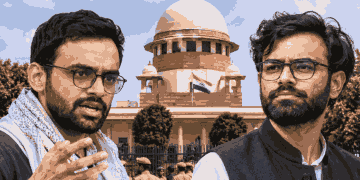















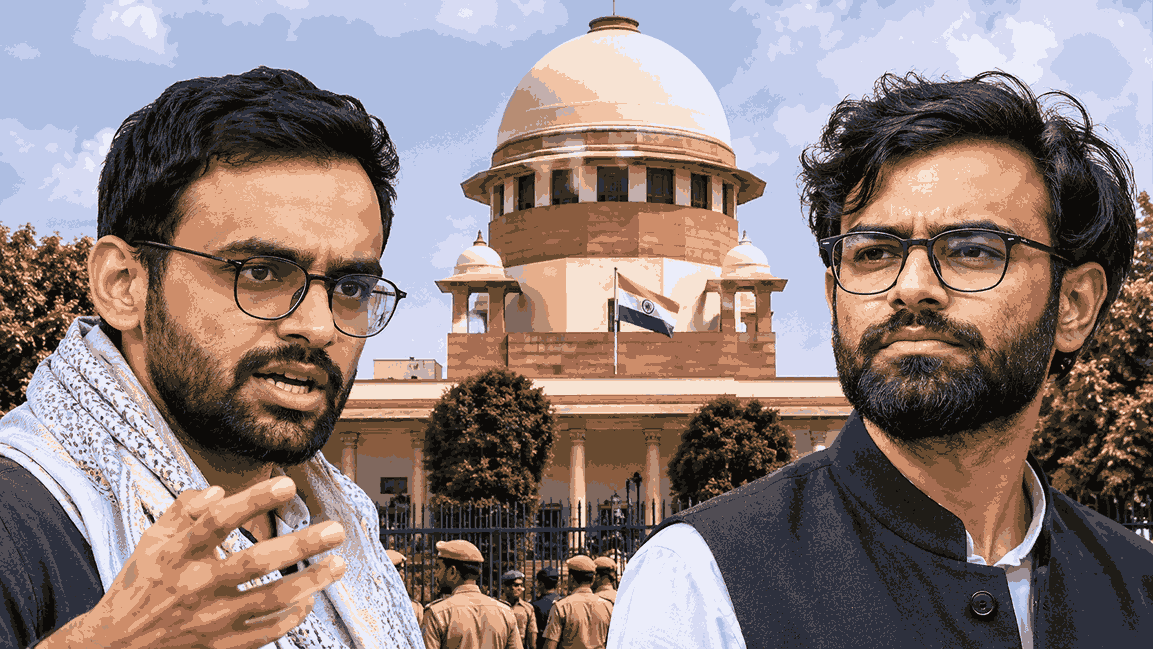
The Supreme Court of India on Wednesday, November 25, 2026, declined to grant Interim Bail to former Jawaharlal Nehru University (JNU) scholar Umar Khalid and activist Sharjeel Imam in the 2020 northeast Delhi riots larger conspiracy case. The top court, however, issued notice to the Delhi Police and sought its response to the fresh bail petitions filed by the two accused, who have been in custody for more than six years. The decision has once again brought the prolonged legal proceedings surrounding the February 2020 riots into the national spotlight.
A three-judge bench comprising Chief Justice of India Surya Kant and Justices Joymalya Bagchi and V Mohana heard the petitions challenging the Delhi High Court’s September 30, 2026, decision to deny them bail. During the proceedings, senior advocate Kapil Sibal, representing Umar Khalid, requested temporary relief until the main bail petitions could be considered. Senior advocate Siddharth Dave, appearing for Sharjeel Imam, also pressed for similar relief, pointing to his client’s prolonged incarceration.
The bench, however, was unwilling to grant Interim Bail without first hearing the investigating agency. Responding to the lawyers’ submissions, the judges indicated that the Delhi Police must be given an opportunity to present its position before the court considers the request. The bench’s brief response, “Not today”, made it clear that immediate release was not on the table at this stage.
The Supreme Court also directed that the matter be placed before the Chief Justice of India on the administrative side for the constitution of a three-judge bench to examine the legal questions arising from the bail proceedings. This development is particularly significant because the issue involves differing judicial observations concerning the application of stringent provisions of the Unlawful Activities (Prevention) Act (UAPA) and the constitutional importance of personal liberty.
Khalid and Imam have argued that their continued detention has become increasingly difficult to justify given the slow progress of the trial. Their legal teams have highlighted the prosecution’s failure to examine protected witnesses, contending that the lengthy period of incarceration warrants reconsideration of their continued custody. They have also relied on the conditions mentioned in the Supreme Court’s January 5, 2026, order, which had denied them bail while indicating circumstances under which they could approach the court again.
The demand for Interim Bail also comes against the backdrop of a significant judicial debate over whether prolonged delays in trials involving UAPA charges can justify granting bail. On May 22, 2026, a two-judge Supreme Court bench referred a related legal question to a larger bench after differences emerged over the interpretation of earlier judgments concerning prolonged incarceration and individual liberty. The question has wider implications for undertrial prisoners facing charges under stringent anti-terror legislation.
The legal history of the case has been particularly consequential for both accused. On January 5, 2026, the Supreme Court rejected the regular bail applications of Khalid and Imam while granting relief to five other accused in the same case. The court had observed that the roles attributed to the two men were on a qualitatively different footing. Subsequently, the Delhi High Court dismissed their fresh bail appeals on September 30, maintaining that it could not modify the earlier Supreme Court directions.
The prosecution’s case concerns an alleged larger conspiracy behind the communal violence that erupted in northeast Delhi in February 2020. The violence occurred during widespread protests against the Citizenship (Amendment) Act, 2019, and the proposed National Register of Citizens. According to official figures, 53 people lost their lives and more than 700 were injured during the violence. The Delhi Police has alleged that the accused played significant roles in planning and facilitating the events that culminated in the riots. These allegations remain subject to judicial proceedings, and the accused are entitled to the presumption of innocence until proven guilty.
Umar Khalid was arrested on September 13, 2020, while Sharjeel Imam was taken into custody on August 25, 2020. Both have remained behind bars since their arrests in connection with the larger conspiracy case. Their continued detention has become a focal point in the broader debate over the balance between national security legislation, the rights of accused individuals and the constitutional guarantee of a fair and timely trial.
The Supreme Court’s refusal to grant Interim Bail does not amount to a final rejection of their fresh bail petitions. By issuing notice to the Delhi Police, the court has kept the proceedings alive and opened the way for further arguments after receiving the agency’s response. The proposed larger bench will also have an important role in addressing the legal questions surrounding the application of UAPA provisions.
For now, the immediate prospect of Interim Bail for Khalid and Imam remains uncertain. The next stage of the proceedings will depend on the Delhi Police’s response and the Supreme Court’s consideration of the competing arguments. The case is likely to remain an important test of how India’s highest court balances the demands of national security, the seriousness of criminal allegations and the fundamental principle that justice must not be indefinitely delayed.