
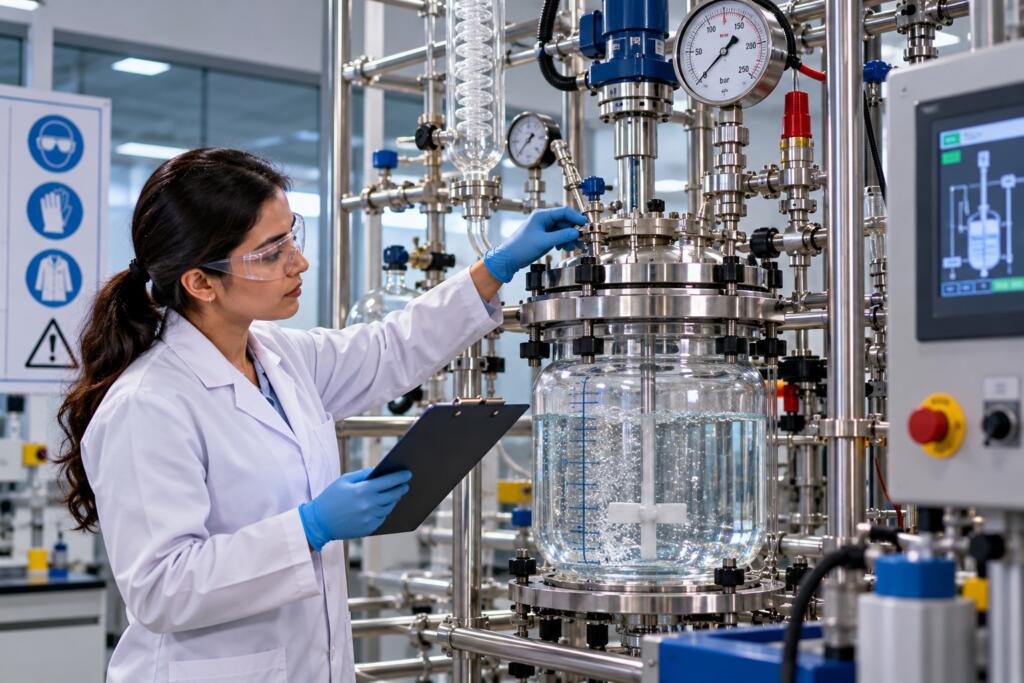
Conducting chemical synthesis under elevated pressure involves significant operational hazards. A sudden pressure spike, undetected structural weakness or incompatible solvent can turn a standard laboratory experiment into a hazardous event. Yet, high-pressure synthesis, hydrogenation and catalytic testing remain essential for developing modern pharmaceuticals and speciality chemicals.
Operating a high pressure glass reactor safely requires a thorough understanding of material limits, strict pre-run inspection routines and proactive pressure control protocols. By combining heavy-wall borosilicate construction with disciplined laboratory safety practices, research teams can harness total process visibility without compromising operator safety.
1. Pre-Operation Inspection and Structural Verification
Before pressurising any glass reactor vessel, a thorough visual and mechanical inspection must take place. Glass is an exceptionally strong material under compression, but localised mechanical damage drastically reduces its tensile strength under pressure.
- Check for Micro-Fractures: Inspect the entire glass body using a focused light source to spot star cracks, scratches or deep chips. Damaged glass must be removed from service immediately.
- Verify O-Ring and Seal Integrity: Examine all fluoropolymer and elastomeric seals for swelling, hardening or chemical degradation that could compromise vacuum or pressure tightness.
- Inspect Support Frameworks: Ensure the reactor sits securely within its mounting frame without mechanical binding or uneven clamping stress along the flange faces.
2. Strict Adherence to Pressure and Temperature Thresholds
Every high-pressure glass reactor is engineered to precise pressure and temperature limits. Exceeding these design thresholds compromises structural integrity and increases the risk of catastrophic vessel failure.
| Parameter | Safety Guideline |
| Max Working Pressure | Never exceed the rated limit specified by the manufacturer (e.g., up to 10 bar). |
| Thermal Shock Delta | Maintain temperature change rates within recommended limits () to prevent stress fractures. |
| Pressure Relief Valve | Pre-set to activate slightly below the maximum vessel design threshold. |
| Burst Disk Rating | Match exact process pressure specifications for immediate, high-volume pressure relief. |
Thermal shock poses a major risk to glass process units. Rapid temperature shifts create internal material stresses that lead to sudden fracture. Always heat or cool the vessel gradually using external thermal control units to maintain safe, steady temperature shifts across the wetted glass walls.
3. Implementing Redundant Pressure Relief Systems
Over-pressurisation can occur rapidly during exothermic reactions or unexpected gas generation. A safe reactor setup must incorporate active and passive pressure relief devices to vent excess pressure automatically before critical thresholds are reached.
- Primary Relief Valves: Spring-loaded safety relief valves should be calibrated to open slightly below the maximum operating pressure of the vessel.
- Rupture Disks: Install secondary burst disks to provide an immediate, high-volume pressure relief path in the event of rapid chemical runaways.
- Vent Line Routing: Direct all relief discharge lines into a dedicated fume hood, scrubber unit or containment vessel to capture hazardous vapours safely.
4. Material Selection and Chemical Compatibility
High-pressure reactions often involve concentrated mineral acids, reactive gases and aggressive organic solvents that destroy standard metal equipment. Corrosion weakens metal walls over time, introducing trace metal impurities into the process mass and increasing failure risks.
High-purity borosilicate 3.3 glass serves as the standard material for pressure-rated reaction units due to its chemical inertness and low thermal expansion coefficient. Established scientific glass fabricators like Goel Scientific Glass Works Ltd. manufacture heavy-wall borosilicate reactors, custom pressure assemblies and pilot-scale process packages capable of handling working pressures up to 10 bar. These precision-engineered units allow researchers to perform hydrogenation, acid-catalysed synthesis and catalytic screening while maintaining complete visual monitoring of phase changes and colour shifts.
5. Protective Shielding and Containment Measures
Even when using certified borosilicate equipment, high-pressure operations require physical containment barriers to protect laboratory personnel from unexpected leaks, sudden pressure releases or material failure.
- Polycarbonate Shielding: Enclose pressure reactors behind shatter-resistant polycarbonate safety shields to block potential debris and thermal sprays.
- Fume Hood Placement: Locate high-pressure setups inside dedicated fume hoods with the sash lowered to provide an essential secondary barrier against volatile fumes, hot thermal fluids and airborne particles.
- Remote Instrumentation: Use digital sensors and remote monitoring instruments to track internal pressure and temperature setpoints from a safe distance.
- Personal Protective Equipment (PPE): Require operators to wear blast-rated face shields, safety glasses and heavy-duty thermal gloves during all active pressure cycles.
6. Standardised Emergency Protocols and Operator Training
Equipment design forms only half of the safety equation; trained personnel form the other. Facilities operating pressure equipment must establish standard operating procedures (SOPs) and conduct regular safety training sessions.
- Purge Protocols: Flush the glass reactor vessel with inert gas (such as nitrogen or argon) before introducing flammable reagents or hydrogen.
- Emergency Shutdown: Ensure all operators know how to isolate gas supply lines, cut heating power and activate maximum cooling instantly.
- Logbook Maintenance: Document every run, tracking operating hours, peak pressures and chemical exposure history to identify maintenance needs before component failure occurs.
Conclusion
Operating high-pressure glass systems safely relies on combining robust equipment design with rigorous operational discipline. Inspecting vessels before use, respecting pressure limits, installing redundant relief valves and maintaining physical shielding allow research facilities to run demanding chemical reactions with confidence. Investing in high-purity borosilicate equipment and adhering to established safety protocols protects laboratory personnel, preserves research data and ensures reliable, repeatable synthetic outcomes.