
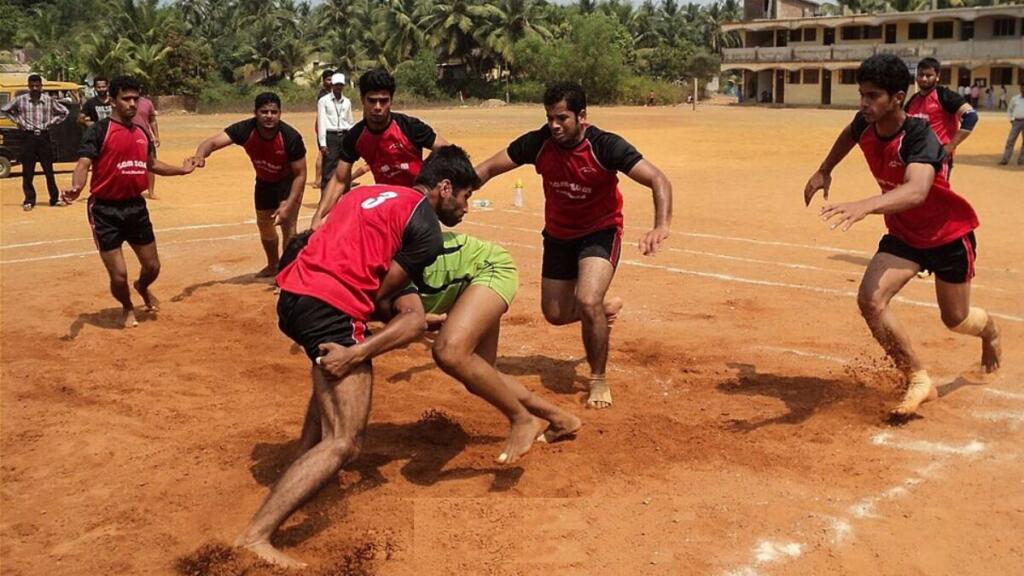
Kabaddi, the game that grew up in village courtyards, is being lined up for a bigger national stage, and a women’s league is to be introduced. If it takes hold, it would give women players the professional platform that men have had for more than a decade.
For most of its history, kabaddi has been a sport of the grassroots. It was played at village fairs, school grounds and district tournaments, with a pipeline that ran through state associations to the national championships. The All India Kabaddi Federation was formed in 1950, and in 1972 it was replaced by the Amateur Kabaddi Federation of India (AKFI), which organises the national championships from which national teams are selected. Kabaddi was added to the Asian Games in 1990, and India has dominated the event at that level.
The sport’s big commercial moment came in 2014, when Anand Mahindra and Charu Sharma launched the Pro Kabaddi League (PKL), which Star Sports has broadcast since its first season. The PKL is often called India’s second-most-watched league after the IPL. It turned the best men’s players into recognisable names. Even so, the league has had a shaky stretch lately. PKL 13 will not be held in 2026, with the next season likely in a June-July 2027 window, and the league has yet to land a new broadcast deal, with the current broadcaster offering half the previous agreement.
Women’s kabaddi: success on the mat, little visibility off it
Women’s kabaddi has produced world-class results without a matching professional structure. India’s women won the Women’s Kabaddi World Cup in Dhaka in November 2025, winning all six matches and beating Chinese Taipei 35-28 in the final. They also won the inaugural Commonwealth Kabaddi Championship in 2026, beating Uganda 35-15 in the final.
Leagues for women have started to appear, though mostly outside the mainstream. The first Women’s Kabaddi League began in Dubai on 16 June 2023, with eight teams and 96 players, each team representing an Indian state. The Global Indian Pravasi Kabaddi League, launched in Gurugram in April 2025, features six men’s and six women’s teams. In May this year, the Asian Kabaddi League announced a professional women’s league with eight city-based teams and 120 professional athletes. It said Sony Sports Network would show matches in prime time, bringing women’s kabaddi into millions of Indian households on a dedicated national sports platform for the first time. That broadcast coverage is the point, since women’s kabaddi has traditionally received limited mainstream broadcast exposure despite growing grassroots participation.
How the change could lift the game’s stature
A national platform changes three things for kabaddi. The first is money. Contracts and salaries make it possible for players to treat the sport as a career. The AKL’s pitch is that women who have represented India at the highest levels will compete as professionals for the first time, with salaries, contracts, coaching infrastructure and national broadcast visibility.
The second is the pipeline. A professional league gives a village player a reason to keep going, and a route upward. The AKL says it is building a long-term grassroots pipeline connecting village-level talent to professional franchises. Kabaddi’s base in rural India is among the strongest of any sport in the country, and a ladder from that base to the top is what the game has lacked for women.
The third is attention at a time when the men’s game needs it. With the PKL’s calendar and broadcast arrangements unsettled, a national push could widen the audience. Analysts quoted by Sportscape argue that a women’s league could further strengthen kabaddi’s position as one of the region’s fastest-growing indigenous sports properties. League executives are also making a bold claim about reach, describing a sport with 400 million viewers already on record.
For a game with deep roots in India and a growing record of international titles, the next step is to match the success on the mat with the visibility and the careers that other major sports already offer.