
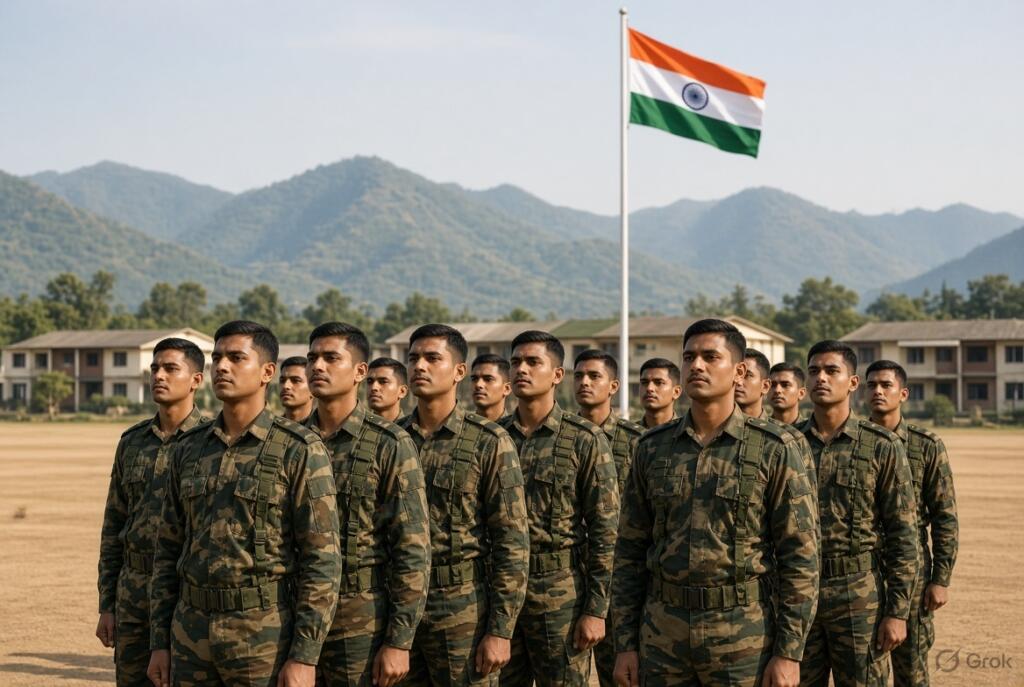
The Modi government on Wednesday approved an additional two-year engagement period for Agniveers completing their initial four-year tenure under the Agnipath scheme. The Cabinet decision, based on recommendations from the Indian Armed Forces, arrives weeks before nearly 18,000 personnel from the first batch were due for discharge. It includes higher remuneration and an enhanced Seva Nidhi package while opening a clearer route to permanent service.
Chief of Defence Staff General NS Raja Subramani called it a significant day for the forces and the young recruits, Agniveers. He noted that the Agnipath scheme, launched on 14 June 2022, had always included continuous performance evaluation and periodic review. Feedback so far has been strongly positive, with officers highlighting physical fitness, high motivational levels, strong morale and growing technological skills among the cohort. These factors, along with operational needs and the aspirations of the personnel, shaped the recommendation that the government accepted.
Under the original structure, 25 percent of those finishing the four-year term are selected on merit for enrolment as regular soldiers. The remaining 75 percent were expected to return to civilian life. That has now changed. The approved policy grants the larger group a second engagement period of two years. After completing the extension, every individual of Agniveers will be offered the chance to enrol as a regular soldier, provided they are willing and meet objective selection criteria set by the forces.
General Subramani stressed that the decision followed careful review of organisational requirements, operational efficiency and the career hopes of the young soldiers. He pointed out that the recruitment system has matured since 2022, with written examinations now held before physical tests, greater transparency, and coverage across almost every district. The forces have also helped many candidates raise their educational qualifications and earn recognised skill certificates. Opportunities for women have expanded across multiple branches.
The second engagement period brings improved pay and a stronger Seva Nidhi package. Officials believe these measures will help retain trained manpower while still preserving the youthful profile the scheme was designed to create. The original Agnipath model sought to bring in energetic recruits, lower the average age of the force, and return motivated youth to society after intensive military training and experience.
For the first batch of Agniveers now nearing the end of their contracts, the announcement removes recent uncertainty. Many have performed well and want to continue. The new pathway allows them to serve longer, gain more experience, and still compete for permanent absorption on merit. Those who choose to leave after the extended period will do so with better financial support and recognised skills useful in civilian life.
Defence observers see the adjustment as a practical refinement of the Agnipath model based on real experience. Periodic review was built into the scheme from the start, and the first full cycle has supplied the data needed for informed change. Performance-based selection remains central, ensuring permanent induction rests on objective standards.
The decision balances institutional needs with individual aspirations. By offering the extra two years and a genuine chance at longer service, the government has recognised the contribution of the first cohort while keeping the door open for those who continue to prove themselves. General Subramani confirmed that the forces remain committed to continuous evaluation and to using ground-level feedback to shape future policy.
As implementation begins across the Army, Navy and Air Force, clear communication of selection criteria and consistent standards will be essential. For the young personnel, the coming months offer both opportunity and the requirement to maintain the same high standards of fitness, discipline and skill already noted by senior leadership. The policy aims to strengthen the forces while giving the first generation of these short-service recruits a fairer chance to build lasting careers in uniform.