
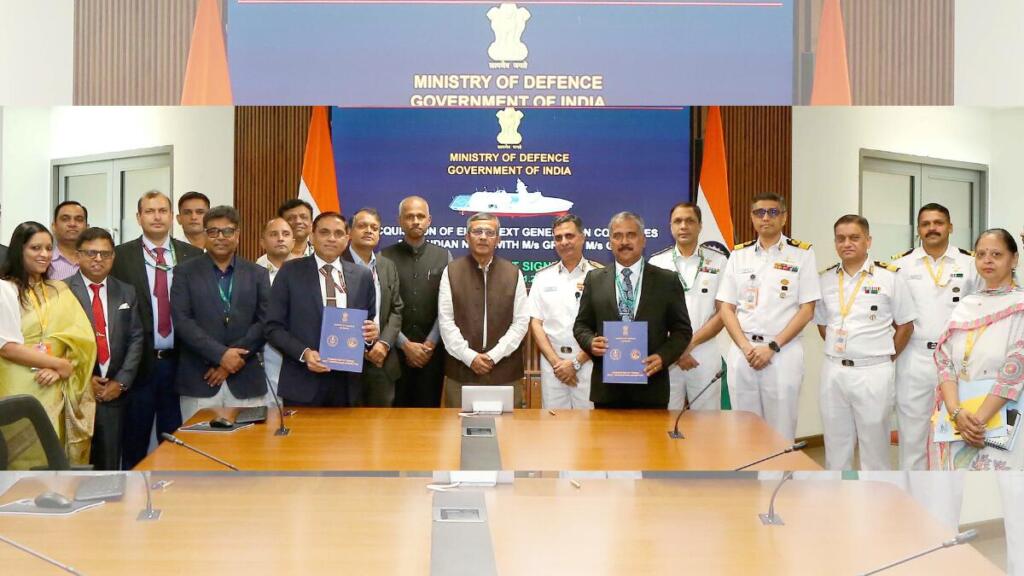
On 2 November 2026, the Ministry of Defence signed contracts worth Rs 53,866.50 crore to buy eight Next Generation Corvettes (NGCs) for the Indian Navy. Defence Secretary Rajesh Kumar Singh was present at the signing at Kartavya Bhawan-2 in New Delhi. Two state-owned shipyards will build the ships: Garden Reach Shipbuilders & Engineers Limited (GRSE) will build five, and Goa Shipyard Limited (GSL) will build three.
What is a corvette, and why does the Navy want more of them?
A corvette is one of the smaller classes of warship, lighter and more agile than a frigate or a destroyer. Corvettes usually work close to the coast, escorting other vessels, patrolling, and hunting submarines. The Ministry says the NGCs will carry advanced missiles, weapons and sensors so they can operate in the air, on the surface and underwater. Their jobs will include protecting maritime trade routes, anti-surface and anti-submarine warfare, coastal defence, fighting in littoral waters (the shallow seas near the shore), and surveillance.
Why is this deal being called a milestone?
The government says this is the first project in which the Indian Navy itself designed the ships and defence public sector undertakings (DPSUs, meaning government-owned companies) were picked through a competitive process to build them. India has often relied on foreign designs or foreign partners for its warships, so an in-house design carried all the way through to construction is what makes the deal stand out.
Dividing the total by eight gives roughly Rs 6,700 crore per ship. That is only a rough average. The two yards are building different numbers of ships, and the release does not break down the cost by yard, so the real figures will differ.
What are the 72 lakh and 460 lakh person-days?
The Ministry expects the project to create about 72 lakh person-days of work in the shipyards and about 460 lakh person-days in ancillary industries and MSMEs (micro, small and medium enterprises) over ten years. A person-day is one person working for one day, so these numbers measure total labour, not the number of jobs. Spread over ten years, they suggest steady work for many suppliers rather than a sudden burst of hiring.
How does this fit the government’s bigger goals?
The deal is part of Aatmanirbhar Bharat (self-reliant India) and Make in India. The idea is to depend less on imports in defence by building up Indian design skills, shipyards and supplier networks, including private shipbuilders and small firms. The release highlights the use of Made-in-India materials, equipment and technology.