
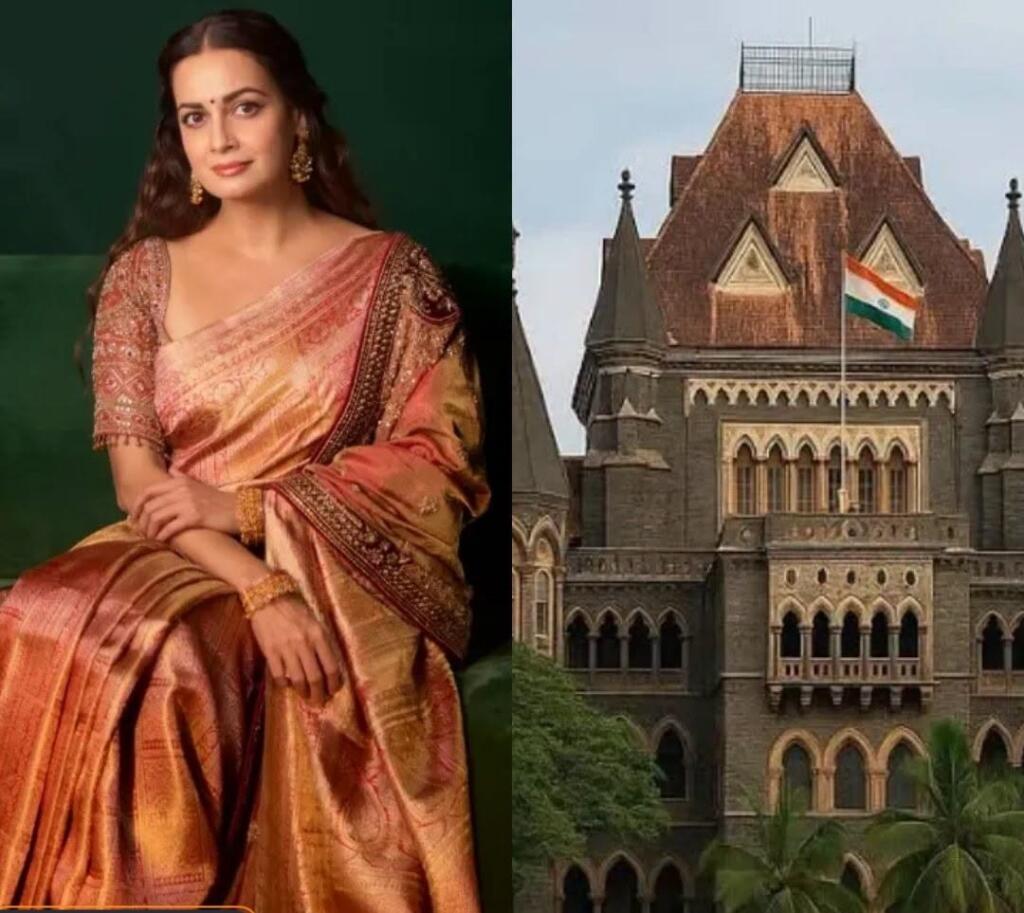
The Dia Mirza controversy has taken a fresh turn after the Bombay High Court directed the Brihanmumbai Municipal Corporation (BMC) to restore the Bollywood actress’s video promoting an environment-friendly Diwali. The court criticised political objections to the campaign, invoking India’s secular character and emphasising that environmental protection concerns everyone, irrespective of religion or caste. However, the controversy has also revived an uncomfortable question: why does celebrity-driven environmental activism appear particularly vocal around Hindu festivals, while comparable scrutiny of other religious celebrations, especially Bakrid, remains relatively limited?
The controversy began when the BMC launched an awareness campaign encouraging citizens to avoid firecrackers during Diwali amid concerns about air and noise pollution. Several prominent personalities, including Madhuri Dixit, cricketer Ajinkya Rahane and Marathi actress Nishigandha Wad, participated in the initiative. Dia Mirza also recorded a video appealing to Mumbaikars to celebrate an environmentally responsible Diwali.
However, the video was removed from the civic body’s social media platforms after objections from BJP Mumbai president Ameet Satam. He questioned the decision to enlist the actress, arguing that Hindus did not need celebrity lectures about how to celebrate their traditional festival. The removal of her video, while similar appeals featuring other personalities remained online, subsequently raised questions about the BMC’s decision-making.
The matter reached the Bombay High Court, where a division bench comprising Justices Girish Kulkarni and Neela Gokhale expressed strong displeasure over the political reactions. On November 3, 2026, the court directed the civic body to restore the video, describing its removal as unfortunate. The judges observed that India was a secular country and that environmental protection could not be given a communal interpretation.
The court remarked that everyone breathed the same air, irrespective of religion or caste. It also criticised public representatives for making unnecessary comments about an environmental awareness initiative. According to the bench, the BMC commissioner had acted appropriately by selecting celebrities to spread awareness, and the civic body should not have withdrawn the video following the controversy.
The intervention has placed Dia Mirza at the centre of a wider discussion about celebrity activism, religious sensitivity and the consistent application of environmental concerns. While the court’s position that environmental protection should remain above political and religious divisions is understandable, critics argue that the broader conversation should also examine whether public figures apply their environmental principles uniformly across different religious communities.
One of the most frequently raised questions concerns the apparent imbalance in environmental messaging around Hindu festivals. Every year, Diwali becomes the subject of extensive public campaigns focusing on firecrackers, air quality and noise pollution. Holi is similarly discussed through the prism of water conservation and chemical colours. Such concerns are not inherently unreasonable. However, critics argue that environmental activism loses credibility when similar enthusiasm is not demonstrated while discussing the environmental consequences of other large-scale religious celebrations.
Bakrid, or Eid al-Adha, is particularly relevant to this discussion. The festival involves the ritual sacrifice of animals, and its observance can raise questions concerning animal welfare, waste disposal, sanitation and the environmental impact of livestock production. These issues deserve responsible public discussion without disrespecting religious freedom. The question is whether celebrities who regularly advocate environmentally conscious celebrations are equally willing to address these concerns.
The Dia Mirza controversy has therefore become more than a disagreement over one social media video. It has exposed the competing expectations placed on public personalities who use their celebrity status to influence public behaviour. Environmental responsibility should not be restricted to one community or one festival. If firecracker pollution deserves public attention, then waste management, livestock-related emissions and animal welfare should also receive appropriate consideration during Bakrid.
There is, however, an important distinction between encouraging environmental awareness and questioning an individual’s right to participate in a religious celebration. The Bombay High Court was addressing the removal of a video from an official civic campaign, not deciding whether every aspect of celebrity environmental activism was beyond criticism. The court’s insistence that environmental awareness should not be communalised is a significant constitutional principle. Equally, citizens must remain free to question the consistency, presentation and priorities of public campaigns.
The political reactions further complicated the matter. Mumbai Mayor Ritu Tawde criticised the actress, accusing her of pursuing a selective agenda and taking positions against Hindu interests. Maharashtra minister Nitesh Rane also questioned why similar environmental messages were not being promoted during Eid, Muharram or Bakrid. These statements attracted criticism from the court, which felt that an environmental awareness initiative was being unnecessarily turned into a communal controversy.
Dia Mirza subsequently defended her participation, explaining that her message concerned public health and pollution rather than opposition to Hindu traditions. This clarification is important because promoting cleaner air does not automatically amount to hostility towards Diwali. At the same time, public figures should understand that the manner in which environmental messages are communicated matters, particularly when they concern deeply rooted cultural celebrations.
The actress has previously attracted attention for her environmental advocacy. In June 2026, she discussed an incident involving her five-year-old son and a coconut delivery worker who had brought coconuts in plastic packaging. She narrated how her son objected to the plastic bags and straws. The anecdote generated questions about whether ordinary delivery workers, who have little control over business packaging decisions, should become the subjects of public environmental lessons.
Her remarks about climate change during the same period also attracted attention. She discussed patriarchy and its relationship with environmental destruction, prompting debate over whether complex ecological challenges should be explained through ideological frameworks.
Ultimately, the Dia Mirza episode highlights the importance of consistency in public advocacy. Environmental protection is a shared responsibility, and no religious community should be exempt from reasonable environmental regulations. Equally, no community should feel that its traditions are being disproportionately targeted by campaigns that claim to represent universal concerns.
The Bombay High Court has made its position clear: environmental awareness must not be turned into a communal confrontation. The larger challenge, however, is ensuring that this principle works in every direction. Dia Mirza and other public personalities are entitled to promote sustainable celebrations, but citizens are equally entitled to demand consistency. If the objective is genuinely cleaner air, better sanitation and environmental responsibility, those principles must apply across festivals and communities without exception.