
















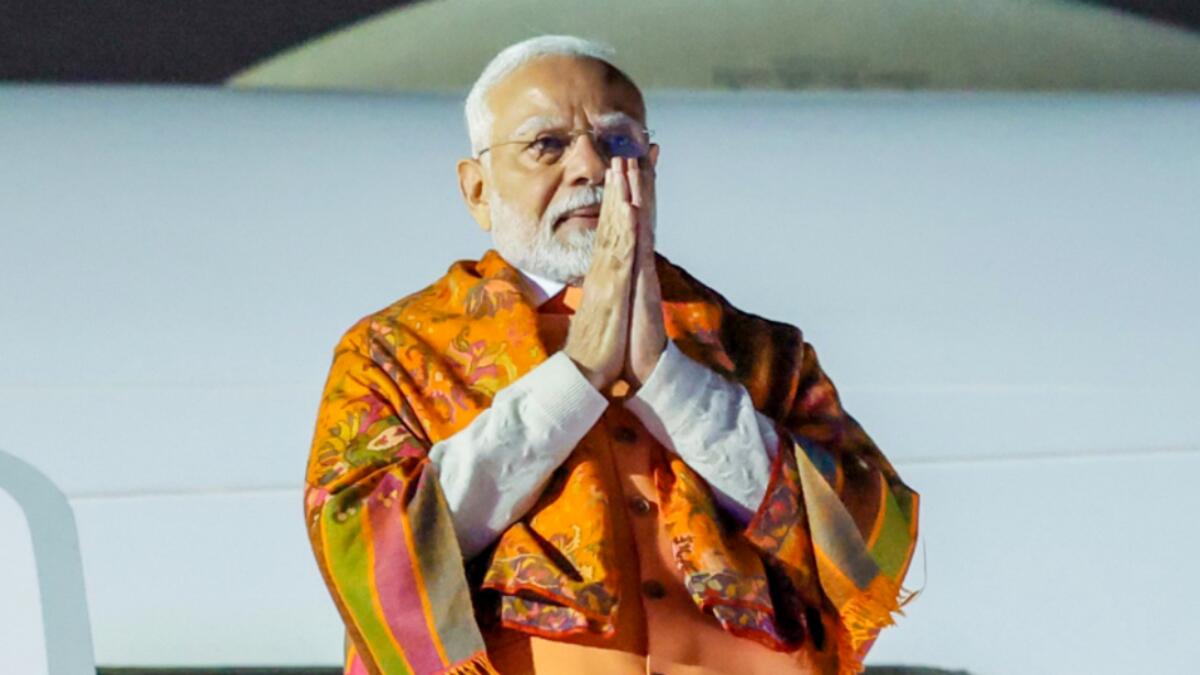
On October 7, 2001, a relatively little-known party organiser took the oath as Chief Minister of Gujarat. Twenty-five years later, to the day, he completes 25 uninterrupted years in public office. In that time Narendra Modi has gone from managing one state to leading the world’s most populous country, and he has never lost an election he led as his party’s face.
The milestone has drawn tributes from across the political spectrum. President Droupadi Murmu said that over these years he had set many new benchmarks of good governance and given inclusive development a new direction. One news report notes that his combined days as Gujarat CM and Prime Minister now exceed the previous record for the longest-serving head of an elected government in India. Apart from Jawaharlal Nehru, he is the only Prime Minister to lead his party to victory in three consecutive general elections.
The Gujarat Years
Modi inherited a state in crisis. A devastating earthquake had struck earlier that year, following a super cyclone, successive droughts and political instability. Rebuilding Kutch became his first test. The reconstruction of quake-hit districts is still cited by supporters as proof of his administrative focus.
Over the next thirteen years he built a governance model that later became his national calling card. The Jyotigram Yojana separated agricultural and household power lines, giving villages reliable electricity for the first time. The Narmada canal network carried water to dry regions of Saurashtra and Kutch. The biennial Vibrant Gujarat summits courted investors on a global scale, and projects such as GIFT City signalled ambitions beyond conventional industry. By 2014, “the Gujarat model” had become shorthand for a development-first politics that carried him to Delhi.
Remaking the Economy
When he was sworn in as Prime Minister on May 26, 2014, Modi promised a government of reform and delivery. Among his earliest moves was the Pradhan Mantri Jan Dhan Yojana, which has brought hundreds of millions of Indians into the banking system. Linked with Aadhaar and mobile numbers, it enabled direct benefit transfers that cut out intermediaries and reduced leakage in subsidy programmes.
That digital foundation supported what may be the most visible transformation of his tenure. The Unified Payments Interface made instant digital payments routine, from big-city malls to roadside tea stalls, and India now leads the world in real-time transactions. Digital India, along with a vast expansion of mobile connectivity, pushed public services online.
Structural reforms followed. The Goods and Services Tax in 2017 replaced a patchwork of central and state levies with a single national framework. The Insolvency and Bankruptcy Code gave lenders a time-bound way to resolve bad debts. Make in India and the production-linked incentive schemes aimed to turn the country into a manufacturing hub, a theme Modi repeated when he said India was becoming the new factory of the world rather than the world’s back office. Startup India nurtured an entrepreneurial ecosystem that is now among the largest anywhere.
Physical infrastructure expanded alongside. Highways, expressways, metro systems, new airports, Vande Bharat trains and the PM Gati Shakti coordination platform became signature projects, pursued at a pace supporters say India had not seen before.
Welfare at Scale
Modi’s political identity has always rested on welfare delivery. Swachh Bharat launched a nationwide sanitation drive centred on toilet construction. Ujjwala Yojana put LPG connections in the kitchens of crores of poor households, replacing smoky chulhas. The Pradhan Mantri Awas Yojana funded housing, while the Jal Jeevan Mission worked to bring tap water to rural homes.
Ayushman Bharat created one of the world’s largest publicly funded health insurance schemes. PM-KISAN transferred income support directly to farmers’ accounts, and during COVID-19 a free foodgrain programme reached hundreds of millions of people. The government says over 25 crore people have been lifted out of poverty in this period, a claim Modi himself has repeated as the central achievement of his years in office.
Security, Identity and Political Milestones
Some of Modi’s most defining decisions came in security and national identity. In 2016 India announced surgical strikes across the Line of Control, followed by the Balakot air strike in 2019 and, more recently, Operation Sindoor. Supporters see these as a doctrinal shift towards a more assertive response to cross-border terrorism.
In 2019 Parliament abrogated Article 370, ending the special status of Jammu and Kashmir, a long-standing item on the BJP’s agenda. The consecration of the Ram Mandir at Ayodhya and the redevelopment of the Kashi Vishwanath corridor fulfilled cultural and religious aspirations for many of his supporters. Other landmark measures included the law banning instant triple talaq, the new National Education Policy, and the Women’s Reservation Act of 2023, which promises one-third of legislative seats for women.
India on the World Stage
Abroad, Modi has pursued an active, personality-driven diplomacy. India’s G20 presidency in 2023, capped by the New Delhi Leaders’ Declaration, showcased the country as a convener of both the developed and the developing world. The International Solar Alliance, co-founded with France, gave India a leading role in climate diplomacy. Delhi has positioned itself as a voice of the Global South, a theme again on display at this year’s BRICS summit, which was described as showcasing India’s diplomatic prowess.
India’s science and space programmes gained fresh prestige too. Chandrayaan-3 made India the first nation to land near the Moon’s south pole, and Aditya-L1 studies the Sun, while the Gaganyaan programme works towards crewed missions. The domestic COVID-19 vaccination drive, which crossed two billion doses, was another point of national pride.
A Quarter Century On
Modi entered his 25th year as head of government with a message of gratitude, saying it had been his constant endeavour to improve the lives of people and contribute to the nation’s progress. At 76, he shows no sign of slowing. His party has launched a month-long “Seva Sankalp Abhiyan” to mark the occasion, and the 2029 general election lies ahead.
Whatever one’s politics, few leaders in any democracy have held executive office continuously for this long. Supporters see the quarter-century as the story of a man who modernised governance, empowered the poor and restored national confidence. Its full measure will be taken by historians, but by sheer longevity, scale and political impact, it has already reshaped how India sees itself.