
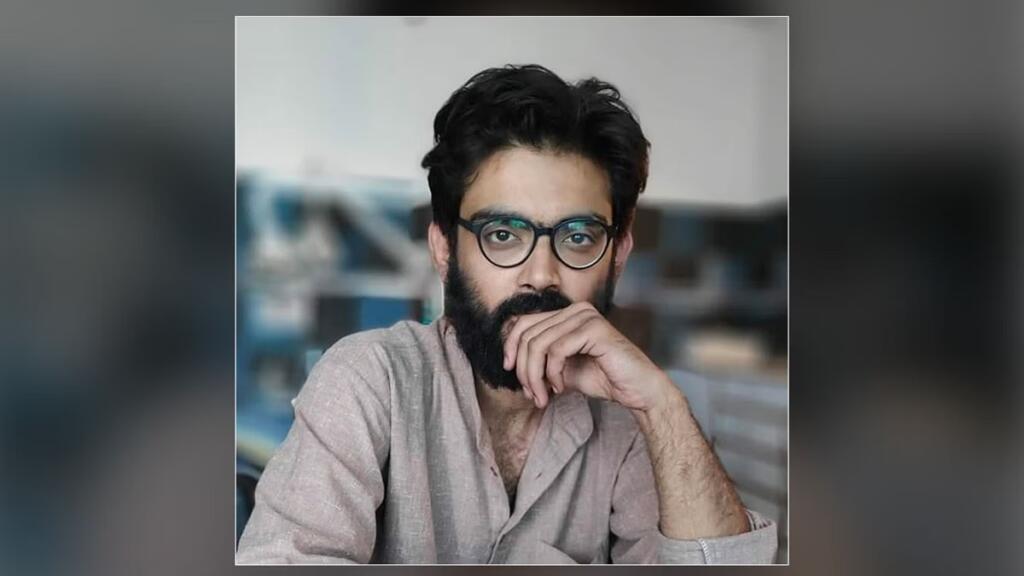
A recent interview given by Sharjeel Imam has triggered renewed political and academic debate in India after the activist and former Jawaharlal Nehru University student criticised the Constitution, secularism and the country’s democratic framework while presenting a distinctly majoritarian reading of minority politics. The interview, published by The Quint on 29 September, has drawn sharp criticism from commentators who argue that Sharjeel Imam’s remarks move beyond advocacy for minority rights into a rejection of India’s constitutional settlement. Supporters, however, maintain that his comments should be read as a critique of structural discrimination rather than an attack on the Republic itself.
In the conversation with Athique Haneef, Sharjeel Imam described secularism as part of a broader nationalist paradigm that, in his view, marginalises Muslims, Christians, Dalits, Adivasis and other minority communities. He argued that the difference between secular and Hindutva frameworks was largely one of detail, claiming that both rested on the idea of an ancient, unified Indian nation. He also criticised Jawaharlal Nehru’s The Discovery of India as an exercise in what he called mythmaking, while invoking the ideas of Muhammad Iqbal and Muhammad Ali Jinnah in support of his argument.
The remarks have proved controversial because they revisit questions that remain politically sensitive in India: the legacy of Partition, the place of religion in public life, and whether constitutional protections adequately serve religious and caste minorities. Sharjeel Imam contended that Muslims in India constitute a nation in the modern sense and suggested that India could become a nation only through a “respectable and just agreement” among its communities. Critics say such language echoes the two-nation theory that underpinned the demand for Pakistan, while his supporters argue that he is describing a political reality rather than endorsing secession.
Sharjeel Imam also directed criticism at the Constitution, particularly its abolition of separate electorates and its refusal to provide religion-based reservations. He described the secular framework as lacking historical understanding and alleged that it was hostile to Muslim interests. These statements have intensified concerns among constitutional scholars and political observers who see the Indian Constitution as a deliberately secular document designed to guarantee equal citizenship rather than communal entitlements. Others counter that formal equality can coexist with persistent social and political disadvantage, making debate over representation legitimate.
The interview further addressed India’s first-past-the-post electoral system. Sharjeel Imam argued that it can reduce substantial vote shares to few or no seats and called for proportional representation. He proposed a broader political coalition of Muslims, Dalits, Sikhs, Christians and tribal communities, using coordinated electoral strategy to pressure mainstream parties and keep the Bharatiya Janata Party out of power. Political analysts note that coalition-building among marginalised groups is a longstanding feature of Indian politics, though the framing of such alliances around religious identity remains contentious.
Sharjeel Imam also defended his earlier statements on protest and connectivity in Assam and the Northeast, saying he had referred to chakka jam as a method of obstruction rather than secession. He has previously faced serious legal proceedings, including charges under the Unlawful Activities Prevention Act, in connection with speeches and alleged roles in protests linked to the anti-CAA movement. His defenders describe the prosecutions as politically motivated, while authorities and critics maintain that the cases concern alleged incitement and public-order concerns.
The interview has also drawn attention because of Sharjeel Imam’s repeated reliance on Iqbal and Jinnah. He praised Iqbal’s concept of “communal oligarchy” and presented Partition as a consequence of Congress decisions rather than the Muslim League’s campaign for a separate Muslim state. Historians generally regard Partition as the outcome of multiple, interacting forces, including colonial policy, communal mobilisation, constitutional negotiations and the political strategies of both the Congress and the Muslim League. Reducing it to a single cause, scholars caution, risks oversimplifying a complex historical process.
What makes the controversy particularly charged is the contrast between Sharjeel Imam’s criticism of Indian institutions and his comparatively favourable treatment of Iqbal, Jinnah and the Muslim League. Opponents argue that this selective historical narrative ignores the experience of minorities in Pakistan, including the case of Jogendra Nath Mandal, Pakistan’s first law minister, who resigned and returned to India in 1950 amid persecution of minorities. Supporters respond that pointing to Pakistan’s failures does not settle questions about discrimination within India.
The episode underscores a wider tension in contemporary Indian public life. India’s constitutional order promises equality, religious freedom and political participation to all citizens, while its democracy has repeatedly accommodated religious, linguistic and caste-based political mobilisation. The challenge lies in distinguishing legitimate criticism of state policy from rhetoric that seeks to delegitimise the constitutional framework itself.
As reactions continue, Sharjeel Imam’s interview is likely to remain a reference point in debates over secularism, minority representation and the meaning of Indian nationhood. Whether his arguments are seen as a provocative critique of power or as a challenge to constitutional democracy will depend largely on how citizens and institutions choose to respond to the ideas he has placed back at the centre of public discussion.