

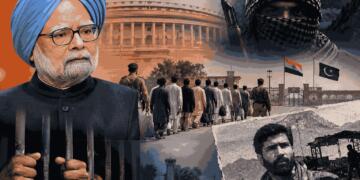
















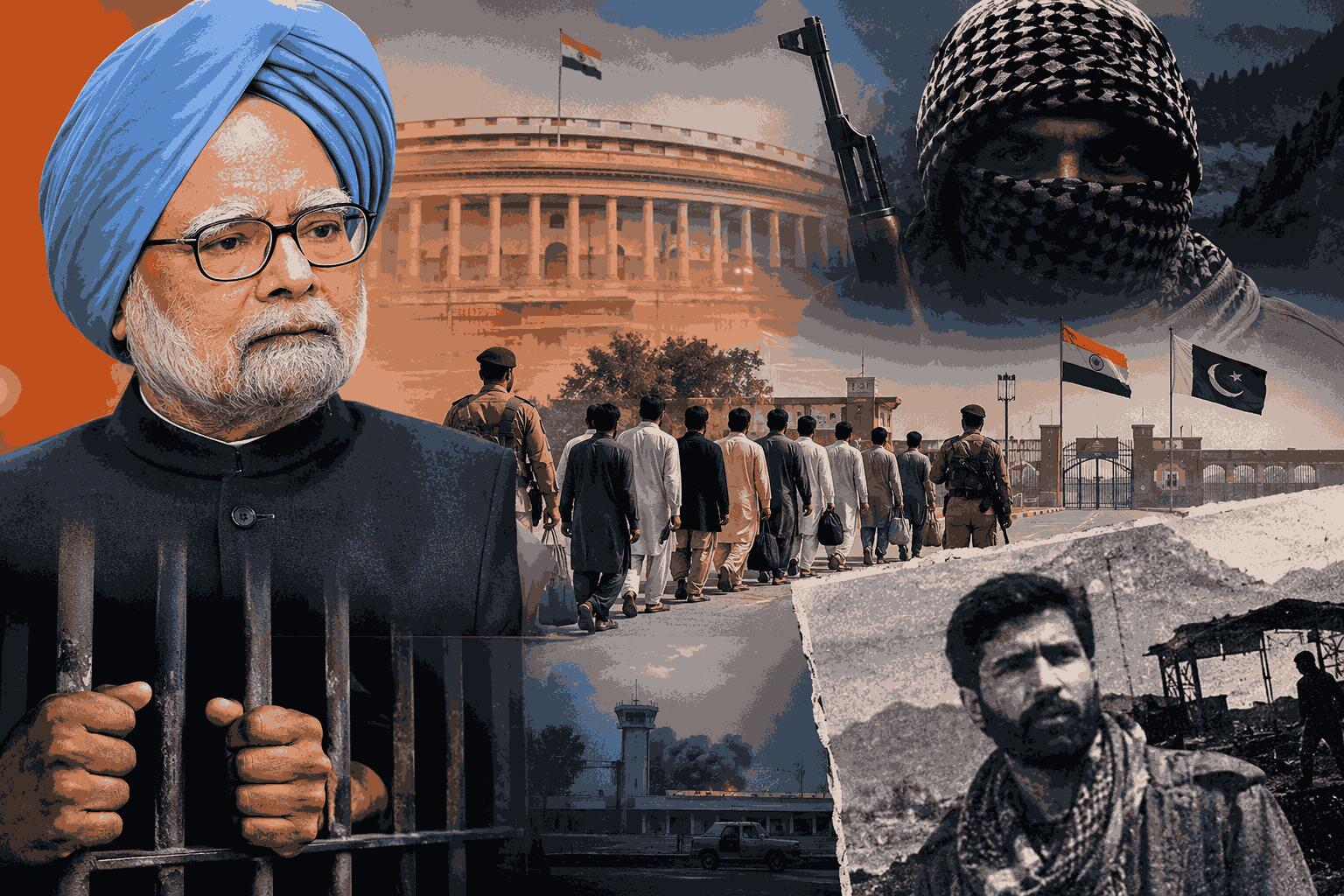
The decision of UPA regime in 2010 to release 25 Pakistani militants from Indian prisons in what was described at the time as a goodwill gesture towards Pakistan has returned to public attention, particularly because one of those released, Jaish-e-Mohammed operative Shahid Latif, was subsequently identified as a key figure linked to the 2016 Pathankot terror attack. The episode has revived questions over the risks involved when national-security decisions are made in pursuit of diplomatic outreach.
The release took place in May 2010, ahead of then Prime Minister Manmohan Singh’s planned visit to Jammu and Kashmir. Contemporary reports stated that the Jammu and Kashmir government revoked the detention orders of 25 Pakistani nationals held in prisons across India on the advice of the Union Home Ministry. Most of the detainees were associated with Pakistan-based terror organisations, including Lashkar-e-Taiba and Hizbul Mujahideen. They were eventually handed over to Pakistani authorities at the Wagah border.
The decision was notable because the prisoners had been detained under the Jammu and Kashmir Public Safety Act. Some had been moved to prisons outside Jammu and Kashmir because of security concerns. Reports from the time also stated that the detainees had received consular access before their release. Crucially, there was no corresponding release of Indian prisoners from Pakistani jails as part of the arrangement, according to contemporary reporting.
For the UPA regime, the move was presented as part of a broader effort to create a favourable atmosphere for dialogue and engagement. Political observers at the time linked the decision to the Centre’s attempts to open channels with different groups in Jammu and Kashmir and improve the environment ahead of the Prime Minister’s visit. Yet, with the benefit of hindsight, the decision has acquired a far more troubling dimension because of what happened to some of those released after returning to Pakistan.
Among the most controversial names was Shahid Latif. Latif had entered Jammu and Kashmir in the early 1990s and was arrested by Indian authorities in 1994. He subsequently spent years in Indian custody. According to the report, he was among the 25 militants released on 28 May 2010 and deported to Pakistan. After his return, he rejoined Jaish-e-Mohammed and rose within the organisation’s network.
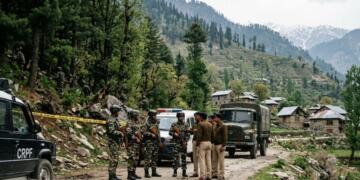
The subsequent trajectory of Latif is what has made the UPA regime decision particularly contentious. Investigators later identified him as a key handler associated with the Jaish-e-Mohammed terrorists who carried out the Pathankot attack in January 2016. The assault targeted the Indian Air Force station in Punjab and triggered a prolonged counter-terror operation involving multiple Indian security agencies. Seven security personnel and a civilian were killed, while several others were injured, according to official figures cited in the report.
The Pathankot episode transformed Latif’s release from an obscure administrative decision into a matter of enduring national-security debate. The question is not merely whether a diplomatic gesture can be justified in principle, but whether individuals with established links to militant organisations should ever be returned to a country where they could potentially resume terrorist activity.
The UPA regime also faces scrutiny because Latif had previously been sought by terrorists during the 1999 hijacking of Indian Airlines flight IC-814. The Atal Bihari Vajpayee government ultimately released three terrorists—Masood Azhar, Mushtaq Ahmed Zargar and Omar Sheikh—in exchange for the passengers held hostage, but Latif was not among those released. The contrast has since become a central part of criticism surrounding his later deportation.
The controversy surrounding the UPA regime decision is therefore less about hindsight alone and more about the principle governing counter-terrorism policy. Diplomatic engagement with Pakistan has repeatedly faced the challenge of balancing dialogue against the activities of terror groups operating from Pakistani soil. Any concession involving convicted or detained militants inevitably carries a substantially higher security burden than ordinary diplomatic confidence-building measures.
Latif was eventually killed by unidentified gunmen in Pakistan’s Sialkot district in October 2023. By then, his name had become closely associated in India with the Pathankot case. His death, however, did little to erase the questions surrounding his earlier release or the broader policy that enabled it.
For critics of the UPA regime, the 2010 episode remains an example of how the pursuit of goodwill can carry consequences far beyond the diplomatic table. For policymakers, it offers a broader lesson: counter-terrorism decisions cannot be evaluated solely through the immediate objective of improving bilateral relations. The long-term security implications, the possibility of recidivism and the interests of Indian citizens must remain central.
Ultimately, the story of the 25 Pakistani militants is a reminder that decisions taken in the name of diplomacy can acquire an entirely different meaning when viewed through subsequent events. The UPA regime may have regarded the releases as part of an effort to improve the political climate with Pakistan, but the later emergence of Shahid Latif in the Pathankot investigation has ensured that the episode remains a contentious chapter in India’s national-security history.