




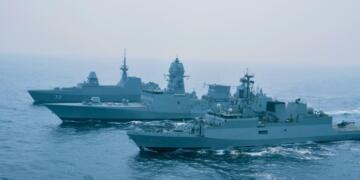











On the evening of 15 September, in international waters of the North Arabian Sea, a Pakistan Navy offshore patrol vessel identified in Indian accounts as PNS Hunain closed at speed on an Indian warship conducting routine surveillance, and struck it. India summoned Pakistan’s Chargé d’Affaires the following day and lodged a protest against what the Ministry of External Affairs called unacceptable and unprofessional conduct. Indian sources say warnings were issued over Channel 16 before contact, that the Pakistani vessel sustained heavy damage, and that the Indian ship continued on task. Islamabad has so far said little.
The word carrying the weight in that protest is “unprofessional.” It is worth asking what naval professionalism actually consists of, because the answer is not to be found in the seconds before a collision. It is found in the hours after a distress call, when the people who need pulling out carry the adversary’s passport. On that test the Indian Navy has a documented record, compiled recently enough to be checked.
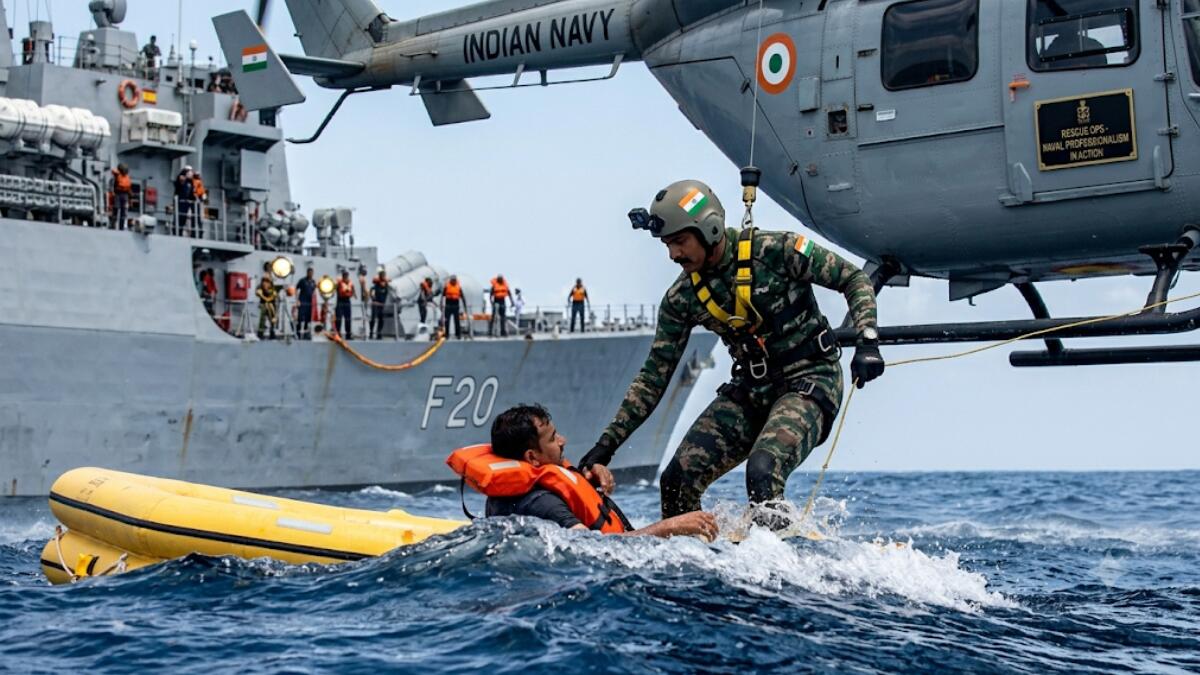
On 28 January 2024, INS Sumitra, an indigenously built offshore patrol vessel deployed east of Somalia, answered a distress message from the Iranian-flagged fishing vessel Iman, whose seventeen crew had been taken hostage. The vessel was intercepted, the crew freed in the early hours of 29 January, and the boat released for onward transit. Within hours, Sumitra was redirected to a second hijacked Iranian-flagged trawler, Al Naeemi, held by eleven Somali pirates. Her nineteen crew were Pakistani nationals. Using her integral helicopter and boats, and what the Navy termed coercive posturing, Sumitra compelled their release. Thirty-six seafarers in under thirty-six hours, some 850 nautical miles west of Kochi. Nineteen of them went home to Pakistan.
This was not an isolated gesture. On 29 March 2024, acting on inputs regarding the hijacking of the Iranian trawler Al Kambar 786, roughly ninety nautical miles south-west of Socotra, INS Sumedha and the frigate INS Trishul were diverted to intercept. After more than twelve hours, nine armed pirates surrendered without a shot being exchanged. All twenty-three of the rescued crew were Pakistani. In a single quarter, Indian warships returned forty-two Pakistani citizens to their families.
Three features of that record deserve emphasis. First, nothing was sought in return: no conditions, no linkage to Kashmir, no acknowledgement of a debt. Second, the restraint was doctrinal rather than incidental. When INS Kolkata cornered the hijacked bulk carrier ex-MV Ruen over forty hours in March 2024, some 1,400 nautical miles from the Indian coast, the pirates shot down an Indian drone, fired on the warship, and pushed hostages forward as human shields; the response was to disable the vessel’s steering and navigational aids, take all thirty-five pirates alive, and evacuate seventeen crew without injury. Third, these operations were performed by the same fleet now drawn into dangerous encounters at sea. Professionalism is not a department within a navy. It is a habit.
The contrast with the conduct protested this week is instructive. Article 10 of the 1991 India-Pakistan agreement on advance notice of military exercises requires warships of the two navies to keep at least three nautical miles apart in international waters. That provision exists because the alternative has been tested. In June 2011, PNS Babur closed on INS Godavari from astern in the Gulf of Aden and damaged her helicopter safety net; India protested then in almost the language it used this week. Yet in that same episode the Pakistan Navy assisted in securing the release of Indian sailors held aboard MV Suez, and India’s external affairs minister publicly thanked it for doing so. Pakistani vessels have rescued Indian fishermen; Indian vessels have rescued Pakistani ones.
The point is not that one navy is crewed by better men. It is that humanitarian conduct at sea is impossible to fake, whereas posturing achieves remarkably little. A ship that shaves a warship’s quarter at speed in a swell purchases a photograph and risks a war; it deters nobody who was not already deterred. A ship that spends thirty-six hours freeing trawlers establishes something more durable: that its flag is worth trusting when trust is all a hostage has.