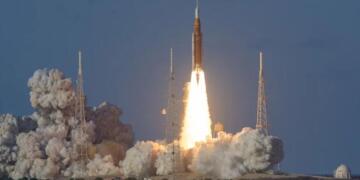
















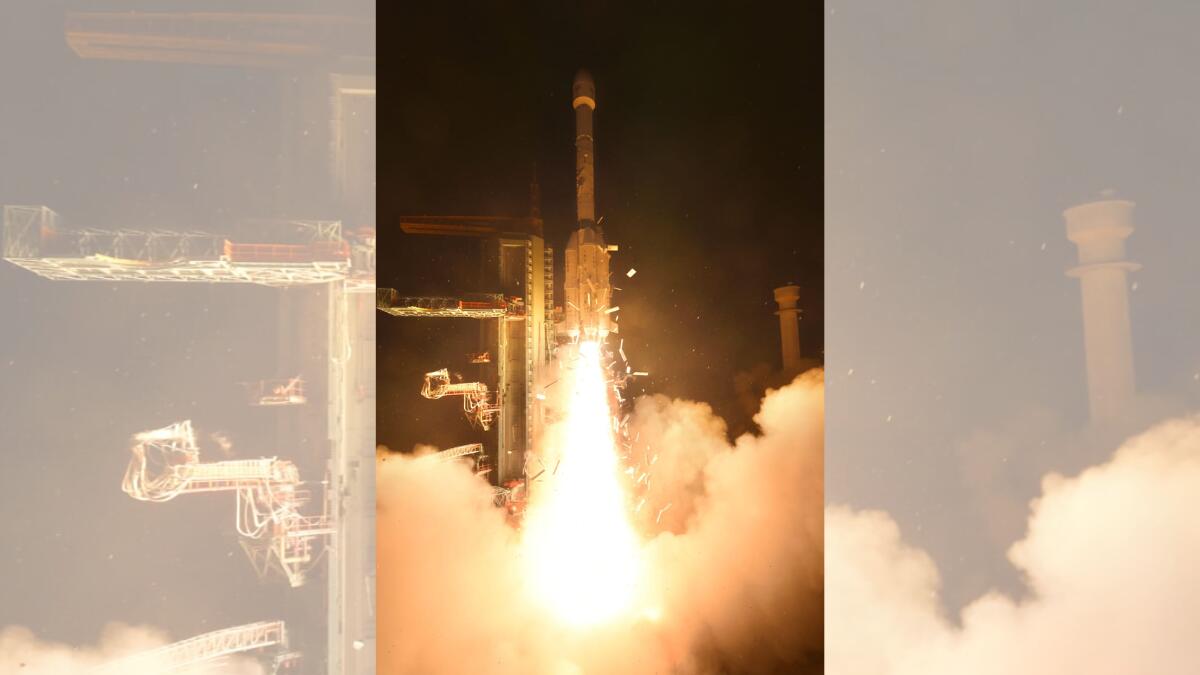
The Indian Space Research Organisation successfully launched the GSLV-F17 rocket from Sriharikota in the early hours of September 4, 2026, placing the much-awaited EOS-05 earth observation satellite into its intended orbit — a mission carrying outsized significance for the space agency.
The Geosynchronous Satellite Launch Vehicle (GSLV) picked up its unflattering nickname during its difficult early years, when it suffered a string of failures — six of its first 18 flights failed to fully accomplish their mission. Unlike its more dependable sibling, the Polar Satellite Launch Vehicle (PSLV), which built a reputation as one of the most reliable rockets in the world, the GSLV struggled particularly with its complex indigenous cryogenic upper stage — the component responsible for the final, precise push that places satellites into their target orbits. That troubled history, including the loss of the earlier EOS-03 mission in 2021 due to a cryogenic-stage anomaly, is what earned the rocket its “Naughty Boy” moniker at ISRO.
What Happened on Launch Day
The three-stage GSLV lifted off from the Second Launch Pad at the Satish Dhawan Space Centre in Sriharikota at 2:55 am local time. This was the 19th flight of the GSLV and the heaviest satellite the launcher has ever carried. Around 18 minutes after liftoff, the 2,367 kg EOS-05 satellite separated successfully, with the rocket’s third stage performing better than expected and injecting the satellite into a geosynchronous transfer orbit with a perigee of 171 km, an apogee of about 31,026 km, and an inclination of 19.28 degrees.
ISRO Chairman V Narayanan confirmed the precision of the injection, saying the GSLV-F17 had successfully and precisely placed the advanced EOS-05 geo-imaging satellite into its intended and required orbit.
What Is EOS-05?
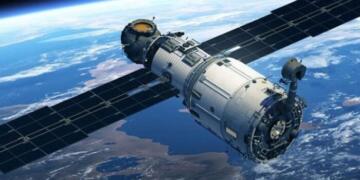
EOS-05, also known as GISAT-1A, is India’s first-ever imaging satellite designed to operate from geosynchronous orbit — nearly 36,000 km above Earth. Rather than being placed directly into that final orbit, the satellite was injected into a sub-geosynchronous transfer orbit; over the coming days, EOS-05 will use its own propulsion system to gradually raise its altitude until it reaches its intended geosynchronous position. Once operational, it will give India continuous, real-time earth observation capability from a fixed vantage point over the country — useful for weather monitoring, disaster response and strategic surveillance.
Why This Launch Mattered So Much
The mission marked ISRO’s comeback after a lull of nearly eight months, and — somewhat ironically — it was also the space agency’s first successful launch of 2026. The timing was especially important given recent turbulence: the PSLV, ISRO’s historically reliable workhorse, faced repeated failures through 2025 and 2026, prompting the government to ground the rocket while investigations and tests continue. Because the issues affecting PSLV are unrelated to the GSLV Mk II, ISRO could proceed with the EOS-05 mission on the GSLV’s own technical merits — and a failure here would have compounded a difficult stretch for the agency.
Reactions
Prime Minister Narendra Modi welcomed the launch on social media, calling it an outstanding achievement and a proud moment for the nation, and pointing to the launch as a reflection of the excellence, innovation and growing capabilities defining India’s space sector. He also highlighted the deepening collaboration between ISRO and Indian industry as adding strength and scale to the country’s broader space programme.
The Bigger Picture
For a rocket long associated with early-mission jitters, the EOS-05 launch represents one of the GSLV’s most significant achievements to date — proof that its indigenous cryogenic upper stage, once its biggest liability, can now deliver consistently on demanding missions. With ISRO also working through an ambitious slate that includes uncrewed Gaganyaan test flights and further GSLV and LVM3 missions, a clean GSLV flight after a near-year-long lull gives the agency real momentum heading into the rest of 2026.