






















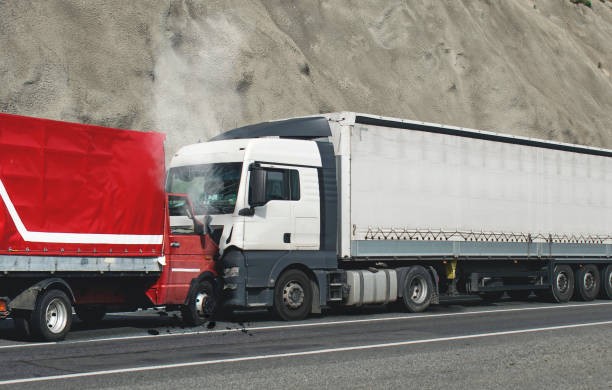
A truck accident case may go to trial when the parties cannot agree on liability, the value of the damages, or other key issues affecting the claim. While many truck accident cases settle before reaching the courtroom, some require a judge or jury to review the evidence and determine the outcome.
Truck accidents often involve severe injuries, substantial property damage, and complex legal questions. Insurance companies, trucking businesses, and injured individuals may have very different views about what happened and who should be held responsible.
Understanding these disputes helps explain why some cases proceed through settlement negotiations while others require a trial. Knowing the jury’s responsibility in truck accident cases also helps victims understand what to expect if their claim cannot be resolved outside of court.
Disagreements Over Liability
One of the most common reasons a truck accident case goes to trial is a dispute over who caused the collision. The trucking company or its insurer may argue that the injured driver was partially or entirely responsible for the accident.
Evidence such as police reports, witness testimony, dashcam footage, electronic logging device data, and accident reconstruction reports may all be presented to establish fault. When both sides strongly disagree about liability, a trial may be necessary to determine who is legally responsible.
Disputes About the Value of Damages
Even when liability is clear, disagreements often arise regarding the amount of compensation the injured person should receive. Medical expenses, future treatment costs, lost wages, reduced earning capacity, and pain and suffering can all become points of contention.
Insurance companies may question whether certain medical treatments were necessary or whether an injury was caused by the accident. If the parties cannot reach an agreement on fair compensation, the case may proceed to trial so the evidence can be evaluated in court.
Multiple Parties May Be Responsible
Truck accident cases frequently involve more than one potentially liable party. Depending on the circumstances, responsibility may extend beyond the truck driver.
Possible defendants may include:
- The trucking company
- A vehicle maintenance contractor
- The cargo loading company
- The manufacturer of defective vehicle parts
- Another negligent driver
When several parties are involved, determining each party’s share of responsibility can become complicated, making settlement negotiations more difficult.
Serious or Catastrophic Injuries
Cases involving catastrophic injuries often involve larger financial claims because the long-term consequences can be significant. Permanent disabilities, traumatic brain injuries, spinal cord injuries, and other life-changing conditions may require ongoing medical care and affect a person’s ability to work.
Because substantial compensation may be involved, both sides often conduct extensive investigations and consult medical, economic, and accident reconstruction experts. If negotiations fail, these complex issues may ultimately be decided at trial.
Disputes Over Evidence
The outcome of a truck accident case often depends on the strength of the available evidence. Sometimes the parties disagree about whether certain evidence should be admitted or how it should be interpreted.
Examples include electronic logging records, driver qualification files, maintenance records, surveillance footage, and expert testimony. Resolving these disputes may require judicial rulings before the case can proceed, and unresolved disagreements can contribute to a trial.
Failure to Reach a Fair Settlement
Most personal injury claims involve settlement negotiations before trial. However, negotiations are only successful when both sides are willing to compromise.
If the insurance company offers compensation that the injured person believes does not fairly reflect the losses suffered, accepting the offer may not be appropriate. Likewise, if the parties remain too far apart after mediation or continued negotiations, taking the case to trial may become the next step.
Although trials require additional time and expense, they also provide an opportunity to present the evidence before an impartial decision-maker.
The Court Applies the Law
Truck accident cases are decided according to established legal standards governing negligence and civil liability. For example, 49 C.F.R. §392.3 prohibits commercial motor vehicle drivers from operating a truck while their ability or alertness is impaired by fatigue, illness, or any other cause that makes it unsafe to drive.
When evidence shows that federal safety regulations may have been violated, those facts can become important during litigation and may influence how liability is evaluated.
Understanding the legal rules that apply to commercial trucking operations helps both parties prepare their cases and present relevant evidence during trial.
Key Takeaways
- Truck accident cases may go to trial when the parties disagree about liability or compensation.
- Serious injuries often increase the complexity and value of a claim.
- Multiple responsible parties can make settlement negotiations more difficult.
- Evidence disputes sometimes require court intervention before a case can be resolved.
- A trial allows a judge or jury to evaluate the evidence when negotiations fail.
- 49 C.F.R. §392.3 prohibits commercial drivers from operating a vehicle when fatigue, illness, or other conditions make driving unsafe.
- Thorough preparation and strong evidence are essential whether a truck accident case settles or proceeds to trial.