
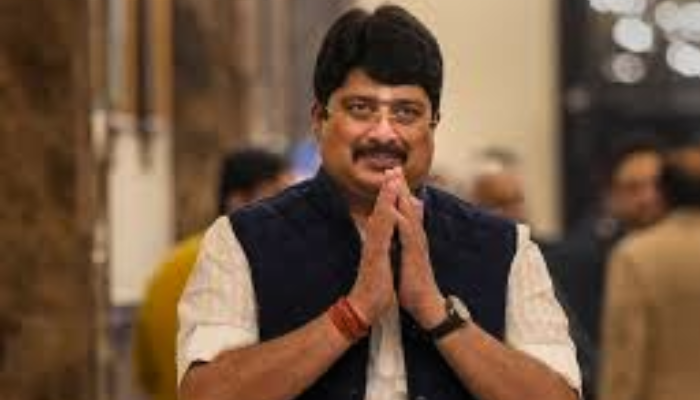
Speaking at a Ram Katha gathering near Prayagraj, the Kunda MLA asserted that the overwhelming majority of Indian Muslims were originally Hindus and claimed that conversions to Islam happened because of fear, pressure, greed, and weakness rather than genuine conviction. Videos of the speech surfaced online on Monday and rapidly spread across social media, triggering sharp political and ideological reactions.
“All the Muslims today were Hindus before. They did not come from Arabia,” Raja Bhaiya said while addressing the gathering. “Those who were faithless, weak, greedy, or under pressure changed their religion. Those who were brave and willing to sacrifice remained steadfast in their faith.”
The remarks immediately drew criticism from opposition voices and liberal commentators, who accused the MLA of making divisive statements. However, supporters viewed the speech as a blunt articulation of historical truths and civilisational realities that mainstream political discourse often avoids.
Raja Bhaiya Links India’s Secularism To Hindu Civilisation
Raja Bhaiya’s address went far beyond the issue of religious conversion. At the centre of his speech was a broader ideological argument that India’s secular framework survives because the country remains rooted in Sanatan civilisation and Hindu-majority values.
According to him, India’s democratic and pluralistic structure is inseparable from Hindu traditions that historically allowed diversity and coexistence to flourish.
“India is secular because it is Hindu-majority and Sanatan-majority,” he said. “The day Sanatan becomes weak, the Constitution too will not survive in its present form.”
Referring to slogans such as “Jai Samvidhan”, Raja Bhaiya claimed that many people celebrate constitutional ideals without acknowledging the civilisational foundation sustaining them. He warned that if India ever ceased to remain a Hindu-majority, the constitutional structure itself would face danger.
“The day India ceases to be a Hindu-majority, they will tear up the Constitution and throw it away,” he declared.
The remarks echoed a growing ideological view among nationalist circles that Sanatan Dharma is not merely a religion but the cultural backbone of the Indian republic.
‘Forget Caste, We Are Hindu Brothers’
Throughout the speech, Raja Bhaiya repeatedly stressed the need for Hindu consolidation and urged people to rise above caste divisions, which he described as the greatest weakness within Hindu society.
“Leaving aside caste distinctions, we are all Hindu brothers,” he said repeatedly during the event.
The MLA argued that caste fragmentation had weakened Hindu society for decades, while opposing ideological forces remained united and organised. He maintained that preserving religion, culture, and civilisation requires collective consciousness and social unity.
He also warned Hindus against complacency and urged them to actively defend their traditions and identity.
“No one else will fight this battle for us. We ourselves will have to fight it,” he told the gathering.
Udhayanidhi Stalin Controversy Reignited
Raja Bhaiya also revived the controversy surrounding Udhayanidhi Stalin and his earlier remarks comparing Sanatan Dharma to diseases such as dengue, malaria, and coronavirus.
Questioning what he called selective outrage, Raja Bhaiya argued that derogatory statements against Hindu traditions are often defended under the banner of free speech, while comments against Islam trigger immediate nationwide protests and outrage.
“There is a leader in Tamil Nadu who says Sanatan Dharma should be eliminated,” he said. “Imagine if someone had spoken similarly about Islam. How massive would the protests and fatwas have been?”
The Sanatan Dharma controversy involving Udhayanidhi Stalin has remained politically explosive since 2023. In 2025, the Supreme Court of India reportedly criticised Stalin for irresponsible use of free speech and observed that public figures must understand the consequences of their remarks.
Udhayanidhi later clarified that he was not against Hinduism itself but against caste-based discrimination and certain social practices linked to Sanatan traditions. He also defended anti-Sanatan movements in Tamil Nadu, arguing that they historically challenged social evils and inequality.
Muslim Cleric Rejects Conversion Claims
Responding to Raja Bhaiya’s remarks, Maulana Shahabuddin Razvi Barelvi rejected the allegation that conversions to Islam in India took place through coercion or inducement.
The cleric stated that Islam spread through Sufi teachings and voluntary acceptance by local communities influenced by those teachings. He insisted that Indian Muslims are natives of the country and fully Indian in identity and culture.
He also said that no Muslim ruler or Islamic preacher forced people to convert and argued that millions embraced Islam willingly after being influenced by Sufi saints and Islamic teachings.
Argument Over History, Identity, and Civilisation Intensifies
Raja Bhaiya’s remarks have once again pushed questions of history, religious identity, and civilisational politics to the centre of national discourse.
Supporters of the MLA argue that his comments reflected historical realities surrounding invasions, conversions, and the survival of Hindu civilisation despite centuries of foreign rule. Many social media users praised him for speaking openly on issues they believe mainstream politics and media often avoid discussing directly.
Critics, meanwhile, accused him of making inflammatory statements capable of widening communal tensions.
Yet for a growing section of politically assertive Hindu voices, Raja Bhaiya’s speech represented not provocation but an unapologetic defence of Sanatan Dharma, Hindu unity and India’s civilisational roots at a time when debates around identity, religion and history continue to dominate Indian politics.