
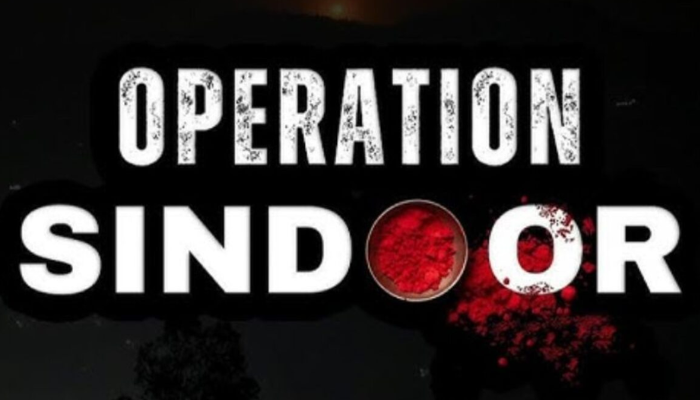
One year after Operation Sindoor struck terror infrastructure across Pakistan and Pakistan-occupied Jammu and Kashmir, the Modi government has used the anniversary to send a sharp message to Islamabad and its terror proxies.
India launched Operation Sindoor in the early hours of May 7, 2025. The operation came days after the April 22 Pahalgam terror attack that killed 26 civilians in Jammu and Kashmir.
Indian forces carried out precision air and missile strikes on nine terror camps inside Pakistan and Pakistan-occupied Jammu and Kashmir. The strikes targeted facilities linked to Lashkar-e-Taiba, Jaish-e-Mohammed and Hizbul Mujahideen.
Indian officials said the operation eliminated more than 100 terrorists.
The strikes hit several major terror hubs. These included Markaz Taiba and Markaz Subhan in Bahawalpur. India also targeted Muzaffarabad’s Sawai Nala Camp and Syedna Belal Camp. Gulpur Camp, Abbas Camp, Barnala Camp, Sarjal Camp and Mehmoona Joya Camp also came under attack.
Prime Minister Modi described the mission as a reflection of India’s “firm response against terrorism”.
“A year ago, our armed forces displayed unparalleled courage, precision and resolve during Operation Sindoor. They gave a fitting response to those who dared to attack innocent Indians at Pahalgam,” Modi said on X.
The Prime Minister said, “The operation showcased the professionalism and coordination of the armed forces”. He also highlighted the growing jointness among the services and the impact of India’s defence self-reliance push.
India Has Shifted Its Counter-Terror Strategy
Operation Sindoor marked a major shift in India’s security posture.
For years, Pakistan relied on the belief that nuclear deterrence would stop India from carrying out strong military retaliation after terror attacks. Operation Sindoor challenged that assumption directly.
India not only struck terror infrastructure across the border, but also sustained military pressure without retreating diplomatically.
President Droupadi Murmu called the operation a “defining testament” to India’s resolve against terrorism. She said those threatening Bharat must know that the country remains “vigilant, united, and prepared to respond with strength”.
Vice President Jagdeep Dhankhar said the armed forces dismantled terror networks through “unwavering courage”.
Amit Shah described Operation Sindoor as an “epochal mission”. He said the operation showed the “infallible striking power” of India’s armed forces.
“History will remember it as the day of the precise striking power of our armed forces, meticulous intelligence of our agencies, and resolute political will rising together as one,” Shah said.
Lieutenant Governor Manoj Sinha also praised the operation. He called it a declaration of India’s commitment to securing a terror-free Jammu and Kashmir.
Operation Sindoor Redefined India’s Military Signalling
The Indian armed forces marked the anniversary by releasing a montage video at exactly 1:05 am, the same time the operation began last year.
The video carried a blunt message: “Justice served. India forgets nothing. India forgives nothing.” It also noted that the mission “just took 88 hours”.
Defence Minister Rajnath Singh called the operation a “powerful symbol of national resolve and preparedness”. He praised the “seamless jointness and deep synergy” between the services.
International observers also revisited the operation. US military expert John Spencer said, “India achieved “air superiority” over Pakistan within 72 hours.” He described the campaign as proof of India’s growing capabilities in drones, precision strikes and integrated air defence systems.
The operation accelerated India’s military modernisation efforts. The armed forces increased their focus on drones, missile systems, surveillance technology and artificial intelligence-driven warfare.
India also hardened its diplomatic posture after the Pahalgam attack. The government suspended the Indus Waters Treaty and signalled that terror attacks would carry consequences beyond the battlefield.
At the time, Prime Minister Modi declared that “terror and talks cannot go together, terror and trade cannot go together and blood and water cannot flow together.”
One year later, Operation Sindoor has become more than a military operation. It now symbolises India’s new doctrine against cross-border terrorism: swift retaliation, visible force and zero strategic hesitation.