

















RelatedPosts
Prime Minister Narendra Modi’s recent appeal urging citizens to conserve petrol and diesel, prioritise carpooling and work-from-home arrangements, and avoid unnecessary gold purchases has triggered a sharper conversation in policy and strategic circles than the government’s communication style usually invites.
On the surface, the message sits within familiar economic logic: conserve energy, reduce import dependence, and manage inflationary pressures. But the timing has pushed analysts to interpret it as a forward-looking adjustment rather than a routine advisory. In other words, not just about today’s prices, but about tomorrow’s uncertainty.
India’s exposure to global oil markets is the central backdrop. As a major importer of crude, even moderate disruptions in international supply chains translate quickly into domestic inflation, currency pressure, and fiscal stress. In such a setting, appeals to reduce fuel consumption are increasingly seen as part of a broader strategy to smooth demand before external shocks intensify.
The reference to gold carries a different but equally important signal. Gold demand in India tends to rise during uncertain global phases, often widening the current account deficit due to higher imports. By discouraging unnecessary purchases, the government is effectively nudging households to reduce pressure on external balances at a time when global conditions remain unpredictable.
Beyond Household Behaviour: A Shift in Economic Messaging
What makes the intervention notable is the shift in tone. Governments typically do not lean on behavioural advisories unless they anticipate prolonged stress in external conditions. The combination of fuel restraint, remote work encouragement, and consumption moderation suggests a coordinated emphasis on economic cushioning.
This comes against a backdrop of persistent global instability. Energy markets continue to react sharply to geopolitical developments, trade routes remain sensitive to disruption, and supply chain normalisation has been uneven across regions. The result is not a single crisis point, but a stretched period of uncertainty that refuses to settle into stability.
In such an environment, governments often begin to prepare populations quietly. Not through alarm, but through repetition of restraint-oriented messaging that gradually normalises the idea of economic discipline.
India’s Exposure Makes the Signal More Significant
For India, the sensitivity is structural. Energy imports form a large share of consumption needs, and global price fluctuations transmit quickly into domestic inflation. Similarly, disruptions in shipping routes or geopolitical tensions in key corridors can raise logistics costs almost immediately.
This is why even incremental shifts in government communication are closely watched. They often reflect internal assessments of external risk, particularly when the messaging aligns with consumption patterns that directly affect macroeconomic stability.
A familiar strain in India’s policy memory
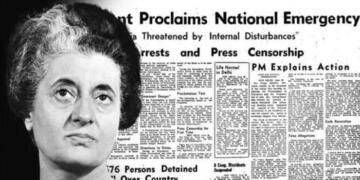
The idea of urging restraint during economic pressure is not new in India’s governance history. In earlier decades of global stress, former Prime Minister Indira Gandhi also publicly emphasised austerity, conservation of resources and reduced consumption during periods of economic strain, particularly in the aftermath of global oil shocks.
While the context today is structurally different, the underlying policy instinct remains comparable: when external shocks tighten the economic environment, governments often turn to public restraint as a first line of cushioning before structural adjustments fully take hold.
Reading the Direction, Not the Declaration
There is no official indication of an immediate crisis or escalation. But the direction of messaging is: caution over confidence, resilience over expansion, restraint over consumption.
That shift matters because governments rarely adjust public communication styles without a corresponding shift in risk perception. Even if the external environment does not deteriorate further, the current signals suggest that policymakers are preparing for a scenario where volatility persists longer than earlier expectations.
In that sense, Modi’s appeal is not being interpreted as a standalone economic suggestion. It is being read as part of a broader recalibration, one where India positions itself not for short-term disruption, but for an extended phase of global uncertainty where economic endurance becomes a governing priority rather than a temporary adjustment.
