

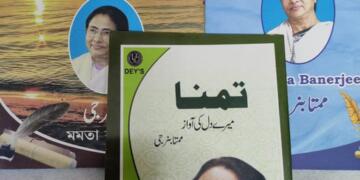

















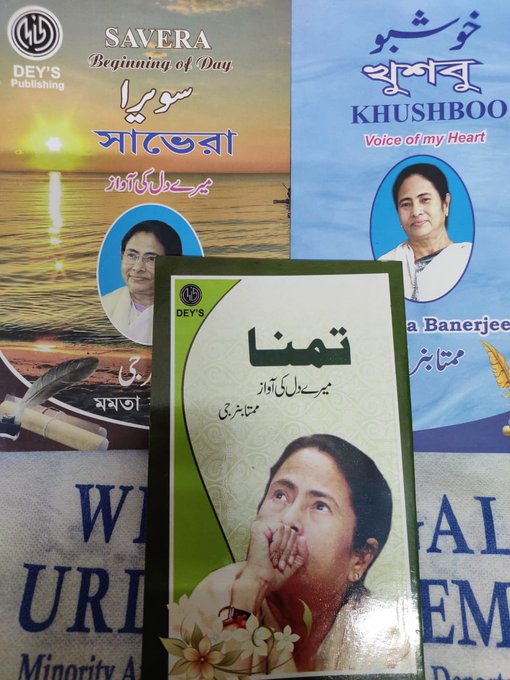
A fresh political storm has erupted in West Bengal, with allegations of “Urdu over Bengali” gaining traction in the run-up to the 2026 Assembly elections. At the centre of the controversy is Chief Minister Mamata Banerjee, whose recent political messaging and linguistic choices have sparked a heated debate over identity, culture, and electoral strategy in the state.
According to reports, critics claim that Mamata Banerjee is prioritising Urdu in public communication and outreach efforts, fuelling the narrative of “Urdu over Bengali” as a deliberate political strategy. The issue has quickly evolved from a linguistic debate into a broader political flashpoint, with opposition parties accusing the Trinamool Congress (TMC) leadership of undermining Bengal’s cultural identity to consolidate minority votes.
The controversy stems from observations that the Chief Minister has increasingly used Urdu phrases and messaging in official and campaign contexts. Critics argue that this shift signals a calculated attempt to appeal to Muslim voters, who constitute a significant demographic in several districts of West Bengal. In this framing, the phrase “Urdu over Bengali” has become a rallying cry for those who believe that linguistic identity is being reshaped for electoral gain.
Supporters of Mamata Banerjee, however, reject this interpretation. They argue that West Bengal has always been linguistically diverse, with Urdu, Hindi, Nepali, and several tribal languages coexisting alongside Bengali. From this perspective, the emphasis on inclusivity is being misrepresented as “Urdu over Bengali,” when in fact it reflects the state’s pluralistic ethos.
Nevertheless, the political implications of the debate are significant. Language has historically been a powerful marker of identity in Bengal, dating back to movements that asserted the primacy of Bengali culture and literature. Any perception of “Urdu over Bengali” therefore resonates deeply, particularly among voters who view linguistic heritage as inseparable from regional pride.
The timing of the controversy is also critical. With elections approaching, both the ruling TMC and opposition parties are sharpening their narratives. For the opposition, the “Urdu over Bengali” issue provides an opportunity to question the government’s priorities and portray it as engaging in vote-bank politics. For the TMC, the challenge lies in balancing outreach to minority communities while maintaining its longstanding image as a champion of Bengali identity.
Political analysts note that language politics is rarely just about language. In this case, the “Urdu over Bengali” debate intersects with broader themes of communal polarisation, electoral strategy, and identity mobilisation. By framing the issue in linguistic terms, competing political forces are effectively engaging in a larger contest over cultural ownership and political legitimacy.
It is also worth noting that Mamata Banerjee has, in the past, strongly advocated for the promotion of Bengali language and culture. She has repeatedly emphasised the importance of preserving Bengali in education, media, and public life. This apparent contradiction has added another layer of complexity to the current debate, with critics questioning whether the recent emphasis on Urdu represents a shift in priorities or simply a tactical adjustment.
Meanwhile, the discourse around “Urdu over Bengali” has extended beyond political speeches into social media and public opinion. The phrase has been widely circulated, often accompanied by polarised interpretations and emotionally charged rhetoric. This amplification has contributed to an increasingly tense atmosphere, where language becomes a proxy for deeper societal divisions.
Experts caution that such narratives can have long-term consequences. When linguistic identity is politicised, it risks entrenching divisions rather than fostering unity. The repeated invocation of “Urdu over Bengali” may mobilise certain voter segments, but it could also alienate others and complicate efforts to maintain communal harmony.
As the election campaign intensifies, the “Urdu over Bengali” controversy is likely to remain a central issue. Whether it ultimately influences voter behaviour will depend on how effectively each side communicates its position and addresses public concerns.
In the final analysis, the debate over “Urdu over Bengali” is not merely about language—it is about identity, perception, and power. For Mamata Banerjee and her opponents alike, the challenge lies in navigating this संवेदनशील terrain without deepening existing fault lines. The outcome of this linguistic and political contest may well shape the future trajectory of West Bengal’s राजनीति and its complex social fabric.





