












The wind in the high-altitude passes of Ladakh carries a certain stillness this week, a quiet that reflects the somber mood of the Indian Army.
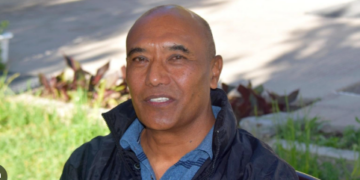
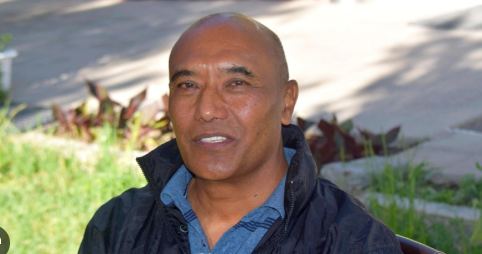
On April 10, 2026, Colonel Sonam Wangchuk, a legendary figure of the Kargil War and a Maha Vir Chakra recipient, passed away. His departure marks the end of a storied era, but for the Ladakh Scouts, the “Nunnus” (as the soldiers are affectionately known), he remains an eternal presence.
Colonel Wangchuk was far more than a decorated officer with a row of ribbons on his chest, he was a living embodiment of the regiment’s spirit.
In every military unit, there are men who perform their duties with excellence, and then there are those who become part of the regiment’s very soul, Wangchuk was the latter.
While military historians will meticulously document his strategic brilliance and gallantry, his soldiers will remember the man, a leader whose personal impact was as enduring and unyielding as the rugged Himalayan terrain he spent a lifetime defending.
A Natural Ethos: From the Soil of Ladakh
Though his military journey began in the Assam Regiment, it was with the Ladakh Scouts that Sonam Wangchuk’s name became etched into the granite of regimental memory.
This transition was more than a mere posting, it was a homecoming. The Ladakh Scouts are not just another infantry unit, they are a unique brotherhood built on the foundations of extreme endurance, local knowledge, and an ancestral bond with the high-altitude desert.
Coming from Ladakh himself, Wangchuk understood the temperament of the land and its people. He didn’t just lead his men; he shared their breath in the thin air. He wore the regiment’s identity with a quiet, complete sincerity that resonated with the troops.
In him, the soldiers saw a reflection of their own resilience. He spoke their language, understood their hardships, and carried the pride of the mountains in a way that commanded respect without the need for raised voices.
The Crucible of Chorbat La
The world came to know the name Sonam Wangchuk during the summer of 1999. As a young Major with the 3 Ladakh Scouts (Indus Wing), he was thrust into the crucible of the Chorbat La sector.
The conditions were nothing short of hellish with waist-deep snow, sub-zero temperatures that froze the blood, and a relentless rain of enemy fire from superior heights.
It was here that Wangchuk transitioned from an officer to a legend. Leading a small group of his “Nunnus,” he conducted a daring raid to preempt enemy occupation of a vital ridge.
The official gallantry profile records a leader who displayed exemplary courage, securing positions that were tactically critical for the defense of the region. He led from the front, often climbing sheer ice walls under the cover of darkness to surprise the infiltrators.
In plain words, he became “a living legend from the Ladakh Scouts.” But legends in the army are not manufactured by citations alone. They are forged when soldiers remember who stood firm when the ground shook, who shared their meager rations in the trenches, and who never asked a subordinate to step into a line of fire that he himself had not already faced. Wangchuk was the first man up the slope and the last man to seek comfort.
A Legacy of Tactical Wisdom and Immortality
What truly set Colonel Wangchuk apart within the military fraternity was that his influence did not fade once the guns of Kargil went silent. His standing remained intact, growing into a reservoir of wisdom that even the highest echelons of the Army sought to tap into.
The depth of this respect was highlighted recently during a poignant homage on April 12, 2026. At an event hosted by the Colonel of the Regiment of Jammu and Kashmir Rifles and Ladakh Scouts, Major General SS Patil shared a revealing anecdote in the presence of the Chief of the Army Staff.
Gen Patil noted that when General Upendra Dwivedi served as the Northern Army Commander, he would frequently drive his officers to meet Wangchuk, specifically to “take lessons from the tactical acumen of Colonel Sonam.” This wasn’t a courtesy call to a veteran; it was a pilgrimage to a master of mountain warfare.
Perhaps the most touching tribute to his life’s work lies in the geography of the sector he defended. Two high-altitude posts in the Chorbat La region were named “Sonam 1” and “Sonam 2” following his actions in the war. In the military world, such gestures are rare and deeply significant.
While maps may change and borders may be contested, these names endure. They serve as a constant reminder to every young soldier shivering on those icy heights that they are standing on ground held by a giant.
As the Indian Army bids farewell to this quintessential soldier-mountain-man, Colonel Sonam Wangchuk’s story continues. He will live on in the “mess-deck” stories told by seasoned Subedars to wide-eyed recruits.
He will live on in the fierce pride of the Ladakh Scouts. He was more than a hero of a single war; he was a man who gave his regiment its heart, proving that the greatest strength of a soldier lies not in the steel of his weapon, but in the quiet, unspoken affection of the men he led.