










A major controversy has erupted in Uttar Pradesh after a Muslim cleric from Bihar was arrested for allegedly making objectionable remarks about the mother of Chief Minister Yogi Adityanath. The incident, which surfaced through a viral video, has triggered widespread outrage, legal action, and renewed debate over hate speech, political sensitivity, and public accountability.
The Muslim cleric, identified as Maulana Abdul Salim Chaturvedi (also known as Mohammad Salim Qasmi), was taken into custody by the Uttar Pradesh Special Task Force (STF) from Bihar’s Purnia district. Authorities acted after multiple complaints were filed regarding his alleged statements made during a public gathering. The remarks, reportedly targeting the Chief Minister’s mother, quickly spread online and led to significant backlash across several districts.
According to police officials, cases were registered in districts such as Balrampur and Bahraich under provisions related to promoting enmity, outraging religious sentiments, and spreading public mischief. The Muslim cleric was subsequently brought to Uttar Pradesh for questioning and later sent to judicial custody. Officials confirmed that legal procedures were followed, and the arrest was based on formal complaints and evidence gathered from the viral video.
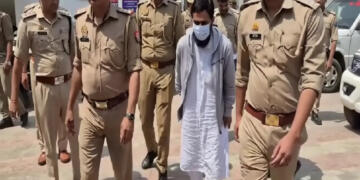
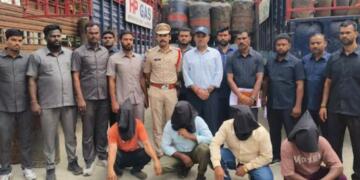
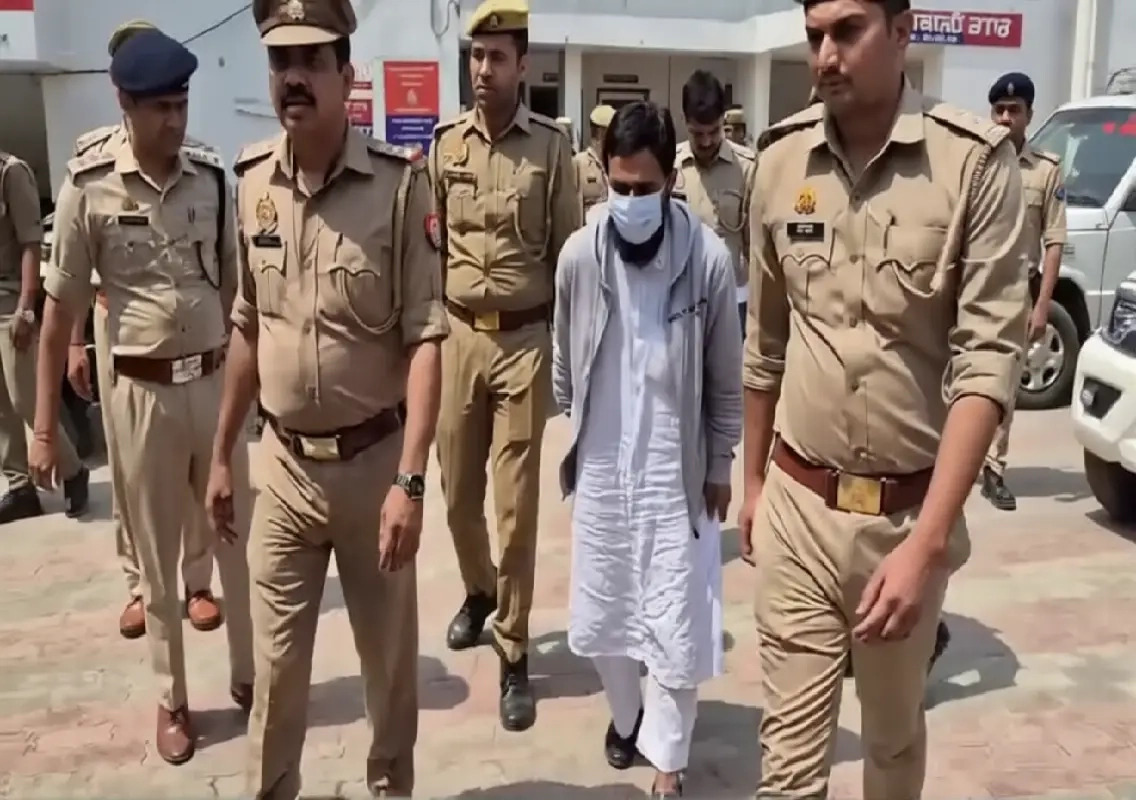
Eyewitness accounts and reports indicate that after questioning, the Muslim cleric was seen being escorted to jail, appearing physically weak and limping, with police personnel assisting him. This visual quickly circulated on social media, further intensifying public attention around the case. The sequence of events—from the viral video to the arrest and subsequent jail transfer—has kept the issue in the national spotlight.
The controversy has also drawn strong reactions from political groups and civil society. Several organisations and political leaders condemned the remarks, stating that targeting a public figure’s family crosses acceptable boundaries of discourse. Protests were reported in multiple locations, with demonstrators demanding strict legal action against the Muslim cleric. The issue has thus moved beyond an isolated incident to become a broader law-and-order and political matter.
Amid mounting pressure, the Muslim cleric issued a public apology. In a video statement, he expressed regret for his remarks, stating that certain words spoken during his speech “should not have been said” and sought forgiveness from the Chief Minister and his family. Despite this apology, authorities proceeded with legal action, underlining that such offences are subject to due process regardless of subsequent retractions.
Interestingly, the Muslim cleric has claimed that the viral video may have been edited or taken out of context, suggesting that his statements were misrepresented. Supporters have echoed this claim, calling for a fair investigation into the authenticity and completeness of the footage. This has added another dimension to the case, raising questions about misinformation, selective editing, and the role of social media in amplifying controversies.
The incident also highlights the broader issue of speech and accountability in India’s politically charged environment. While freedom of expression remains a fundamental right, authorities have repeatedly emphasised that statements inciting hatred or targeting individuals in a derogatory manner can attract legal consequences. The arrest of the Muslim cleric underscores how swiftly law enforcement can act when public outrage and political sensitivity converge.
For the administration led by Yogi Adityanath, the case reinforces its stance on maintaining law and order and taking a firm approach against provocative speech. The Uttar Pradesh government has, in recent years, adopted a zero-tolerance policy toward statements perceived as disturbing communal harmony, regardless of the source.
At the same time, the episode has reignited debates about the boundaries of political and religious speech in India. Critics argue that selective outrage and uneven enforcement can sometimes shape public perception, while supporters of the action insist that respect for individuals—especially family members of public figures—must be upheld.
As legal proceedings continue, the fate of the Muslim cleric will depend on the outcome of the investigation and judicial review. The case serves as a reminder of the complex interplay between speech, law, and politics in contemporary India, where a single viral clip can trigger nationwide consequences.
Ultimately, the controversy surrounding the Muslim cleric is not just about one individual’s remarks—it reflects deeper tensions around free speech, accountability, and the evolving dynamics of public discourse in a highly connected digital age.