



















RelatedPosts
India has achieved a major milestone in its civil nuclear energy programme after the country’s most advanced atomic reactor, the Prototype Fast Breeder Reactor (PFBR) at Kalpakkam in Tamil Nadu, attained criticality, marking the start of a sustained nuclear fission chain reaction and bringing the facility a crucial step closer to full operation.
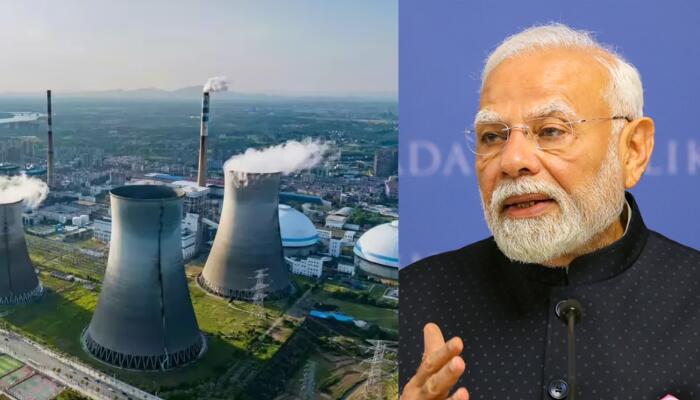
Prime Minister Narendra Modi described the development as a defining moment in India’s nuclear journey, saying the indigenously designed and built reactor reflects the depth of the country’s scientific expertise and engineering capability. He said, “The achievement advances the second stage of India’s nuclear power programme and moves the country closer to harnessing its vast thorium reserves.”
In nuclear terminology, criticality refers to the stage at which a reactor achieves a self-sustaining chain reaction. At this point, each nuclear fission event produces enough neutrons to trigger another reaction, allowing the process to continue steadily without external intervention. Although the reactor is not yet producing electricity at full capacity, attaining criticality is one of the most important steps before a nuclear plant begins commercial power generation.
A Reactor More Than Two Decades in the Making
The PFBR is a 500-megawatt electric sodium-cooled fast breeder reactor that has been under development for over two decades. The project has involved complex engineering and technological challenges and represents one of the most ambitious undertakings by India’s atomic energy establishment.
The reactor has been developed and is operated by Bharatiya Nabhikiya Vidyut Nigam Limited under the Department of Atomic Energy at the Indira Gandhi Centre for Atomic Research campus in Kalpakkam. The initiative forms a key part of India’s long-term strategy to strengthen its nuclear fuel cycle and achieve energy independence.
Dr Ajit Kumar Mohanty, Chairman of the Atomic Energy Commission and Secretary of the Department of Atomic Energy, described the development as a historic milestone. He said the attainment of first criticality marks India’s formal entry into the second stage of the three-stage nuclear power programme envisioned by physicist Homi Jehangir Bhabha.
According to Mohanty, the reactor uses fissile material recovered from the reprocessing of spent fuel from pressurised heavy water reactors, which form the backbone of India’s current nuclear power infrastructure. The PFBR is designed to produce more fuel than it consumes, making it a vital step towards establishing a closed nuclear fuel cycle.
How Fast Breeder Technology Works
Fast breeder reactors differ significantly from conventional nuclear reactors. While traditional reactors primarily consume uranium fuel, breeder reactors operate using plutonium and are capable of generating additional fissile material during operation.
In the PFBR, uranium-plutonium mixed oxide fuel is used inside the reactor core. Surrounding the core is a blanket of uranium-238. When exposed to intense neutron bombardment, this material undergoes nuclear transmutation and converts into plutonium-239, which can later be extracted and reused as fresh fuel. This capability enables the reactor to produce more nuclear fuel than it burns, a defining characteristic of breeder technology.
Gateway to India’s Thorium Future
The milestone at Kalpakkam marks the beginning of the second stage of India’s three-stage nuclear power programme. The first stage relies on pressurised heavy water reactors that run on natural uranium and produce plutonium as a by-product. That plutonium then becomes the starting fuel for fast breeder reactors such as the PFBR.
The third stage, which remains a long-term objective, will involve reactors powered by thorium. India possesses one of the world’s largest thorium reserves, particularly in mineral-rich coastal sands across southern parts of the country.
Fast breeder reactors play a critical role in enabling this transition because they create the conditions necessary to convert thorium into uranium-233, a fissile material that can be used as fuel in advanced nuclear reactors.
Strategic and Energy Implications
Globally, only Russia currently operates a commercial fast breeder reactor, highlighting the technological complexity involved in developing and running such facilities. Several other countries pursued similar programmes in the past but abandoned them due to high costs, safety concerns and technical challenges.
Once the Kalpakkam reactor becomes fully operational, India will become only the second country to run a commercial fast breeder reactor. The project is therefore seen as a significant step in strengthening the country’s technological capabilities in nuclear energy.
The development also aligns with India’s broader climate and energy goals. The government has outlined plans to expand nuclear power capacity to 100 gigawatts by 2047 as part of efforts to strengthen low-carbon electricity generation and enhance long-term energy security.
Before being connected to the national power grid, the PFBR will undergo a series of low-power physics experiments to assess reactor behaviour and operational stability.
Calling it a moment of national pride, the Prime Minister congratulated the scientists and engineers involved in the programme, saying the milestone reflects India’s growing technological confidence and represents an important step towards achieving energy self-reliance.