

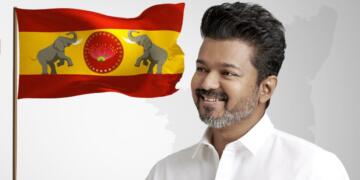
















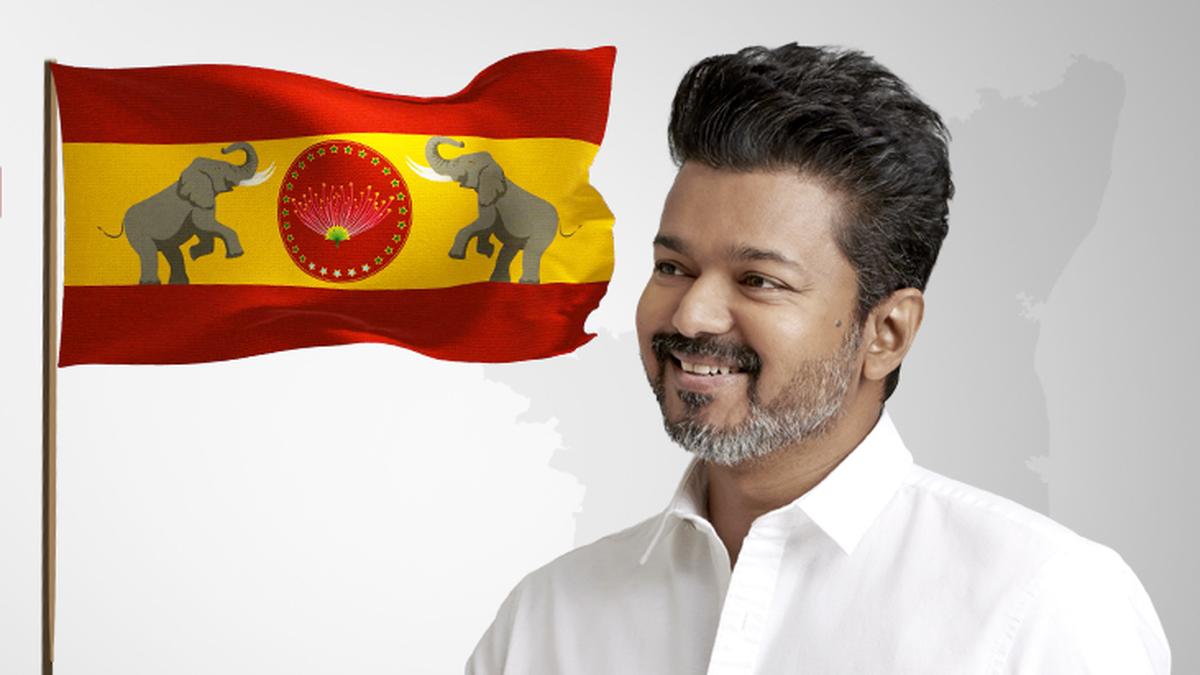
The political journey of Joseph Vijay, founder of Tamilaga Vettri Kazhagam, has rapidly evolved from cinematic stardom to electoral ambition. However, as Joseph Vijay prepares for the 2026 Tamil Nadu Assembly elections, the spotlight has shifted sharply onto the candidates fielded by his party. Reports and commentary, including those highlighted by The Commune, have raised serious concerns regarding the backgrounds of several nominees, prompting questions about candidate selection, political ethics, and the broader direction of Joseph Vijay’s fledgling political outfit.
Joseph Vijay entered politics positioning himself as a reformist voice, promising clean governance and a break from entrenched political practices. His party, launched in 2024, quickly gained traction, drawing support from youth and sections disillusioned with traditional Dravidian politics. Yet, the scrutiny surrounding Joseph Vijay’s TVK candidates suggests a disconnect between the party’s projected ideals and the profiles of some individuals chosen to represent it in elections.
According to reports referenced in the article, several candidates associated with Joseph Vijay’s party have faced allegations ranging from criminal involvement to caste-based mobilization and misconduct. These claims, whether proven or contested, have fueled a narrative that Joseph Vijay’s candidate selection process may not have adequately filtered controversial figures. Such concerns are particularly significant in a political climate where public perception of integrity often shapes electoral outcomes.
The issue of candidate background is not merely symbolic—it strikes at the core of governance credibility. When Joseph Vijay positions himself as an alternative to established political formations, the expectation naturally extends to the individuals he fields. Critics argue that the presence of candidates with questionable pasts undermines the reformist image that Joseph Vijay has sought to cultivate. Supporters, however, contend that allegations alone should not be treated as convictions, emphasizing the need for due process and fairness.
The timing of these controversies is also critical. Joseph Vijay’s entry into electoral politics coincides with a highly competitive environment ahead of the 2026 elections, where new entrants are expected to demonstrate both organizational strength and moral clarity. The emergence of such allegations risks diverting attention from policy discourse to personal controversies, thereby complicating Joseph Vijay’s campaign narrative.
Adding to the complexity is the broader political context in Tamil Nadu. The state’s political landscape has historically been dominated by strong regional parties with deep-rooted structures. For a relatively new party like TVK, candidate selection becomes a crucial test of institutional maturity. In this sense, the scrutiny of Joseph Vijay’s nominees reflects not just individual controversies but also the growing pains of a party attempting rapid expansion.
Recent developments further underline the challenges faced by Joseph Vijay’s political venture. Reports indicate that he and his party cadres have already faced legal scrutiny during campaign activities, including allegations of violating the Model Code of Conduct during election campaigning. Such incidents, combined with questions over candidate backgrounds, contribute to a perception of turbulence at a critical juncture.
At the same time, Joseph Vijay continues to command significant public attention and support, partly due to his cinematic legacy and mass appeal. His ability to mobilize large crowds and generate enthusiasm remains a key asset. However, as politics differs fundamentally from cinema, sustaining credibility requires consistent alignment between rhetoric and action—particularly in areas like candidate selection.
Ultimately, the controversy surrounding Joseph Vijay’s TVK candidates highlights a broader tension inherent in new political movements: the challenge of balancing rapid growth with rigorous standards. For Joseph Vijay, this moment represents both a test and an opportunity. Addressing these concerns transparently could reinforce his commitment to reform, while failure to do so risks eroding the very trust that underpins his political ascent.
As the चुनाव approaches, the focus will remain firmly on how Joseph Vijay responds—not only to criticism but also to the expectations he himself has set.





