






















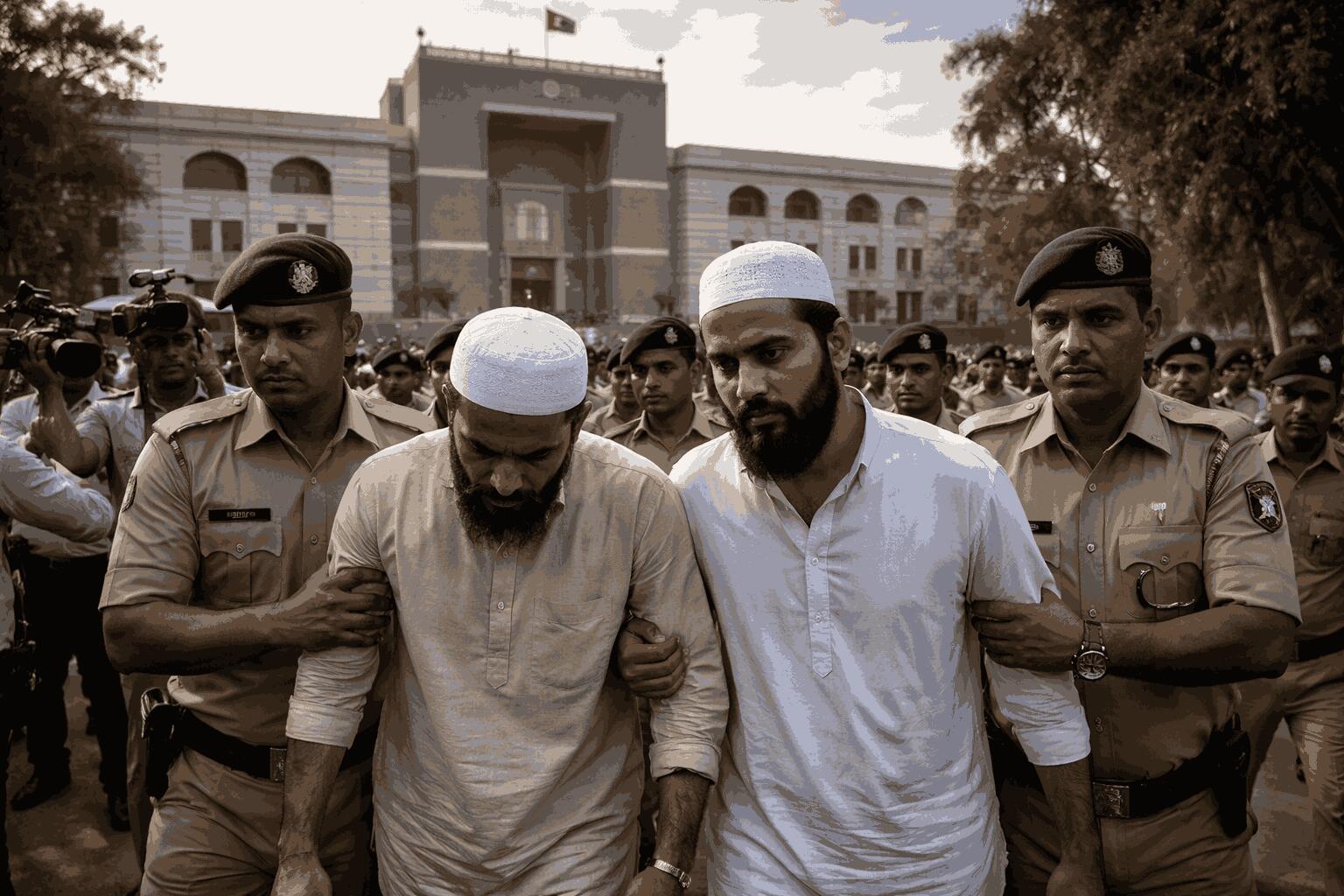
The Bharuch Mass Conversion case has emerged as a significant legal and social flashpoint, with the Gujarat High Court recently refusing to discharge several accused, including Muslim clerics, in connection with alleged large-scale religious conversions in the state. The ruling has drawn national attention, as it underscores the judiciary’s stance on cases involving alleged inducement-based conversions and the application of state laws governing religious freedom.
The case traces its origins to a 2021 First Information Report (FIR) filed in Bharuch district’s Amod taluka. According to the complaint, more than 100 individuals from around 35–37 tribal Hindu families were allegedly converted over a period extending back to 2006. The allegations include inducements such as money, household items, and other material benefits offered to vulnerable communities.
In its recent decision, the Gujarat High Court upheld the trial court’s earlier rejection of discharge pleas filed by the accused. The bench, led by Justice Gita Gopi, emphasised that at this stage of proceedings, the court’s role is limited to determining whether a prima facie case exists. It observed that witness statements, documentary evidence, and the chargesheet collectively indicated sufficient grounds to proceed with the trial in the Bharuch Mass Conversion case.
The defence argued that the accused, particularly the clerics, were merely exercising their fundamental right to preach religion, which is protected under the Constitution. They contended that no criminal intent could be inferred from religious propagation alone and that their inclusion in the case was unwarranted, especially since some were named only in supplementary chargesheets.
However, the state strongly opposed these claims, asserting that the matter went far beyond simple religious preaching. Prosecutors argued that the Bharuch Mass Conversion case involved a well-organised network that systematically targeted economically vulnerable tribal populations. According to the prosecution, inducements such as cash, clothes, medical aid, and even promises of appliances like air coolers and handcarts were allegedly used to persuade individuals to convert.
The High Court appeared to accept the state’s arguments at this preliminary stage. It noted that there was evidence of organised meetings, religious lectures, and coordinated activities aimed at facilitating conversions. Importantly, the court clarified that it could not conduct a “mini trial” at the discharge stage and that evaluating the credibility of evidence would be the responsibility of the trial court during the full proceedings.
Legal provisions invoked in the Bharuch Mass Conversion case include sections of the Gujarat Freedom of Religion Act, 2003, along with various sections of the Indian Penal Code related to conspiracy, intimidation, and promoting enmity. The prosecution has also alleged violations of procedural requirements under the Act, including the absence of prior approval for religious conversions, which is mandatory under state law.
The case has broader implications beyond the immediate legal proceedings. It has reignited debates over the fine line between religious freedom and unlawful conversion. While the Constitution guarantees the right to profess, practice, and propagate religion, several states, including Gujarat, have enacted laws to regulate conversions, particularly those allegedly carried out through force, fraud, or inducement.
Supporters of such laws argue that they are necessary to protect vulnerable communities from exploitation. Critics, however, contend that these laws can be misused to target legitimate religious activities and restrict individual choice. The Bharuch Mass Conversion case thus sits at the heart of a larger national conversation about religious liberty, state intervention, and the protection of marginalised groups.
Another notable aspect of the case is the role of evidence. Investigators have reportedly relied on witness testimonies, video recordings of meetings, and documentary records, including alleged modifications to identity documents. These elements have played a crucial role in establishing a prima facie case, as acknowledged by the High Court.
As the trial moves forward, the Bharuch Mass Conversion case is expected to remain under close scrutiny. The High Court’s refusal to discharge the accused does not determine guilt but ensures that the matter proceeds to full trial, where evidence will be examined in detail and the accused will have the opportunity to defend themselves.
Ultimately, the case highlights the complexities of balancing constitutional freedoms with legal safeguards. It reflects the challenges faced by courts in addressing sensitive issues that intersect law, religion, and social dynamics. The outcome of the Bharuch Mass Conversion proceedings could have far-reaching implications, shaping how similar cases are interpreted and adjudicated in the future.