
























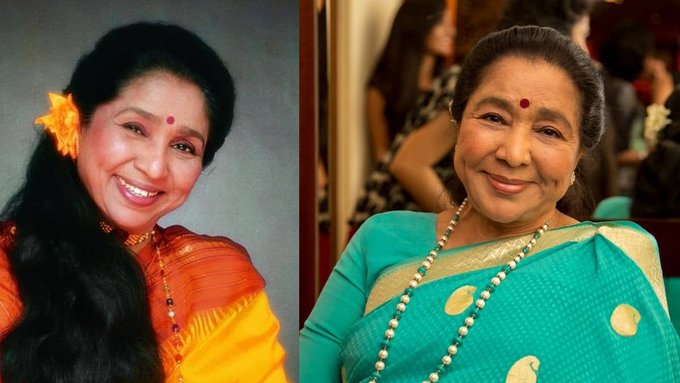
The passing of legendary singer Asha Bhosle has not only left millions mourning across the world but has also triggered an unexpected controversy in Pakistan, where a tribute broadcast has come under official scrutiny. The incident has reignited debates over cultural exchange, censorship, and the enduring power of music that transcends borders.
The controversy began when Pakistani news channel Geo News aired a tribute segment following the demise of Asha Bhosle. As part of its coverage, the channel reportedly broadcast clips of her iconic songs and visuals from Indian cinema. While such tributes are customary in media coverage of global icons, this particular broadcast led to regulatory action, putting Asha Bhosle once again at the center of a cross-border discourse.
Pakistan’s media watchdog, the Pakistan Electronic Media Regulatory Authority (PEMRA), issued a show-cause notice to the channel, questioning its decision to air what it termed “Indian content.” The regulator cited existing restrictions that prohibit the airing of Indian media on Pakistani television, a policy in place since 2018.
Despite the regulatory pushback, Geo News defended its editorial decision, arguing that paying tribute to Asha Bhosle was both appropriate and culturally significant. The channel’s leadership emphasized that honoring legendary artists is a long-standing journalistic practice, especially when reporting on their deaths. For many, Asha Bhosle represents not just Indian music but a shared subcontinental heritage.
The reaction from within Pakistan’s media community has been sharply divided. Critics of the regulator’s move argue that art should not be constrained by political boundaries. In fact, voices within the industry have stressed that Asha Bhosle’s influence extends deeply into Pakistan’s own musical traditions, making her an artist worthy of recognition irrespective of nationality. (mint)
Adding further complexity to the issue is the cultural interconnectedness of the Indian subcontinent. Asha Bhosle herself had acknowledged admiration for legendary Pakistani artists like Noor Jehan and collaborated with icons such as Nusrat Fateh Ali Khan. These connections underscore the shared artistic legacy that continues to bind audiences across borders, even amid political tensions.
The controversy also highlights the broader challenge of regulating content in an era of global media consumption. While PEMRA maintains that the Geo News broadcast violated legal provisions, many observers believe that restricting tributes to universally celebrated figures like Asha Bhosle risks alienating audiences who view art as a unifying force rather than a divisive one.
Meanwhile, the global outpouring of grief following Asha Bhosle’s passing has been overwhelming. The legendary singer, who passed away at the age of 92, leaves behind an unparalleled musical legacy spanning decades and genres. (Wikipedia) From classical compositions to Bollywood hits and international collaborations, Asha Bhosle’s voice became synonymous with versatility and emotional depth.
In India, tributes poured in from political leaders, film personalities, and millions of fans who grew up listening to her timeless melodies. Across the border, despite regulatory constraints, many in Pakistan also expressed admiration for Asha Bhosle, reflecting the deep cultural resonance she holds in the region.
The Geo News episode has, therefore, become more than just a regulatory dispute—it is a reflection of the enduring tension between politics and culture. While authorities may attempt to enforce boundaries, the legacy of artists like Asha Bhosle continues to transcend them effortlessly.
Ultimately, the incident raises an important question: can music truly be confined within national borders? For millions who have cherished her songs, the answer is clear. Asha Bhosle’s voice, much like art itself, belongs to everyone—beyond regulations, beyond politics, and beyond boundaries.
As the debate continues, one thing remains certain: even amid controversy, the legacy of Asha Bhosle shines brighter than ever, reminding the world that true art knows no limits.