














India has strongly condemned recent airstrikes on Afghan territory at the United Nations Security Council, calling them blatant violations of international law, the UN Charter, and the principle of state sovereignty. The sharp intervention came during a UN discussion on Afghanistan, where India criticised cross-border attacks that have led to significant civilian casualties and humanitarian distress.
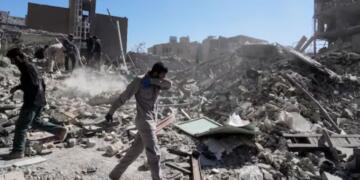
Speaking at the meeting, India’s Permanent Representative to the United Nations, Ambassador Harish Parvathaneni, said the airstrikes had resulted in the deaths of 185 civilians as of March 6, according to figures cited from the United Nations Assistance Mission in Afghanistan. More than 55 per cent of those killed were women and children, while over 100,000 people were displaced by the violence.
Parvathaneni said India “strongly condemns the airstrikes on Afghan territory”, describing them as “flagrant violations of international law, the UN Charter and the principle of state sovereignty”.
India calls out ‘hypocrisy’ over Ramadan strikes
India also criticised what it described as hypocrisy in carrying out military strikes during the Islamic holy month of Ramadan while invoking the principles of international law and Islamic solidarity.
“It is hypocritical to espouse high principles of international law and Islamic solidarity on the one hand, while mercilessly carrying out air strikes during the holy month of Ramadan,” Parvathaneni said during the council meeting.
He referred to concerns highlighted in the UN Secretary-General’s report about the civilian casualties caused by violence in Afghanistan and reiterated India’s strong condemnation of the cross-border airstrikes.
The remarks came amid escalating tensions between Pakistan and Afghanistan, with both sides launching multiple strikes against each other in what has been described as the deadliest phase of fighting between the two neighbours in recent times.
India flags ‘trade and transit terrorism.’
Beyond the military attacks, India also raised concerns about what it termed “trade and transit terrorism”. Parvathaneni pointed to Pakistan’s denial of trade routes and restrictions on transit access for Afghanistan, a landlocked country that relies heavily on external corridors for economic activity.
He warned that vulnerabilities faced by Land-Locked Developing Countries should not be weaponised for strategic purposes. According to India, restricting access to trade and transit routes undermines international commitments aimed at supporting such countries and further aggravates Afghanistan’s fragile economic situation.
Call for coordinated action against terror groups
During the discussion, India urged the international community to strengthen collective action against terrorist organisations operating in the region. Parvathaneni said only coordinated global efforts could ensure that groups such as ISIL, Al Qaeda, and their affiliates, including Lashkar-e-Tayyiba and Jaish-e-Mohammed, along with proxies such as The Resistance Front, are prevented from continuing cross-border terrorist activities.
He stressed that the world must move beyond a “business as usual” approach in dealing with Afghanistan and adopt flexible strategies that can deliver sustainable benefits to the Afghan people. He also said the United Nations sanctions regime relating to Afghanistan should reflect present-day realities.
Pakistan defends its position
Responding to the criticism, Pakistan’s Permanent Representative to the United Nations, Ambassador Asim Iftikhar Ahmad, said Islamabad had consistently prioritised dialogue with Afghanistan and had undertaken multiple diplomatic efforts to address its concerns.
According to Ahmad, mediation attempts supported by countries such as Qatar, Turkiye, and Saudi Arabia had failed to produce the desired outcome. He accused the Taliban leadership of failing to take substantive action against militant organisations, including Tehreek-e-Taliban Pakistan and the Baloch Liberation Army.
Pakistan, he said, would not remain idle in the face of attacks originating from across the Afghan border targeting its border posts, law enforcement agencies, civilian infrastructure, and public spaces such as places of worship and schools.
India reiterates support for the Afghan people
Despite the deteriorating security environment, India emphasised its continued commitment to Afghanistan’s sovereignty, independence, and long-term development. Parvathaneni highlighted the resilience of Afghan society and noted the enthusiasm of Afghan youth for cricket, including the national team’s recent performance at the Cricket World Cup.
He also referred to India’s humanitarian assistance and its development partnership with Afghanistan, which includes more than 500 projects aimed at supporting infrastructure, education, and community development.
“India will always stand for the priorities and aspirations of Afghan society and will always support the people of Afghanistan,” Parvathaneni said, reaffirming New Delhi’s continued support for the Afghan people.