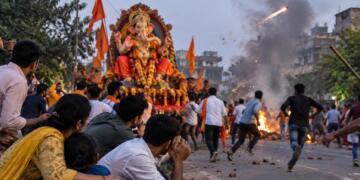






















Ram Navami is often understood as a religious festival marking the birth of Lord Ram. That understanding, while correct, is incomplete. At its core, the festival is a reaffirmation of a timeless idea: that righteousness prevails, even when overwhelmed by the force of evil.
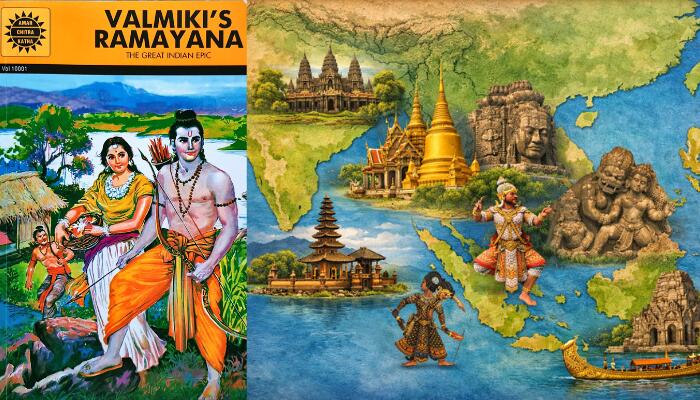
Celebrated across India with devotion and scale, Ram Navami carries a deeper, often overlooked dimension. The legacy of Lord Ram does not end at India’s borders. It extends across Southeast Asia, embedded in temples, state traditions, performing arts, and collective memory. From Indonesia to Thailand, from Cambodia to Singapore, the Ramayana is not an imported text. It is a lived cultural reality.
Take Indonesia. In Bali, a Hindu-majority island within a Muslim-majority nation, the observance of Ram Navami is neither symbolic nor marginal. It is alive in ritual, performance, and public life. The Ramayana Ballet, with its synthesis of dance, music, and theatre, does more than narrate a story. It sustains a worldview. Here, Ram is not distant mythology. He is an ethical reference point.
In Malaysia and Singapore, the diaspora has ensured continuity. Temples become spaces not just of worship, but of transmission. Week-long recitations of the Ramayana, processions, and devotional gatherings are not acts of nostalgia. They are acts of preservation. In these spaces, Ram Navami becomes a bridge between generations, carrying forward values of duty, dignity, and restraint.
Thailand presents perhaps the most politically significant example. The invocation of Ram during royal coronations and the adoption of the title “Ram” by monarchs signal something deeper than ritual. They reflect an idea of kingship rooted in dharma. At Wat Phra Kaew in Bangkok, the Ramakien murals do not merely decorate walls. They define a worldview where power is inseparable from moral responsibility.
In Cambodia, the scale of this influence is carved in stone. Angkor Wat is not only an architectural marvel but a civilisational statement. Its Ramayana reliefs are reminders of a time when political authority drew legitimacy from moral ideals embodied in Ram. Even today, classical dance traditions keep these narratives alive, not as relics, but as living culture.
This influence extends further into Laos, Myanmar, and Vietnam. Each region has reshaped the Ramayana in its own idiom. Yet, its essence remains intact. The story adapts. The values do not. That is what gives the Ramayana its civilisational durability.
To view the Ramayana merely as a religious text is to miss its larger role. It has functioned as a cultural framework, a political philosophy, and a moral guide across societies. It has travelled without conquest, spread without imposition, and endured without dilution.
In an age marked by social fragmentation, ethical ambiguity, and cultural dislocation, the relevance of Ram Navami is not diminishing. It is intensifying. The ideals associated with Ram, power restraint, commitment to truth, respect for relationships, and a deep sense of duty, are not abstract virtues. They are urgently needed corrections.
The significance of Ram Navami lies in what it commemorates: the birth of an idea as much as a deity. The birth of Ram in Ayodhya symbolises the restoration of order in the face of chaos, the assertion of dharma over adharma. It is a reminder that moral order, though challenged, is never permanently defeated.
The presence of the Ramayana across Southeast Asia reinforces a larger truth. Sanatan Dharma has never been territorially confined. Its imprint on temples, courts, and cultures across nations is neither accidental nor superficial. It is structural.
Ram Navami, then, is not just India’s festival. It is part of a shared Asian inheritance. A reminder that long before modern borders, there existed a civilisational continuum bound not by power, but by ideas.
The story of Ram has crossed centuries, kingdoms, and cultures. It continues to endure for one reason: it speaks to something fundamental in human society, the constant struggle between right and wrong.
And its conclusion has remained unchanged. Dharma prevails.