



















A social media post by commentator and academic Dilip Mandal has triggered widespread discussion online after it referenced the legacy of Gautama Buddha in the context of modern social and ideological debates. The post, shared on the platform X (formerly Twitter), quickly drew reactions from supporters and critics alike, reflecting how the figure of Buddha continues to be invoked in India’s ongoing discourse around caste, identity, and history.
The controversy began when Mandal shared a statement interpreting historical narratives related to Buddhism and social reform. Within hours, the post circulated widely across social media, prompting users to debate both the historical claims and the broader political implications of invoking Buddha in present-day ideological arguments.
For many followers of Mandal, his comments were consistent with a long tradition of social critique rooted in the writings of anti-caste thinkers. Mandal has frequently referenced figures such as B. R. Ambedkar and Periyar E. V. Ramasamy in his commentary on social justice and caste hierarchies. In this context, some supporters argued that the mention of Buddha was intended to highlight Buddhism’s historical association with egalitarian values and its influence on anti-caste movements in India.
Others, however, interpreted the remarks differently. Critics accused Mandal of oversimplifying historical narratives or using the legacy of Buddha to advance contemporary ideological positions. Several commentators on social media questioned the historical interpretation presented in the post and argued that the teachings of Buddha should not be drawn into modern political disputes.
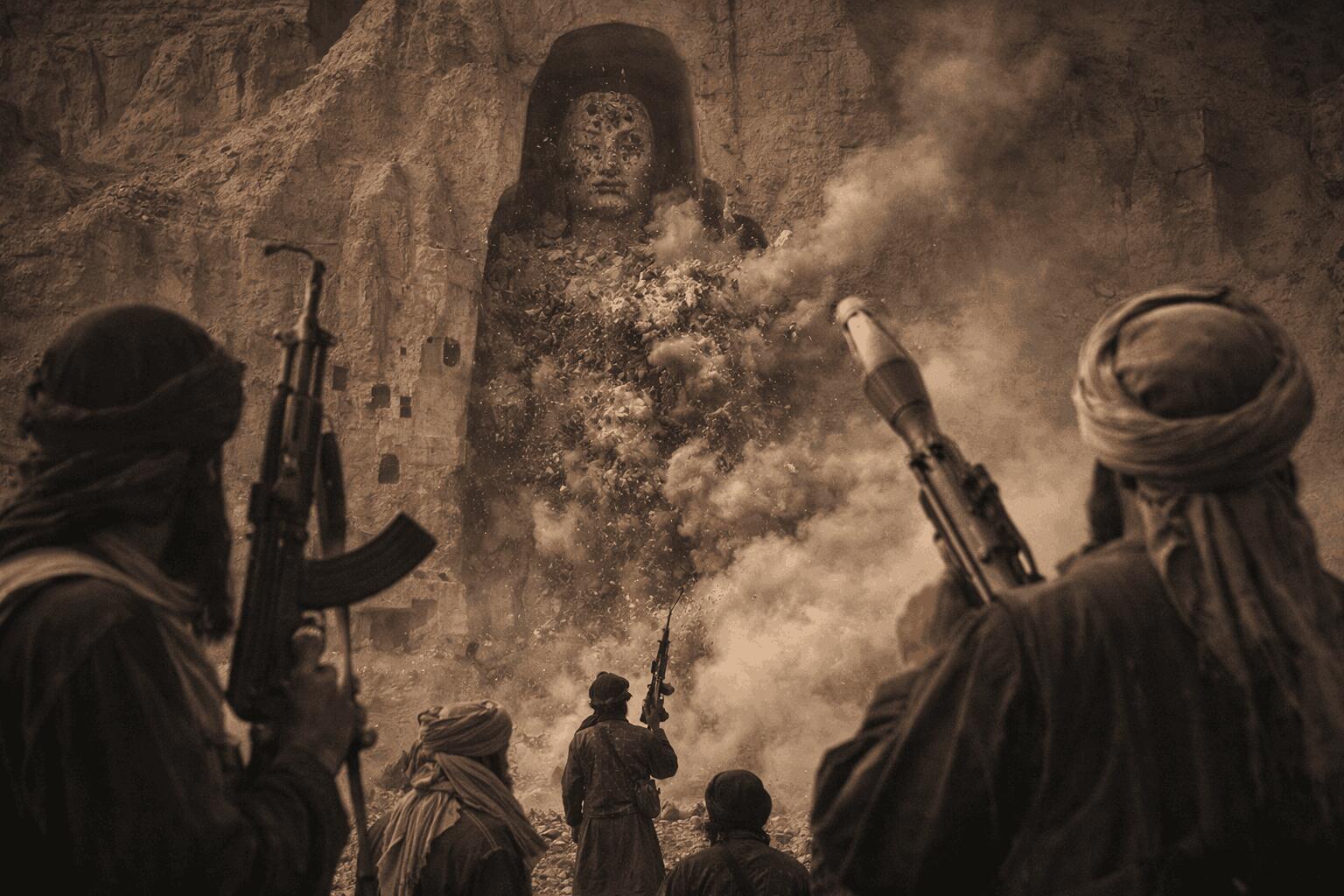
The debate reflects a broader pattern in India’s intellectual and political discourse, where historical religious figures are often reinterpreted through the lens of modern social movements. Scholars have long noted that Buddha has been viewed not only as a spiritual teacher but also as a symbol of social transformation. His teachings emphasized ethical conduct, compassion, and liberation from suffering, principles that later reformers interpreted as aligning with the ideals of equality and social justice.
The legacy of Buddha also played a significant role in the life and thought of B. R. Ambedkar, the chief architect of India’s Constitution. In 1956, Ambedkar famously embraced Buddhism along with hundreds of thousands of followers, presenting it as a path toward dignity and freedom from caste discrimination. This historical association explains why references to Buddha frequently appear in discussions about caste reform and social equality in India.
Supporters of Mandal argued that invoking Buddha in contemporary debates is part of a legitimate intellectual tradition. According to them, historical figures often acquire new meanings as societies reinterpret their teachings to address present challenges. In their view, Buddha represents a philosophical legacy that continues to inspire movements advocating equality and social reform.
On the other hand, critics insisted that historical figures like Buddha should be approached with scholarly caution. They argued that modern political narratives sometimes project present-day concerns onto ancient teachings, potentially distorting the historical context in which those teachings emerged. This concern has fueled the strong reactions seen across social media following Mandal’s post.
Despite the disagreement, the episode demonstrates the enduring influence of Buddha in India’s public life. More than two millennia after his lifetime, the teachings of Buddha continue to shape philosophical, social, and political discussions across the country. His message of compassion, moral discipline, and the pursuit of wisdom remains one of the most influential traditions in world history.
The online debate also illustrates the power of social media to amplify intellectual disputes. Posts that might once have remained within academic circles can now reach millions within hours, turning historical interpretation into a public conversation. In this environment, figures like Buddha become focal points for broader debates about identity, history, and social justice.
Ultimately, the controversy surrounding Mandal’s post reveals less about a single tweet and more about the complex ways in which historical figures are interpreted in modern society. Whether viewed as a spiritual teacher, a social reformer, or a philosophical guide, the legacy of Buddha continues to inspire discussion and reflection in contemporary India.





