











For the first time in 20 years, Bihar Chief Minister Nitish Kumar did not attend Eid prayers at Gandhi Maidan in Patna, breaking a long-standing tradition of personally participating in the city’s largest religious gathering.
In a notable departure, the Bihar CM sent his son, Nishant Kumar, to represent him at the Eid-ul-Fitr celebrations on Saturday, which saw participation from thousands of community members, including children, youth, and senior citizens.
The Eid prayers, conducted amid intermittent rain, were a testament to the enduring spirit of the community and the continued significance of Gandhi Maidan as a central venue for social and religious gatherings in the state capital.
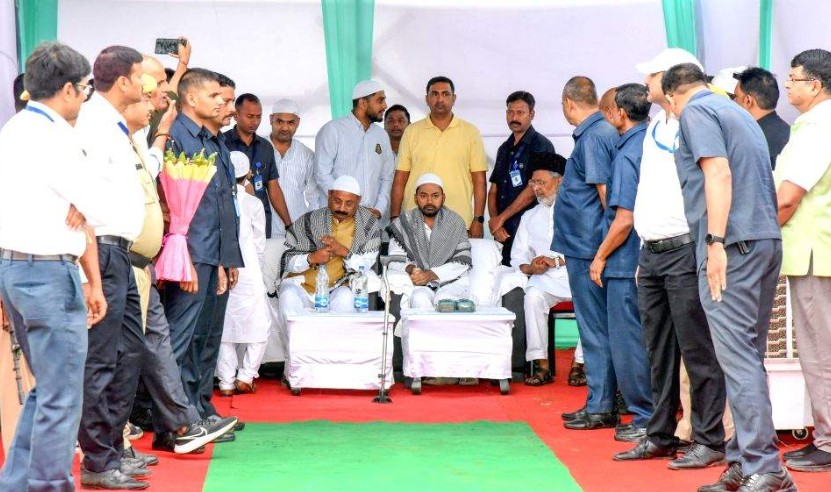
Nishant Kumar participated under the security cover of the Chief Minister’s protection team, joined by senior leaders and ministers from the Janata Dal (United), including Ashok Chaudhary. On the stage, Muslim leaders accorded him a warm reception, draping him with a traditional gamchha, signaling both respect and the symbolic presence of Nitish Kumar through his son.
Nitish’s Outreach and Inclusive Politics
Over the years, Nitish Kumar has carefully cultivated a political image that combines strategic alliances with broader social outreach. While maintaining a strong partnership with the Bharatiya Janata Party, he has also nurtured close ties with the minority Muslim community through the Janata Dal (United).
This dual approach has allowed him to position himself as a leader capable of bridging political and social divides, earning support from a wide spectrum of communities across Bihar. This balancing act has been a cornerstone of Nitish Kumar’s political longevity, enabling him to maintain influence in both urban and rural constituencies while projecting an image of inclusivity.
The Eid prayers were conducted in Gandhi Maidan with stringent security arrangements and entry was strictly monitored to ensure the smooth conduct of the prayers. Apart from Gandhi Maidan, Eid prayers were also held at Jama Masjid near Patna Junction, Phulwarisharif, and other local Eidgahs across the city.
Symbolism and Political Messaging
As per media reports, this is the first time in nearly two decades that Nitish Kumar has been absent from the prayers. Since becoming Chief Minister, he had always been present, reinforcing his outreach to the Muslim community.
The event sparked discussions on the message Nitish Kumar intends to convey, whether this move is to signal a shift away from appeasement politics, or is he subtly grooming his son to inherit his political legacy?
While the Chief Minister’s absence marks a historic departure from tradition, Nishant Kumar’s presence ensures the family’s symbolic representation and continued connection with the community.
The gesture, coupled with the careful security arrangements and continued participation of Muslim leaders, highlights the JD(U)’s commitment to inclusivity while signaling a potential generational transition in Bihar politics.
The decision to send Nishant Kumar instead of attending personally has sparked discussions about the underlying message Nitish Kumar intends to convey. While some observers interpret this move as a subtle signal of distancing from appeasement politics, demonstrating a shift toward asserting political independence and recalibrating alliances, others see it as a strategic step in grooming his son for future leadership.
By placing Nishant at the forefront in a highly symbolic religious gathering, Nitish might be trying to ensure continuity of the family’s political presence while reinforcing the JD(U)’s inclusive image. This dual messaging allows him to maintain his traditional support base, signal political maturity, and gradually introduce the next generation, blending legacy with strategic foresight.