
















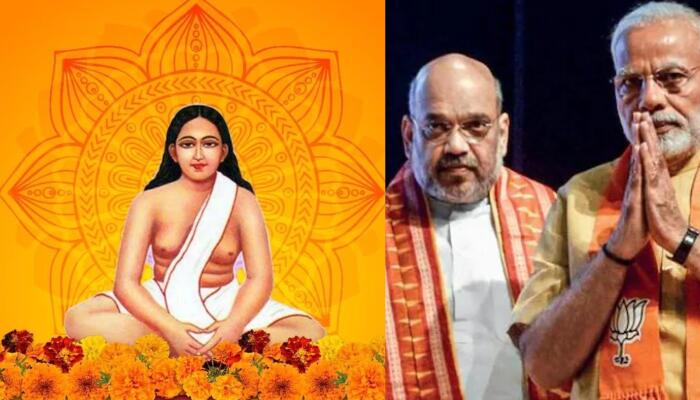
The 215th birth anniversary of the revered Matua spiritual leader Harichand Thakur was commemorated today with the Matua Dharma Mela in North 24 Paraganas, drawing tributes from national leaders and renewed attention to the political significance of the Matua community in West Bengal ahead of the state’s assembly elections.
Prime Minister Narendra Modi and Union Home Minister Amit Shah extended greetings to devotees and participants of the annual gathering, while senior Bharatiya Janata Party leader Suvendu Adhikari also paid tribute to the spiritual reformer whose teachings continue to shape the identity of the Matua community.
The Matua Dharma Mela, held every year in North 24 Paraganas, is a major religious and cultural event for followers of the Matua faith and commemorates the legacy of Harichand Thakur, who founded the Matua movement advocating devotion, equality, and moral living.
National Leaders Highlight Spiritual and Social Legacy
In a message shared on social media, the Prime Minister offered his greetings to devotees and participants of the Matua Dharma Mela and paid his respects to Harichand Thakur on the occasion of his birth anniversary.
Modi said, “The teachings of the spiritual leader continue to give strength and hope to millions. According to him, Thakur’s ideas helped awaken a powerful social movement centred on dignity, equality, and devotion. He added that the reformer inspired generations to follow the path of righteousness, harmony, and collective upliftment.”
The Prime Minister also noted that the vibrant traditions of Matua culture reflect deep spiritual strength and a firm commitment to equality. These traditions, he said, significantly enrich the social fabric of India.
He further stated that over the past decade, the government has remained committed to the welfare, empowerment, and dignity of the Matua community.
Union Home Minister Amit Shah also conveyed his greetings to members of the community. In his message, Shah described Harichand Thakur as a divine soul who explored the depths of spiritual wisdom and advanced the ideals of devotion, equality, and ethical living.
He expressed hope that the Matua Dharma Mela organised in North 24 Paraganas would strengthen society’s commitment to these principles.
A Movement Rooted in Equality
Harichand Thakur is widely recognised as the founder of the Matua movement, a spiritual and social reform initiative that emphasised devotion, dignity, and moral conduct. His teachings played a significant role in advocating for social equality and uplifting marginalised communities.
The Matua Dharma Mela serves as an important annual gathering where followers celebrate his teachings and reaffirm their commitment to the values he championed.
Electoral Importance in West Bengal
The Matua community holds considerable political influence in West Bengal, particularly in districts such as North and South 24 Paraganas. Because of its sizable population, the community is widely regarded as a decisive electoral bloc in the state.
As West Bengal moves towards the next assembly elections, the Matua vote has once again become a key factor in political calculations. Both the Bharatiya Janata Party and the All India Trinamool Congress are seeking to secure the community’s support.
The annual commemoration of Harichand Thakur’s birth anniversary, therefore, carries significance beyond faith. It highlights how a spiritual movement rooted in equality and devotion continues to shape both the cultural identity and political dynamics of West Bengal.