














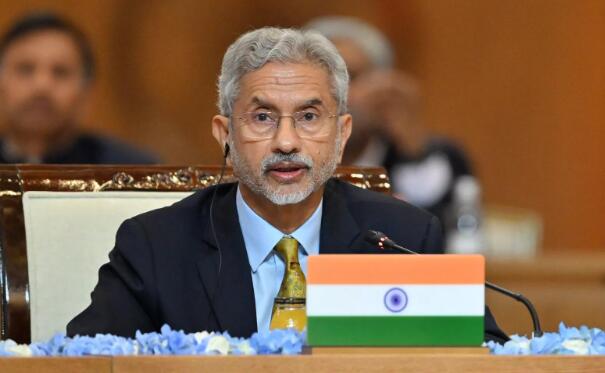
As tensions continue during the ongoing conflict involving the United States and Israel, External Affairs Minister S Jaishankar said direct talks with Iran are the most effective way to restart shipping through the Strait of Hormuz.
In an interview with the Financial Times published on Sunday (March 15), Jaishankar said discussions with Iran had already helped two Indian-flagged gas tankers pass through the strategic waterway, even as several ships from other countries remain stranded in the region.
“I am at the moment engaged in talking to them, and my talking has yielded some results. This is ongoing. If it is yielding results for me, I would naturally continue to look at it. Certainly, from India’s perspective, it is better that we reason and we coordinate and we get a solution,” Jaishankar said. He added that dialogue was the best approach for India to resolve the situation.
No Blanket Arrangement for Indian ships
Jaishankar clarified that there is no “blanket arrangement” with Iran allowing all Indian-flagged vessels to pass through the strait.
According to him, each ship movement is being handled individually. He also rejected suggestions that Iran had received anything in exchange for allowing the two Indian tankers to cross.
“It’s not an exchange issue. India and Iran have a relationship. And this is a conflict that we regard as something very unfortunate. These are still early days. We have many more ships there. So while this is a welcome development, there is continuing conversation because there is continued work on that,” Jaishankar said reportedly.
The External Affairs Minister added that talks are continuing as more Indian vessels remain in the region.
Iran says Strait Closed only to ‘Enemies’
Iranian Foreign Minister Abbas Araghchi said the strait remains open to most countries and is only closed to ships belonging to the United States, Israel and their allies.
According to reports, Araghchi on Saturday said vessels from other countries are still allowed to use the vital shipping route.
“As a matter of fact, the Strait of Hormuz is open. It is only closed to the tankers and ships belonging to our enemies, to those who are attacking us and their allies. Others are free to pass,” he said.
Two LPG tankers cross the strait
Earlier, Prime Minister Narendra Modi held a conversation with Iranian President Masoud Pezeshkian and discussed the transit of goods and energy supplies.
Following the discussions, two Indian-flagged LPG tankers, Shivalik and Nanda Devi, carrying about 92,700 metric tonnes of liquefied petroleum gas safely crossed the Strait of Hormuz. The vessels are expected to reach the ports of Mundra Port and Kandla Port in the coming days.
Blockade raises energy supply concerns
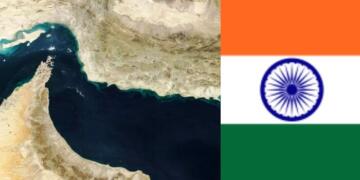
The Strait of Hormuz, the Persian Gulf’s only access route to the Arabian Sea, handles around 20 per cent of the world’s crude oil and natural gas shipments.
Iran has restricted the route in retaliation for attacks by the United States and Israel, raising concerns about energy security in major Asian markets such as India and China.
India is the world’s fourth-largest buyer of liquefied natural gas and the second-largest buyer of LPG, which is widely used for cooking. A large portion of these supplies comes from the Middle East.
Amid fears of supply disruptions, the Indian government has directed that households and the transport sector be prioritised for gas supplies. Several industries, including ceramic tile manufacturers, are already facing shortages that could affect production.





