





















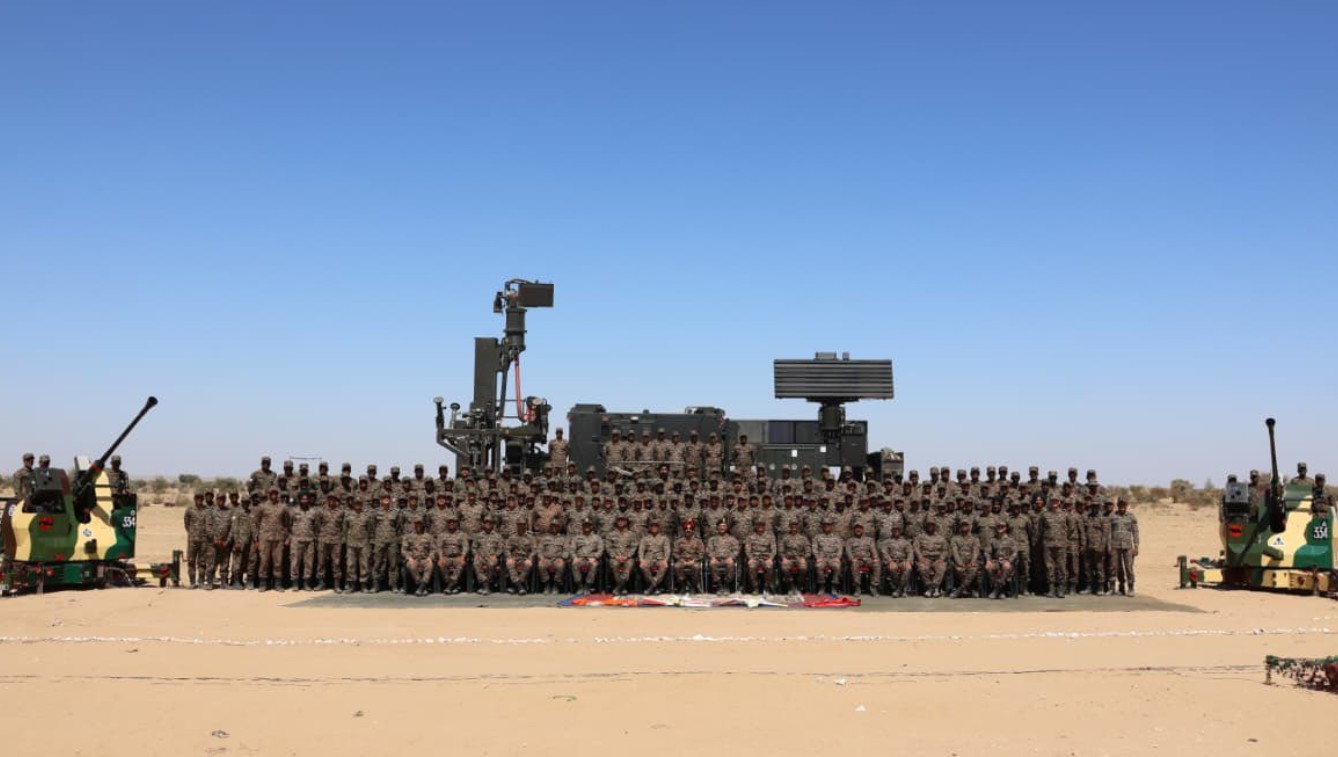
The Indian Army carried out a high-intensity live firing exercise at the Pokhran Field Firing Range in Rajasthan’s Jaisalmer district, focusing on countering one of the most rapidly evolving threats in modern warfare, drone swarms.
According to reports, the drill, conducted by the Army’s Air Defence Brigade under the Southern Command, simulated battlefield conditions where multiple small autonomous drones attack simultaneously.
https://x.com/IaSouthern/status/2030942935840444823
The exercise comes at a time when global militaries are closely studying the growing use of unmanned aerial systems in conflicts. Recent fighting in West Asia, particularly the ongoing confrontation involving Iran, has highlighted the effectiveness of coordinated drone swarm tactics against advanced air defence networks.
During the drill, Indian Army units engaged multiple aerial targets designed to replicate small drones operating in groups. The aim was to test how quickly and effectively different air defence systems could detect, track and destroy such threats.
Integrated Air Defence Response Tested
The exercise went beyond routine live firing and placed special emphasis on the integration of surveillance, detection and engagement systems, said officials. Troops practiced coordinated responses in which radars, sensors, command centres and weapons functioned as a single network instead of separate components, reported TOI.
Response times between different air defence elements were closely examined. The drill also tested command-and-control coordination to ensure that units can respond rapidly when several aerial threats appear at the same time.
Modern drone warfare has significantly changed battlefield dynamics. Small drones are relatively inexpensive and can be deployed in large numbers, while interceptor missiles used to destroy them are far more expensive.
This creates what defence analysts describe as an “asymmetric cost equation,” where attackers can overwhelm sophisticated air defence systems using large numbers of low-cost drones. Recent conflicts have shown how such tactics can drain interceptor stockpiles and create vulnerabilities in layered defence networks.
Preparing for Future Battlefields
The Indian Army has been steadily increasing its focus on unmanned systems and counter-drone technologies as part of its modernisation plans. Military exercises at Pokhran are often used to test new technologies, including surveillance drones, loitering munitions, air defence guns and missile systems under realistic desert combat conditions.
The Pokhran range, located in the Thar Desert, is one of India’s key testing grounds for large-scale military drills. It allows the armed forces to simulate complex battlefield situations involving artillery, armoured vehicles, helicopters and unmanned systems.
Defence experts say preparing for drone swarm attacks is becoming a priority for armed forces worldwide. Unlike traditional aircraft, small drones can fly at low altitude, change direction quickly and approach from multiple directions, making them difficult to detect and intercept.
By conducting exercises focused on such threats, the Indian Army is preparing for what it describes as the “emerging aerial battlespace,” where unmanned systems, electronic warfare and networked command structures will play a major role in future conflicts.
Officials say the Pokhran drill reflects the Army’s efforts to adapt to rapidly evolving warfare technologies and ensure that its air defence systems remain capable of protecting troops and critical infrastructure against next-generation aerial threats, reports said.





