
















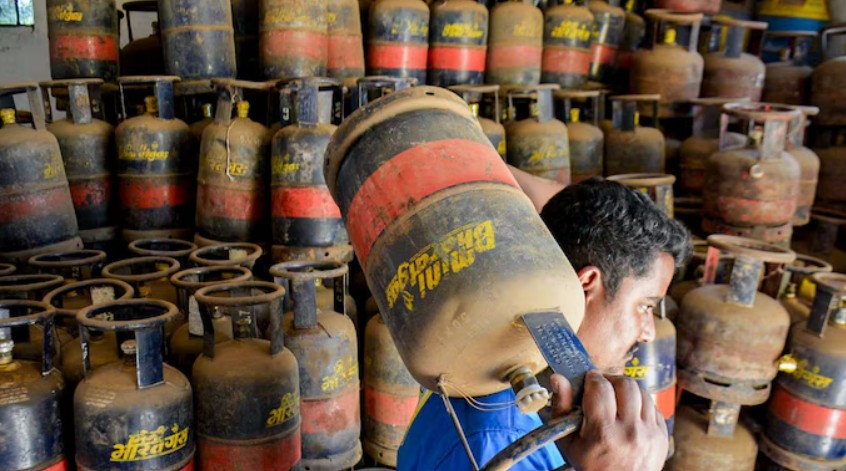
The ongoing war in West Asia, triggered by military action involving the United States, Israel and Iran since February 28, has sent shockwaves through global energy markets driving up crude oil and LPG prices and tightening supply chains worldwide.
In India, where more than 60 per cent of cooking gas demand is met through imports and a large share of shipments move through the Strait of Hormuz, the escalation has directly impacted domestic LPG costs.
As per reports, from March 7, 2026, oil marketing companies raised the price of a standard 14.2‑kg domestic LPG cylinder by Rs 60 across the country, marking one of the steepest hikes in nearly a year.
In Delhi, the non‑subsidised cylinder now costs around Rs 913, up from Rs 853 previously. In cities such as Mumbai, Kolkata and Chennai, similar increases have been recorded.
The impact has been even sharper for commercial users. 19‑kg LPG cylinders, widely used by hotels, restaurants and small businesses, have become costlier by around Rs 114–Rs 115, reflecting sharper upward pressure from volatile international energy markets.
Inflationary and Supply Chain Impacts
The ripple effects of higher LPG and crude prices are already being felt in consumer spending and business costs. In India, the price hike affects household budgets and raises operating costs for the hospitality and food service sectors, many of which are already struggling with disrupted commercial LPG supplies, reported Reuters.
According to reports, restaurants and hotels in cities such as Mumbai, Bengaluru and Kolkata are facing difficulties in procuring commercial LPG cylinders, with industry associations reporting irregular supplies over the past few days.
In response to the situation, the government has directed oil companies and refineries to increase LPG production in an effort to stabilise supplies and ease the pressure on restaurants and hotels.
As per reports, oil marketing companies have confirmed that measures are being taken to increase LPG production and prioritise supply for domestic consumers amid ongoing geopolitical tensions affecting global fuel supplies.
In a statement, Indian Oil Corporation (IOC) said the government has decided to ensure LPG availability first for households and other essential non-domestic sectors such as hospitals and educational institutions.
For other commercial or non-domestic users, requests will now be reviewed by a special committee comprising Executive Directors from the three state-run oil marketing companies. The committee will assess requests and allocate LPG based on necessity, merit, and product availability.
The panel includes K Sailendra (IOC), T V Pandiyan (Bharat Petroleum Corporation Limited), and Dhruv Kapil (Hindustan Petroleum Corporation Limited). Officials said that sectors requiring LPG for essential purposes can submit requests via designated email addresses. However, supply for non-domestic users depends heavily on imported LPG, so not all requests may be fulfilled. Decisions will be taken according to availability and urgency.
Petroleum Minister Meets PM Modi Amid LPG Supply Concerns
Petroleum and Natural Gas Minister Hardeep Singh Puri met Prime Minister Narendra Modi in Parliament on Monday as reports of LPG supply disruptions grew across the country.
Multiple cities have reported delays in domestic and commercial cylinder deliveries, affecting households, hotels, and restaurants. In response, the Centre has already taken steps to prioritise LPG supply for domestic consumers by invoking the Essential Commodities Act and directing refineries to divert key hydrocarbon streams for LPG production.
Govt Invokes Essential Commodities Act to Safeguard LPG Supply
The government has invoked the Essential Commodities Act to prevent any disruption in the supply of domestic cooking gas across the country.In a directive issued late Monday, the Ministry of Petroleum and Natural Gas asked refineries and petrochemical units to step up the production of liquefied petroleum gas (LPG) and divert key hydrocarbon streams to boost LPG availability.
Under the order, refiners have been instructed to channel the entire output of C3 and C4 hydrocarbon streams towards LPG production. These streams include propane, butane, propylene and butenes, which serve as key raw materials in the manufacturing of LPG.
The government has also directed that these streams be supplied exclusively to the three state-run oil marketing companies, Indian Oil Corporation (IOC), Bharat Petroleum Corporation (BPCL), and Hindustan Petroleum Corporation (HPCL) which together manage the bulk of LPG distribution in the country.
Additionally, refineries and petrochemical complexes have been barred from diverting these hydrocarbon streams for petrochemical manufacturing or other downstream industrial uses.The move is intended to prioritise LPG supply for households and ensure stable availability of cooking gas nationwide.
The government has also directed oil refineries to increase the production of liquefied petroleum gas (LPG) in an effort to stabilise supplies amid the ongoing LPG cylinder shortage.
As per reports, officials said the step is intended to prioritise the availability of domestic LPG and prevent further disruption to essential services. These include restaurants, hospitals and food supply chains, which rely heavily on a steady supply of cooking gas for daily operations.
Explained: What is the Essential Commodities Act?
The Essential Commodities Act (1955) allows the Indian government to regulate the production, supply, and distribution of essential goods, including food grains, edible oils, fuel, and fertilisers.
The law was introduced to ensure essential items remain available at fair prices and to prevent hoarding or black marketing during shortages or emergencies. Under the Act, the government can control how much of a commodity is produced, stored, and sold.
In the current LPG supply crisis, the government is using the Act to direct refineries and petrochemical units to prioritise domestic LPG production, ensuring that households continue to receive uninterrupted cooking gas even amid global supply disruptions.
Global Price Ripples Felt Beyond India
The rise in energy prices is not restricted to India. Countries around the world are experiencing similar inflationary pressures. Gasoline prices have jumped sharply, with some states such as California seeing pump prices rise above $5 per gallon, a significant spike linked to the surge in crude markets since late February.
Benchmark natural gas and LNG prices have risen sharply in recent weeks, in some cases climbing by over 40–45% on certain trading timeframes as global buyers face tighter supplies due to reduced flows from the Gulf.
These movements reflect a broader tightening of global energy markets as investors and traders adjust to heightened geopolitical risks, potential supply disruptions and reduced flows of crude oil and gas from the Middle East historically a key exporter to global markets.
Analysts note that this price rise comes on the back of a surge in crude oil prices amid the conflict. Global crude benchmarks have climbed above $100 per barrel, driven by supply fears after the Strait of Hormuz, a chokepoint for roughly one‑fifth of global oil and LPG shipments saw disruptions and shipping warnings, said reports.
Globally, rising fuel prices contribute to broader inflationary pressure, with energy costs feeding into transportation, manufacturing and consumer goods prices. Economists warn that continued uncertainty in the West Asia conflict could maintain upward pressure on energy prices in the coming months.





