













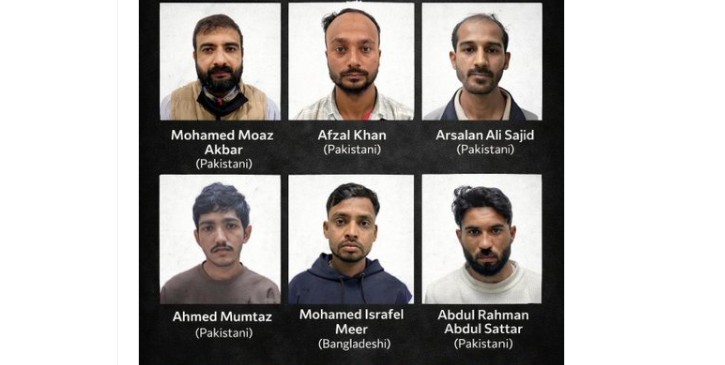
The Interior Ministry of Bahrain has arrested five Pakistani nationals and one Bangladeshi national for allegedly filming and praising missile and drone attacks carried out by Iran, following the viral spread of videos posted by the accused on social media.
The Pakistani nationals detained have been identified as Afzal Khan, Mohammed Moaz Akbar, Ahmed Mumtaz, Arslan Ali Sajjad, and Abdul Rahman Abdul Sattar. The Bangladeshi national arrested is Mohamed Israfel Meer.
https://x.com/FrontalForce/status/2031226774693228642?s=20
As per reports, six were detained by the Anti‑Cybercrime Directorate under Bahrain’s General Directorate of Anti‑Corruption and Economic and Electronic Security, which said their posts risked “undermining public order” and spreading misinformation during a period of heightened regional tension.
The suspects have been referred to public prosecution, and local officials stressed that even expatriates living in the kingdom are subject to Bahraini law when it comes to national security and public harmony.
Authorities said the content posted on social media platforms had the potential to incite unrest and create fear among the broader population, particularly in a country already on alert over regional developments.
Divided Loyalties and Expatriate Engagement in Gulf Societies
The incident has sparked debate about loyalty, identity and social cohesion among expatriate communities in the Gulf region. Millions of foreign workers from South Asia and beyond make their homes in countries such as Bahrain, Qatar, and the UAE, contributing to local economies while often maintaining strong cultural, familial, and religious ties to their countries of origin.
Some analysts say that, in rare cases, expressions of support for conflicts abroad can highlight the complex emotional and political connections expatriates have with events in other countries.
However, experts also stress that a small number of highly visible social‑media posts should not be taken as representative of entire communities.
Concerns Over Transnational Identity and Social Media
The arrests come amid ongoing tensions in the Middle East, which have intensified discussions about how international conflicts are discussed and shared online.
In India, like in other multi‑religious, multi‑ethnic societies there have been periodic concerns about how global events involving religious or ideological identities can influence public discourse at home.
Indian Muslims in several cities staged demonstrations following the reported killing of Iran’s Supreme Leader, Ayatollah Ali Khamenei, in Israeli–US strikes. Hundreds of Shia Muslims gathered in places including Srinagar, Pattan, Ramban, and Lucknow, raising slogans against the United States and Israel while expressing solidarity with Iran.
Reports said large groups of protesters took to the streets carrying photographs of Khamenei and black flags, while clerics and community leaders condemned the strikes and called for mourning gatherings in several locations
Observers note that transnational identity, amplified by social media, can sometimes lead people to feel more connected to developments in other countries than to local issues.
This is not unique to any one community people everywhere, regardless of religion or nationality, can be more vocal about distant conflicts than about domestic concerns.
Experts emphasize the importance of lawful and respectful public discourse. Societies with diverse populations and beliefs, whether in the Gulf, India, or elsewhere, must balance freedom of expression with responsibility, especially when speech touches on security, communal harmony, or national loyalty.